

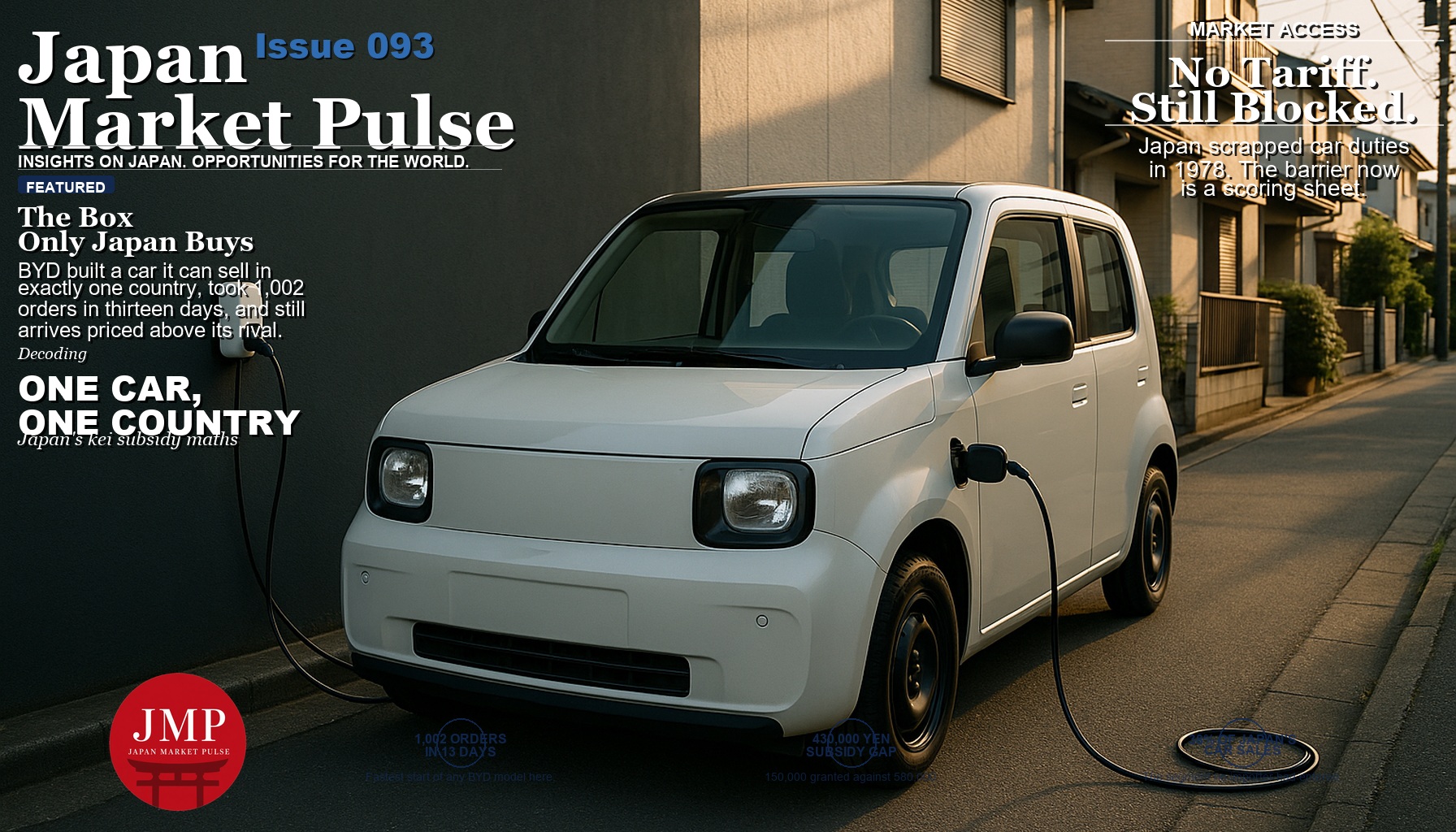
On 28 July 2026, BYD began selling a car in Japan that it sells nowhere else. The Racco is a kei car — built to a Japanese regulatory box that exists in no other country — and it is the first vehicle the company has designed specifically for Japan rather than adapting something from its Chinese line-up.
Thirteen days later, BYD Japan said the Racco had taken 1,002 orders. That is a small number by the standards of a segment that moves well over a million units a year, and a large one for a Chinese brand in a category that Suzuki, Daihatsu and Honda have owned for decades. It was the fastest order pace of any BYD model in Japan.
I have lived here for twenty years, and I have read a great many foreign explanations of why cars from outside Japan do not sell in Japan. Almost all of them reach for tariffs. Japan removed its duty on imported passenger cars in 1978 and has charged nothing since. There is no tariff. There has not been one for nearly fifty years, and imported brands still hold only a mid-single-digit share of the market.
The Racco is the clearest illustration I have seen of what actually stands in the way. It is not a customs line. It is a scoring sheet at the Ministry of Economy, Trade and Industry, and it is worth about ¥430,000 a car.
The Box Foreign Carmakers Never Tried to Fit Into
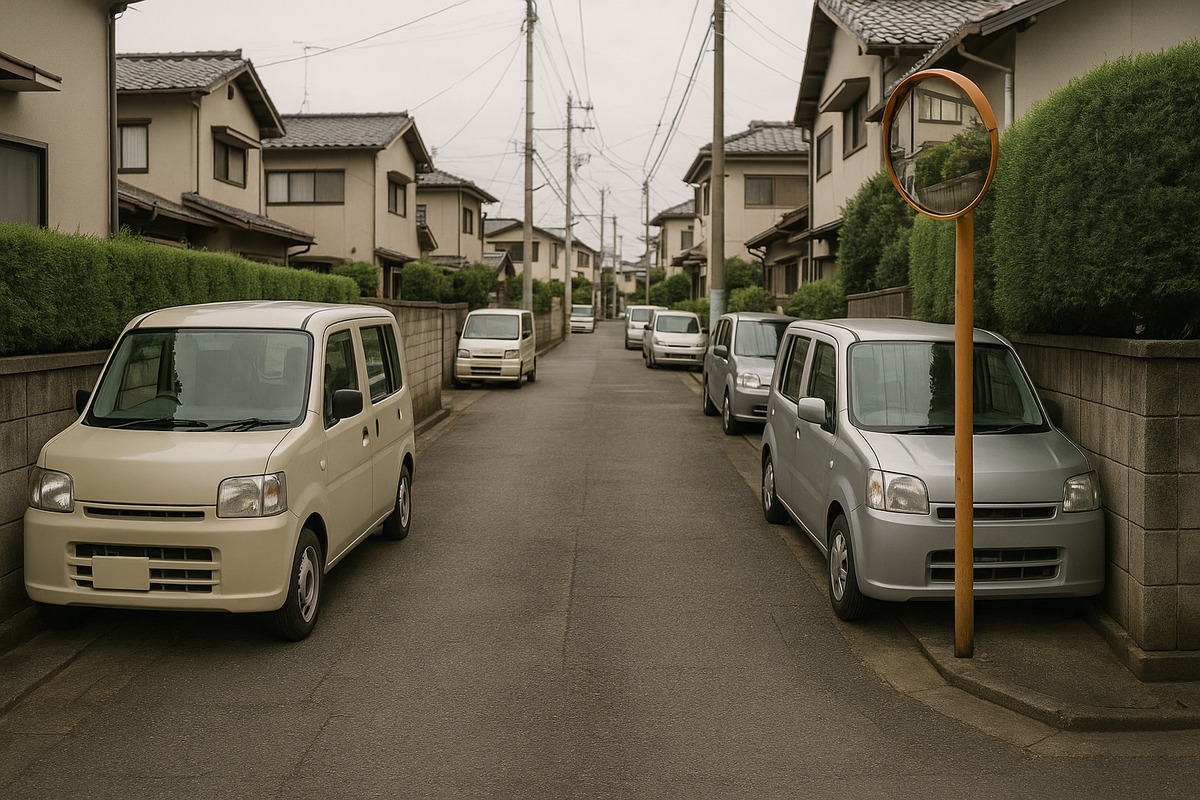
A kei car is not a market segment. It is a legal specification. To qualify, a vehicle must be no longer than 3.4 metres, no wider than 1.48 metres, and — for a combustion model — carry an engine no larger than 660cc. Electric kei cars have no displacement to cap, and instead observe the industry’s long-standing 47-kilowatt convention, the electrical equivalent of the 64PS output that kei makers have voluntarily held to for decades. In exchange, the owner gets a cheaper annual vehicle tax, cheaper mandatory inspection, a distinctive yellow number plate, and in much of the country an exemption from the requirement to prove you have somewhere to park before you are allowed to register a car at all.
That last point is the one foreigners consistently miss. In most Japanese cities you cannot buy a normal car without first producing a certificate from the police confirming you have a parking space for it. For a household in a dense suburb, the kei category is not a budget choice. It is often the only legal choice.
The result is a segment that accounted for roughly 38 percent of Japan’s passenger-car sales in 2025, with about 1.3 million passenger minicars registered that year, up more than eight percent. Suzuki, Daihatsu and Honda between them hold something close to 80 percent of it. Every one of those cars is designed around dimensions that make no commercial sense in Europe, China or the United States, which is precisely why foreign manufacturers have barely tried. There have been exceptions, and they prove the shape of the rule: the Smart K, a narrowed version of the European Smart city car, went on sale in Japan as a kei model in 2001, and Caterham has offered a kei-legal version of its Seven. Both were adaptations of existing European cars sold in small numbers. Nobody had designed a kei car from scratch, as a volume model, from outside Japan. The tooling has no second market. You either commit to Japan alone or you do not do it.
BYD did it.
1,002 Orders in Thirteen Days
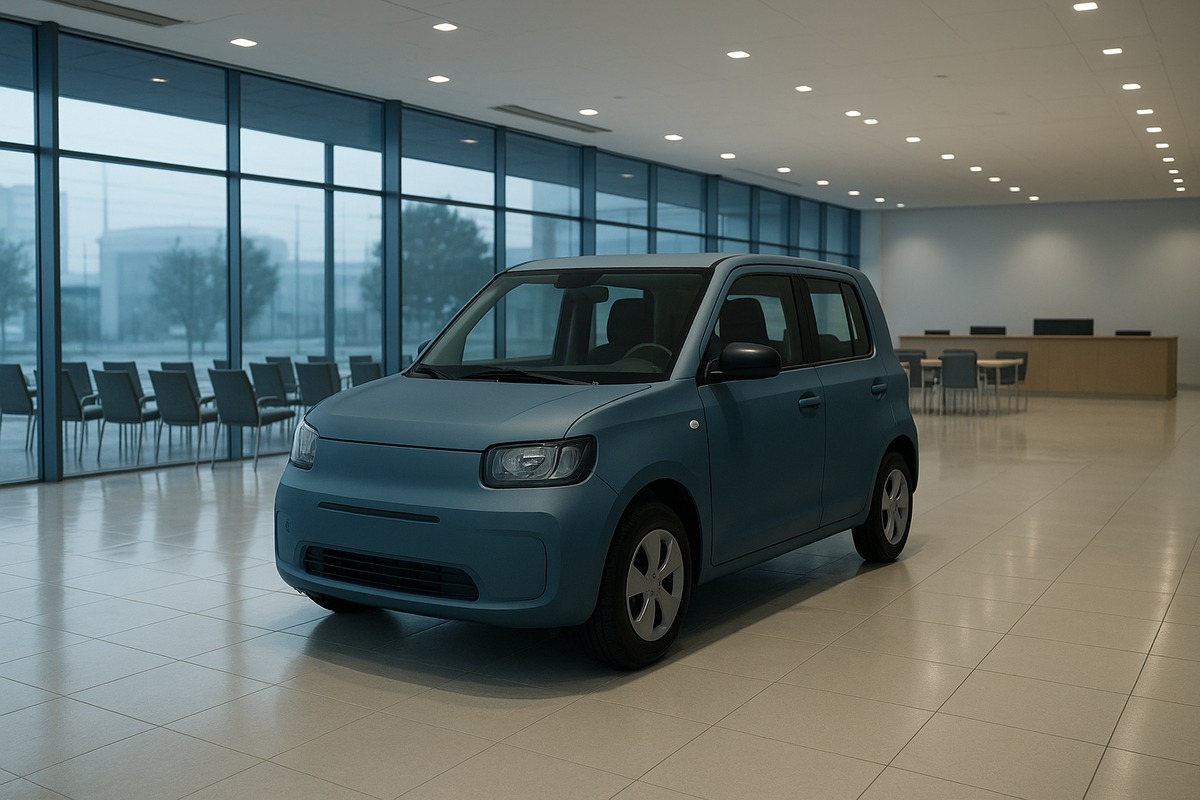
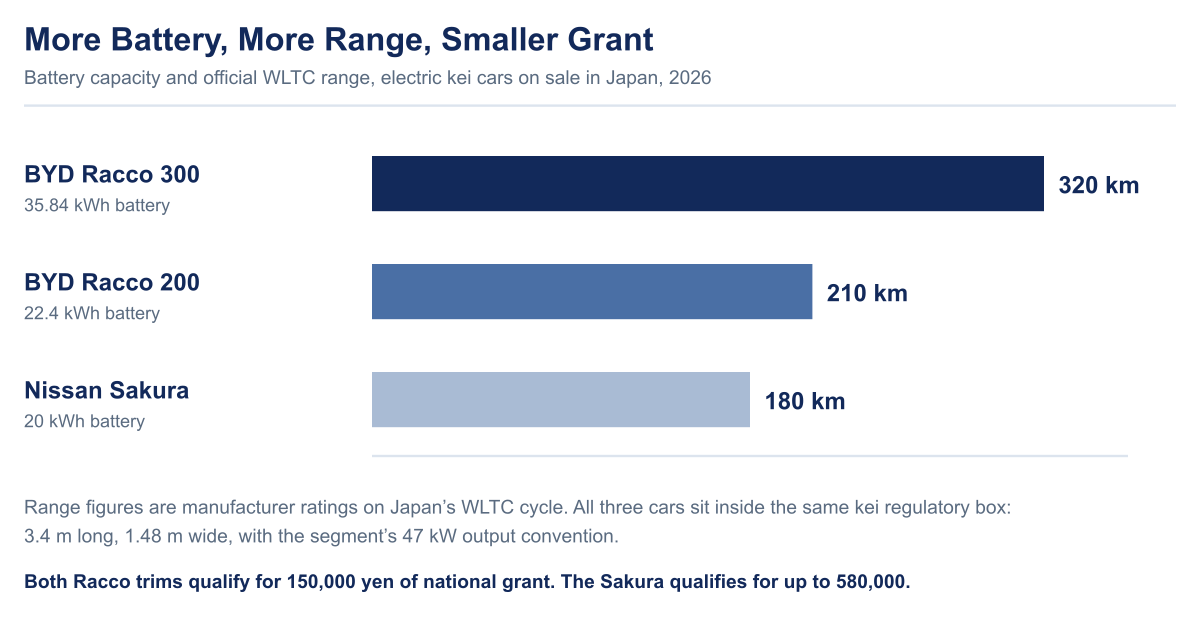
The Racco arrived in three trims — the 200, the 300 Plus and the 300 Premium — priced from ¥2,145,000 to ¥2,497,000 before any grant. At roughly ¥160 to the dollar that is about $13,400 to $15,600. The entry car carries a 22.4 kilowatt-hour battery rated at 210 kilometres on Japan’s WLTC cycle; the two upper trims carry 35.84 kilowatt-hours and 320 kilometres.
Those range figures are the part that made Japanese dealers sit up. The Nissan Sakura, the car that popularised the modern electric kei category and sold 14,093 units in Japan in 2025, runs a 20 kilowatt-hour pack and an official 180 kilometres. The Racco’s top trim offers close to double that. Whether a kei owner needs 320 kilometres is a fair question — these are cars that spend their lives on school runs, supermarket trips and the twelve-minute drive to the station — but range anxiety does not respond to fair questions, and BYD knew it.
It is worth holding those 1,002 orders against the size of the pond. A segment registering something like 1.3 million passenger minicars a year is moving roughly 110,000 cars a month. Thirteen days of Racco orders would not register as a rounding error on that chart. What they represent is a foreign brand generating genuine demand inside a category that has never had to think about foreign brands at all, and doing it before most Japanese buyers have seen one on the road.
Eighty percent of those first orders were for the 300 Premium, the most expensive trim. That is not the behaviour of a market shopping purely on price. BYD’s stated target is 10,000 orders by the end of 2026, which would put the Racco somewhere in the vicinity of the Sakura’s annual volume in its first partial year.
By the standards of what foreign brands normally achieve in Japan, this is already an unusual outcome. By the standards of what BYD needs to justify a single-market vehicle programme, it is a start and nothing more.
The ¥430,000 Line That Isn’t a Tariff
Here is where the story turns.
Japan’s Clean Energy Vehicle subsidy — the CEV grant, administered under the Ministry of Economy, Trade and Industry — is not a flat payment. It is a scored award. Manufacturers are assessed across a set of criteria, and the amount a buyer receives depends on how the maker scores.
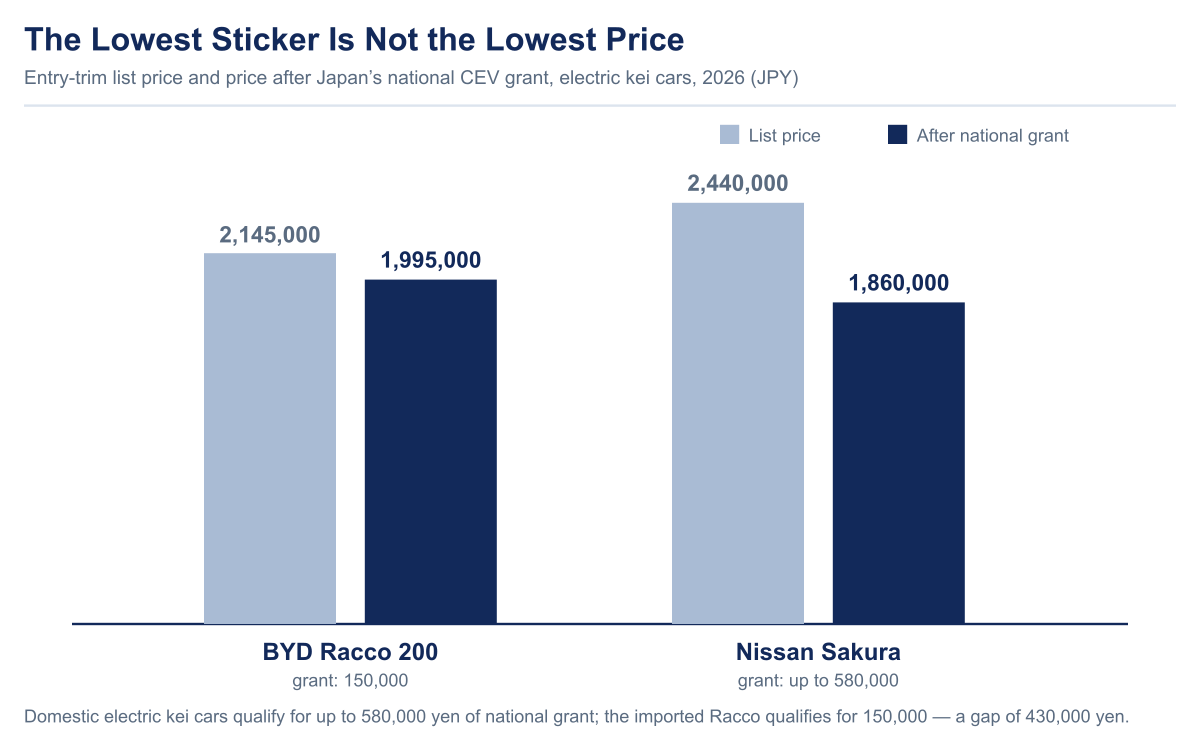
Electric kei cars from Japanese manufacturers qualify for up to ¥580,000. The Racco qualifies for ¥150,000.
Run the arithmetic on the showroom floor. A Racco 200 at ¥2,145,000 less ¥150,000 lands at ¥1,995,000. A Nissan Sakura, which starts around ¥2,440,000 — nearly ¥300,000 more expensive on the sticker — lands at roughly ¥1,860,000 if it draws the full grant. The imported car with the lowest list price in the category is not the cheapest car in the category once the paperwork is done. It is about ¥135,000 more expensive than the domestic model it was priced to undercut.
Prefectural and municipal governments layer their own grants on top of the national one, and those vary enough that the final gap differs by address. But the national scoring is the structural fact, and it applies everywhere. BYD’s grant was not always this small: its models previously drew roughly ¥350,000 or more, depending on the car, before the award was cut to ¥150,000 earlier in 2026.
No tariff was raised. No quota was imposed. The car simply costs more to own, and the reason sits in a spreadsheet.
Why BYD Says It Got No Credit for Chargers It Built
The criteria were revised again with effect from April 2026. Alongside the existing measures, the scoring now takes account of the stable supply of vehicle batteries under Japan’s Economic Security Promotion Act, in a policy environment where critical-minerals security has moved to the centre of Japanese and American industrial strategy alike. In plain terms, where your cells come from is now part of how much your customer gets.
BYD makes its own batteries in China. That is the company’s central structural advantage everywhere else in the world, and in this particular calculation it counts against it.
The other component is domestic infrastructure and after-sales presence: charging investment, service points, the physical apparatus of supporting a car over its life in Japan. BYD executives have complained publicly that the assessment gave the company no credit in the charging-infrastructure category despite its own investment in fast charging in Japan, while manufacturers without comparable deployment were credited. The ministry does not publish per-item scores, so this is the company’s account rather than a documented breakdown — but it is the account of the only party that has seen its own result.
The timing is worth noting for anyone running a product-planning calendar. A vehicle programme of this kind is locked years before launch. The Racco’s specification, pricing and business case were settled long before the April 2026 revision added supply-chain security terms to the scoring, and before the earlier cut that reduced BYD’s award to ¥150,000. The company committed to a single-market car under one set of rules and launched it under another.
I want to be careful here, because this is the point at which a foreign reader usually reaches for the word “protectionism” and stops thinking. A government is entitled to attach industrial-policy conditions to its own money, and battery supply security is a defensible thing for any country to buy with public funds. The United States wrote sourcing rules into its own EV credits for the same reason. The observation that matters commercially is narrower and more useful: in Japan, the decisive number in your pricing model may not be your cost, your margin or your landed price. It may be a score you did not know you were being given.
The Spec Sheet Japan Didn’t Expect
Strip the subsidy away and the Racco is a genuinely competitive piece of engineering, which is why the domestic industry is not treating it as a curiosity.
It fits the box exactly, as every kei car does — these vehicles are all built to within a few millimetres of the 3.4-metre and 1.48-metre limits — and it delivers 47 kilowatts, the ceiling the segment observes. Early buyers, in BYD Japan’s own account of its order book, cited cost-performance, equipment levels and build quality. The 80 percent skew toward the top trim suggests the car is being cross-shopped against well-equipped domestic kei models rather than treated as a budget import.
BYD’s problem in Japan has never been the product. It has been the network. Going into 2026 the company had roughly 69 outlets, including planned sites, across 38 prefectures — short of the 100 it had originally aimed for. It now says it will reach 100 by the end of 2026 and 120 by the end of 2027. A kei car is bought by people who will want it serviced within a few kilometres of home, often at the same place for fifteen years. That is a very different distribution problem from selling an imported saloon to an urban early adopter, and it is the reason the dealer count matters more than the spec sheet.
Suzuki Called It a Threat
The domestic response has been notably unrelaxed. Toshihiro Suzuki, president of the manufacturer with the largest minicar sales in Japan, has said plainly that a new phase of competition is beginning and that he regards BYD as a serious threat.
I spent a slow twenty minutes last month counting cars on a residential street in western Tokyo, the kind with a single lane, no pavement and a mirror bolted to a pole at every corner. Eleven of the nineteen parked cars were kei. Two were foreign brands, both German, both parked at the wider end of the street where the houses are newer. That ratio is the whole competitive question in one image: the segment that dominates the street is the one no importer has ever contested, and the segment importers do contest is the one that physically does not fit down most of it.
This is not the language Japanese executives normally use about foreign entrants in this segment, and the reason is that the kei category has functioned for years as a protected core. Margins are thin, volumes are enormous, and the customer relationship is local and durable. A competitor that arrives with a longer-range battery, an aggressive list price and the willingness to build a car that only works in one market is attacking the part of the business that funds everything else.
There is a second-order risk that Japanese executives are watching more quietly. If a Chinese manufacturer demonstrates that the kei box can be filled profitably from outside Japan, the Racco will not be the last one. The tooling argument that has kept foreign makers out of the segment for decades only holds while nobody has proved it can be entered on purpose.
What Operators Should Take From This

If you are planning a Japan entry in any regulated category — vehicles, appliances, medical devices, food, anything touched by a subsidy, a certification or a procurement list — the Racco is a useful case to keep on file, for four reasons.
First, the barrier is administrative, not commercial. Japan’s formal trade barriers in cars are gone and have been for decades. What replaced them is a set of qualification criteria that are published, legitimate and extremely specific about domestic presence.
Second, those criteria change. The CEV scoring was revised twice inside a single fiscal year, and the April 2026 revision added supply-chain security terms that no product-planning cycle could have anticipated when the Racco was designed. Build the assumption of revision into your pricing model rather than treating the current rules as fixed.
Third, localisation in Japan is deeper than translation and compliance. BYD did not adapt a car for Japan. It designed one that carries no regulatory advantage anywhere else on earth, then discovered that fitting the physical box was the easier half of the problem.
The corollary is that the diligence question is not “is this category open to us?” It is “what is the current scoring basis, who sets it, how often has it moved in the last three years, and which of its inputs can we actually change?” Some inputs — a service footprint, a domestic partner, local assembly — are within a company’s control if the investment is made early enough. Others, such as where a battery cell is manufactured, are the entire business model and cannot be traded away for a grant.
Fourth, the service network is not a post-launch cost. In a scored regime it can be an input to the score itself, which means the dealer and support footprint you build in year one may determine the price your customer sees in year three.
Frequently Asked Questions
Q. Can I buy a BYD Racco outside Japan?
A. Not at present. The Racco is built to Japan’s kei specification and BYD has presented it as a vehicle developed for the Japanese market alone, with no announced plans to sell it elsewhere. Its dimensions and 47-kilowatt output exist to satisfy a Japanese regulatory category, and there is no equivalent classification in the United States or Europe that would give the car any advantage.
Q. How much does the Racco actually cost?
A. List prices run from ¥2,145,000 to ¥2,497,000 — roughly $13,400 to $15,600 at about ¥160 to the dollar. After the ¥150,000 national grant the entry trim lands at ¥1,995,000. Local government grants vary by prefecture and can reduce that further.
Q. Why do Japanese kei EVs get a bigger subsidy than the Racco?
A. Japan’s CEV subsidy is scored rather than flat. The assessment covers battery supply security, charging infrastructure and after-sales presence in Japan, among other criteria, and the amount the buyer receives follows the maker’s score. Domestic electric kei cars qualify for up to ¥580,000; the Racco qualifies for ¥150,000.
Q. Does Japan charge a tariff on imported cars?
A. No. Japan eliminated its duty on imported passenger cars in 1978. Foreign brands nonetheless hold only a mid-single-digit share of new-car sales, which is why the interesting barriers in this market are almost never the ones at the border.
Q. Is the Racco actually selling well?
A. It is selling well relative to expectations for a foreign brand in this segment, and modestly in absolute terms. The 1,002 orders taken in its first thirteen days were the fastest start of any BYD model in Japan; the company’s target is 10,000 by the end of 2026, against a segment that registers well over a million cars a year.
The Box Was Never the Barrier
BYD did the hard, expensive, unglamorous thing that every consultant tells foreign companies to do in Japan. It did not localise a product. It built one from scratch to a specification that exists nowhere else on earth, accepted that the tooling would never be amortised across another market, and priced it below the incumbents.
And it still arrives at the dealership more expensive than the car it was built to beat, because of a scoring criterion it cannot satisfy from a Chinese battery plant.
There is no villain in this. Japan is buying supply-chain security with its subsidy budget, as the United States and the European Union are also doing, and it is being reasonably transparent about the price list. The lesson for anyone modelling a Japanese entry is simply that the border is not where the decisions are made. The decisions are made in the criteria, they are revised more often than your product cycle, and the difference between qualifying and not qualifying can be larger than your entire margin.
BYD has 1,002 orders and a ¥430,000 problem. Which of those numbers turns out to matter more will be visible by this time next year.
If you’re interested in this topic, the Japanese market more broadly, or what KETCHUPs is working on, we’d love to hear from you — please reach out via our contact form.
Japan Market Pulse is a weekly read on what the Japanese consumer-tech, food, and mobility markets are choosing to do, written for international operators who want to know what is happening before it shows up in the global trade press.
Subscribe at ketchups.co/japan-market-pulse.