

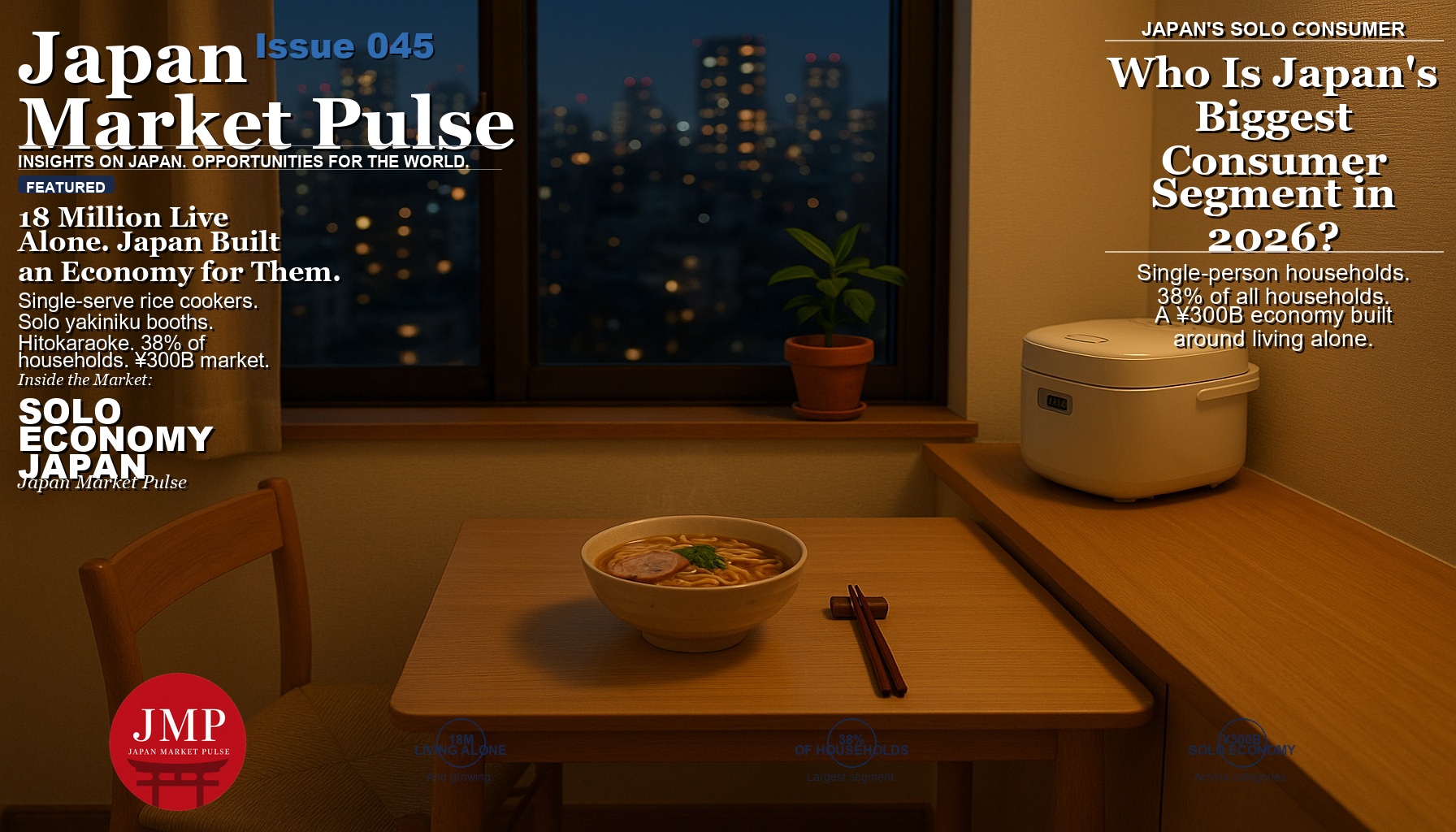
The Japanese word for it is hitorigurashi — “living alone.” And in Japan in 2026, hitorigurashi is not a temporary condition, a transitional phase between college and marriage, or a character note in a sad story. It is a primary lifestyle category, chosen and sustained by a growing and increasingly influential share of the population.
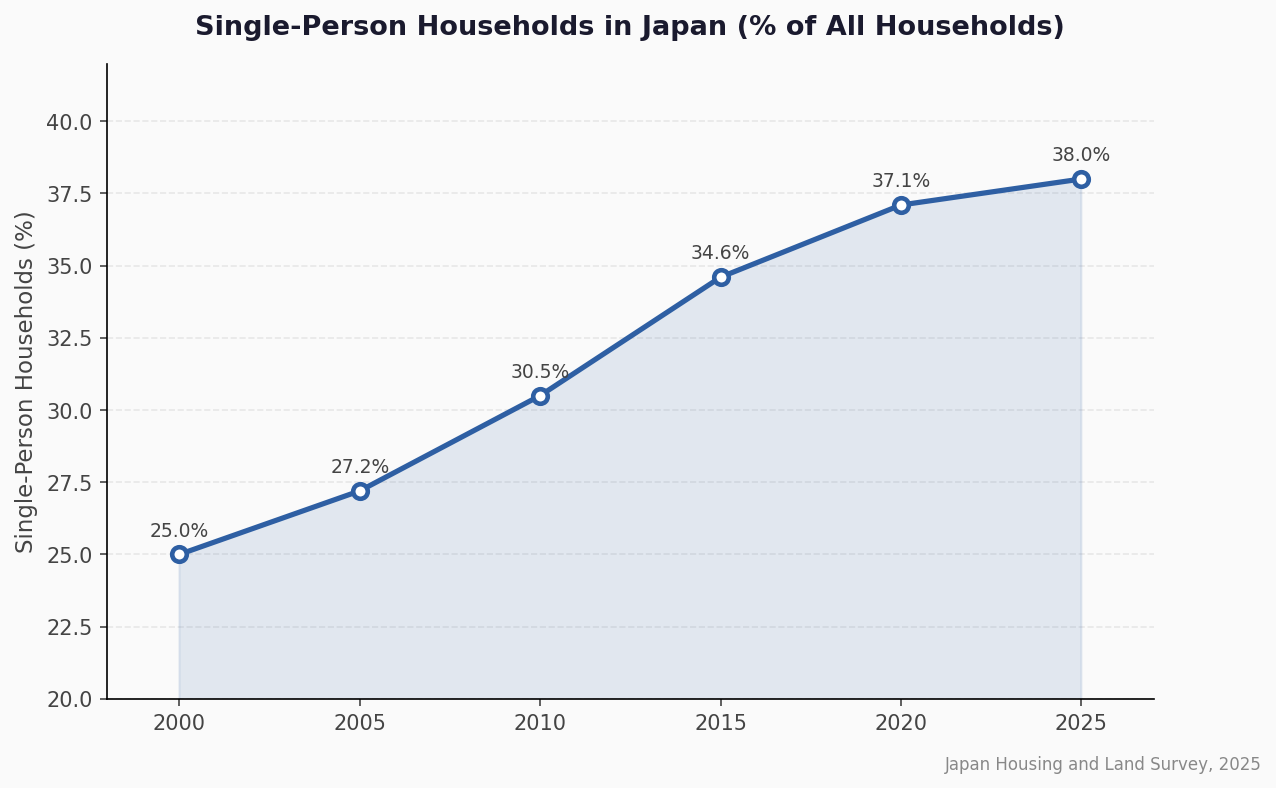
Japan’s 2025 housing census data confirms what demographers had been forecasting for years: single-person households now account for approximately 38% of all Japanese households, the largest single household type by size. That translates to roughly 18 million people living alone — a number that is larger than the entire population of the Netherlands and that has been growing steadily for decades.
The economic implications of this demographic reality are substantial and still being absorbed by most of the consumer brands, food companies, and housing developers that would benefit from understanding them. Japan has built, over the past twenty years, a significant economy of products, services, and infrastructure designed around the needs, preferences, and budgets of people who live by themselves. That economy is now large enough — estimated at ¥45 trillion, approximately $300 billion, across all affected categories — to merit the kind of strategic attention that most international brands have not yet given it.
Who Is Actually Living Alone
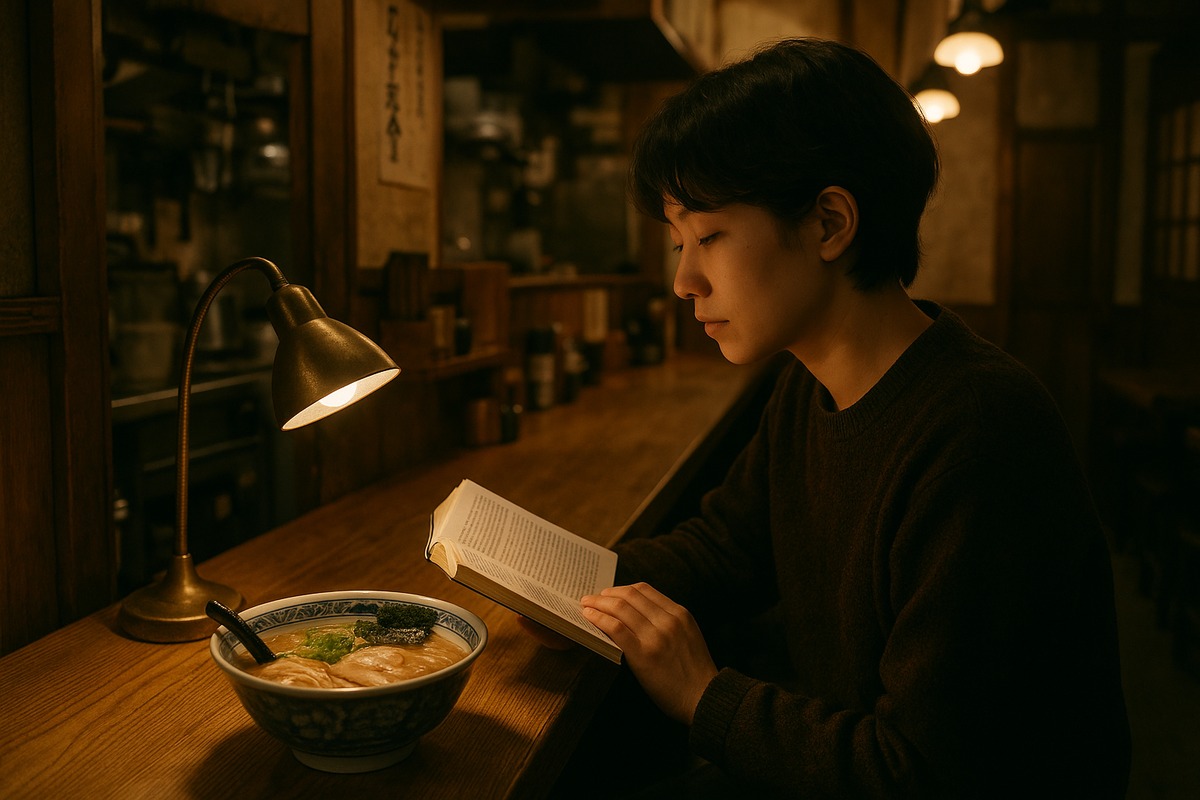
The popular narrative about solo Japanese living tends to center on one or both of two images: the overworked young professional in a tiny Tokyo apartment, and the elderly person left isolated by the collapse of multigenerational household norms. Both images contain truth. Neither is complete.
Japan’s solo living population spans six decades in age. Twenty-somethings who have moved to urban areas for work represent one cohort. Thirty- and forty-year-olds who have chosen career prioritization over partnership, or who have experienced divorce at rising rates, represent another. The baby boomer generation, now passing into their late seventies, represents perhaps the largest single cohort — millions of people who outlived spouses or never married and who are now managing households, healthcare decisions, and financial planning independently.
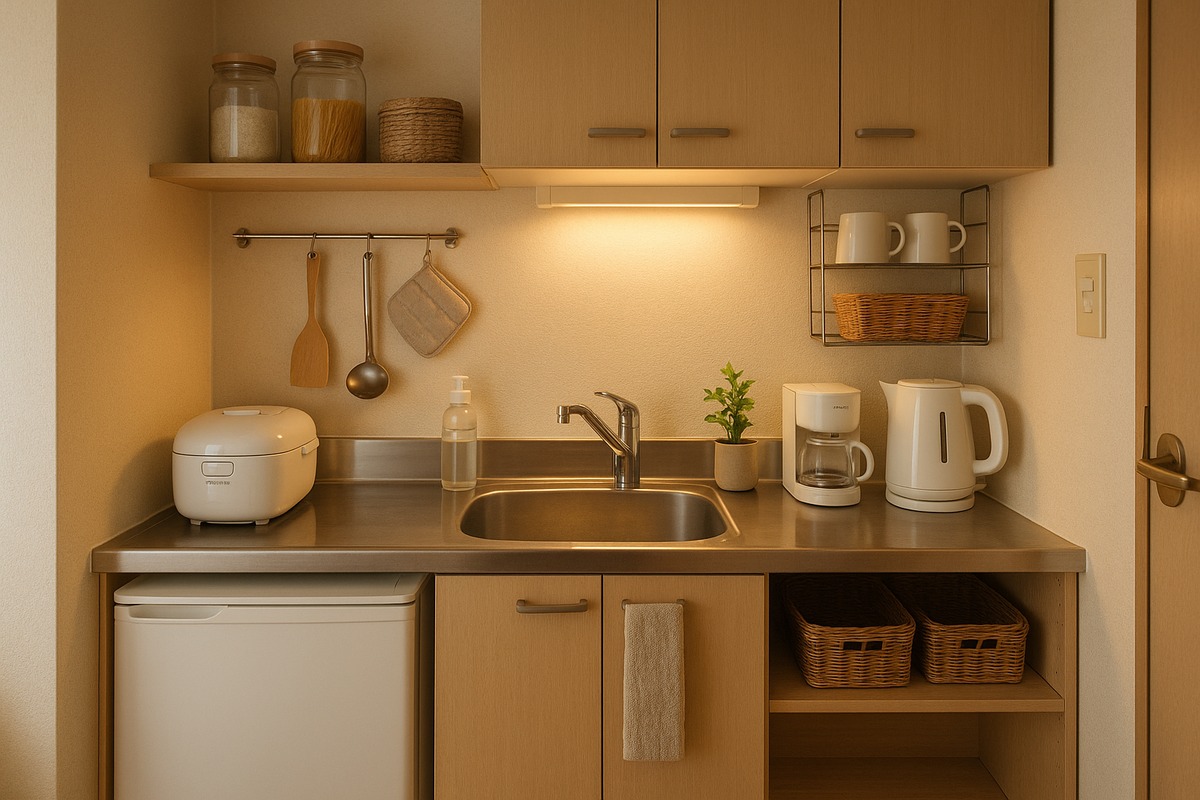
What all these cohorts share is not loneliness — the Western default assumption about solo living — but a particular set of consumer needs that differ structurally from household-based needs. They need smaller quantities of food, prepared with less time and waste. They need appliances designed for one person’s use. They need living spaces that function efficiently without the redundancy that multi-person households build in. And they need — increasingly — services and social structures that substitute for the functional support that family cohabitation would otherwise provide.
This consumer profile is not niche. It is mainstream Japan. And the brands that have built products and services specifically for it have, in many categories, beaten generic competitors by targeting it deliberately.
The Kitchen Revolution: Half-Portions, Micro-Appliances, and the Art of Cooking for One
Food is the category where Japan’s solo economy is most visible, most creative, and most instructive for international brands thinking about product design.
The challenge of cooking for one is as old as solo living itself, but Japanese food manufacturers have approached it with unusual engineering commitment. Consider the single-serve rice cooker. In most Western kitchen contexts, rice cookers are designed for three to six servings. In Japan, single-serve rice cookers with precise 1-go (180ml uncooked rice = 1 Japanese serving) capacity are a mainstream product category, sold in every home electronics store and on Amazon Japan with thousands of reviews. The Zojirushi NS-LGC05XB — a compact rice cooker that has attracted a small but devoted following outside Japan — is one example of a product designed explicitly for solo use that travels well internationally.
But the adaptation goes beyond appliance sizing. Japanese food manufacturers have developed an entire tier of packaging specifically for single-person consumption. Half-size instant noodle packs. Single-serve dashi stock sachets with pre-portioned amounts. Vacuum-sealed fresh fish portions sized for one meal. Even traditional condiments — miso paste, soy sauce, ponzu — are now sold in trial-size format alongside the standard containers, explicitly labeled for hitorigurashi use.
Grocery stores have adapted their fresh sections accordingly. Pre-cut vegetables in portion sizes designed for one meal. Half a cabbage, half a daikon, wrapped and labeled. Single-serve sashimi trays. This is not just a consumer courtesy — it represents a fundamental restructuring of fresh food supply chains to serve a population that now constitutes over a third of all households.
For international food brands planning a Japanese market entry, the packaging implication is clear and frequently underestimated. Products sized for Western family portions will not find shelf space in Japanese stores targeting the hitorigurashi consumer, and that consumer represents the country’s single largest household segment. Localization means more than translation.
Solo Dining: The Social Reinvention of Eating Alone
One of the most significant cultural shifts associated with Japan’s solo living trend is the normalization — and then the celebration — of solo dining.
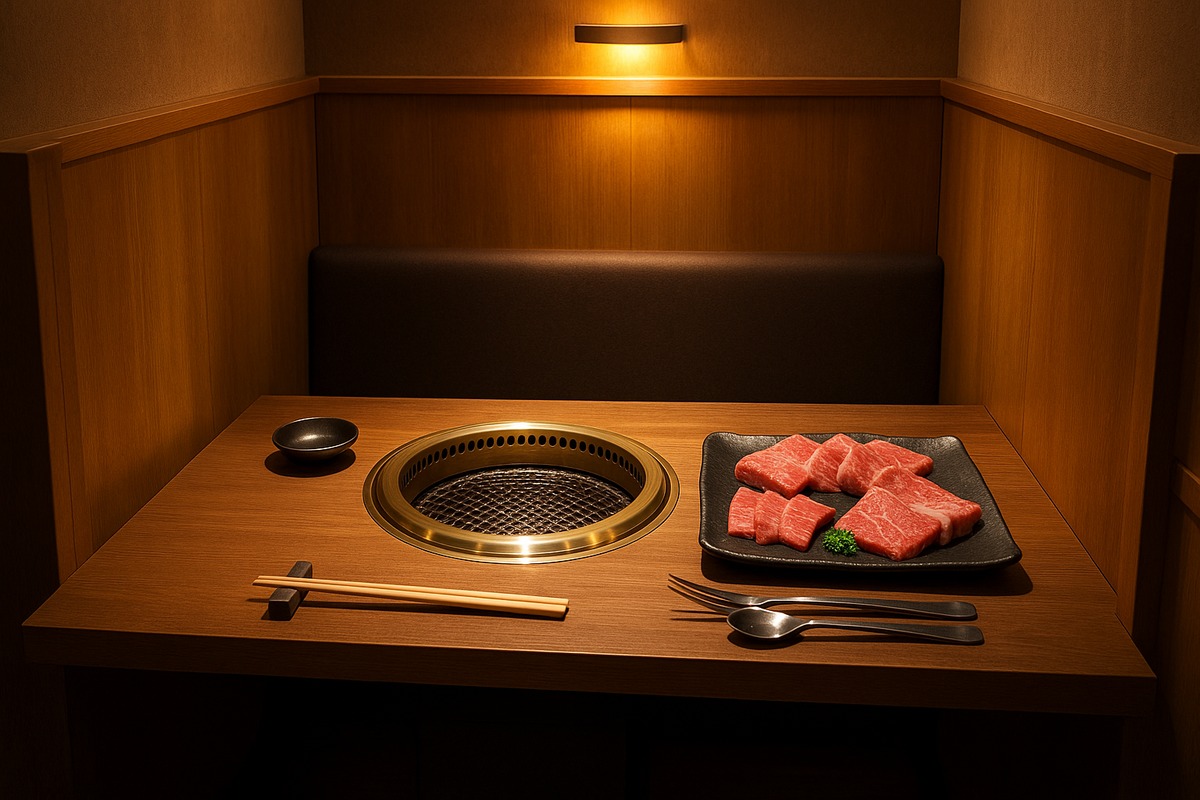
A decade ago, eating alone in Japan carried a mild but real social stigma, particularly in restaurants designed for group dining. A single diner at a yakiniku restaurant (where meat is grilled at the table) was uncomfortable in the most literal sense: the grill was too large, the portion sizes were designed for sharing, and the seating configuration did not accommodate a solo customer gracefully.
Yakiniku restaurants responded by creating solo dining rooms: small private booths with individual grills, personal ventilation, and menu options sized for one. The format has since spread across restaurant categories. Solo sushi counters. Solo ramen bars with book stands and reading lamps built into the counter. Solo karaoke rooms (hitokaraoke) that have become a distinct and thriving category. Solo family restaurant sections with tablet ordering that eliminates the need to flag down a server.
The commercial logic is straightforward: an untapped customer segment that had self-excluded from your category because the category didn’t accommodate them is a growth opportunity. Japanese restaurant operators solved this before their counterparts in other markets because the solo customer base in Japan became large enough, early enough, to justify dedicated infrastructure investment.
The hitokaraoke category is particularly instructive. Karaoke in Japan was always nominally social — you booked a room for a group, the per-person cost was reasonable, and the experience was collective. Solo karaoke initially seemed economically marginal: why would a chain invest in small rooms for single occupants? The answer turned out to be: because solo customers are willing to pay a premium for privacy and control, and because they come more frequently than group bookings precisely because they are not coordinating with other schedules.
Financial Products for Solo Seniors: The Category Nobody Talks About
The financial services implications of Japan’s solo economy are perhaps less visible but at least as large in aggregate as the consumer products implications.
The fastest-growing segment of Japan’s solo living population is seniors — people over 65 living independently, many without children in the same city or in some cases any surviving family members. This population is large — approximately 7 million people over 65 living alone — and is growing at a rate that has no historical precedent.
Their financial service needs are specific and underserved. Standard household insurance products assume that a family member is available to make emergency decisions — which is often not true for solo seniors. Standard end-of-life planning services assume the involvement of immediate family in healthcare and estate decisions. Standard credit assessment models favor household income stability over individual profiles.
Several Japanese financial services companies have begun addressing these gaps explicitly. Insurance products designed for solo seniors include emergency response components — annual check-ins, digital daily confirmation systems, emergency contact programs. Trust banking products have developed “solo senior trusts” that pre-designate social welfare organizations or trusted non-family individuals to manage assets and healthcare advocacy in the absence of family. Life care advisory services — which combine financial planning, housing transition support, and healthcare navigation — have emerged as a distinct industry serving this population.
For international financial services brands considering Japan, the solo senior segment represents a combination of large scale, specific underservice, and relatively low existing competition that is rare in developed market financial services. The market entry requires significant trust-building investment and local regulatory navigation, but the structural opportunity is genuinely large.
The Tech Layer: AI Companions and Smart Home for One

Technology companies have been among the fastest to recognize and design for the solo living market in Japan.
The most provocative category is AI companionship. Japan has a longer and more mainstream history with social robots and companion technology than almost any other country — AIBO, the Sony robotic dog, was a sensation in the 1990s; Pepper, the humanoid service robot, became a fixture in stores, hotels, and government buildings. This cultural familiarity with non-human companions has made Japan an unusually receptive market for AI companionship services.
Services like Rinna (an AI conversational character developed by Microsoft and now operating as an independent company) have attracted millions of users in Japan who engage in regular text-based conversations with AI companions. The demographics skew toward solo seniors and young solo professionals — exactly the hitorigurashi population. The companionship function is not a substitute for human relationship but a supplement to it: a reliable, always-available conversational partner for people whose daily lives may have fewer human interactions than household residents experience.
Smart home technology for solo living has developed specific adaptations in Japan. Safety sensors — designed to detect unusual inactivity and alert emergency contacts or monitoring services — are a standard feature of housing designed for solo seniors, increasingly provided by property management companies as part of the rental package rather than purchased by tenants individually. Single-person smart cooking appliances, voice-activated home management for occupants who may have mobility limitations, and connected medication management systems all address the specific vulnerability landscape of solo living in a way that generic smart home products do not.
What International Brands Should Take Away
The solo economy in Japan is not a market within a market. It is rapidly becoming the market itself. For international brands evaluating Japan market entry, the hitorigurashi consumer profile deserves consideration across every category, not as a specialty segment but as a mainstream positioning target.
Several principles emerge from studying how successful Japanese brands have approached this consumer.
Design for constraint, not deficiency. The most successful hitorigurashi products in Japan do not position solo living as a problem to be solved or a diminished version of family living. They treat the solo consumer’s constraints — space, time, portion size — as design specifications that produce genuinely better products. A mini hot pot for one designed around one person’s meal rhythm is not a smaller family hot pot. It is a different, and often better, product.
Solo does not mean asocial. Japan’s solo economy includes a thriving social infrastructure — hitokaraoke, solo dining rooms, community event series designed for solo participants. International brands that assume solo consumers want to be left alone have misread the market. Solo consumers want control over their social engagement, not its elimination.
The premium solo market is large. Solo consumers in Japan typically have higher discretionary income per person than equivalent household residents because they are not sharing costs. A 45-year-old professional living alone in Tokyo has a discretionary spending profile that is, in many categories, more attractive than a 45-year-old supporting two children in the suburbs. Premium products in food, travel, technology, and personal care have consistently found strong markets in the solo segment.
Japan built its solo economy over decades in response to demographic pressures that are now appearing in South Korea, Germany, Sweden, and — more slowly — the United States. Brands that understand what Japan did with the hitorigurashi consumer will be better positioned for every market where solo living is growing. That is most of the developed world.
This article contains affiliate links. If you purchase through these links, we may earn a small commission at no extra cost to you.
If you’re interested in this topic, the Japanese market more broadly, or what KETCHUPs is working on, we’d love to hear from you — please reach out via our contact form.
Japan Market Pulse is a weekly read on what the Japanese consumer-tech, food, and mobility markets are choosing to do, written for international operators who want to know what is happening before it shows up in the global trade press.
Subscribe at ketchups.co/japan-market-pulse.