

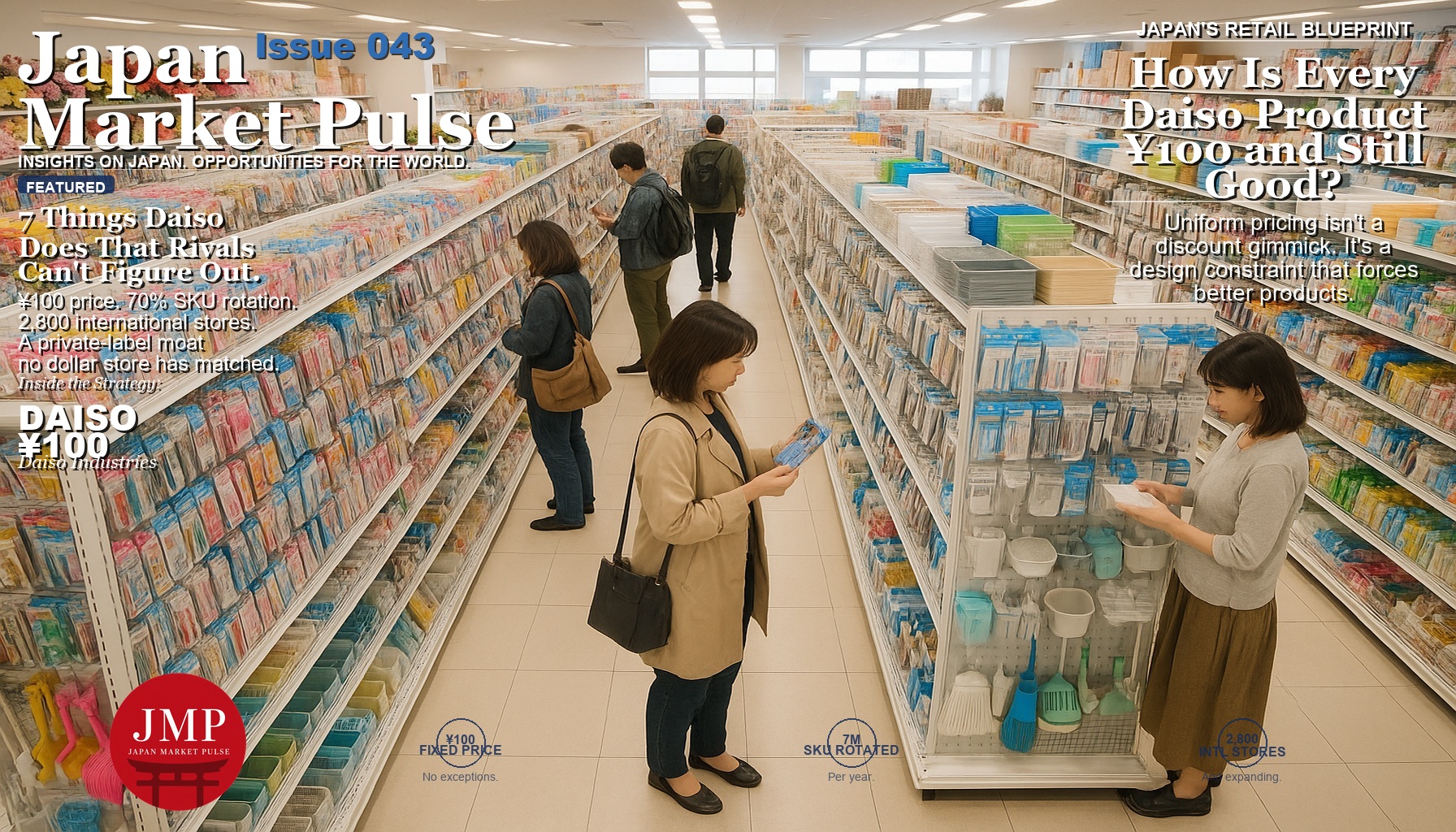
The first time you walk into a Daiso, you might spend ten minutes looking for the catch.
The towels are good. The kitchen tools are thoughtfully designed. The stationery is better than what most American office supply chains stock. The packaging is clean and competent. And everything — the towels, the kitchen tools, the stationery, the packaging — costs the same: ¥100 plus tax.
There must be a catch. There isn’t. This is just Daiso.
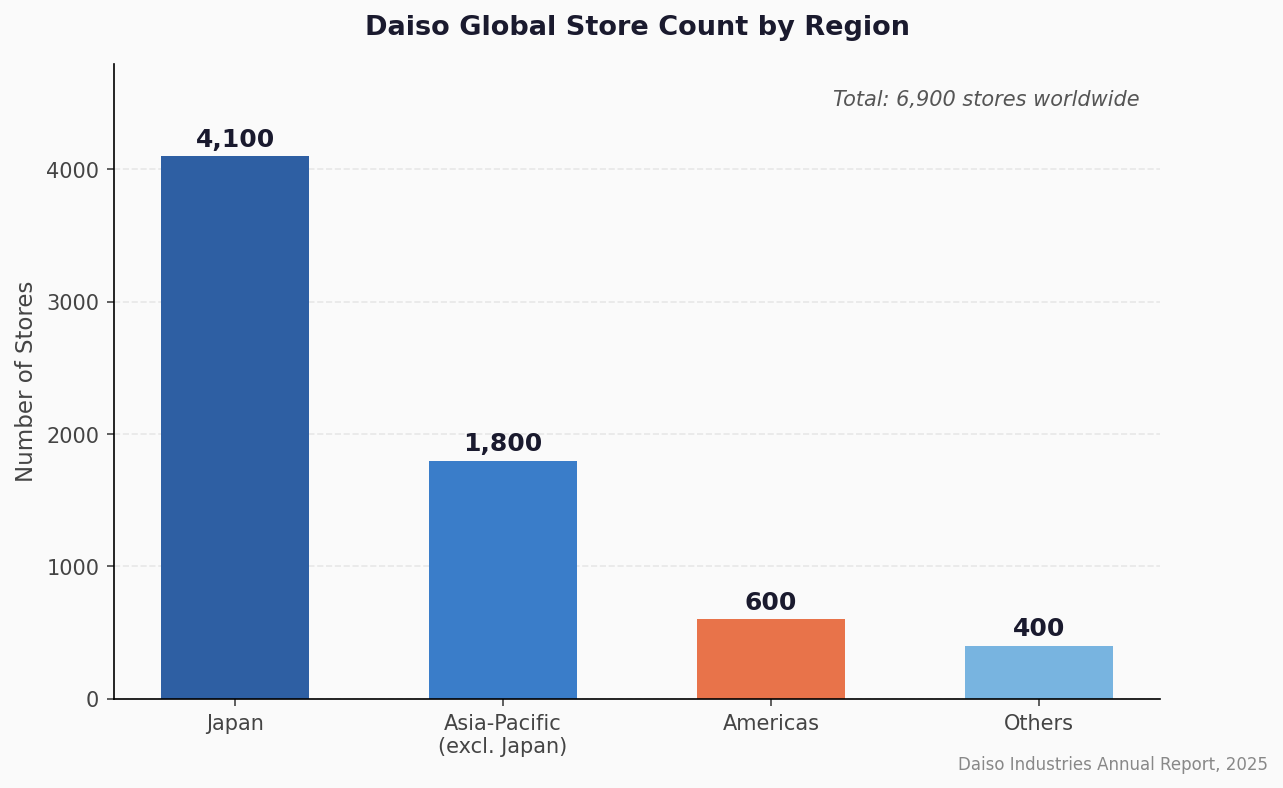
Japan’s dominant ¥100 store chain has over 4,100 stores in Japan and approximately 2,800 internationally across Australia, Singapore, South Korea, Taiwan, the United States, and elsewhere. Annual sales exceed ¥600 billion. Its parent company, Hiroshima-based Daiso Industries, was founded in 1977 by Yasuaki Kadoya, a man who sold items from the back of a van before opening his first store. The van is gone. The pricing philosophy has never changed.
But the real story of Daiso is not pricing. It is the set of operational and design decisions behind the pricing that American retail has consistently failed to replicate, despite several attempts. Understanding those decisions is, I would argue, one of the most useful exercises available to any international brand thinking about Japanese retail.
1. Uniform Pricing Is Not a Gimmick. It Is a Design Constraint.
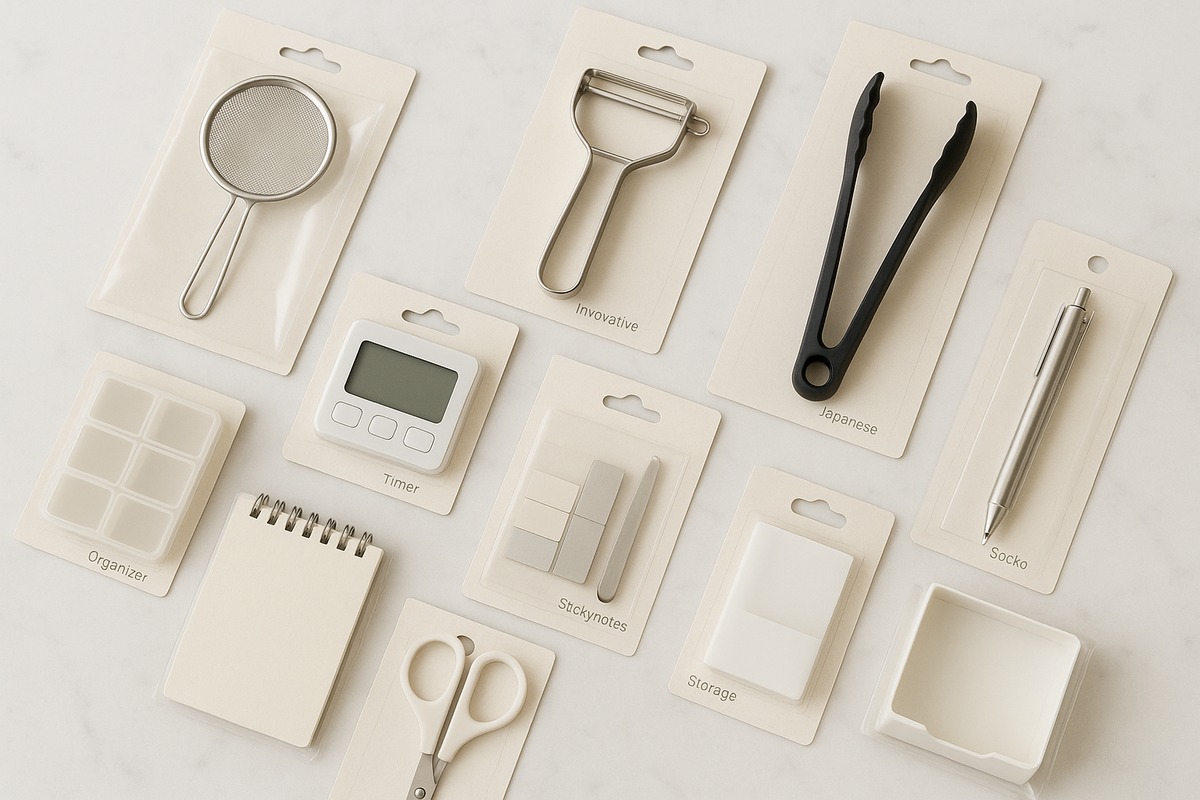
Daiso’s ¥100 price point is often described as a marketing strategy. It is more accurately described as a design constraint that shapes every other decision the company makes.
When every item costs the same, the consumer’s decision process changes fundamentally. There is no comparison shopping between items. There is no anxiety about whether a slightly more expensive version is worth the premium. The only question is: do I want this or not? This cognitive simplification turns the shopping experience into something closer to browsing — a low-stakes, high-curiosity state in which consumers buy more impulsively and feel better about doing so.
Daiso’s product development teams understand this constraint intimately. Because there is no upsell option, every product must succeed or fail purely on whether customers pick it up and bring it to the register. This ruthless elimination of price-based differentiation forces the team to invest in design, packaging, and display quality that communicates value immediately and viscerally.
American dollar-store chains adopted the ¥100 / $1 price point format but largely did not adopt the design philosophy. The result is a category that many American consumers associate with low quality rather than value — the opposite of how Japanese consumers experience Daiso.
2. New Products Every Two Weeks, 70% of SKUs Changed Annually
Daiso refreshes its product lineup with an aggressiveness that most retailers would find uncomfortable. Approximately 70% of its SKU mix changes in any given year, with new products arriving in stores roughly every two weeks. The total active SKU count is approximately 70,000 globally.
This velocity is possible because Daiso operates a tightly integrated private-label development process. Unlike retailers that source products from third-party brands and negotiate placement, Daiso develops the majority of its products in-house, working directly with manufacturing partners — predominantly in Japan, China, and Southeast Asia — on a rapid iteration cycle.
The practical effect is that regular Daiso customers develop a behavior pattern of visiting frequently because they know the inventory will have changed. This is a behavior more commonly associated with fashion retail (Zara, H&M) than with general merchandise. Daiso has achieved it in a product category — household goods, stationery, seasonal items — where novelty is not the obvious draw.
For any brand operating in or studying Japanese retail, this lesson is important: Japanese consumers have been trained by Daiso and the broader convenience store culture to expect frequent product rotation. A product or store that looks the same every visit loses appeal quickly. Novelty is not a nice-to-have feature in Japanese retail. It is an operational expectation.
3. The Store Is the Product. Not the Items In It.
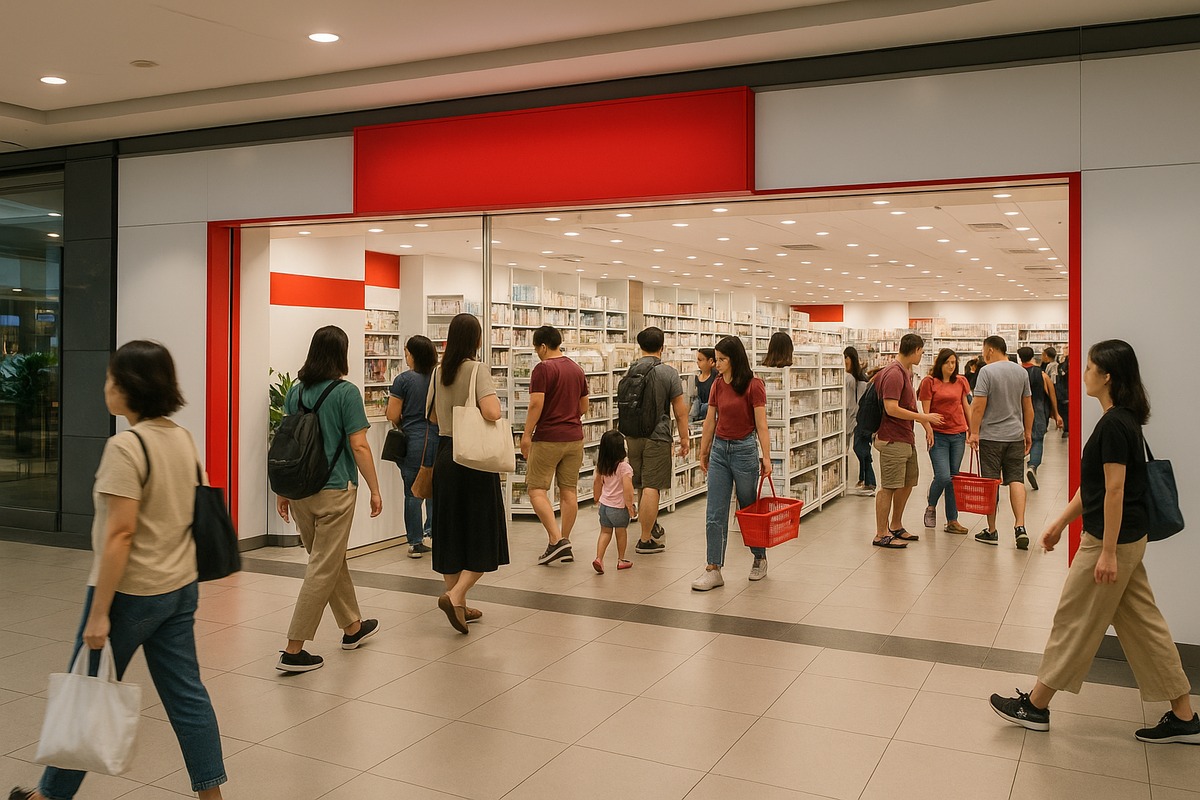
Walk into the Daiso in Shibuya’s Mark City mall on a Saturday afternoon and observe not just what people are buying but how they are moving through the store. Most shoppers enter without a specific item in mind. They wander the aisles systematically, picking things up, examining them, and returning some while keeping others.
Daiso’s store layout is engineered for this behavior. The aisle configuration creates a path that most shoppers follow naturally, passing through each product category in turn. The shelf height is kept low enough to maintain sightlines across the entire floor — no section feels hidden or separate. Seasonal displays and limited-edition items are positioned at natural decision points along the standard path.
This is a well-understood retail design principle, but Daiso applies it with unusual consistency. The visual harmony of the store — similar packaging format across all categories, consistent color palette, aligned shelf presentation — creates a browsing environment that feels calm rather than overwhelming despite the enormous SKU count. Japanese retail design generally tends toward visual order, but Daiso’s execution of it is particularly deliberate.
4. Quality Is Taken Seriously — and So Is Quality Perception
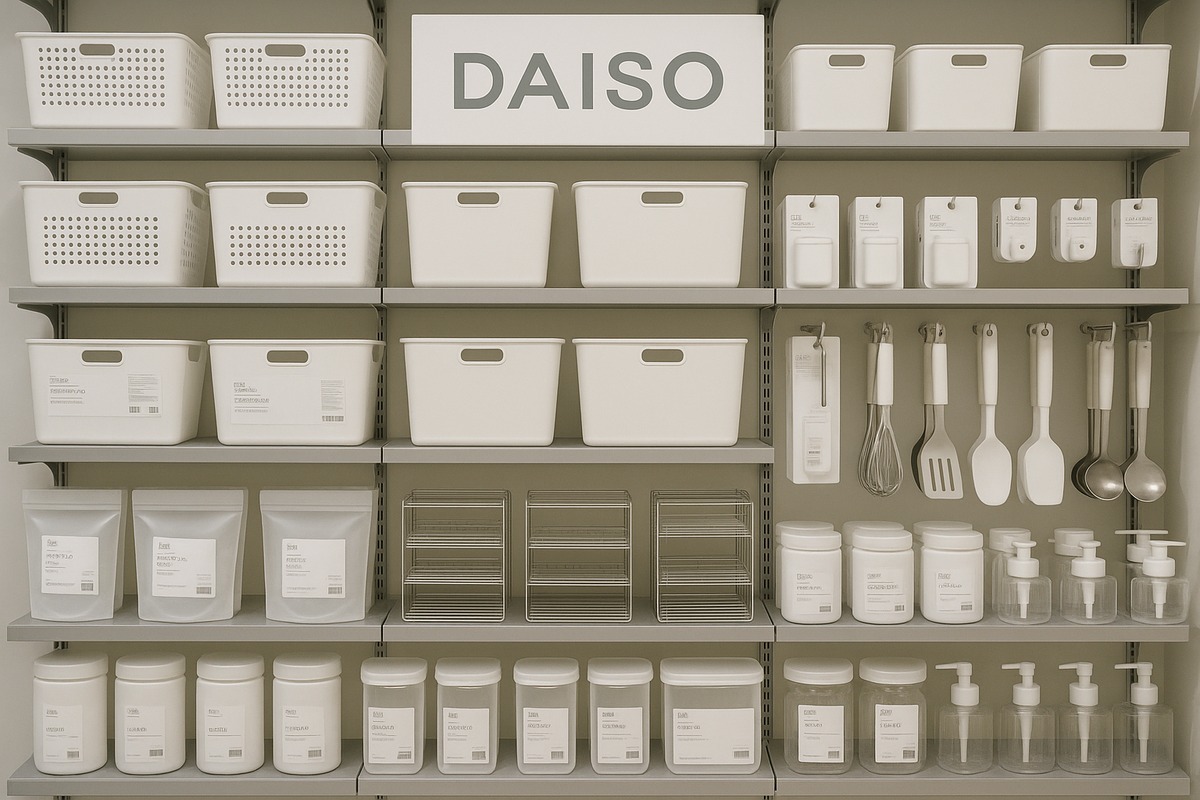
The most persistent misconception about Daiso outside Japan is that ¥100 products are necessarily low quality. Some are. The ¥100 wine glasses are not designed to impress a sommelier. But a meaningful proportion of Daiso’s product range — particularly in kitchen tools, stationery, and organizational goods — competes credibly with products at three to five times the price in Western markets.
This quality strategy is conscious. Daiso’s product development process includes multiple rounds of durability testing and functional testing before items reach shelves. The company has also learned that certain categories — cooking tools, scissors, storage products — are the gateway through which skeptical new customers become regular shoppers. A first visit that produces a good kitchen peeler or a reliable set of measuring cups converts a casual browser into a repeat customer.
Internationally, this quality credibility has been one of Daiso’s most effective growth tools. The Daiso Japanese Kitchen Tools category on Amazon has a dedicated following in the US, Australia, and Singapore. Customers who discovered Daiso while traveling in Japan and wanted to replicate the experience at home represent a meaningful share of international e-commerce traffic to Japan-focused product sellers.
5. International Expansion Is Happening Faster Than You Think
Daiso’s international store count is already larger than most Western retailers realize. With approximately 2,800 locations outside Japan, Daiso is bigger internationally than many well-known American specialty chains.
In the United States, Daiso has concentrated its physical retail presence on the West Coast, particularly in California’s large Japanese-American and Asian-American population centers. The Santa Clara location — one of the highest-revenue Daiso stores outside Japan — routinely draws customers who drive 45 minutes specifically to browse the import inventory that is not available online.
Australia has been perhaps Daiso’s most successful international market. Over 70 stores serve a population of 26 million in a country with no equivalent domestic competitor. The Australian success has been notably driven by mainstream non-Asian-origin consumers who discovered Daiso through word of mouth rather than ethnic marketing, a pattern that suggests the brand’s appeal is broader than its Japanese positioning might imply.
The company has also begun testing higher price points internationally. In markets where ¥100 ($0.65–0.70 at current exchange rates) is insufficient to cover import and logistics costs, Daiso has moved to $1.50, $2.00, and $3.00 price points for specific categories without meaningful consumer resistance. This suggests that the brand equity — “better than expected quality at a surprising price” — is portable across price points, not fixed to ¥100 specifically.
6. Private Label Strategy: What Daiso Knows That Dollar Tree Doesn’t
Daiso’s private label architecture is one of the least-discussed but most important components of its model. Unlike Western dollar-store operators that typically source from third-party brands and private-label manufacturers who also supply other retailers, Daiso has invested deeply in exclusive product development.
This means a significant portion of Daiso’s inventory is not available anywhere else. Not from the same manufacturer. Not from a similar vendor at a different price. Only from Daiso. This exclusivity creates genuine differentiation in categories where the product itself might otherwise be a commodity.
The mechanism is Daiso’s direct relationships with manufacturers — predominantly in Japan and China — who develop products specifically to Daiso’s specifications on a volume-committed basis. Daiso shares sales data, customer feedback, and category trends with these partners, functioning more like a collaborative product developer than a traditional buyer. The resulting products tend to be better adapted to actual Japanese consumer behavior than generic equivalents from the same factories.
For Western brands seeking entry into Japanese retail, the Daiso model provides a useful data point: Japanese consumers respond to products that appear to have been designed with their specific context in mind, not adapted from elsewhere. This expectation of contextual fit extends far beyond the ¥100 store category.
7. The Premium Experiment: Standard Products, Threeppy, and the Next Chapter
Daiso’s parent company has acknowledged explicitly that the ¥100 price point will eventually face structural pressure from inflation and cost increases. The response has been to quietly build higher-tier sub-brands.
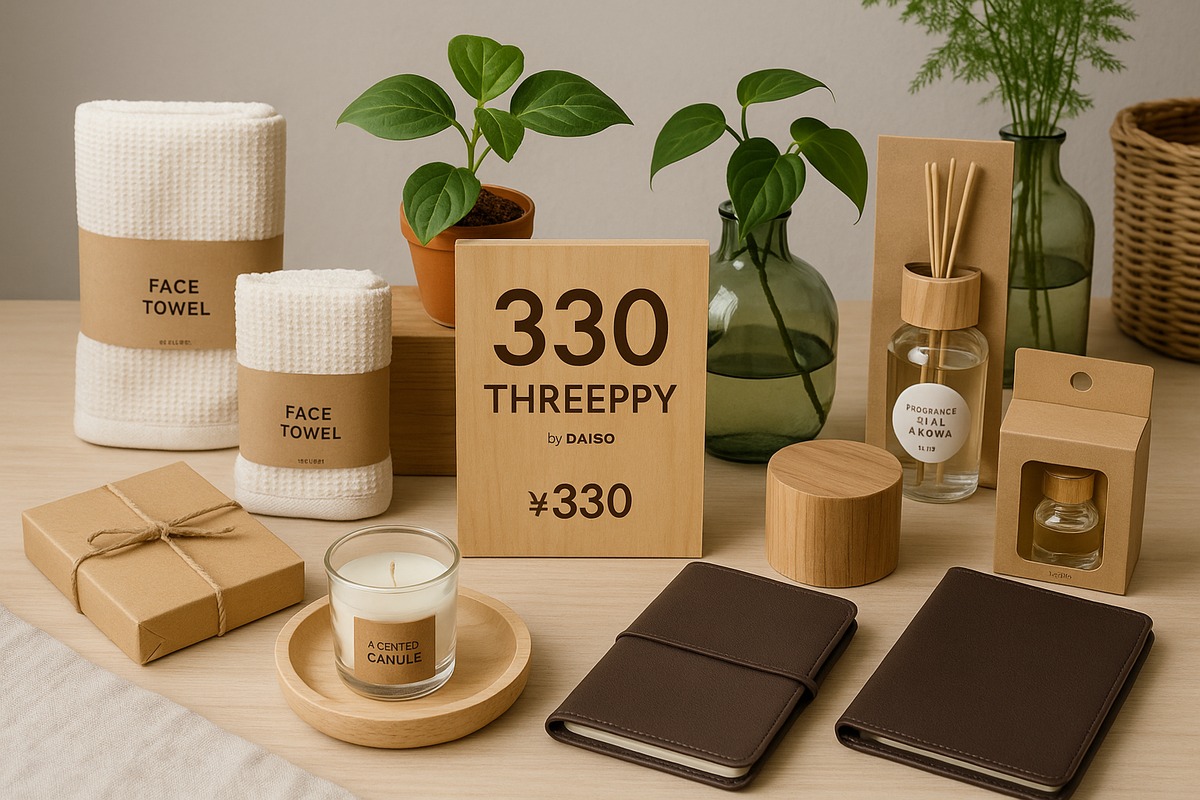
Standard Products is Daiso’s premium line, selling at ¥300–¥1,000 per item with a design aesthetic that skews Scandinavian-influenced minimalism. Threeppy (a portmanteau of “three” and “happy”) operates at the ¥330–¥1,100 tier. Both brands operate as separate stores and also as in-store sections within larger Daiso locations.
The strategic logic is sound. Customers who developed their ¥100 store habits in their twenties are now in their thirties and forties with larger homes, greater disposable income, and evolved taste. Daiso is attempting to grow with them without abandoning the core value proposition.
The early signs are encouraging. Standard Products locations in Shibuya and Ikebukuro have consistently positive reviews and frequent media coverage — a notable achievement for a retailer positioned as a ¥100 store’s upmarket sibling. Whether the premium extension can generate real margin at scale remains to be seen, but the experiment is serious and funded.
What This Means for International Brands
The Daiso story carries several implications for international companies thinking about Japan.
Price alone is not the value proposition. The ¥100 price point is the hook, but design quality, product curation, and the browsing experience are what sustain the relationship. International brands that compete primarily on price in Japan will consistently underperform relative to those that compete on fit-to-context.
Rotation creates loyalty. Japanese consumers are trained by Daiso and convenience store culture to expect novelty. Brands that plan a Japanese retail strategy around static assortments will lose attention to those that build in seasonal and limited-edition refresh cycles.
Private label is a threat. For brands in categories where Daiso has invested in private label product development, competing at the mass end of the market is genuinely difficult. The more viable strategy is typically to position clearly above the ¥100 tier and invest in differentiation signals that Daiso cannot replicate: brand story, provenance, sustainability, or the kind of international social proof that Japanese consumers increasingly value.
The ¥100 store that started in a van in Hiroshima is now a global retail force that understands Japanese consumers better than most of the companies trying to sell to them. That is the catch.
This article contains affiliate links. If you purchase through these links, we may earn a small commission at no extra cost to you.
If you’re interested in this topic, the Japanese market more broadly, or what KETCHUPs is working on, we’d love to hear from you — please reach out via our contact form.
Japan Market Pulse is a weekly read on what the Japanese consumer-tech, food, and mobility markets are choosing to do, written for international operators who want to know what is happening before it shows up in the global trade press.
Subscribe at ketchups.co/japan-market-pulse.