Campaign Teardown · Makuake
Gatebox3: 10 Years of Brand Trust, Zero Ad Spend
Gatebox3 hit its ¥5M goal in under a minute and passed ¥45M in 24 hours — with confirmed zero Meta ad spend. Here is what actually replaced paid acquisition.
Gatebox3 crowdfunding teardown with campaign visuals, funding charts, source attribution, and Japan launch lessons.
Campaign Teardown · Makuake
Gatebox3 hit its ¥5M goal in under a minute and passed ¥45M in 24 hours — with confirmed zero Meta ad spend. Here is what actually replaced paid acquisition.
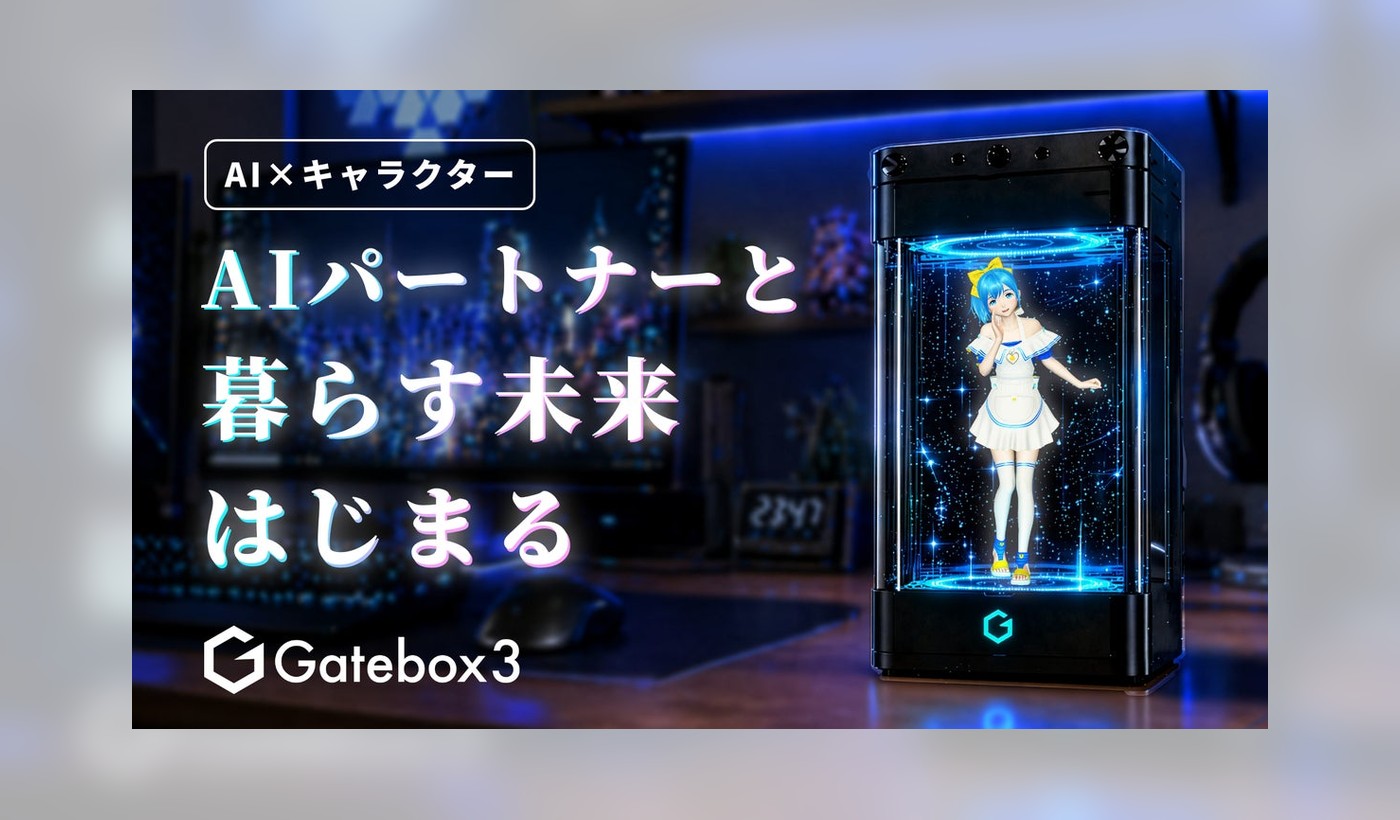
Gatebox3 is the third-generation “character summoning display” from Gatebox Inc. (formerly Winkl Inc.), an Akihabara-based hardware maker founded in February 2014. The device pairs an OLED display with roughly 300 built-in LEDs to project a VRM-format 3D character into a box on your desk, supports more than 70 emote motions, and ships bundled with the company’s AI companion software, “Aizuma Hikari.” It is a PC-connected successor to the standalone projector-based models the company sold in 2016 and 2019.
The campaign launched on Makuake on April 29, 2026, with a modest funding goal of ¥5,000,000 over a 150-day, all-in window closing September 25, 2026. It reached that goal in under a minute. Within 24 hours, pledges had passed ¥45,000,000 — about nine times the target and roughly 61% of everything the campaign would raise in its first 80 days. The top pricing tier, a 35%-off unit capped at 100 backers, sold out in about an hour.
As of this snapshot (July 18, 2026, with the campaign still open), Gatebox3 had raised ¥73,200,000 from 495 backers — 1,464% of its goal. Units are due to ship at the end of March 2027, with general retail expected from April 2027 at an anchor price of ¥200,000 (tax excluded).
The first thing worth ruling out is paid social advertising. A Meta Ad Library query — run both by keyword and by the advertiser page ID for Gatebox’s official Facebook page — returned zero active or historical ads, in Japan and worldwide. No Meta ad spend, in other words, produced a one-minute goal completion and a ¥45M opening day.
What replaced it was a combination of assets built over a decade, not a single tactic:
None of this happened in isolation. It sits on top of ten-plus years of company history: a 2017 capital and business alliance with LINE Corp, independence from the LINE Yahoo group in 2024, and a ¥230M seed round in April 2025 led by PKSHA Algorithm Fund. The campaign’s speed reads less like a marketing trick and more like a decade of brand equity being converted into a single 24-hour spike.
Gatebox ran a ChatGPT-linked version of the product on Makuake in 2023, and the two campaigns make a useful before/after comparison:
Total funds raised are up about 1.4x, even though the backer count is slightly lower — 495 versus 524. The gap is explained by price: Gatebox3’s four tiers run from ¥130,000 to ¥160,000, meaningfully above what the 2023 campaign is understood to have charged, and the average pledge rose by roughly 50% as a result. In practical terms, the company raised more money from a slightly smaller audience by selling a higher-priced product to a base that had already shown willingness to pay in 2023 and, before that, in a 2023-24 CAMPFIRE campaign for a smartphone version of Gatebox (¥3,000,000 goal → ¥4,702,500 raised, 134 backers).
Structured like an executive launch dashboard: audience asset, offer window, and conversion proof are separated for diagnosis.
It’s tempting to read “zero Meta ad spend, 1,464% of goal” as a formula: skip paid acquisition, lean on organic and founder content, and the campaign takes care of itself. The data doesn’t support that generalization, and a comparison inside our own research series makes the point directly. A separate Makuake campaign we profiled, KOTTI — a company founded in 2020 with no prior track record in this product category — also ran zero Meta ads, and also had no independent press verification of its opening-day numbers. Its total raise came to roughly 6% of Gatebox3’s, from about a quarter of the backers.
Both campaigns avoided paid social. Only one had ten years of brand history, two previous successful crowdfunding campaigns, a continuously maintained landing page, a founder with an existing personal following, and a media list willing to cover the launch without being pitched a wire release. The zero-ad-spend headline is true for both companies; the outcome is not remotely comparable. What separates them is everything Meta’s ad platform doesn’t measure — accumulated trust, prior proof of delivery, and a pre-built audience.
For a brand entering the Japanese market without that history, the more useful lesson from Gatebox3 isn’t “don’t advertise.” It’s what to start building now so that a future campaign doesn’t have to rely on paid reach at all: a landing page that stays live and updated well after a campaign closes rather than going dark, a named person — not just a brand account — who posts consistently and is recognizable before the campaign starts, and pricing built around hard unit caps rather than vague time-limited discounts, which read as more credible scarcity to backers. None of that replaces advertising in a first campaign. It’s the groundwork that, a decade in, can make advertising optional.
Source: Makuake project page (makuake.com/project/gatebox3), Meta Ad Library query, PR TIMES releases, and Gatebox Inc. activity reports, compiled by KETCHUPs Inc. Figures are a snapshot as of July 18, 2026; the campaign runs through September 25, 2026, and totals may have grown since.
Tell us about your product and we will come back within 48 hours with an honest read on its fit for the Japanese market – including what comparable campaigns have done.
We use cookies to measure how this site is used. Analytics cookies are only set if you accept. See our Privacy Policy.