

Disclosure: This article is published by KETCHUPs, a Tokyo-based trading and brand-development firm. All content is editorial.
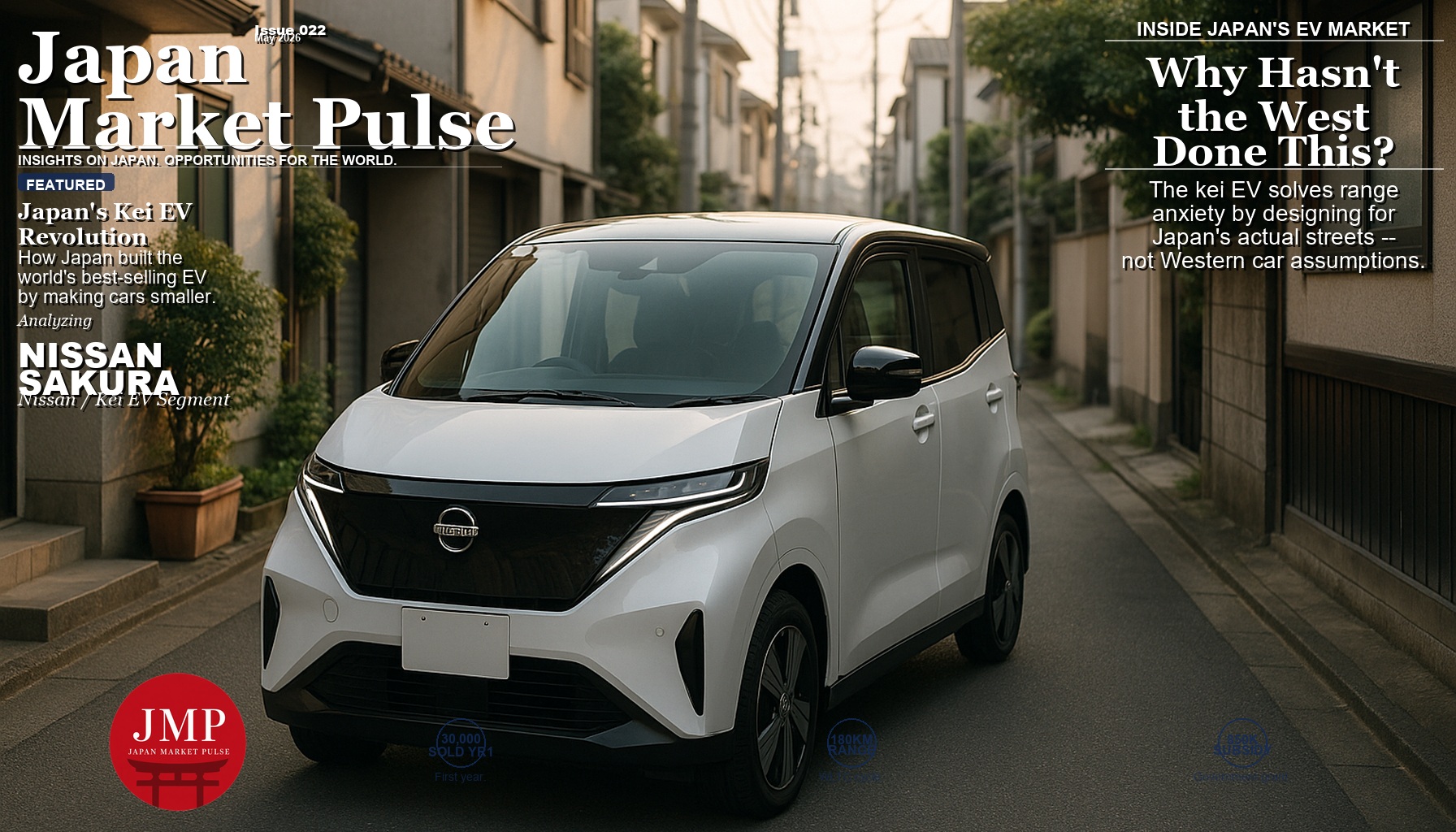
In May 2022, Nissan launched a new electric vehicle in Japan. No global fanfare, no livestream event, no Elon-style theater. Just a quietly competent press release and a sticker price of ¥2,330,000 — roughly $15,500 at current exchange rates.
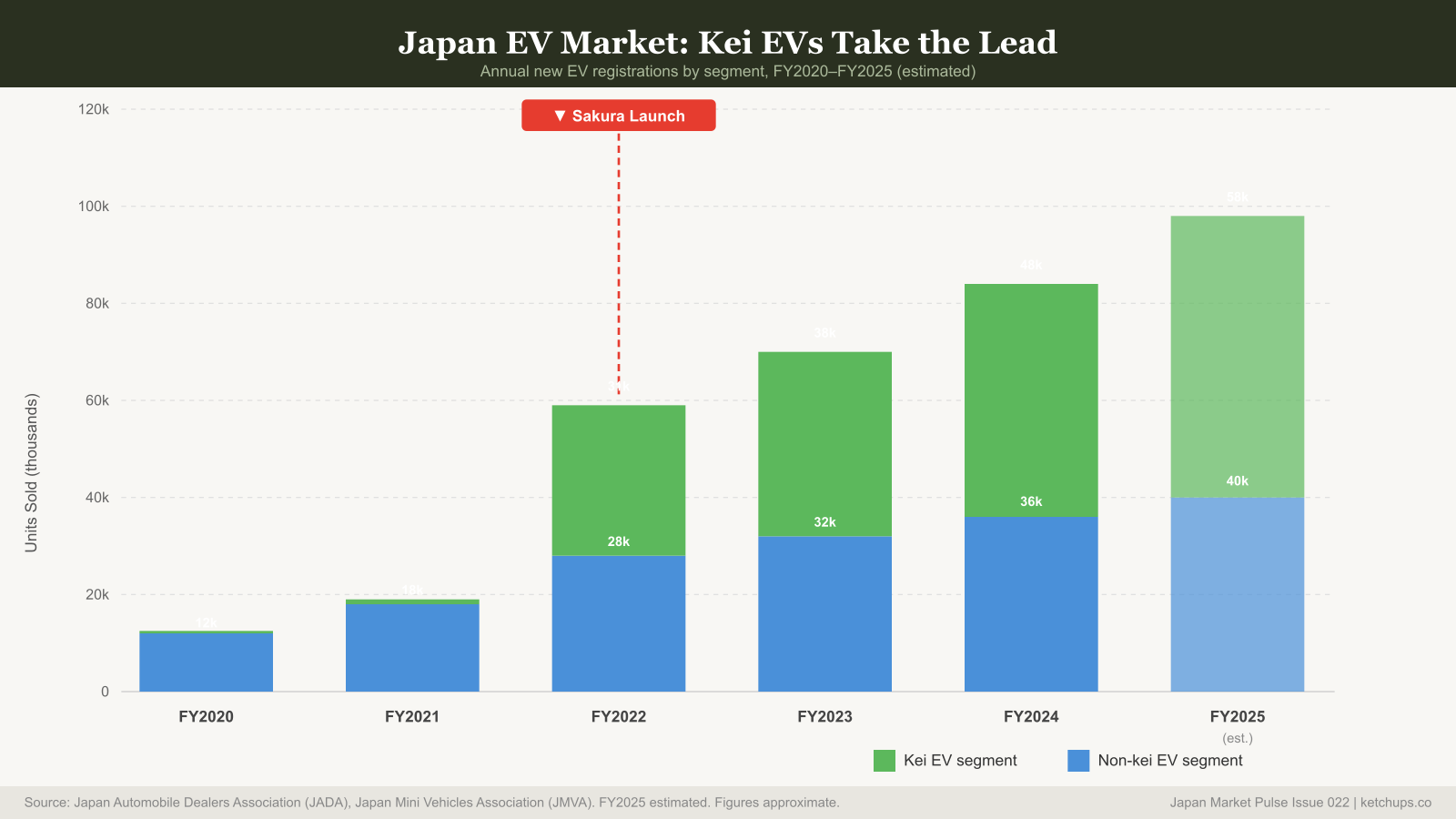
The Nissan Sakura went on to become the best-selling EV in Japan for two consecutive fiscal years. It outsold the Tesla Model 3. It outsold every other EV in the country. In FY2022, it moved over 30,000 units. Not bad for a car that won’t make it onto a single American automotive influencer’s YouTube channel.
The Sakura is a kei car. For those unfamiliar: kei is a Japanese regulatory category for small vehicles — maximum 3.4 meters long, 1.48 meters wide, engine displacement capped at 660cc for combustion models. Think the physical footprint of a golf cart but with full highway certification, proper crash safety ratings, air conditioning, Apple CarPlay, and a 20kWh battery that delivers 180km on Japan’s standard WLTC test cycle. That is not a toy. That is a car. And the fact that it costs less than a loaded MacBook Pro setup is the entire story.
Japan’s Car Market Is Not Like Yours
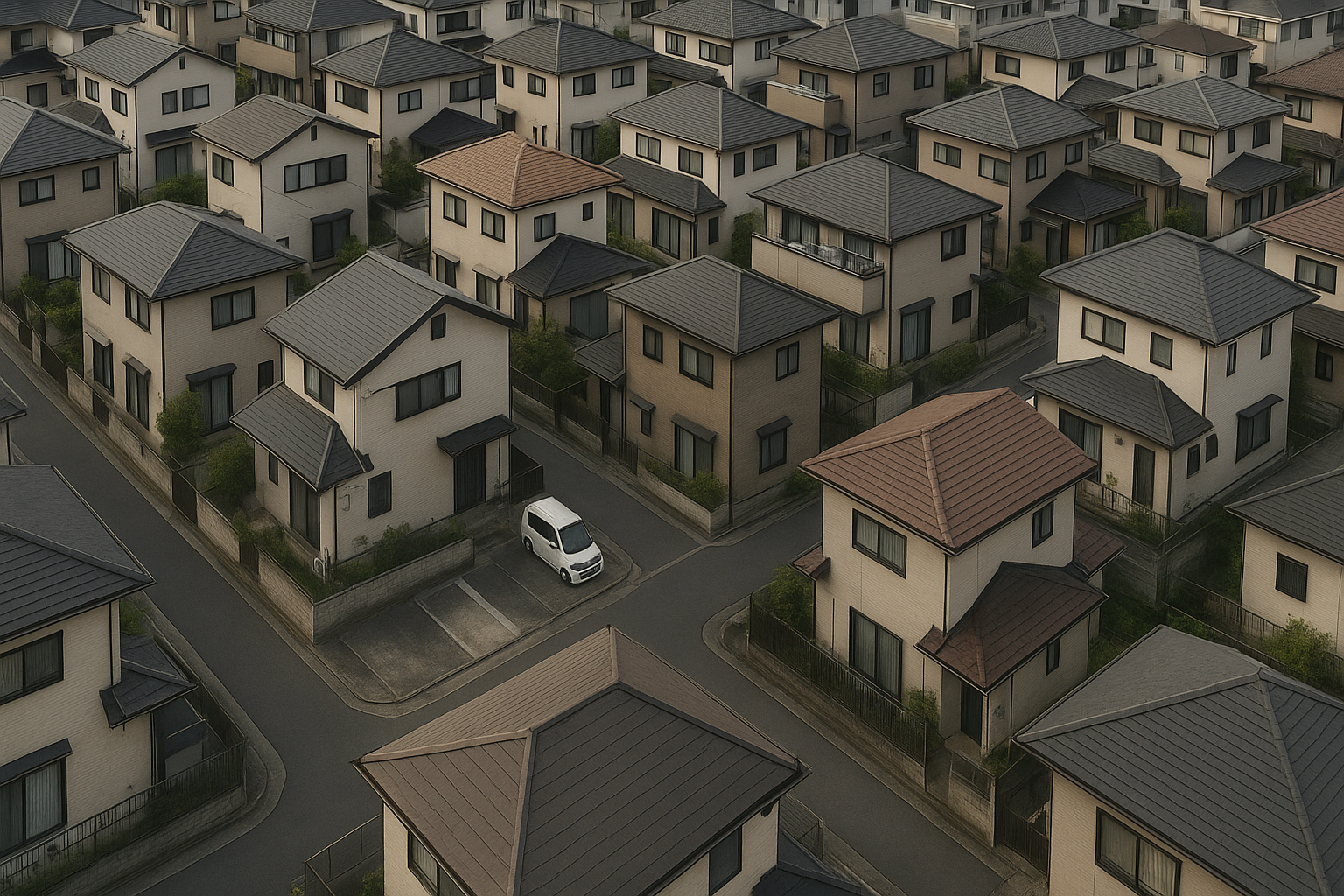
Before you can understand why the Sakura works, you need to understand the market it was designed for. Kei cars account for approximately 35% of all new car sales in Japan as of 2025. One in three cars sold in this country is a kei. This is not a niche. This is not a novelty. This is the structural backbone of how Japan actually moves people and goods around.
The reasons are deeply practical. Japan’s urban street grid, particularly outside the major arterial roads, was largely laid out before the automobile existed. Streets that were designed for foot traffic and the occasional ox cart are now navigating daily automobile use. Parking in dense urban areas is expensive — in Tokyo, a parking space can run ¥30,000 to ¥60,000 per month. A kei car occupies roughly 60% of the space a full-size sedan requires, which translates directly into cheaper parking and easier navigation of narrow residential streets.
Then there is the household economics dimension. The average Tokyo household owns 0.3 cars per household. Car ownership in Japan’s most populous metro area is genuinely uncommon. But outside Tokyo — in the mid-sized cities, the suburbs, the rural prefectures where public transit gets thin — the calculation shifts. You need a car. You just don’t need a large one, and you definitely can’t justify ¥5 million for one. The kei car exists precisely for that gap.
The Sakura’s Numbers, Examined Honestly
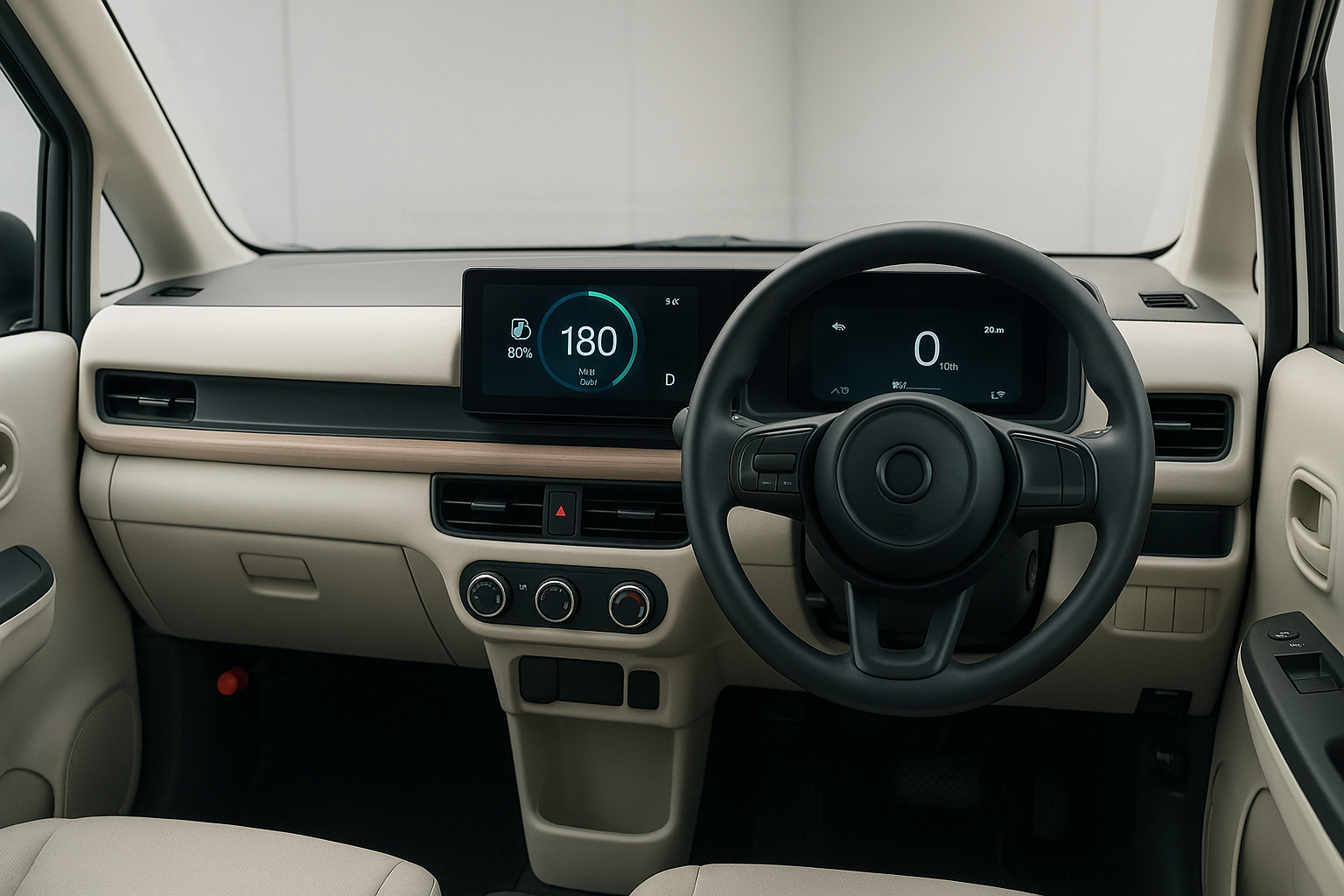
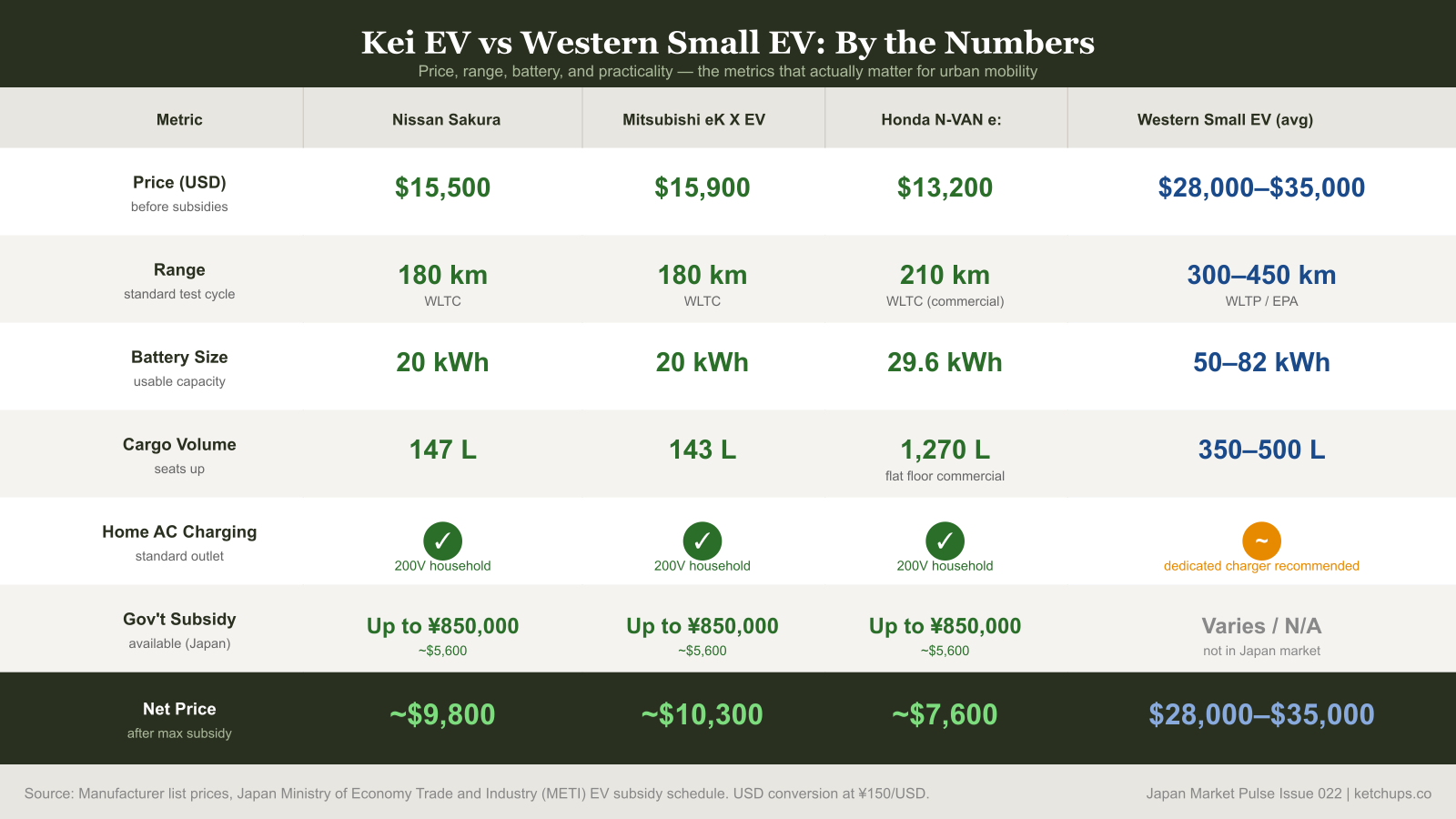
Base price: ¥2,330,000 ($15,500). Japan’s national government offers an EV incentive of up to ¥850,000 for qualifying kei EVs. Several prefectures stack their own subsidies on top. After incentives, a Sakura can land in the ¥1.5 million range — under $10,000. That is the price of a used Corolla, for a new EV.
Range: 180km on the WLTC cycle. Real-world urban driving in Japan averages 30 to 40 kilometers per day. At 40km per day, the Sakura’s 180km range covers four to five days of driving between charges. The vast majority of Sakura owners are not taking highway road trips. They are running errands, doing the school run, and making the grocery circuit. For those missions, 180km is not a compromise — it is a surplus.
Charging: the Sakura charges via standard AC household current at 200V. You do not need a dedicated EV charger installed. This is a critical design choice that distinguishes the Japanese kei EV approach from Western EV strategy. Western EV development has been predicated on adding fast-charging infrastructure. Kei EV design inverts that assumption. If you drive less than 40km a day and charge at home every night, you never need a public fast charger.
The Competitive Field Is Expanding
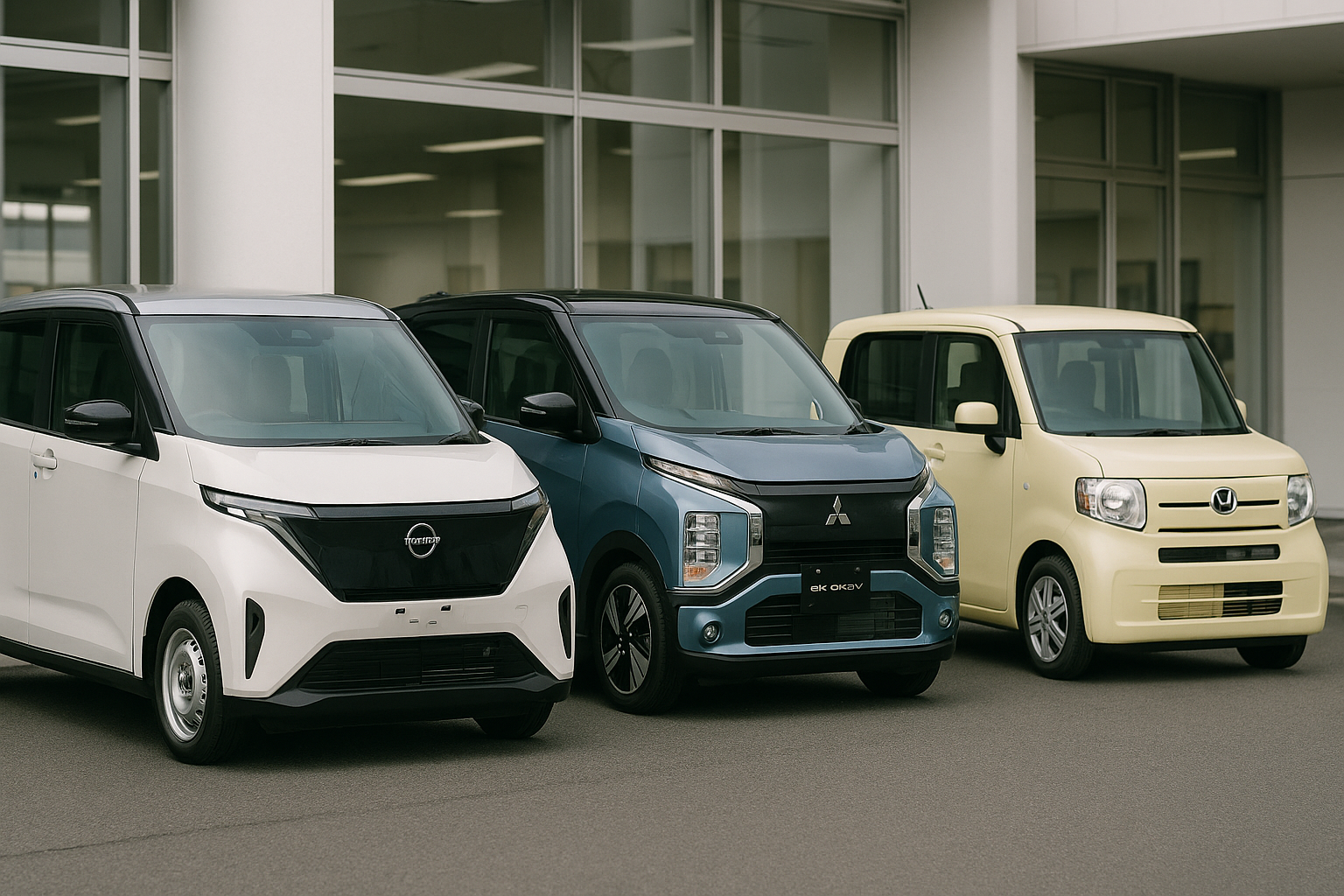
Mitsubishi entered with the eK X EV, priced at ¥2,398,000 — essentially price-matched to the Sakura. The eK X EV offers a twin-motor all-wheel drive option, which matters considerably in Japan’s snow belt. Honda took a different angle entirely with the N-VAN e:, launched in 2024 at ¥1,986,000, targeting commercial and last-mile delivery use. Amazon Japan, Yamato Transport, and various local delivery operators have shown interest in fleet procurement.
What is notable about this competitive field is what it is not: it is not a premium contest. No one is competing on 0-100kph times. No one is competing on interior materials or brand prestige. The competition is entirely on value delivery per yen — range, reliability, cargo practicality, and total cost of ownership. This is engineering competition, not marketing competition.
Why the West Hasn’t Done This
The obvious question: if this works so well, why hasn’t it appeared in the United States or Europe? The answers are layered, and none of them are flattering to Western automotive strategy.
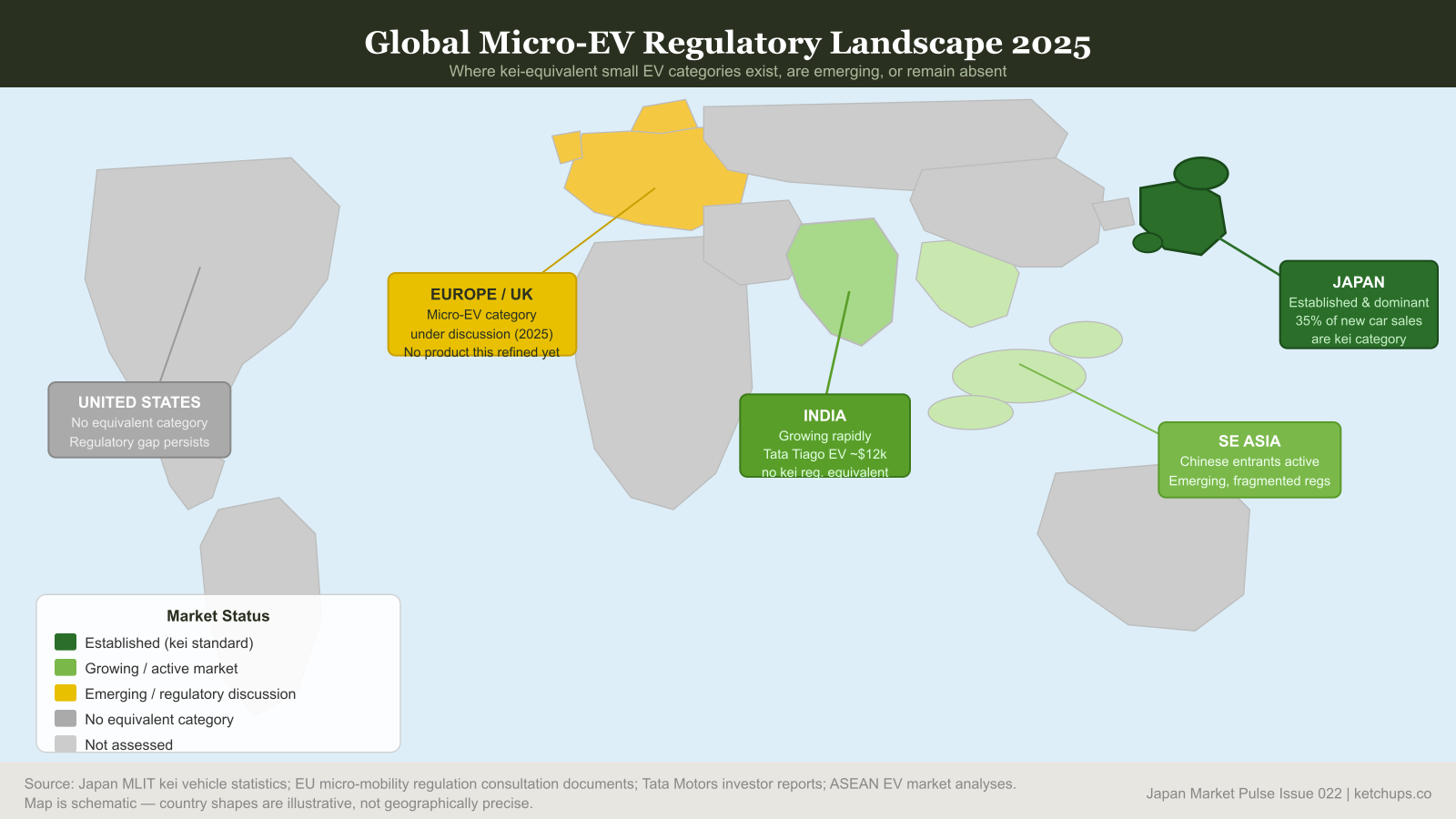
First, regulatory structure. The kei category is a Japanese domestic standard with no equivalent in the US or EU. The US safety framework effectively excludes kei-scale vehicles from the mainstream market. The EU is actively discussing a new “micro-EV” category, but the process is slow and the product standards remain undefined. Second, market assumptions. American EV R&D investment has been driven toward longer range and faster charging. The alternative hypothesis — that you can solve range anxiety by designing for shorter daily distances — has received almost no serious investment in the US. Third, dealer economics. The US automotive retail model is built on transaction size. A genuinely affordable small EV is structurally inconvenient for the US distribution system even if consumers would buy it.
The Export Question and the Actual Opportunity
The Sakura and its kei EV peers are not sold outside Japan. But the principle is not Japan-specific. In India, where the economics of a $10,000–15,000 practical EV are compelling, Tata has already moved aggressively on the Tiago EV. In Southeast Asia, Chinese EV entrants are competing in exactly this space. The Japanese kei EV approach suggests there is a viable premium tier in the affordable small EV segment that has not yet been fully occupied outside Japan.
What’s Next: The Second Wave
Battery costs are still the limiting factor on how low kei EV pricing can go. As battery costs continue to fall, the subsidy requirement shrinks and the addressable market expands. The broader signal for international watchers is this: Japan’s EV market is not underperforming. It is performing on a completely different axis than the metrics Western analysts are using to measure it. The Sakura story is not about whether Japan is “behind” on EVs. It is about whether Japan has found the approach that actually generates mass adoption rather than premium-segment enthusiasm. My read after twenty years watching this market: Japan has. The West is still arguing about the wrong things.
If you’re interested in this topic, the Japanese market more broadly, or what KETCHUPs is working on, we’d love to hear from you — please reach out via our contact form.
Japan Market Pulse is a weekly read on what the Japanese consumer-tech, lifestyle, and adult-collectibles markets are choosing to do, written for international operators who want to know what is happening before it shows up in the global trade press.
Subscribe at ketchups.co/japan-market-pulse.