

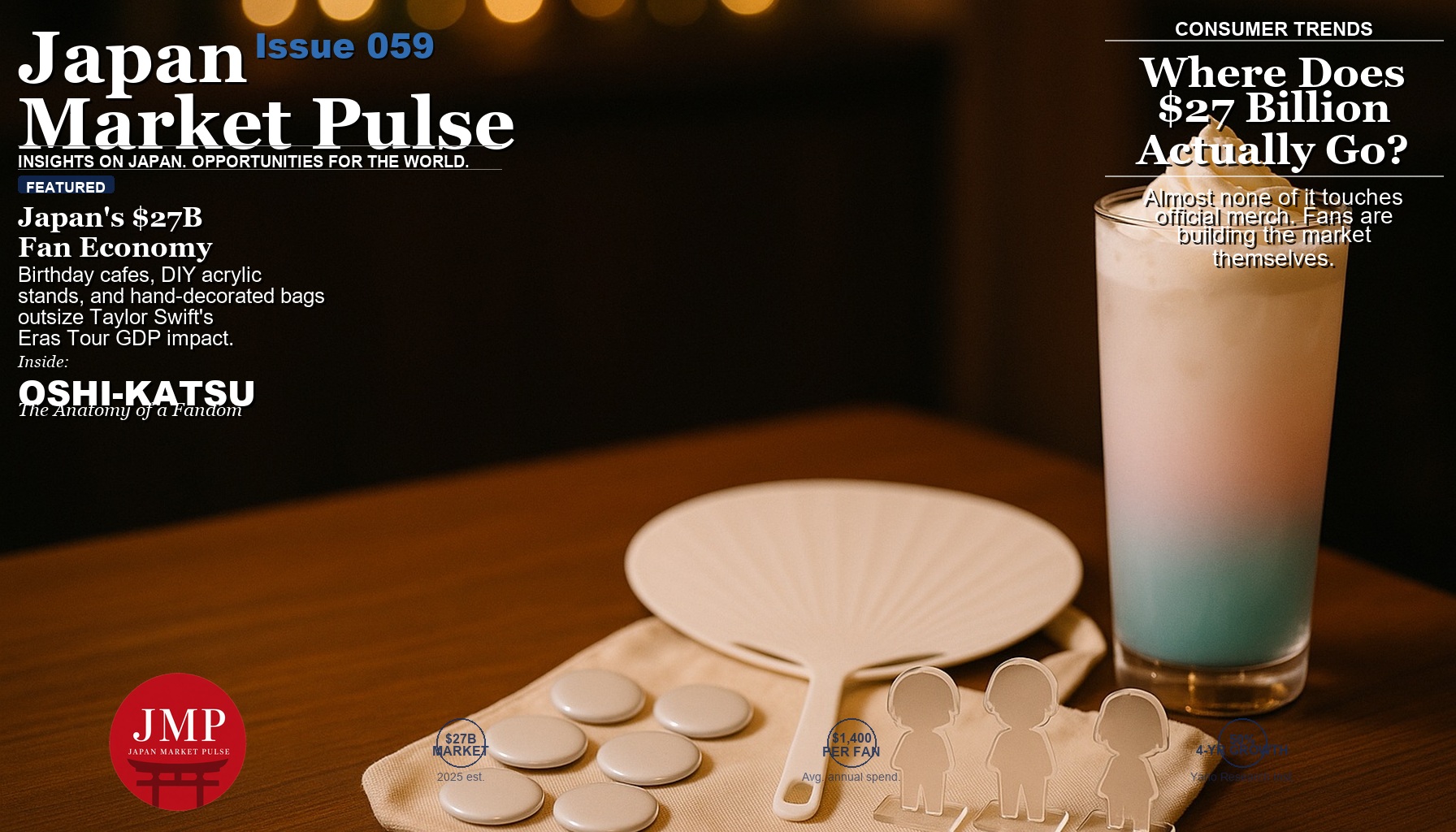
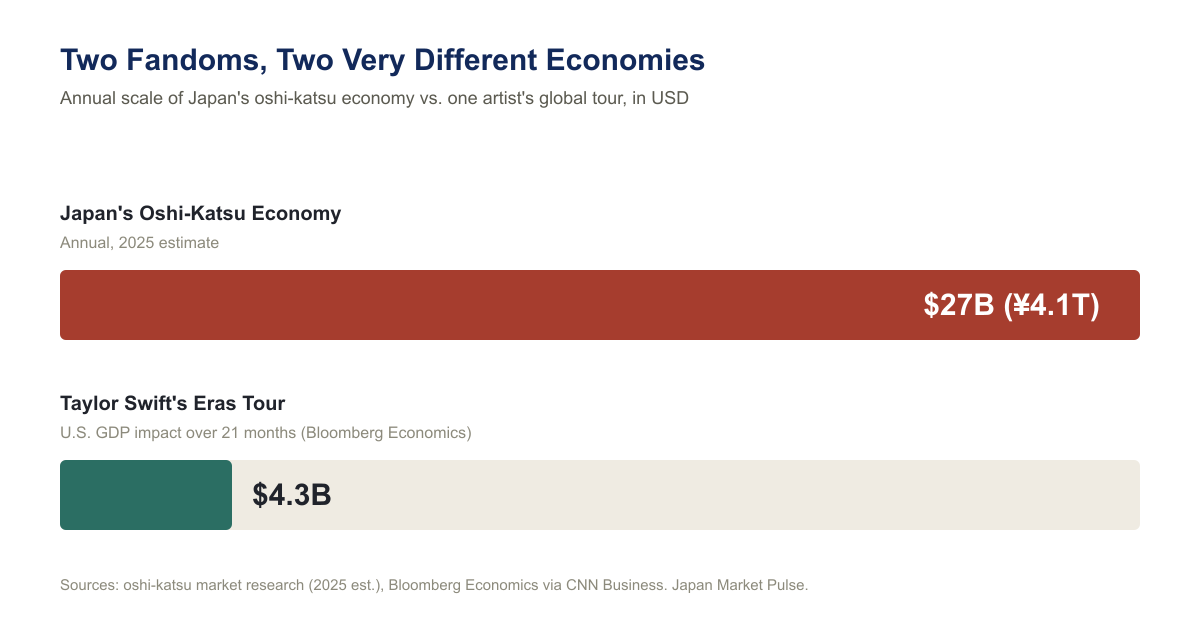
Japan’s oshi-katsu economy — the sprawling ecosystem of spending built around supporting a favorite idol, anime character, VTuber, or athlete — grew to roughly ¥4.1 trillion in 2025, according to industry researchers who track the category. That’s somewhere in the neighborhood of $27 billion. For comparison, Bloomberg Economics estimated that Taylor Swift’s Eras Tour — arguably the single biggest pop-culture economic event in recent American history — added $4.3 billion to U.S. GDP over its 21-month run. The U.S. Travel Association, factoring in indirect spending like hotels and flights, put the number closer to $10 billion.
Put those side by side and the instinct is to say Japan’s fandom economy is simply bigger. That’s true, but it’s the least interesting part of the story. The more useful fact, for anyone running a brand, a sports league, a game studio, or a music label outside Japan, is how that ¥4.1 trillion gets generated. It isn’t concentrated in ticket sales and licensed merchandise sold by a handful of companies. It’s spread across thousands of small, often improvised transactions that fans run themselves — pop-up cafes they book out for a character’s birthday, custom acrylic figures they commission in batches of five, tote bags they spend an entire weekend covering in pins. The IP holders — the anime studios, the talent agencies, the game publishers — often capture only a sliver of it.
I’ve lived in Tokyo for two decades now, and the oshi-katsu economy is one of those things that’s been quietly scaling in the background the entire time, the way convenience store coffee or bicycle commuting scaled — not through one company’s marketing push, but through a million individual consumer decisions compounding into a structure nobody quite planned. It’s worth understanding not because it’s charming (though it is), but because it’s a working example of a fandom monetization model that looks nothing like the one most Western entertainment and consumer brands default to.
What “Oshi-Katsu” Actually Means
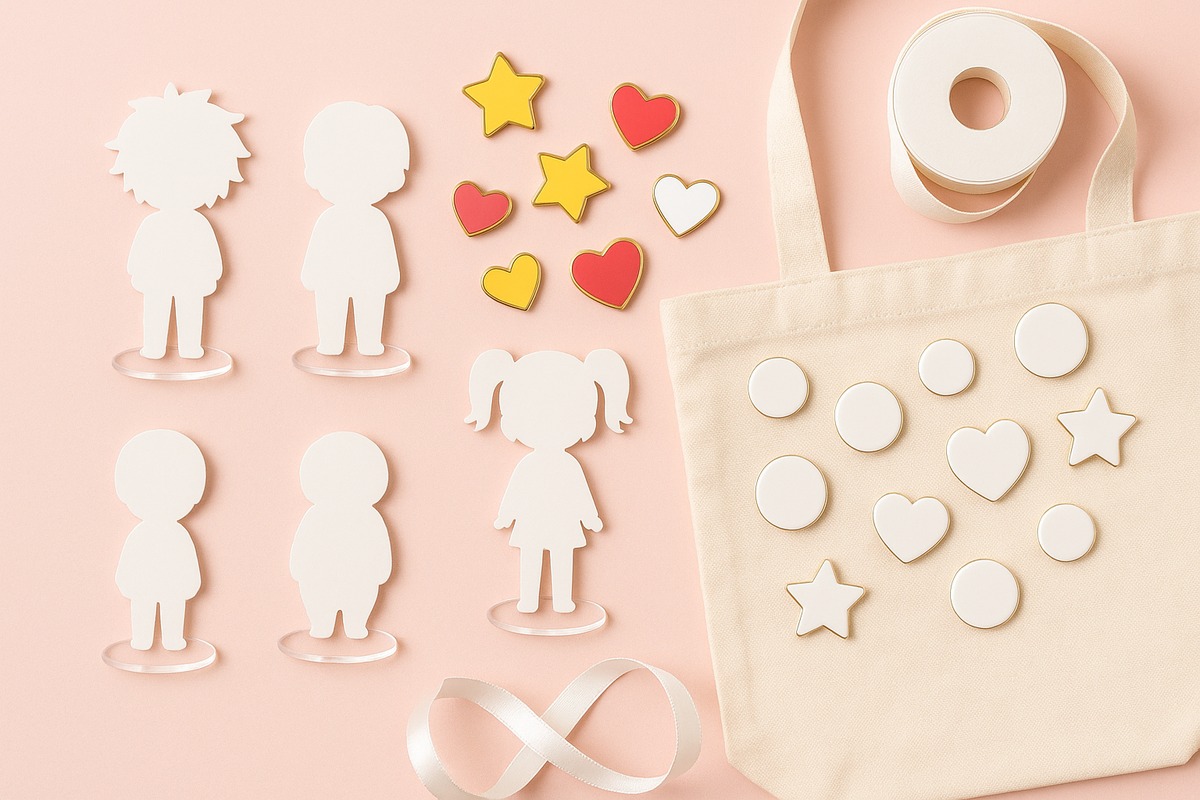
“Oshi” roughly translates to “the one I push for” — your favorite member of an idol group, your favorite VTuber, a specific anime character, a baseball player, sometimes even a corporate mascot. “Katsu” is shorthand for katsudo, or activity. Put together, oshi-katsu describes the entire practice of actively supporting that person or character: buying their goods, attending their events, decorating your belongings with their image, tracking their schedule, and — increasingly — building a visible identity around being their fan.
What makes oshi-katsu distinct from garden-variety fandom, the kind that exists everywhere from K-pop fan cafes to NFL tailgates, is how institutionalized the supporting infrastructure has become. There are dedicated printing shops that exist almost entirely to produce fan-made acrylic goods. There are cafe chains that run a standing weekly rotation of “birthday collaboration” menus for whichever idol or character has a fan-submitted birthday that week. There are entire retail floors in Akihabara and Ikebukuro organized not by product category but by which specific characters they serve. This is not a subculture operating at the margins of commerce. It’s a consumer category with its own supply chains.
It’s worth asking why this scaled into a trillion-yen category specifically over the last five to seven years, rather than existing quietly as a niche the way idol fandom did through the 2000s and early 2010s. Three forces compounded at once. The first is the VTuber boom, which created an entire generation of “oshi” who exist only as digital personas, streaming daily and generating a volume of fan-creatable content — clips, fan art, voice lines — that traditional idols and anime characters simply don’t produce at the same pace. The second is social media as a documentation layer: platforms built around visual sharing turned owning and displaying oshi-katsu goods into a status behavior in its own right, not just a private hobby. A shelf of acrylic stands or a fully decorated itabag photographs well, and that photographability became part of the product’s value. The third, less discussed but probably just as important, is the shift in how Japanese consumers under 35 talk about discretionary spending after the pandemic years — emotional, identity-driven purchases gained social permission in a way that competed directly with more traditional status spending like fashion or travel. Oshi-katsu absorbed a meaningful share of that redirected spending.
The Numbers, and Why They Don’t Quite Agree
Any honest look at this market has to start by admitting the estimates don’t line up cleanly, which is normal for a category that didn’t have an official name a decade ago. Industry researchers focused specifically on oshi-katsu behavior put the 2024 market at approximately ¥3.5 trillion, growing to around ¥4.1 trillion in 2025. The Yano Research Institute, using a narrower definition covering sixteen core “otaku” product categories — trading cards, figures, character goods, and similar — sizes that slice of the market at closer to ¥1 trillion as of its 2024 forecast, but notes that segment expanded by roughly 50% between fiscal 2020 and fiscal 2024.
The gap between ¥1 trillion and ¥4.1 trillion isn’t a contradiction; it’s a definitional question. The narrower number counts manufactured goods. The broader number counts everything a fan spends in service of their oshi — cafe visits, travel to events, streaming subscriptions, printing costs for their own DIY goods, storage furniture for their growing figure collection. Depending on which definition an American retailer or research team is going to use to size their own opportunity here, that distinction matters. But even the conservative reading — a ¥1 trillion manufactured-goods category growing 50% in four years — describes a market moving faster than most consumer categories currently visible in the U.S. or Europe.
The per-person numbers are where the behavior becomes legible. Surveys of self-identified oshi-katsu participants consistently find average annual spending in the neighborhood of ¥210,000 — around $1,400 — per person, across goods, events, and travel. That’s not whale spending from a tiny group of superfans. It’s a broad base of ordinary consumers, disproportionately women in their 20s and 30s, treating fandom as a standing line item in their household budget the way earlier generations budgeted for hobbies like golf or fashion.
Inside the Spending: Birthday Cafes, Acrylic Stands, and Itabags
Four specific behaviors do more to explain the structure of this market than any aggregate figure.
The first is the birthday cafe. When a fan-favorite character or idol has a birthday — and in modern franchises, official canon almost always assigns one — a cafe, sometimes an entire chain location, will run a themed menu for a limited window: a commemorative dessert plate, a specialty drink named after the character, printed coasters, sometimes a life-size standee for photos. Some of these collaborations are organized by the rights holder directly. A large share are organized by fans themselves, who rent out cafe space, design the menu concept, and pay for printing and decoration out of pocket, effectively running a pop-up event business around someone else’s intellectual property with the tacit tolerance of whoever owns it. A casual visit runs about ¥1,000. A fan hosting or fully participating in one of these events will often spend ¥5,000 or more in a single sitting.
The second is the acrylic stand, known locally as an akusuta. These are small printed acrylic figures, typically five to nineteen centimeters tall, produced through custom-order print shops that have built an entire micro-industry around exactly this product. Pricing runs roughly ¥4,000 to ¥5,000 depending on size, and serious collectors don’t buy one — they buy variations across every costume change, every seasonal release, every collaboration a character appears in, building shelves that can hold dozens of pieces. The commercial infrastructure behind this is almost entirely third-party: specialty print shops, not the IP holders themselves, capture most of the transaction value, provided the fan supplies (or commissions) the artwork.
The third is the itabag — literally “pain bag,” named for how visually overwhelming a fully decorated one looks. Fans cover tote bags, backpacks, or clear vinyl bag inserts with dozens or hundreds of pins, buttons, and charms representing their oshi, turning the bag itself into a wearable collection and, often, a form of public identity signaling at conventions and meetups. The itabag is almost entirely DIY: the fan is simultaneously the designer, the assembler, and the display case curator. No single company sells “an itabag.” What gets sold, across dozens of small manufacturers, is the raw material — blank bag inserts, pin backs, charm hooks — that fans assemble into a finished product themselves.
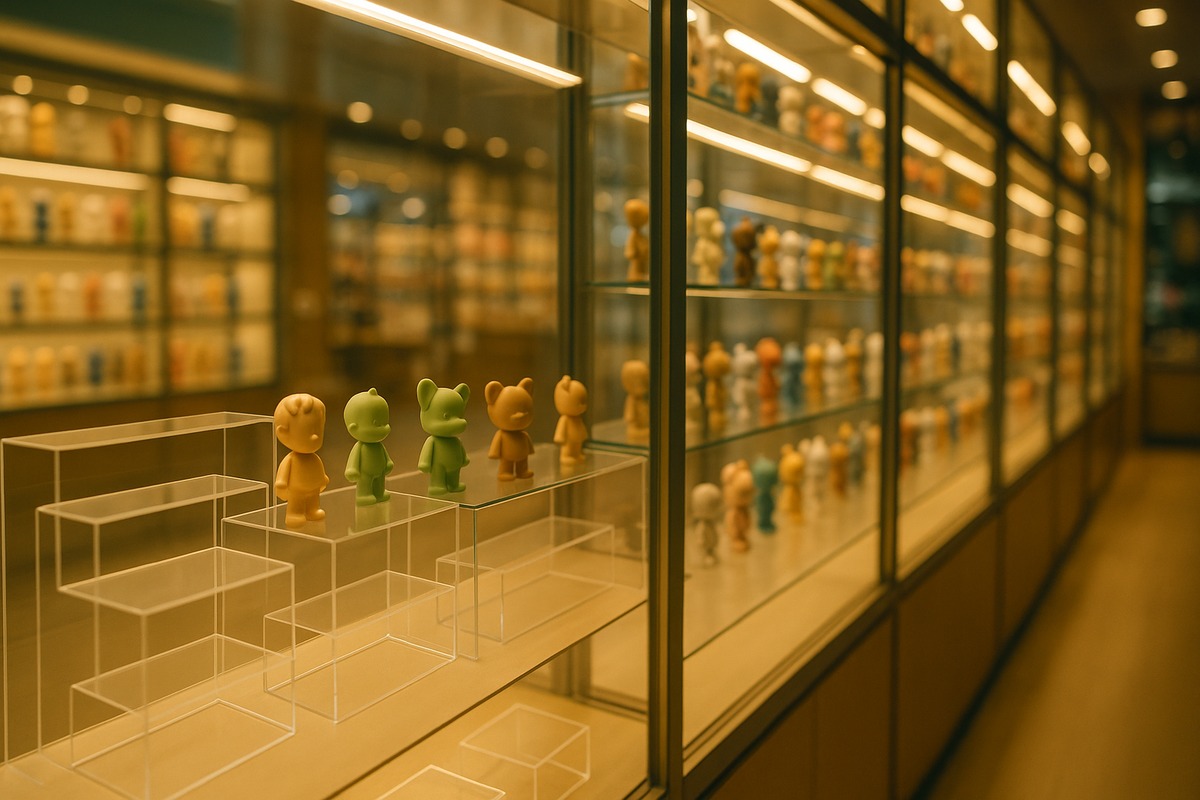
A fourth category, less visible from outside Japan but arguably just as revealing, is the display-furniture market that has grown up specifically to house all of the above. Specialty shelving units — glass-fronted cabinets with UV-blocking panels to keep printed goods from fading, modular acrylic-stand risers sized to the millimeter for standard akusuta dimensions, humidity-controlled cases for higher-end figures — are now a recognizable retail category in their own right, sold by furniture makers who identified oshi-katsu collectors as an underserved segment and built dedicated product lines around them. None of this exists because an anime studio or idol agency asked for it. It exists because a large enough population of fans needed somewhere to put several hundred acrylic stands, and a furniture industry noticed.
None of these four categories requires a licensing deal, a corporate sponsorship, or even, in many cases, explicit permission from the rights holder. That’s the part worth sitting with.
The Real Difference Isn’t Size. It’s Who Captures the Value.
Compare this to how fandom monetization typically works in the West. The Eras Tour model — and it’s a reasonable stand-in for the dominant American approach — routes almost all of the transaction value through a small number of controlled channels: the artist and their label sell the tickets, the artist and their label sell the official merchandise, the venue and its concessions capture the ancillary spending. Secondary markets exist, but they’re adversarial by design — ticket resale platforms and bootleg merchandise are treated as leakage to be minimized, not as a feature of the ecosystem. It’s a centralized model, and it’s an extremely effective one: $2.2 billion in North American ticket sales alone is not a small achievement for any single artist.
Japan’s oshi-katsu economy runs on close to the opposite architecture. IP holders — anime production committees, idol talent agencies, game publishers — typically license loosely and enforce lightly. Fan-run birthday cafes, fan-commissioned acrylic goods, and fan-assembled itabags exist in a gray zone that rights holders could shut down if they wanted to, and mostly choose not to, because the fan-driven layer generates goodwill, visibility, and secondary spending (fans who host a birthday cafe event typically buy official merchandise too) that would be expensive to manufacture through official channels alone. The result is a distributed economy where a meaningful share of the ¥4.1 trillion never touches the IP holder’s balance sheet at all — it flows to print shops, cafe operators, craft suppliers, and the fans’ own time and materials budget.
This isn’t altruism on the part of Japanese entertainment companies. It’s closer to an accepted trade: give up some direct monetization and enforcement control, and in exchange get a fan base that is more emotionally invested, more visible in public spaces, and more likely to keep spending on official channels because the unofficial ones keep the relationship alive between official releases. A Western studio treating every unlicensed fan product as infringement to be shut down is optimizing for a different, more defensive equation.
What This Means for Brands Outside Japan
For international operators — in sports, music, gaming, or any category with a fandom component — the lesson from Japan isn’t “let people bootleg your merchandise.” It’s narrower and more useful than that: the total addressable value of a fandom is larger than what any single company can capture through official channels alone, and the fastest way to grow the size of the pie is often to tolerate, or lightly formalize, the layer of fan-run commerce sitting just outside your direct control.
There are early signs this logic is already migrating. K-pop agencies have grown noticeably more permissive about fan-run cafe collaborations and fan-made merchandise over the past several years, a shift that tracks closely with the oshi-katsu playbook rather than the traditional Western touring-and-merch model. Esports organizations have started experimenting with loosely licensed fan-art marketplaces instead of pure cease-and-desist enforcement. Sports leagues sit on an enormous amount of unrealized fan-run commerce — the tailgate economy, the jersey customization market, the fan-organized meetup circuit — that currently exists almost entirely outside any formal monetization structure, closer to how oshi-katsu operated a decade ago before specialty retailers built infrastructure around it.
Game publishers are arguably the best-positioned category to test this deliberately, because they already sit closest to Japan’s model: many live-service games maintain character-driven fandoms with birthday events, fan art contests, and cosplay communities that mirror oshi-katsu behavior almost exactly, just without the surrounding commercial infrastructure. A publisher that formally tolerates — or even lightly supports with blank templates and print-on-demand partnerships — fan-made acrylic charms and character merchandise for its own cast of characters is, in effect, importing the Japanese model wholesale rather than reinventing it. The logic follows directly from what Japan’s own IP holders have already concluded: an unofficial layer that keeps a fandom visibly active between official content drops tends to feed official spending rather than cannibalize it, which is the opposite of how most Western rights-holders still instinctively treat unlicensed fan production.
The operators who move first here have a real advantage, because building the supply chain — the print shops, the licensing frameworks, the retail specialization — takes years, and Japan’s version of this market didn’t happen overnight either. It compounded over roughly two decades of incremental tolerance and infrastructure-building. Anyone looking at a fandom-driven category outside Japan and wondering why the addressable market feels smaller than it should is very often looking at a category where the fan-run layer never got permission to exist.
Frequently Asked Questions
Q. What exactly counts as “oshi-katsu”?
A. Oshi-katsu covers any consumer activity organized around actively supporting a favorite idol, anime or game character, VTuber, athlete, or public figure — buying goods, attending or hosting themed events, traveling to appearances, and creating fan-made items. It’s a consumer behavior category, not a single product or platform.
Q. How much does the average participant spend per year?
A. Surveys of self-identified oshi-katsu participants put average annual spending at roughly ¥210,000, or about $1,400, spread across goods, cafe events, travel, and DIY materials.
Q. Is this limited to anime and idol fandoms, or does it extend further?
A. The core spending is concentrated in anime, idol, VTuber, and gaming fandoms, but the same behavior pattern — fan-run events, custom merchandise, DIY display culture — is increasingly visible around sports athletes and even corporate mascots in Japan.
Q. Why don’t Japanese IP holders crack down on unofficial fan-made goods like acrylic stands and itabags?
A. Enforcement is inconsistent and generally light-touch because rights holders benefit from the visibility, goodwill, and secondary official-merchandise spending that fan-run commerce generates. Cracking down fully would shrink the ecosystem that keeps fans engaged between official releases.
Q. Can brands or operators outside Japan realistically apply this model?
A. Yes, though it requires giving up some direct control. The clearest early examples are K-pop agencies loosening restrictions on fan-run cafe collaborations and merchandise, and esports organizations experimenting with licensed fan-art marketplaces instead of blanket enforcement.
Conclusion
The headline number — ¥4.1 trillion — is the part that travels well in a press release. The structural story underneath it is the part worth studying: a fandom economy that got bigger not by centralizing more tightly around official channels, but by loosening its grip and letting fans build a genuine commercial layer of their own. For any brand sitting on an underused fandom, that’s the more transferable idea. The market isn’t only as big as what you can sell directly. It’s as big as what you’re willing to let other people build around you.
If you’re interested in this topic, the Japanese market more broadly, or what KETCHUPs is working on, we’d love to hear from you — please reach out via our contact form.
Japan Market Pulse is a weekly read on what the Japanese consumer-tech, food, and mobility markets are choosing to do, written for international operators who want to know what is happening before it shows up in the global trade press.
Subscribe at ketchups.co/japan-market-pulse.