

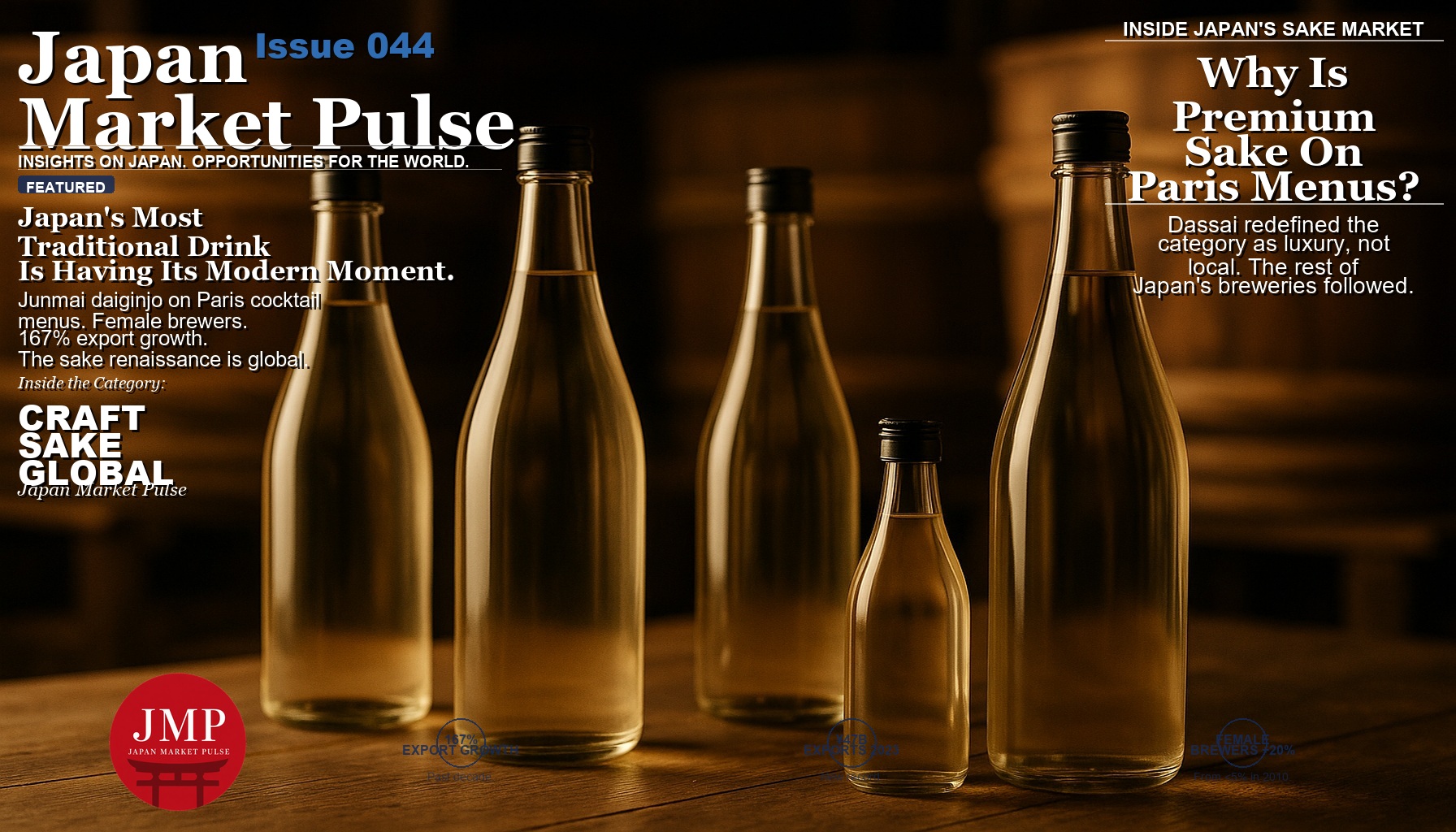
For most of the twentieth century, sake had an image problem in the markets that mattered most for its global future. In the United States, it was associated with heated carafe service in sushi restaurants — a supporting player to raw fish, consumed quickly and usually warm, memorable primarily for the next morning’s headache. In Europe, it was an afterthought, stocked occasionally in specialist Asian groceries alongside rice wine and mirin. In Japan itself, the domestic consumption of sake had been declining since the 1970s as beer, wine, and whisky captured the attention of younger generations.
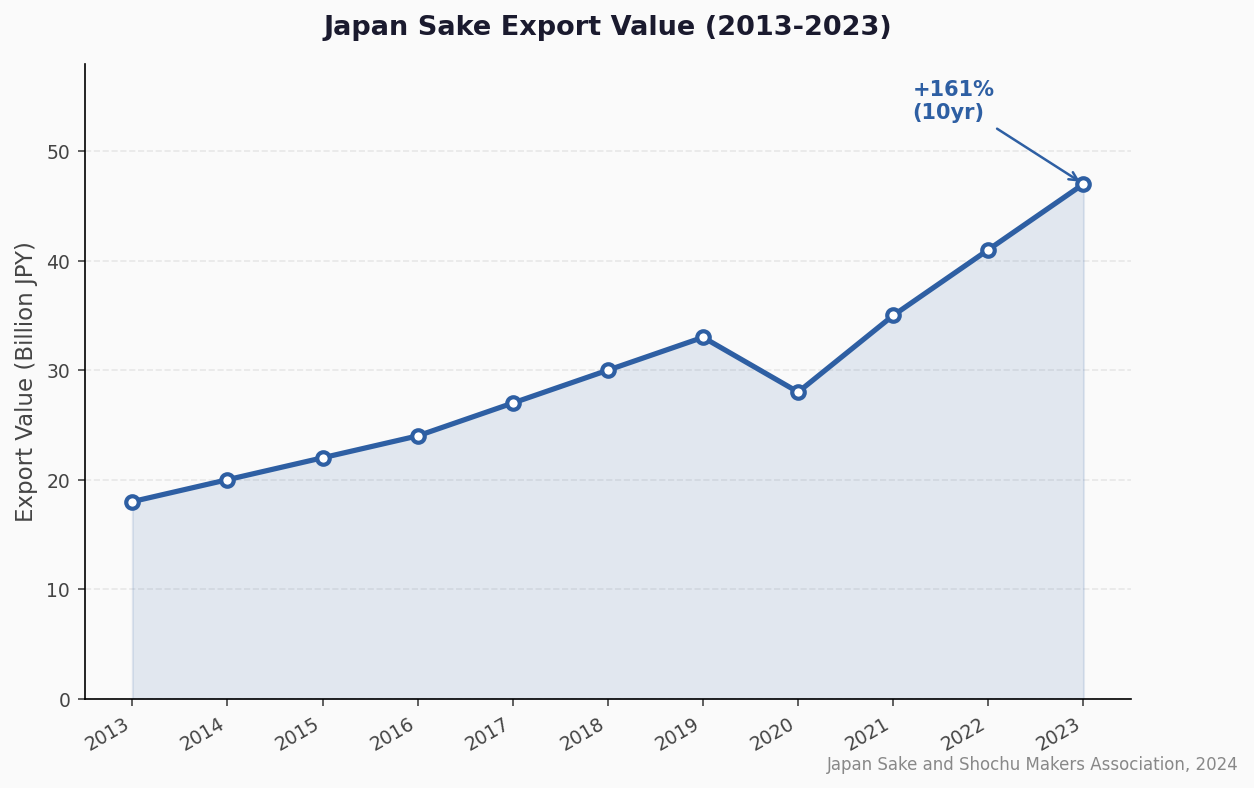
That image problem is dissolving in real time. In 2026, sake’s global story is different in almost every dimension from what it was fifteen years ago. Japanese sake exports have grown more than 167% in value over the past decade, reaching ¥47.3 billion in 2023. Premium sake — junmai daiginjo and junmai ginjo categories — accounts for a disproportionate and growing share of that export value. Sake is appearing on cocktail menus in Paris and New York in ways that have nothing to do with sushi. And a new generation of Japanese brewers — younger, more internationally connected, and deliberately positioning their work within a global premium beverage context — is producing sake that is earning favorable comparisons with the finest wines and spirits in the world.
This is not a niche story. For any brand in the beverage category, for any retailer building a premium drinks selection, and for any hospitality business thinking about its drinks program, what is happening in Japanese sake is one of the most significant category evolution stories of the current decade.
What Makes Sake Premium — and Why That Matters for Global Positioning
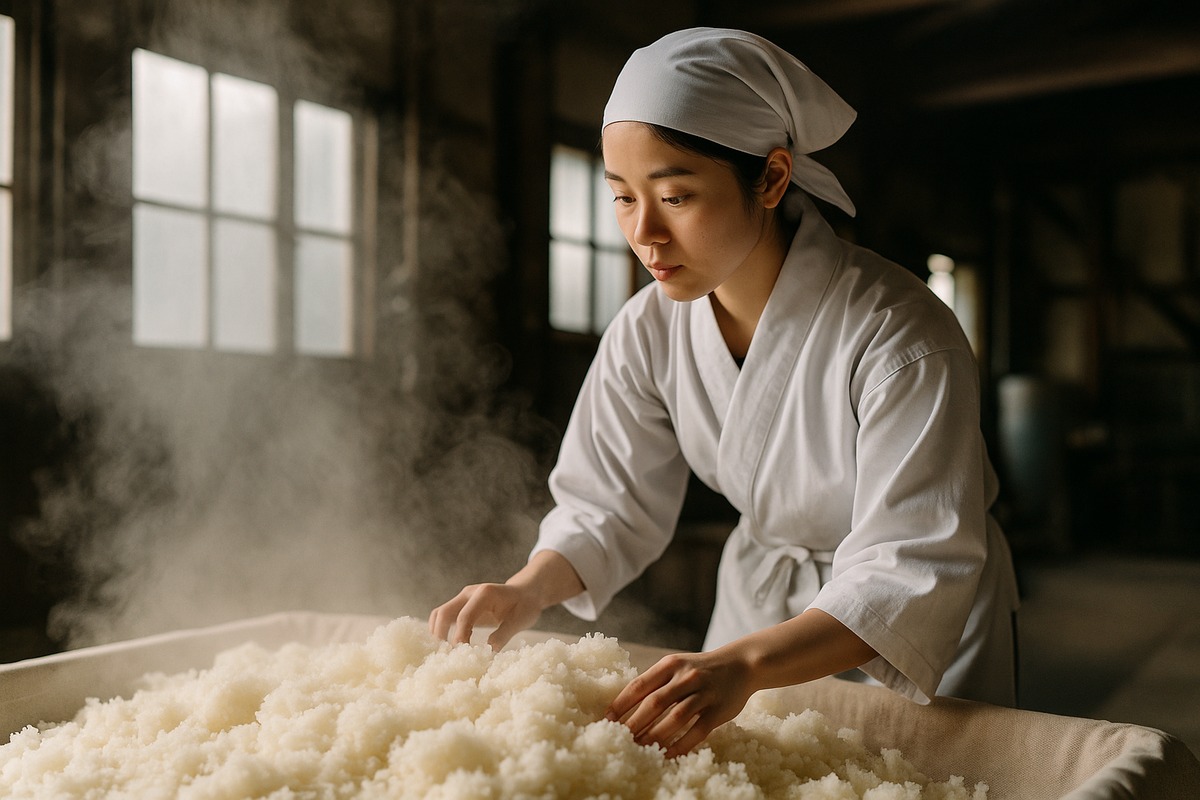
To understand the current sake export boom, it helps to understand what the premium categories actually involve.
Japanese sake is classified by a regulatory framework that distinguishes products based on two primary variables: the degree to which the rice has been milled before brewing, and whether distilled alcohol has been added to the finished product. The results are legally defined categories:
Junmai Daiginjo — brewed with rice milled to at least 50% of its original size, using only rice, water, yeast, and koji mold. No added alcohol. The most labor-intensive and typically the most elegant expression of sake.
Junmai Ginjo — rice milled to at least 60% of original size. Still high quality, more accessible in price, often described as fruity and aromatic.
Junmai — the broad “pure rice” category. No milling requirement, no added alcohol. Quality varies enormously within this category.
Honjozo — brewed with a small, regulated addition of distilled alcohol. Often used to enhance fragrance and achieve a lighter body.
The distinction between these categories is not just technical — it is a market positioning tool. When a brewery in Niigata or Yamagata exports Junmai Daiginjo at ¥8,000 or ¥15,000 per 720ml bottle, it is entering the global premium spirits conversation, not the Asian grocery corner. That repositioning is what the best Japanese sake producers have been engineering deliberately for the past decade.
Dassai: The Brand That Changed What Was Possible
No discussion of sake’s modern moment is complete without Dassai. The Asahi Shuzo brewery in Yamaguchi Prefecture, which produces the Dassai range, is perhaps the single most important actor in the global repositioning of premium Japanese sake.
Dassai 23 — brewed with rice milled to just 23% of its original size, a technical achievement that produces a sake of extraordinary delicacy and precision — has appeared on tasting lists alongside Grand Cru Burgundy and been compared favorably in competitions where it was the only sake in the room. The brand has deliberately courted this comparison: rather than positioning itself as a Japanese specialty product, Dassai frames itself within the global luxury goods conversation.
The practical moves that backed this positioning were not only about product. Asahi Shuzo opened a dedicated restaurant in New York City’s Upper West Side — Dassai Blue — which functions as both a premium consumer touchpoint and a trade education venue. It has built English-language content that explains sake to Western audiences without condescension. It has developed smaller format bottles (180ml, 300ml) that allow price-sensitive consumers to trial premium expressions without committing to a full 720ml purchase.
The result is a brand with genuine name recognition among Western sommelier communities — something that almost no Japanese beverage brand achieved in the previous generation.
The New Brewers: Young, Female, and Internationally Minded
One of the most significant and least-covered developments in Japanese sake is the emergence of a new generation of brewers who are reshaping the industry’s culture as much as its products.
Historically, sake brewing (toji) was a male-dominated, regionally siloed profession. Brewers learned within specific guild traditions associated with their home prefecture and rarely moved between breweries. Women were often excluded from brewing areas under a combination of traditional superstition and labor convention.
That has changed substantially. The share of female brewers in Japanese sake production has grown from under 5% in 2010 to over 20% in 2025. Young brewers with academic backgrounds in fermentation science — rather than guild apprenticeships — are bringing cross-domain knowledge from wine, craft beer, and spirits production into sake traditions that had not changed fundamentally in decades.
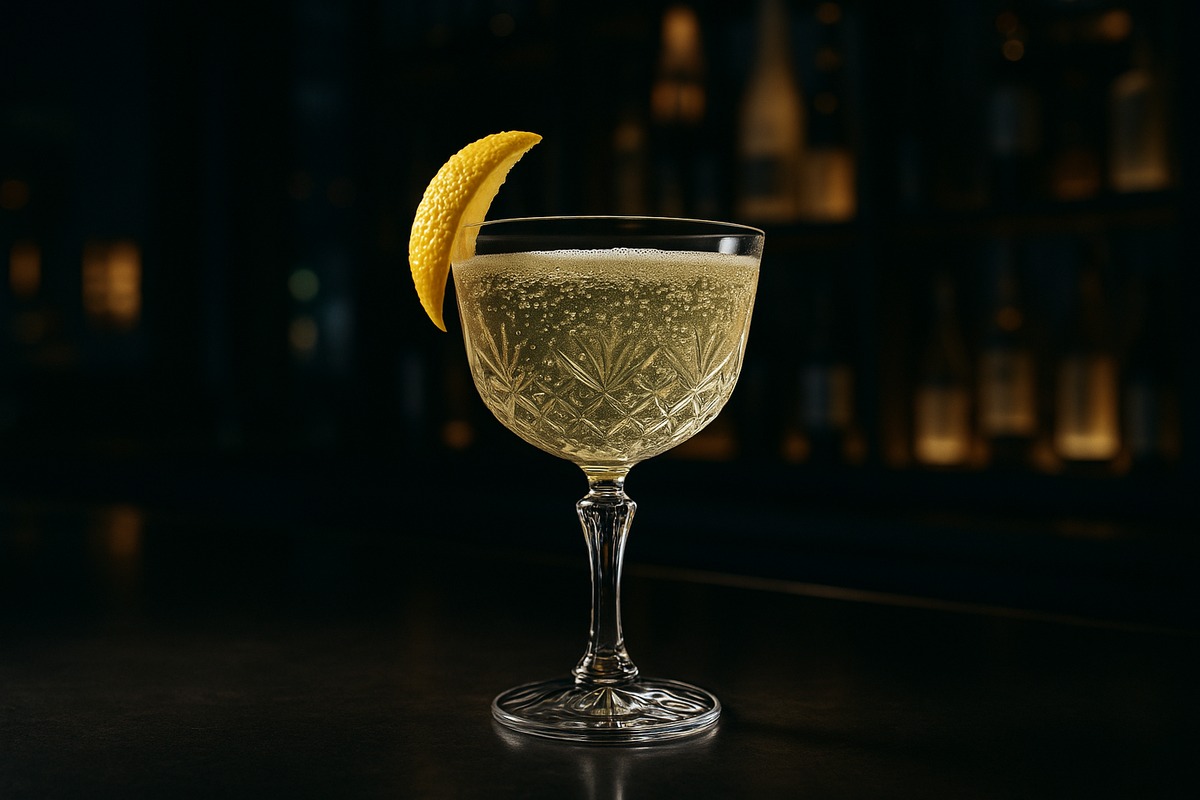
The results are visible on the shelf. Natural sake — produced with ambient yeast, minimal intervention, and sometimes unconventionally short or extended fermentation periods — is a small but growing category that mirrors movements in natural wine. Sparkling sake (doburoku and nigori-style sparkling versions) is expanding rapidly, particularly in the hospitality channel, where it fills the aperitif position that Champagne or Prosecco would occupy in a Western restaurant.
Internationally minded brewers have also begun collaborating with non-Japanese partners. There are now sake breweries operating in France, Australia, and the United States that produce sake using Japanese yeast strains and koji techniques with locally grown rice. These operations are raising interesting questions about provenance and terroir in a category that has traditionally defined authenticity through Japanese geography.
Export Markets: Where the Growth Is Coming From
Japan’s sake export data reveals patterns that have direct implications for any brand, importer, or hospitality business thinking about where to play.
The United States is the largest export market by value, accounting for approximately 30% of sake exports annually. New York and California lead domestically, but sake has been expanding its footprint in cities like Chicago, Seattle, and Miami. The growth driver in the US has shifted from ethnic restaurants to mainstream premium dining — a fundamental repositioning that happened over roughly a decade and is now entrenched.
The European Union is the second-largest market and is growing faster than the US in percentage terms. France, in particular, has been notable — partly because French wine culture provides a consumption framework within which sake’s complexity is legible, and partly because the Japanese food culture that accompanied Tokyo’s restaurant expansion into Paris has primed French consumers for Japanese drink alongside Japanese food.
Southeast Asia — Singapore, Hong Kong, Taiwan — presents a different opportunity: markets where Japanese brand equity is exceptionally high, sake familiarity is strong within existing Japanese restaurant contexts, and per-capita premium spending is growing. Several large-format sake exports (bulk shipping reconstituted at destination) have taken advantage of duty structures in these markets to offer competitive pricing while maintaining premium positioning.
How to Serve It: The Education Gap and the Opportunity It Creates
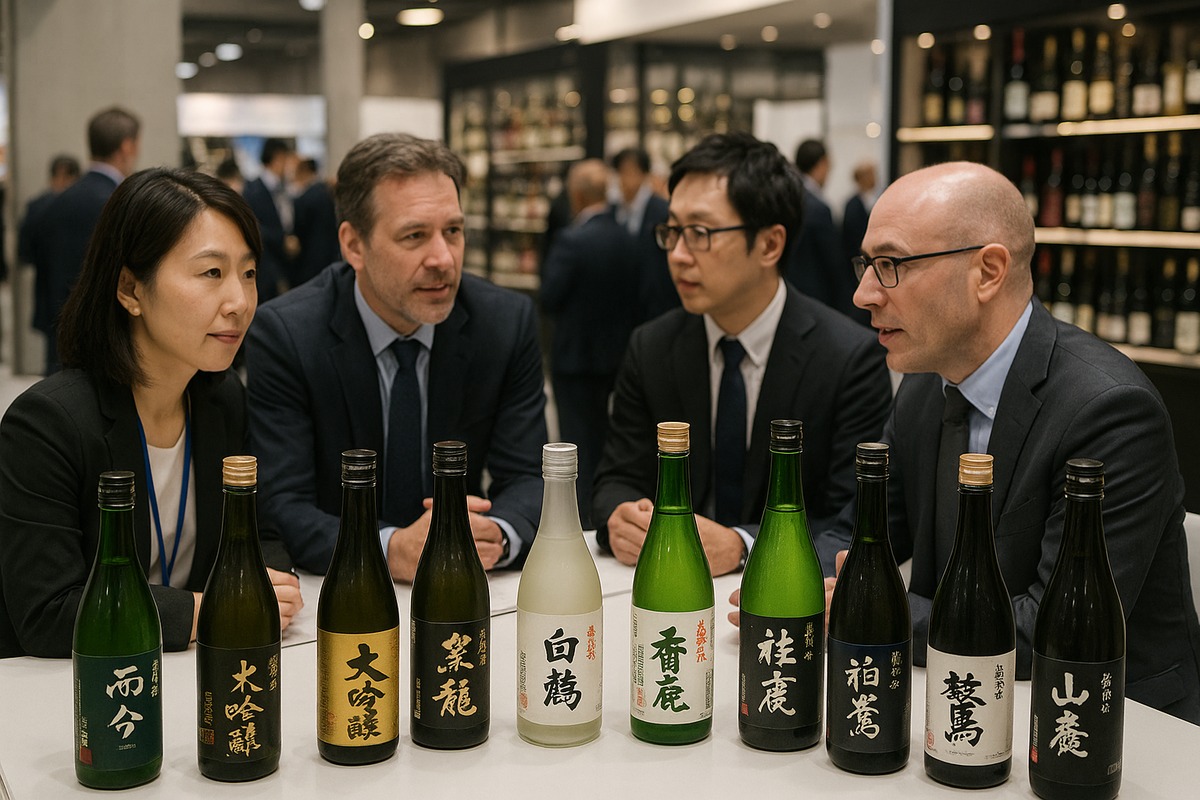
For international businesses in the hospitality and retail sector, one of the most actionable insights from Japan’s craft sake expansion is also the most overlooked: most sake sold outside Japan is sold incorrectly.
Temperature. The conventional wisdom outside Japan — “warm sake is traditional, cold sake is modern” — is a substantial oversimplification. Different sake styles have distinct optimal serving temperatures. Junmai Daiginjo is typically at its best chilled, between 8–12°C, where its aromatics are most expressive. Aged sake (koshu) may actually be enhanced by gentle warming. The idea that all premium sake should be served cold is a correction to the previous overcorrection of serving all sake warm, and neither generalization serves the product.
Glassware. The ochoko (small ceramic cup) and the masu (cedar box) are culturally meaningful but not always the optimal serving vessel for premium sake. Many Japanese brewers who export their products now recommend white wine glasses — particularly those designed for aromatic whites — as the best way to evaluate and enjoy their products’ fragrance and complexity.
Food pairing. Sake’s umami richness makes it one of the most food-flexible beverages ever produced. Hakkaisan Honjozo alongside a charcuterie board, daiginjo alongside oysters, aged sake alongside cheese — these are combinations being explored in progressive sake bars in Tokyo, New York, and Paris right now. Restaurants that build sake pairing programs with non-Japanese food are creating content that travels well and positions sake as a versatile global beverage rather than an ethnic specialty.
The B2B Window That Is Open Right Now
Several conditions align in 2026 to make the current moment unusually attractive for international businesses looking to engage with sake.
Import distribution is underdeveloped. In most Western markets, sake distribution is still handled predominantly by wine and spirits importers who treat it as a small specialty category rather than a priority growth area. The infrastructure for educating retailers, building wine department shelf presence, and training restaurant staff has not been built out to match the product’s potential. This is a white space.
Price-value positioning is exceptionally strong. A truly excellent Junmai Ginjo can be purchased in Japan for ¥2,000–¥3,000 per 720ml bottle. With appropriate import margins, it reaches the US or European consumer at $35–$55 — a price point where it competes directly with mid-range burgundy or Napa Chardonnay and typically wins on value. The category’s quality/price ratio is structurally favorable to importers who can tell the story.
The craft beverage trend provides a tailwind. The same consumer who discovered craft beer, natural wine, and artisanal spirits over the past fifteen years is now discovering craft sake. They already have the vocabulary — provenance, fermentation, terroir, maker-driven production — and they are applying it to a category that rewards exactly that kind of attention.
The sake moment is real. It is not a trend that arrived overnight and it is not a story about one or two breakthrough brands. It is a category in the middle of a generational repositioning, with Japanese producers, international distributors, and premium hospitality businesses all beginning to realize, at roughly the same time, that the conditions for something genuinely significant are finally in place.
This article contains affiliate links. If you purchase through these links, we may earn a small commission at no extra cost to you.
If you’re interested in this topic, the Japanese market more broadly, or what KETCHUPs is working on, we’d love to hear from you — please reach out via our contact form.
Japan Market Pulse is a weekly read on what the Japanese consumer-tech, food, and mobility markets are choosing to do, written for international operators who want to know what is happening before it shows up in the global trade press.
Subscribe at ketchups.co/japan-market-pulse.