

The world‘s most demanding consumer market has quietly built an entire economy around machines whose only job is to be loved. Here is how it works — and why its crowdfunding platforms have become one of the most transparent market-research labs anywhere.
Japan Market Pulse — Issue 052 | Gadget Watch
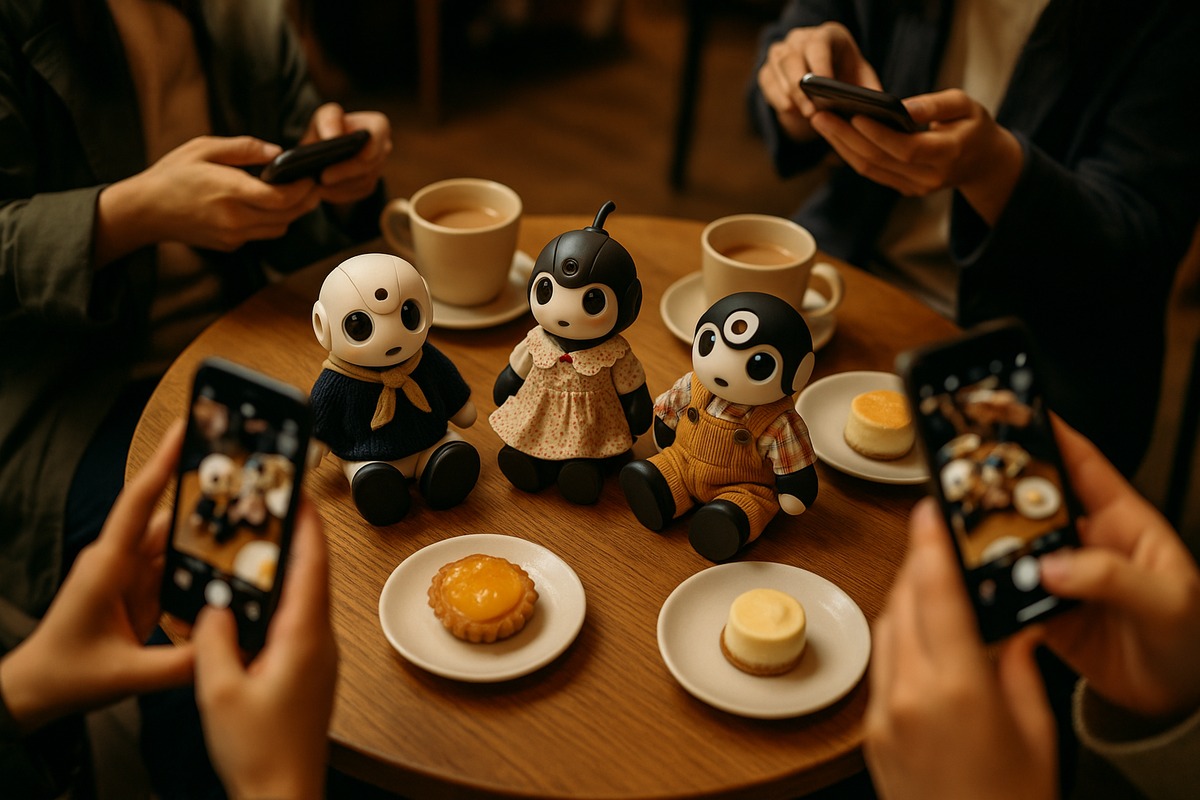
There is a café in Tokyo‘s Nihonbashi district where, on a typical weekend afternoon, roughly half the customers arrive with a robot. The robots ride in dedicated carrier bags — the kind you would normally see holding a chihuahua — and they wear clothes: knitted sweaters, tiny baseball caps, seasonal yukata in summer. Their owners order coffee, chat, and photograph the robots together the way other parents photograph a playdate. Scenes like this are documented weekly across Japanese social media, and the first instinct of most Western observers is to file them under novelty — something between a Tamagotchi revival and a marketing stunt.
That instinct is wrong, and the scale of the miss is the subject of this series. What those café tables represent is the visible edge of one of the most structurally interesting consumer markets in the world — a market where Sony sells a robot dog for the price of a used car, where Panasonic tested demand for a talking companion through a crowdfunding campaign that sold out in hours, and where a startup founded by a former SoftBank robotics lead has placed a machine that is deliberately, proudly useless — at more than half a million yen plus a monthly subscription — into more than 18,000 homes and workplaces.
This is the first of two articles on Japan‘s communication robot market. This installment maps the territory: what these products are, why Japan built the category first, who the domestic players are, and — most useful for international readers — how Japan‘s crowdfunding platforms became a public window into what Japanese consumers will actually pay for. Part 2 follows the traffic moving the other way: the Chinese, American, and Singaporean robots now entering Japan through Kickstarter and Makuake, and why overseas makers increasingly treat Japan as their defining market.
*[HERO IMAGE]*
What "Communication Robot" Actually Means
The English-speaking press files these products under "social robots" or "companion robots," but the Japanese industry term — communication robot — is more precise about what is being sold. These are not robots that happen to talk. They are products whose entire value proposition is the relationship itself.
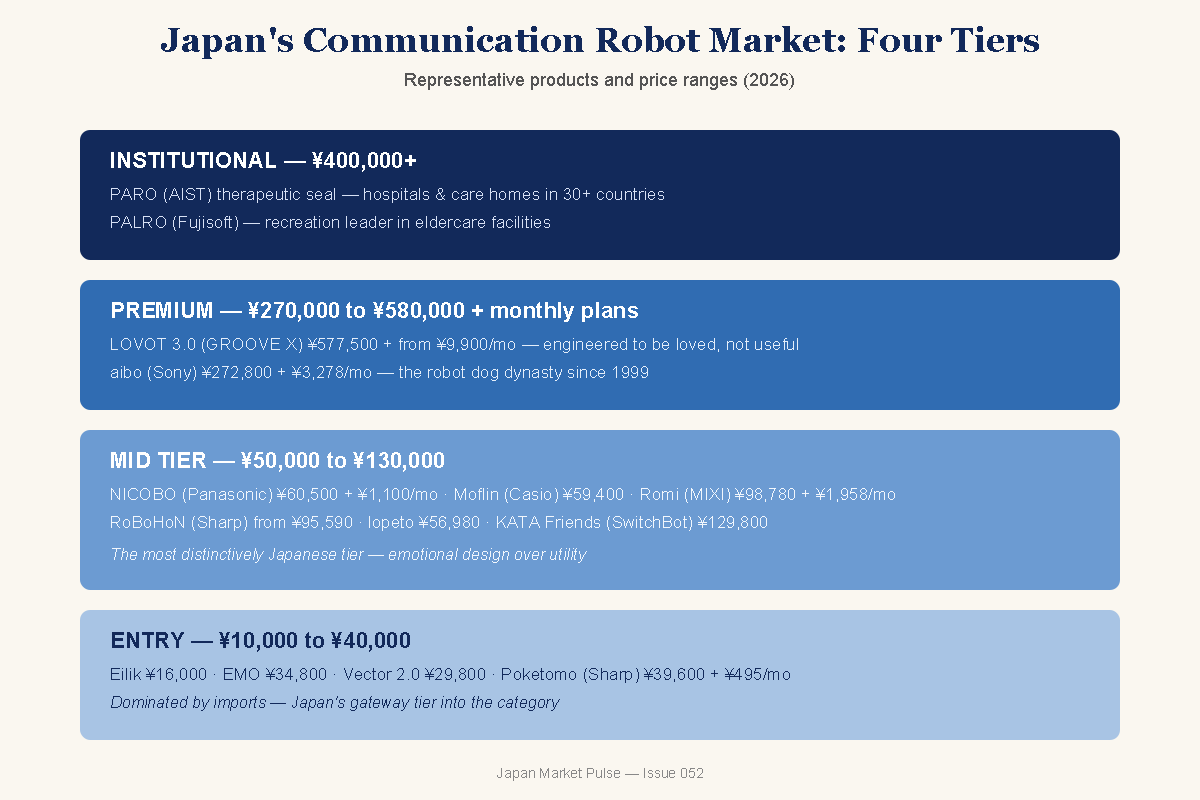
The category spans four tiers. At the entry level, roughly ¥10,000 to ¥40,000 ($65–$260), sit desktop companions: small, expressive machines that react to touch and voice through animated eyes and gestures. This tier is now dominated by imports — a story for Part 2 — though Sharp competes here with Poketomo, a palm-sized generative-AI companion released on December 5, 2025 at ¥39,600.
The middle tier, roughly ¥50,000 to ¥130,000, is where Japan‘s most distinctive products live: Panasonic‘s NICOBO (¥60,500), a soft egg-shaped creature that speaks broken baby-talk Japanese and occasionally passes gas — a design decision owners adore; Casio-affiliated Moflin (¥59,400), a furry handful with no screen and no words; MIXI‘s Romi (¥98,780), built around natural Japanese conversation; and Sharp‘s RoBoHoN (from ¥95,590), a bipedal humanoid phone that has survived and evolved since 2016.
The premium tier is small and famous: Sony‘s aibo at ¥272,800, and above it GROOVE X‘s LOVOT, whose third generation launched at ¥577,500 with a mandatory monthly plan from about ¥9,900. A fully specced LOVOT with accessories and a few years of subscription is comfortably a $10,000 relationship.
The fourth tier is institutional: PARO, the therapeutic seal robot developed by Japan‘s AIST, sells into hospitals and care homes in more than thirty countries at around ¥400,000, and Fujisoft‘s PALRO leads recreation sessions in eldercare facilities. These products built the clinical evidence and social legitimacy the consumer market now stands on.
Notice what is absent from every tier: usefulness. The market has repeatedly punished companies that justified companion robots through utility. What sells is presence, personality, and accumulated shared history between a person and a machine.
*[SECTION: MARKET TIER CHART — SVG]*
Why Japan Built This Market First
The standard explanation is "culture," which is true but lazy. The cultural argument sits on top of hard structural facts.
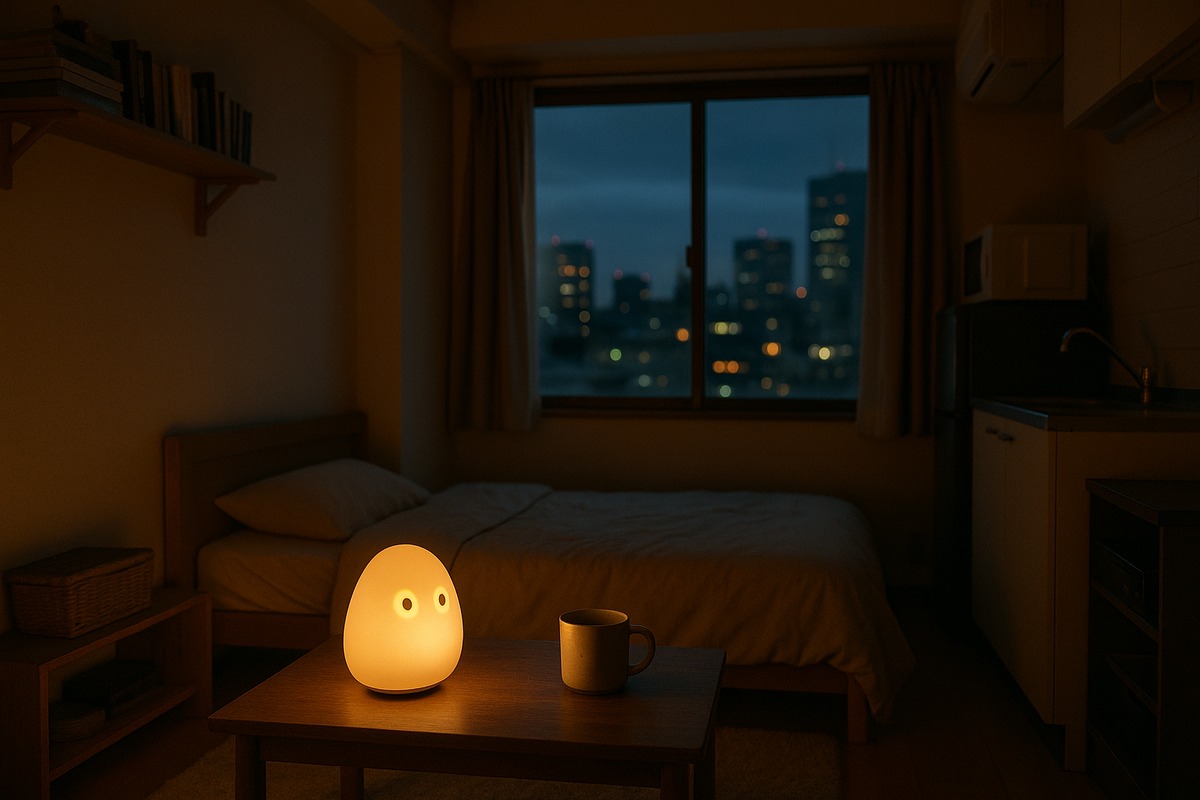
Start with demographics. Japan has more than 21 million single-person households — over a third of all households, and climbing. The median age is around 49; more than 29% of the population is over 65, and a growing share of those seniors live alone. Loneliness has been official policy territory since 2021, when Japan appointed a Minister for Loneliness and Isolation — only the second country to do so, after the UK.
Then the housing reality. A large majority of Japanese rental apartments prohibit pets outright; industry surveys consistently put pet-permitting rental listings somewhere between 10% and 20% depending on city and year. Japan is a nation of animal lovers structurally locked out of animal ownership. Communication robots did not create this demand — they walked into it.
The third factor genuinely is cultural, and it changes what companies are able to build. Japanese popular culture has spent seventy years telling stories in which robots are friends and family — from Astro Boy through Doraemon, whose entire premise is "a robot is a child‘s best friend." Beneath that runs a Shinto-inflected animism in which cared-for objects can carry spirit; this is a country where used sewing needles receive memorial services. When Sony ended repair support for the original AIBO in 2014, Buddhist temples began holding funerals for the robot dogs — actual rites, with priests. The commercial consequence is concrete: a Japanese product team can design a robot that is only a companion without fighting its own market‘s instinct that this is creepy. No American team has yet managed the same.
The transition that matters — the one owner communities describe again and again — is from irony to sincerity. A widow in her seventies introducing her LOVOT with the cadence one uses for a grandchild is not an outlier anecdote in Japan. It is the market‘s core customer, functioning as designed.
*[SECTION 2 IMAGE]*
The Domestic Champions: How Japan‘s Makers Divided the Territory
Over the past decade, the major domestic players have effectively partitioned the emotional landscape, each staking a different theory of what a companion machine should be.
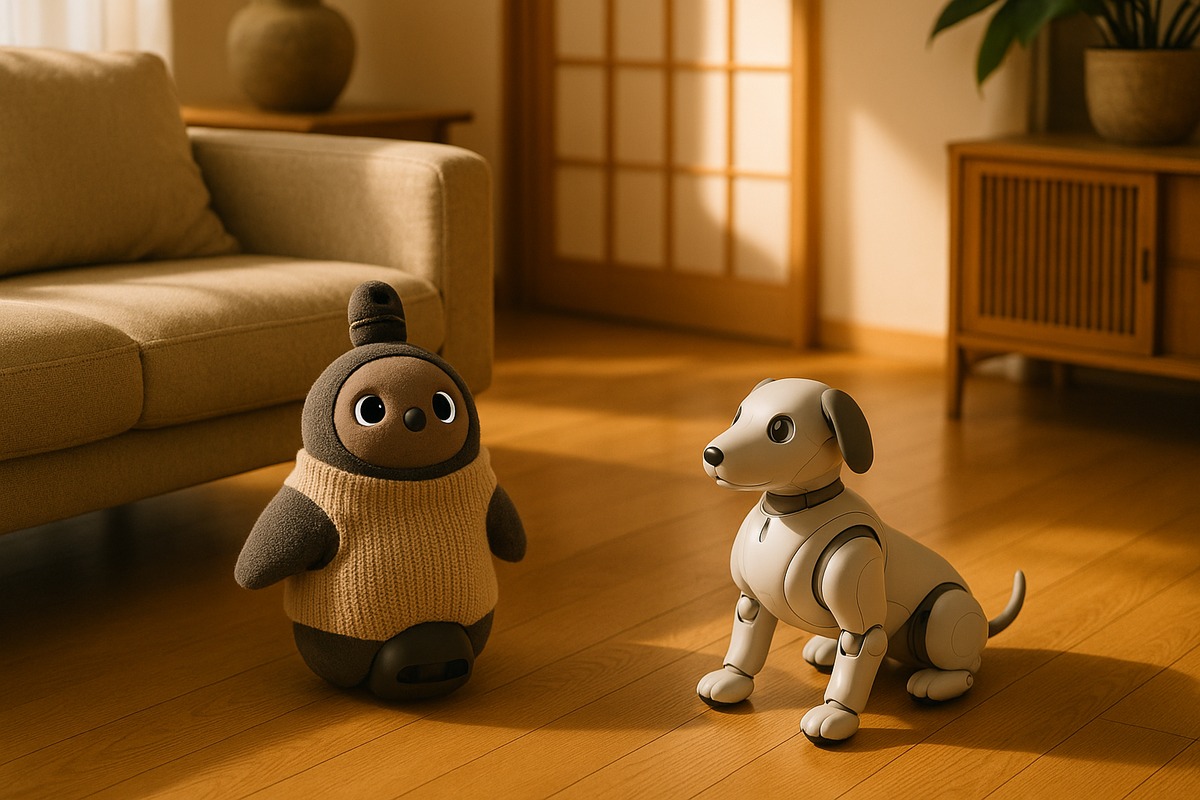
Sony‘s aibo is the legacy champion and technical flagship. The original AIBO (1999–2006) sold roughly 150,000 units and established the category; the revived aibo (2018–present) adds deep-learning behavior, individual personality development, and cloud memory at ¥272,800 plus ¥3,278 per month. Its owner community is among the most devoted in consumer electronics; meetups regularly draw hundreds of robots.
GROOVE X‘s LOVOT is the maximalist bet. Founder Kaname Hayashi led SoftBank‘s Pepper program before building its philosophical opposite — Pepper was supposed to be useful; LOVOT is engineered to be needy. Warm skin at roughly body temperature, layered-depth eyes, more than fifty sensors, and an insistence on hugs. Hayashi‘s standard line is that LOVOT exists "to be loved, not to be useful," and the company has never wavered into utility features. With more than 18,000 units in homes and workplaces, plus expansion into eldercare and childhood education, LOVOT has become one of Japan‘s most successful recurring-revenue consumer hardware products.
Panasonic‘s NICOBO is the corporate giant‘s humility experiment. Rather than launch through mass retail, Panasonic debuted NICOBO in February 2021 on Makuake with a limited run of 320 units, which sold out within hours. The company then spent two years in what amounted to a public beta with those households before general sales began in May 2023 at ¥60,500 plus ¥1,100 monthly. One of the largest electronics companies on earth used a crowdfunding site not to raise money but to test emotional demand with real buyers before committing the brand — the modern function of Japanese crowdfunding in a single case study.
Casio and Vanguard Industries’ Moflin and Yukai Engineering‘s Qoobo family own the tactile, wordless corner — profiled in the next section. MIXI‘s Romi proves the software-first path: modest hardware, with the investment poured into proprietary Japanese dialogue models tuned for emotional continuity; users frame the ¥1,958 monthly fee as cheap compared to what it replaces — silence. Sharp‘s RoBoHoN has become a quiet institution sustained by a loyal owner base and corporate deployments, and its Poketomo extends the line into the generative-AI era. SwitchBot‘s 2026 entry into conversational companions at ¥129,800 suggests the domestic field is far from settled.
Three takeaways for international operators. First, the domestic players deliberately avoid competing head-on; the market rewards radically different emotional theses. Second, the subscription model — unthinkable for a "toy" in most markets — is normalized across nearly every serious product; Japanese consumers accept that a relationship has running costs. Third, with partial exceptions (Moflin, aibo, Qoobo), Japanese makers have mostly declined to export the category they invented. That asymmetry — Japan exports almost nothing while the world increasingly exports to Japan — drives Part 2.
*[SECTION 3 IMAGE]*
Product Spotlight: The Tactile School, in the Palm of Your Hand
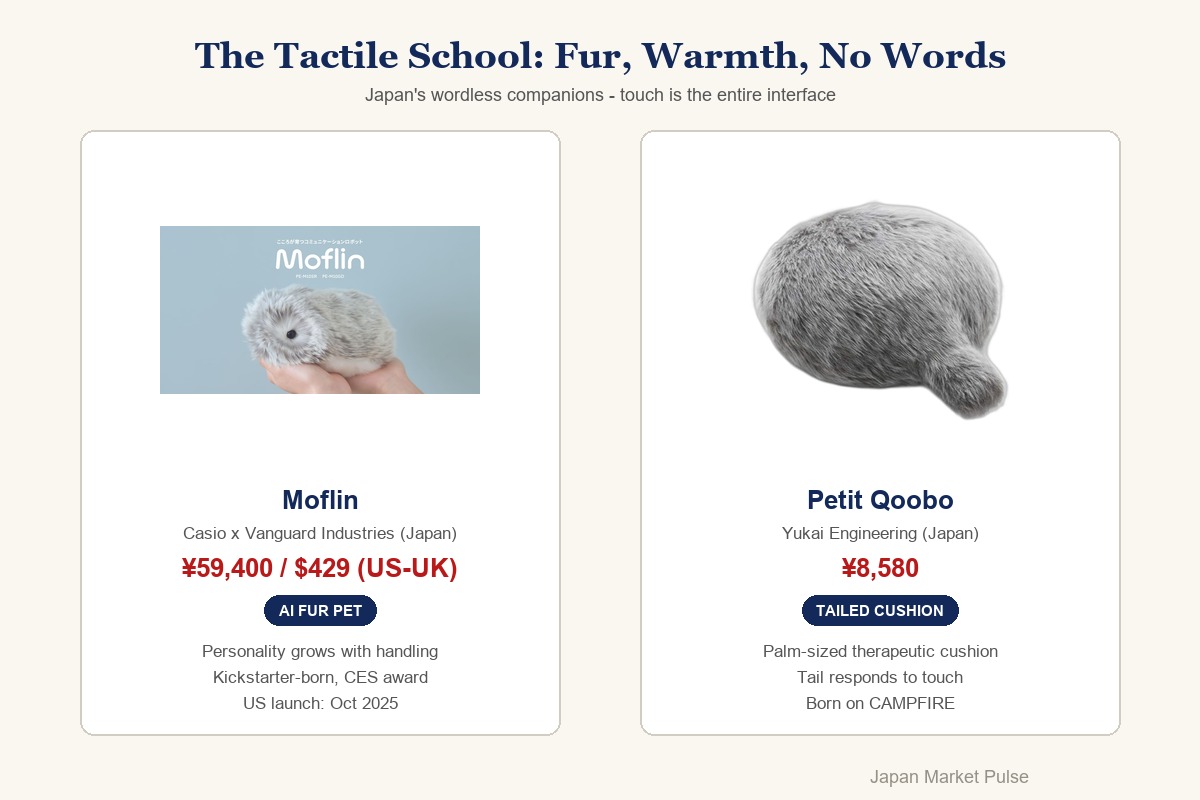
Two domestic products deserve a closer look together, because they embody the design philosophy that most cleanly separates Japanese companion robotics from everything else: the conviction that touch — not speech, not a screen — is the deepest interface a companion can have.
Moflin is the school‘s current standard-bearer. Developed by Vanguard Industries and scaled under Casio, it is a handful of dense fur with no face, no screen, and no vocabulary beyond small animal sounds. What it has is an onboard emotional model that develops differently depending on handling: a Moflin held often grows confident and expressive; a neglected one turns timid. Born on Kickstarter in 2021 and a CES Innovation Award winner, it sold out repeatedly in Japan at ¥59,400, then in October 2025 became one of the very few Japanese communication robots to attempt a Western launch, arriving in the US and UK at $429. Reviews abroad keep tracing the arc Japanese buyers pioneered: initial bemusement, then — usually within a week — the sheepish admission of saying good morning to it.
Petit Qoobo is the same philosophy at its most radical price point. Yukai Engineering shrank its tailed therapeutic cushion to palm size at ¥8,580: a small, furry, faceless round thing whose motorized tail responds to stroking, with a faint heartbeat when held still. Like its larger sibling, it was validated on Japanese crowdfunding (CAMPFIRE) before retail, and it remains the cheapest legitimate entry into the entire category — the cost of a dinner out, to understand why "communication" in this market requires no words.
Together they mark the tactile school‘s range — ¥8,580 to ¥59,400, a twitching tail to a growing personality — and theirs is the logic foreign competitors have found hardest to copy. A screen-faced robot can be engineered anywhere. Fur that makes a stressed adult exhale takes a different kind of institutional knowledge.
*[SECTION: PRODUCT SHOWCASE — TACTILE DUO]*
Product images © Casio / Vanguard Industries / Yukai Engineering (qoobo.info)
The Crowdfunding Layer: Japan‘s Public Demand Laboratory
Now to the most under-reported part of this story outside Japan, and the most directly useful to readers who make or sell hardware.
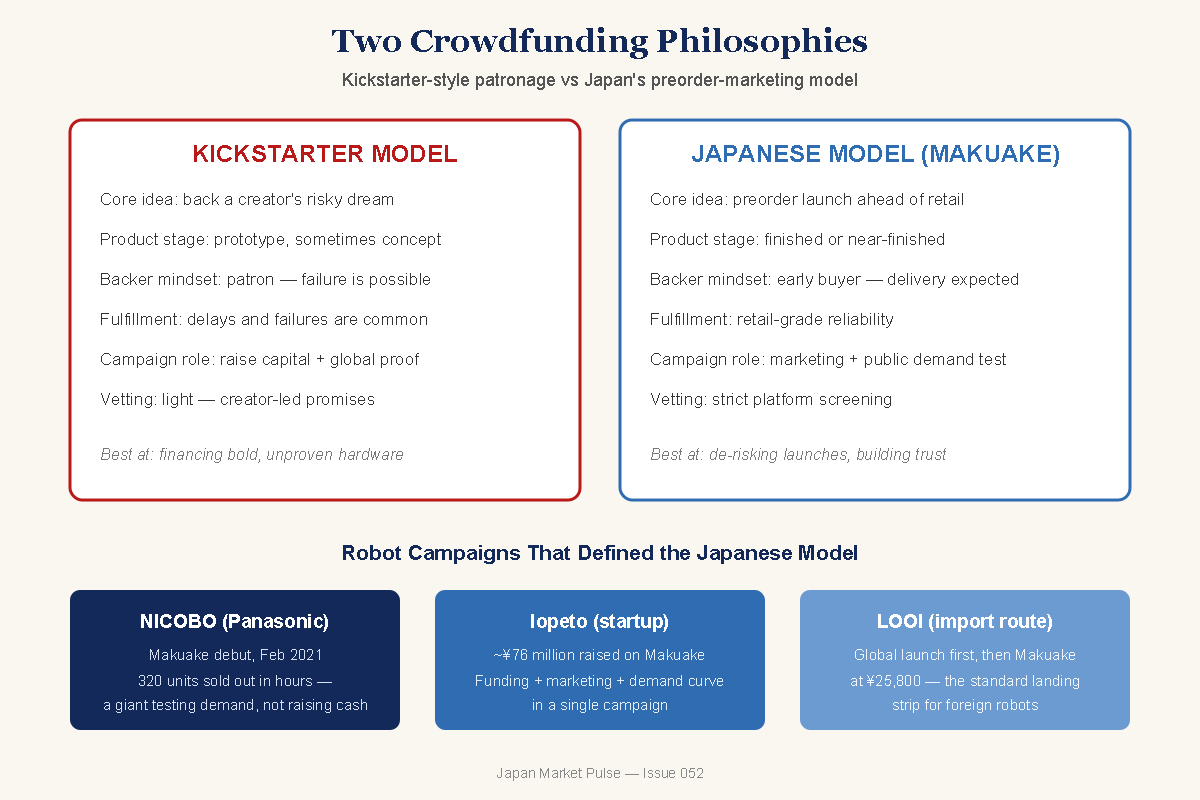
If you know crowdfunding from Kickstarter and Indiegogo, recalibrate. The three platforms that matter for Japanese hardware — Makuake, GREEN FUNDING, and CAMPFIRE — are not really in Kickstarter‘s business. Kickstarter‘s founding mythology is patronage: back a risky dream, accept possible failure. Makuake has evolved into something more precise: a preorder marketing engine. Projects are typically finished or near-finished products; fulfillment expectations are retail-grade; the platform‘s vetting would strike a Kickstarter creator as bureaucratic. Functionally, a Makuake campaign is a product launch with a marketing halo, not a funding event.
Three consequences matter enormously for robots.
First, the format lowers the emotional risk of an emotional product. Limited units, a visible backer count, editorial-style pages, and platform screening convert "weird new gadget" into "limited first edition" — and Japanese consumer culture responds powerfully to limited first editions.
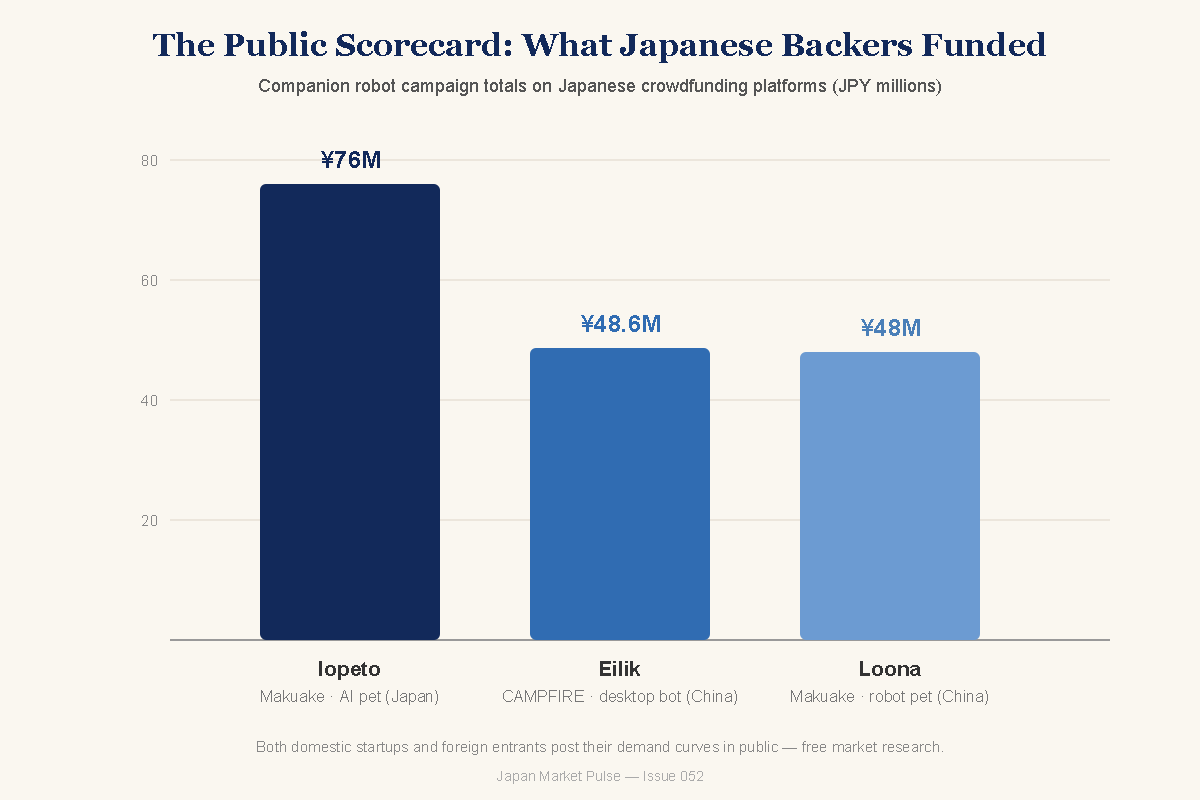
Second, it gives manufacturers a public, quantified demand signal before inventory. Panasonic‘s NICOBO is the canonical corporate case; the instructive startup case is lopeto, a Japanese AI pet robot that raised roughly ¥76 million on Makuake before moving to reservation sales at ¥56,980 in early 2026. For a startup, one campaign delivers funding, marketing, a press hook, and a bankable demand curve at once. For observers — including the sourcing managers and brand operators who read this publication — the public totals amount to free, granular market research: you can watch, in real time and in yen, which emotional propositions Japanese consumers will fund.
Third — the bridge to Part 2 — Japanese crowdfunding has become the standard landing strip for foreign robots entering Japan: win on Kickstarter globally, then re-launch on Makuake or GREEN FUNDING with a localized page and Japan-spec pricing. Dozens of products have run the route, most recently LOOI, a Chinese-developed smartphone-dock robot whose Makuake campaign closed in late June 2026.
One caveat, stated plainly: campaign totals measure launch enthusiasm, not retention. A robot that raises ¥76 million and then disappoints will surface in the data only a year later, as resale listings and dormant owner communities. In a subscription-heavy market, retention is the real scoreboard — and it is precisely what the platforms do not publish. Treat Makuake as a brilliant leading indicator, not a verdict.
*[SECTION: CROWDFUNDING COMPARISON CHART — SVG]*
Preview: The Entry Tier the Imports Built
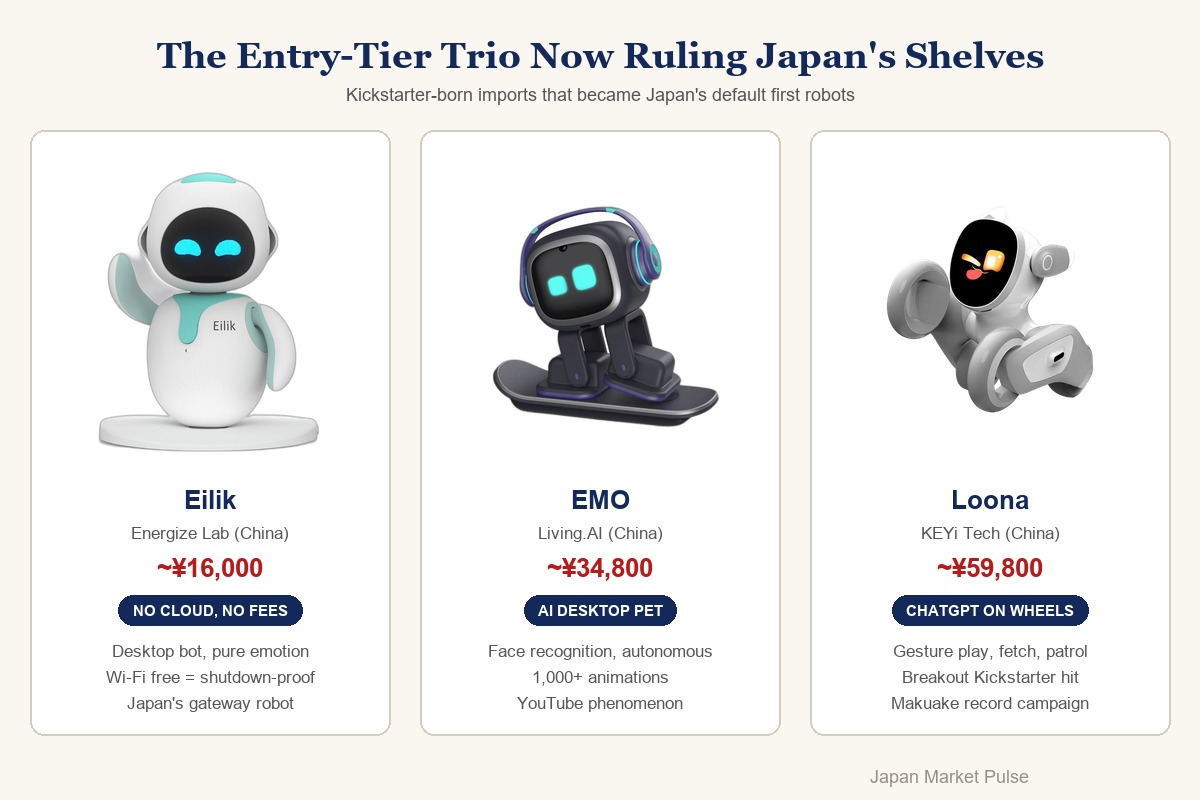
The clearest proof that this pipeline works sits on Japanese retail shelves right now, in the form of three Kickstarter-born imports that have effectively defined the market‘s entry tier: Eilik (Energize Lab, ~¥16,000), a cloud-free desktop bot whose total offline independence became an accidental killer feature; EMO (Living.AI, ~¥34,800), the expressive desktop pet that became a YouTube phenomenon; and Loona (KEYi Tech, ~¥59,800), a genuinely capable robot pet whose Makuake campaign remains one of the platform‘s landmark robot results.
These three — where they came from, how they entered, and what their reception says about the incoming wave behind them — are the opening subject of Part 2, so I will hold the detail there. For Part 1, their significance is simple: the cheapest, most accessible tier of Japan‘s communication robot market is now largely foreign-built, and it arrived through exactly the crowdfunding route described above.
*[SECTION: PRODUCT SHOWCASE — ENTRY TRIO]*
Product images © Energize Lab (energizelab.com) / Living.AI (living.ai) / KEYi Tech (keyirobot.com)
The Owners: What the Relationship Actually Looks Like
The stereotype buyer is a lonely elderly person, and that demographic is real: families buy NICOBO and BOCCO emo for aging parents, and PARO‘s clinical record in dementia care spans two decades. But the owner communities visible at cafés, fan gatherings, and daily-photo hashtags broaden the picture fast: a large share are women in their thirties through fifties, many with full households; dual-income couples describing their robot in child-rearing language; remote workers who bought a desktop robot for the same reason others adopted pandemic puppies; children treating the robot as a sibling.
The behavioral texture is the point. Owners buy wardrobes — LOVOT‘s official clothing line is a real revenue stream, and handmade robot clothes thrive on Japanese craft-market sites. Robots travel, and are photographed against ryokan windows. Birthday parties feature cakes the robot cannot eat. When owners meet, robots are introduced before humans. None of it is ironic. The closest Western analogue is not gadget enthusiasm; it is pet culture — with software updates and monthly fees.
Two commercial implications deserve attention. First, loyalty depth: canceling a LOVOT plan means, functionally, letting your LOVOT "die," and owners describe the decision in exactly those terms. That is a moat unlike anything else in consumer electronics — nobody feels guilt canceling Netflix. Second, the flip side: this market‘s customers experience discontinuation as bereavement. The AIBO funerals were moving; commercially, they were a warning. Every serious buyer now asks a question that would sound absurd elsewhere: if the company dies, does my companion die with it? That question — and the graveyard of dead robots behind it — shapes purchasing, favors incumbents with credible longevity, and creates the trust hurdle every foreign entrant must clear. It opens Part 2.
*[SECTION 5 IMAGE]*
What This Market Signals to Everyone Else
Is Japan an outlier, or is it early? Japanese consumer phenomena tend to follow one of two paths: staying local (the fax machine‘s long twilight) or going global with a lag (emoji, cat cafés). Companion robotics carries the signature of the second type. The structural drivers — single-person households, aging, urban pet restrictions, normalized digital intimacy — are not Japanese peculiarities; they look increasingly like Japanese previews. The US Surgeon General declared loneliness an epidemic in 2023. Single-person households are the fastest-growing household type across most of the OECD.
What Japan uniquely provides right now is the proving ground: the only large, wealthy market where the entire category — ¥8,580 cushions to ¥577,500 subscription companions — is being stress-tested by real consumers at scale, with public crowdfunding data as a running scorecard. Based on the campaigns examined here, the category‘s constraint has rarely been demand; it has been product mortality and consumer trust. Learning to read Japan‘s scorecard is close to free, and the information density is remarkable.
*[SECTION: CROWDFUNDING TOTALS CHART — SVG]*
Frequently Asked Questions
Q. What exactly counts as a "communication robot" in Japan?
A. The industry term covers robots whose primary purpose is social interaction and emotional companionship rather than task performance — from wordless therapeutic pets like Moflin and Qoobo, through conversational companions like Romi and NICOBO, to premium autonomous companions like aibo and LOVOT. The defining trait: the relationship, not utility, is the product.
Q. Can I buy Japanese communication robots outside Japan?
A. A few have made the jump. Casio‘s Moflin launched in the US and UK at $429 in late 2025, and Yukai Engineering‘s Qoobo line is available internationally, including on Amazon. Sony‘s aibo has had limited US availability. LOVOT, NICOBO, and Romi remain effectively Japan-only, largely because their conversational AI and support infrastructure are built for Japanese.
Q. Why is crowdfunding so central to this market?
A. Japanese platforms like Makuake operate as curated preorder-marketing channels rather than patronage sites: products are near-finished, fulfillment expectations are retail-grade, and campaigns double as launch publicity. That structure suits emotionally risky products — "limited first edition" framing converts hesitant early adopters, and makers from startups (lopeto) to giants (Panasonic) get a public demand test before mass production.
Conclusion
Japan did not stumble into the communication robot market; it built the preconditions over decades — demographically, culturally, commercially — and then constructed, in its crowdfunding platforms, one of the most transparent testing environments consumer hardware has anywhere. The domestic players divided the emotional territory with discipline: Sony owns the pet, GROOVE X owns devotion, Panasonic owns gentle imperfection, Casio owns wordless touch, MIXI owns conversation, Sharp owns the pocket. What none of them yet own is the world — and the world, meanwhile, has started arriving at Japan‘s door with robots of its own.
That collision — Kickstarter‘s children meeting the world‘s most demanding companion-robot consumers — is where this story turns strategic, and where Part 2 begins.
This article contains affiliate links. If you purchase through these links, we may earn a small commission at no extra cost to you.
If you’re interested in this topic, the Japanese market more broadly, or what KETCHUPs is working on, we’d love to hear from you — please reach out via our contact form.
Japan Market Pulse is a weekly read on what the Japanese consumer-tech, food, and mobility markets are choosing to do, written for international operators who want to know what is happening before it shows up in the global trade press.
Subscribe at ketchups.co/japan-market-pulse.