

If you have followed any coverage of Japanese retail over the past three years, you already know the standard explanation for why luxury sales here keep going up: the yen is cheap, tourists are flooding in, and foreign visitors are buying handbags at what amounts to a permanent 30% discount. It is a tidy story. It has been broadly true. And in the first half of 2026, it stopped being the main story.
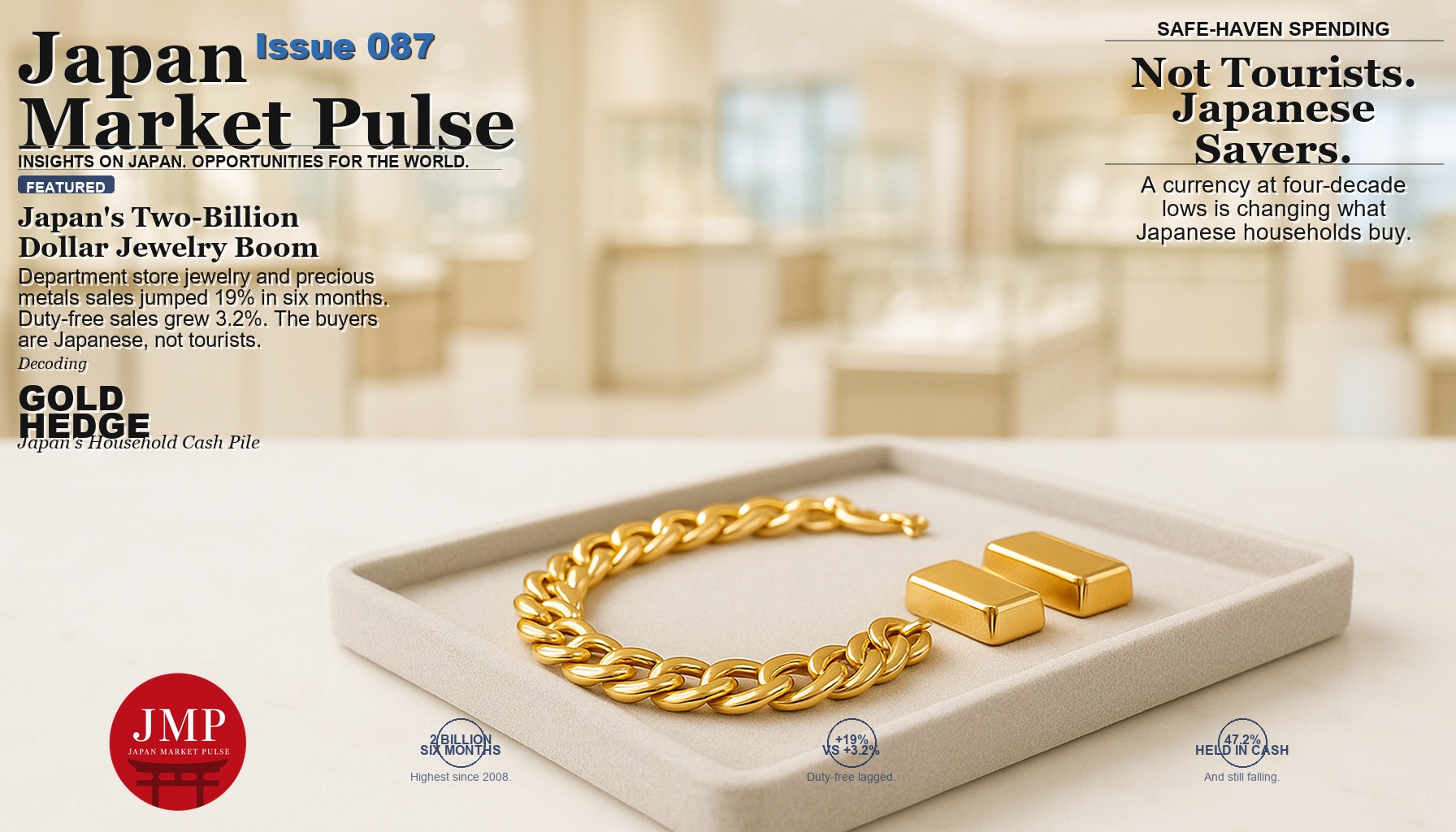
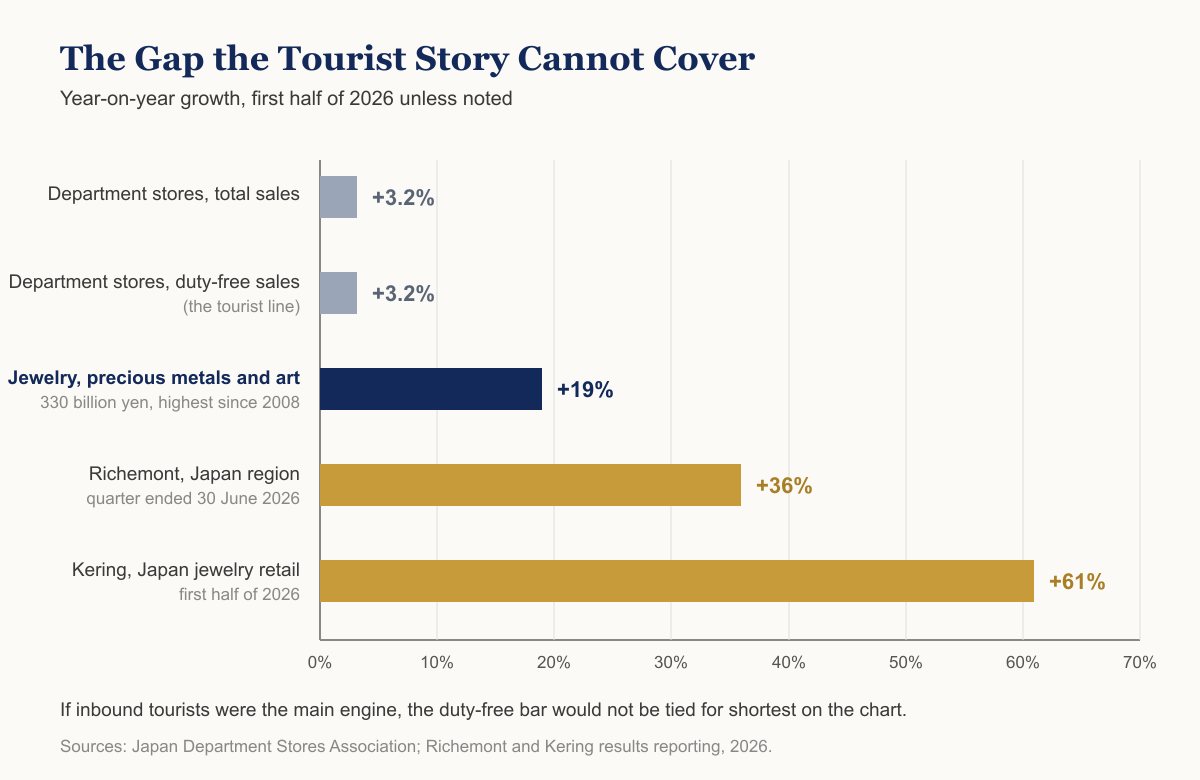
Here is the number that broke it. Sales of gems, precious metals, and artwork at Japan’s department stores climbed 19% in the first six months of 2026 from a year earlier, to ¥330 billion — roughly $2 billion, and the highest first-half figure since the Japan Department Stores Association began keeping this record in 2008. Over the same period, total department store sales rose 3.2%. Duty-free sales — the closest proxy for tourist spending, and the line everybody points to — also rose 3.2%.
Read those three numbers next to each other and the tourist explanation stops being sufficient. Foreign visitors are certainly still buying — luxury groups reporting on Japan describe both local demand and tourist spending. But if inbound visitors were the main engine of the jewelry surge, duty-free would have run hot too, and it did not. Something grew at nearly six times the pace of the channel it sits inside while the tourist line grew in step with everything else, which points to domestic customers as the larger driver: Japanese people, buying gold and diamonds, in yen, with money they were previously keeping in a bank account.
I have lived in Tokyo long enough to have watched Japanese consumers treat jewelry as almost purely emotional territory — a wedding, a milestone birthday, a gift. Watching that same category get repriced, in real time, as a place to store money is one of the more genuinely new things I have seen in this market. It is also a signal that matters far beyond the jewelry counter, because it tells you something specific about what Japanese households now believe about their own currency.
The Number That Doesn’t Fit the Tourist Story
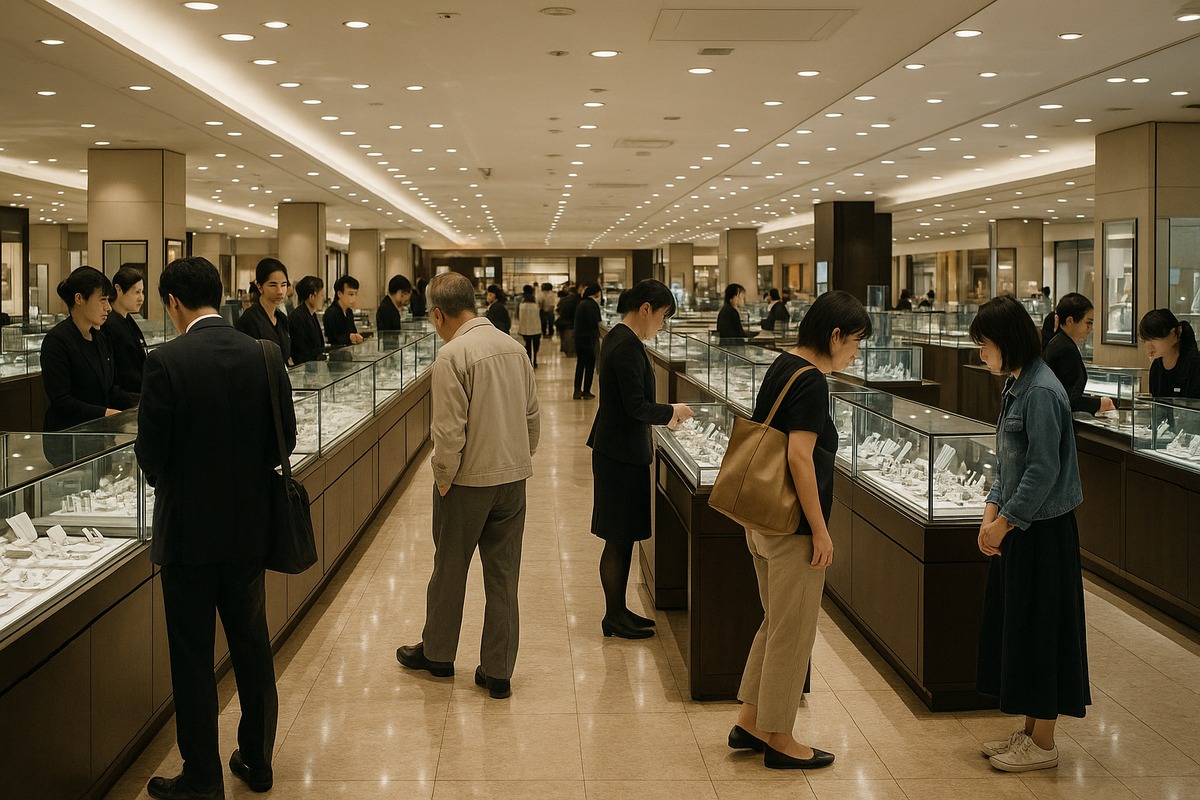
Department stores are a useful measuring instrument in Japan precisely because they are old and slow. The channel has been in structural decline for thirty years, squeezed from below by fast fashion and from above by brand-owned flagship boutiques. When something inside a department store grows 19% in a half-year, it is not because the channel discovered growth. It is because a specific category is being pulled through it by demand the store did not create.
The 19% figure covers a bundle — jewelry, precious-metal items, and art — and it is worth being precise about what that bundle means. It is the category line that Japanese department stores use for fine jewelry, precious metals, and the art and collectibles floors that most large stores still maintain. What unites those things is not luxury. It is durability of value. Nobody buys a gold bar for the styling.
The gap between that 19% and the 3.2% for both overall sales and duty-free sales is the entire argument of this article. Japanese department stores in 2026 are not selling more of everything to more foreigners. They are selling roughly the same amount of most things, to roughly the same mix of people, plus a sharply larger amount of one specific category to domestic buyers who have decided that yen sitting in a savings account is a depreciating asset.
And the brands are seeing it in their own numbers. Richemont — the Swiss group behind Cartier, Van Cleef & Arpels, Buccellati, and Vhernier — reported group sales up 20% at constant exchange rates in its first quarter ended 30 June 2026, with its four jewellery maisons up 24% combined. Japan was its standout region, up 36%. At Kering, the group best known for Gucci, the pattern was even more lopsided: Japanese jewellery retail sales rose 67% in the second quarter and 61% across the first half of 2026 — while the group’s fashion and leather goods business was contracting. Isetan Mitsukoshi, Japan’s largest department store operator, has reported jewelry and watches leading its domestic sales, alongside handbags, cosmetics, and food.
When a category grows 60% in a market where the group’s core business is shrinking, that is not a marketing win. That is a change in what customers think they are buying.
What a ¥600,000 Necklace Is Actually Buying
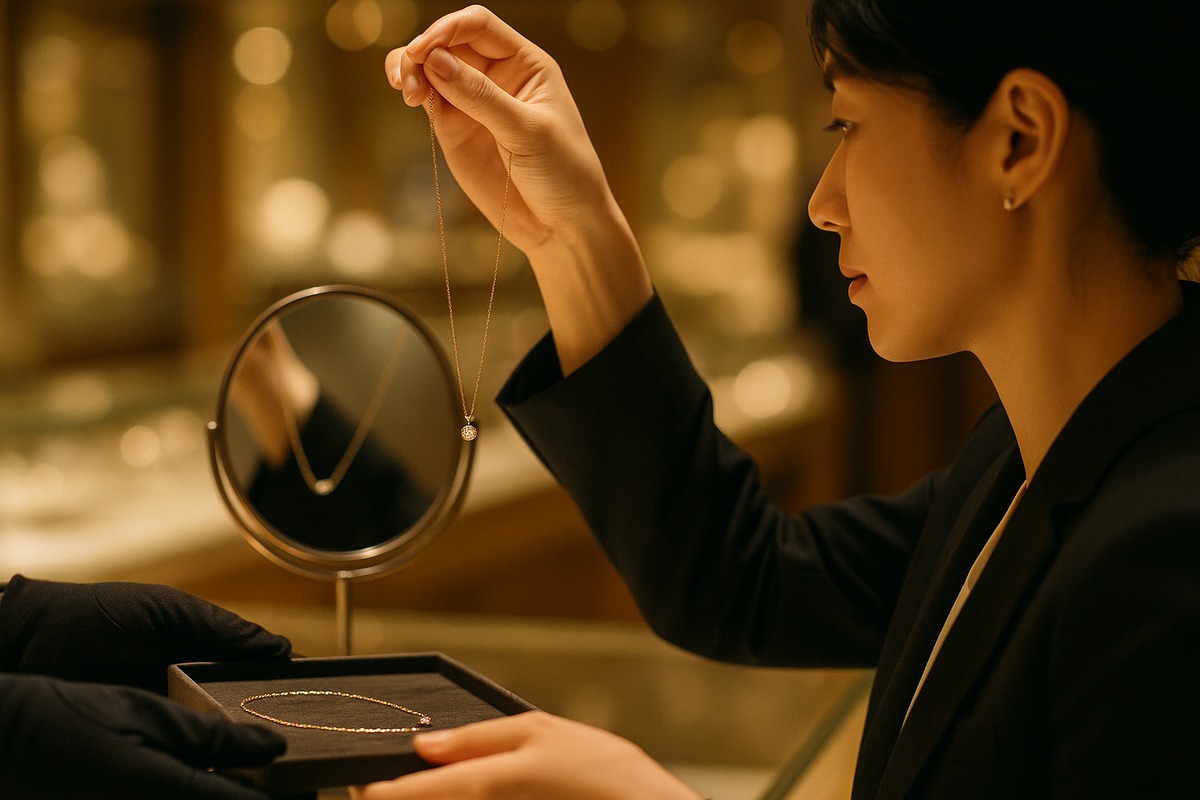
Bloomberg’s reporting on this shift included a detail I have not been able to stop thinking about. Yuki Hayakawa, a 33-year-old office worker, spent roughly ¥600,000 — about $3,600 — on a diamond-and-gold necklace from Chaumet, the LVMH-owned Parisian jeweller. That is a meaningful fraction of an annual bonus for a typical Japanese salaried employee in their early thirties.
The interesting part is not the amount. It is the framing. A generation ago, a purchase like that in Japan would have been narrated as a reward — for a promotion, an anniversary, surviving a hard year. In 2026 it is increasingly narrated as a decision about where to hold money. Satoshi Maehara, president of the Tokyo jeweller Happiness and D, put the new normal plainly: “It’s becoming more normal for people to hold 5 percent to 10 percent of their assets in gold.”
Five to ten percent of household assets in gold is an asset-allocation statement. It is the kind of sentence you would expect from a private bank’s model portfolio, not from a jewellery retailer describing walk-in customers. And that is exactly the point. In Japan right now, the jewellery counter and the wealth-management conversation have merged, and the merge is happening at the retail floor level, not in a brokerage app.
This has a practical consequence for how product is being bought. When jewellery is a gift, the purchase is driven by design, occasion, and the recipient’s taste. When jewellery is a store of value, the purchase is driven by gold content, weight, brand liquidity in the second-hand market, and whether the piece will hold its price. Those are different buying criteria, and they favor different products: high-karat gold, recognizable maisons with deep resale markets, classic designs that will not date, and pieces where the material value is a legible share of the price.
Any brand selling into this market that is still merchandising purely on emotion is competing with one hand behind its back.
The Machine Behind It: ¥164, 1.6%, and a Fourth Year of Falling Real Wages
None of this is happening because Japanese consumers got rich. It is happening because they got nervous, and the arithmetic behind the nervousness is not complicated.
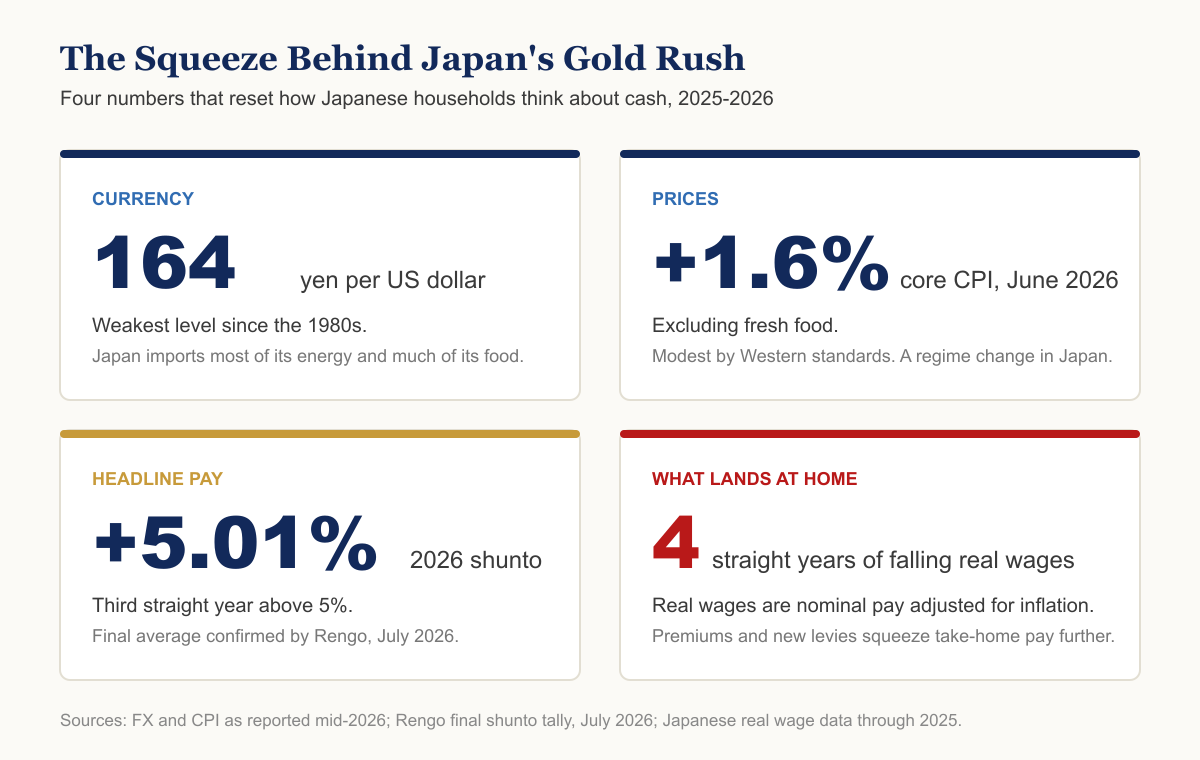
Start with the currency. The yen weakened to nearly ¥164 to the dollar — its weakest level since the 1980s. For anyone whose savings, salary, and pension are all denominated in yen, a currency at four-decade lows is not an abstraction. It is a direct statement about the future purchasing power of the money in their account, particularly in an economy that imports the overwhelming majority of its energy and a very large share of its food.
Add inflation. Core consumer prices, excluding fresh food, rose 1.6% in June. By the standards of the US or the eurozone over the past few years, that is unremarkable. By the standards of Japan, where an entire generation built its financial instincts during two decades in which prices went sideways or down, it is a regime change. Japanese households spent thirty years learning that cash was the safest thing you could hold, because cash quietly gained purchasing power every year that prices fell. That lesson is now wrong, and people are unlearning it in public.
Then add wages. The 2026 shuntō spring wage negotiations produced a headline that sounds excellent: Rengō, Japan’s largest labor federation, confirmed a final average increase of 5.01%, the third consecutive year above 5%. But real wages — nominal pay adjusted for inflation — fell again in 2025, the fourth straight annual decline. Separately, rising social insurance premiums and newly introduced levies are eating further into take-home pay. The headline raise and the lived experience have been diverging for four years running.
Put those three together and you get the psychological engine driving a jewellery counter: a currency at generational lows, prices rising for the first time in most adults’ working lives, and pay increases that look large on the payslip and vanish before they reach the household budget. In that environment, a gold necklace is not an indulgence. It is a hedge you can wear.
Japan’s ¥1,126 Trillion Cash Pile Has Started to Move
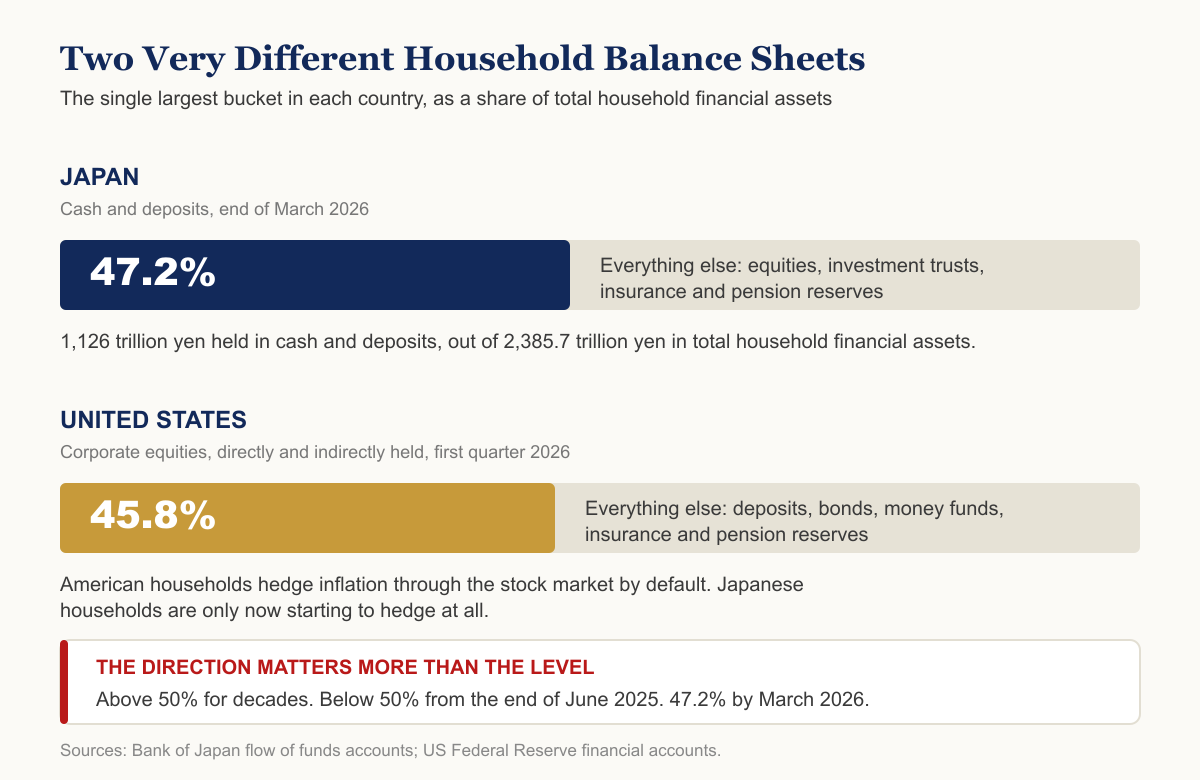
Here is the structural fact that makes this more than a retail anecdote. According to the Bank of Japan’s flow of funds data, Japanese households held ¥2,385.7 trillion in financial assets at the end of March 2026 — up ¥158.9 trillion, or 7.1%, from a year earlier. Of that, ¥1,126 trillion was sitting in cash and deposits.
That is 47.2% of all household financial assets held as cash. For context on how large that pile is: ¥1,126 trillion is roughly seven trillion US dollars of household money earning close to nothing, in a country of about 124 million people.
What has changed is the direction. That cash-and-deposits share stayed comfortably above 50% for decades. It slipped below 50% for the first time at the end of June 2025, and by March 2026 it had fallen to 47.2%. It is worth being precise about what that means: the nominal cash-and-deposits balance is still creeping up, by well under 1% year on year. What is falling is its share, because everything else in the household balance sheet — equities and investment trusts, helped along by the expanded NISA tax-free investment accounts and by rising asset prices — is growing several times faster. Deposits are not emptying out. They are being left behind.
The contrast with the United States is the part international operators should sit with. In the first quarter of 2026, directly and indirectly held corporate equities accounted for roughly 45.8% of US household financial assets. American households hedge inflation through the stock market almost reflexively; it is the default, embedded in retirement plans most people never actively manage. Japanese households are hedging inflation for the first time in their adult lives, without that default, and they are doing it through the channels they actually trust — banks, department stores, and precious metals dealers with a century of history behind the counter.
A few percentage points of ¥1,126 trillion moving toward physical assets is a very large number. Even 1% is over ¥11 trillion. The jewellery and precious metals boom is what the leading edge of that reallocation looks like from the retail floor.
Who Is Winning: Cartier, Kering, and the Department Store Floor
The winners here are not evenly distributed, and the pattern is instructive.
European jewellery maisons with strong brand recognition and deep secondary markets are taking the largest share. Cartier and Van Cleef & Arpels benefit from something specific in this context: a Japanese buyer treating a purchase as a store of value cares whether the piece can be sold again at a defensible price, and those houses have the most liquid resale markets in Japan. That is a moat that has nothing to do with design and everything to do with two decades of secondary-market depth.
Japanese precious metals houses are the other winner, and they are the less visible half of the story. Tanaka Kikinzoku, founded in 1885 and one of Japan’s best-known precious metals groups, sells gold bars, runs jewellery buyback under its RE:TANAKA program, and operates gold accumulation plans — the junkin tsumitate products that let a household buy a fixed yen amount of gold every month, in some cases from as little as ¥1,000 to ¥3,000. That last product category is worth pausing on, because it is where the jewellery boom and the savings behavior visibly become the same thing: a monthly automatic transfer into gold is functionally a savings account that happens to be denominated in metal instead of yen.
Department stores themselves are the third winner, and probably the most surprising one. This is a channel that has spent thirty years being written off. What it still has is trust, physical presence in city centers, and the ability to put a precious metals dealer, a Cartier counter, and an art floor under one roof with a returns policy and a name that a 60-year-old Japanese customer has known their entire life. For a category where the customer’s main anxiety is authenticity and resale value, that combination turns out to be worth a great deal.
The Resale Counter Is the Real Tell
If you want to test whether this is a genuine store-of-value shift rather than a luxury fashion cycle, look at what is happening on the way back out.
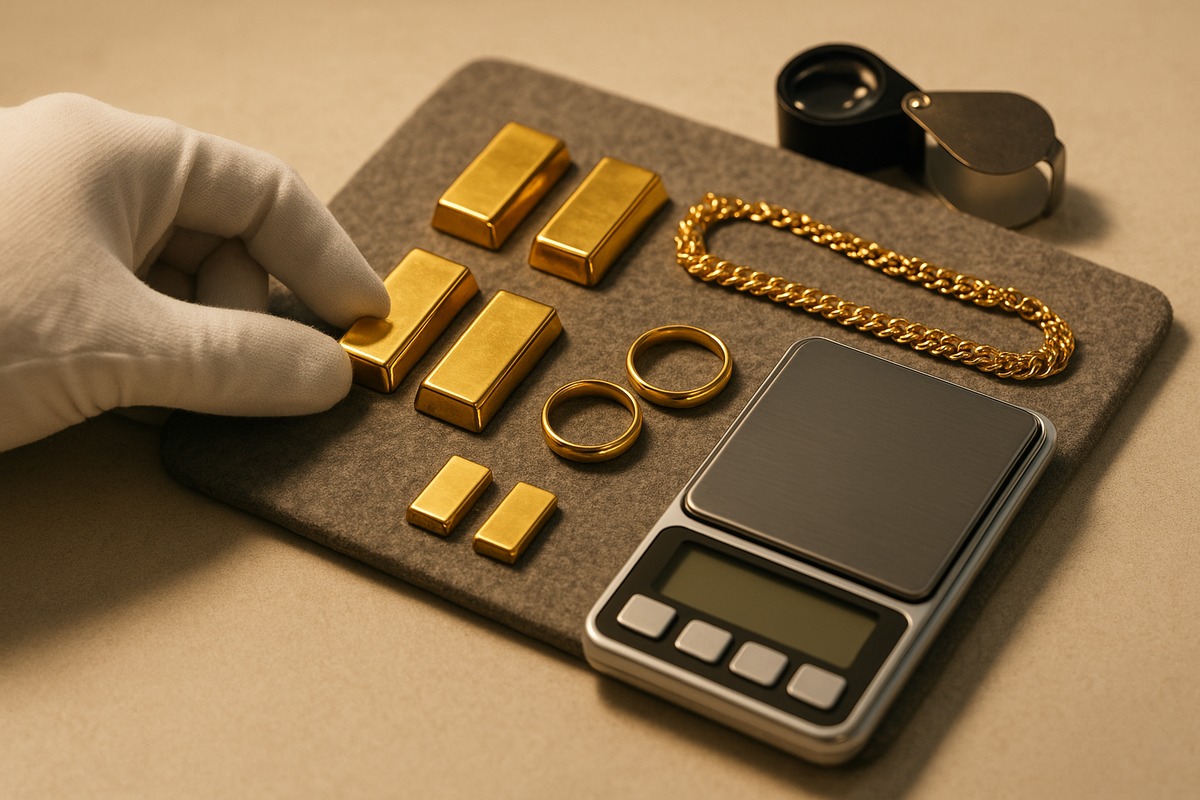
Japan has an unusually mature and unusually respectable second-hand infrastructure. Buying pre-owned in Japan carries none of the stigma it does in some markets, and the buyback counters run by precious metals dealers and reuse chains are ordinary retail, not pawnshops. Programs like RE:TANAKA exist to take unwanted precious metal jewellery back into the material supply chain, and the same department store floors selling new pieces frequently host appraisal and buyback events.
That two-way market is what makes jewellery function as a hedge in Japan in a way it does not in most countries. A hedge you cannot liquidate is not a hedge; it is a decoration with an expensive story attached. Because a Japanese household can walk a gold necklace into a well-known dealer and get a transparent, publicly quoted price based on that day’s spot rate and weight, the purchase carries a floor. That floor is the whole product.
It also means the standard luxury playbook — scarcity, aspiration, brand storytelling — is only half of what is selling here. The other half is something closer to a financial product disclosure: what is the metal content, what is the current price per gram, what will this be worth if I need to sell it. Brands that can answer those questions clearly are outperforming brands that treat the question as vulgar.
What This Means If You Sell Into Japan
Five things I would take away from this if I were building a Japan strategy right now.
First, stop assuming the weak yen story is a tourist story. The most interesting demand in Japanese retail in 2026 is domestic, and it is being driven by Japanese households making defensive decisions about their own currency. Any market entry model built on the assumption that inbound visitors are the growth engine is now describing the smaller half of the picture. Duty-free grew 3.2%. The category most associated with that domestic hedge demand grew 19%.
Second, “store of value” is now a legitimate product positioning in Japan — and not only for jewellery. The same underlying anxiety is showing up anywhere a purchase can be framed as durable rather than disposable: high-end watches, art, collectibles, premium tools and appliances that last twenty years instead of five. If your product genuinely holds its value, that is now a marketable claim to Japanese consumers in a way it was not five years ago, when deflation made “buy it cheaper next year” the rational default.
Third, resale infrastructure is a moat. A brand with a deep, transparent second-hand market in Japan has something competitors cannot buy quickly. If you are a newer brand, the practical version of this is building or partnering into a credible buyback or certification path early, rather than treating the secondary market as someone else’s problem or a threat to full-price sales.
Fourth, the department store channel deserves a second look. I would not have written that sentence three years ago. But for categories where trust, authentication, and physical presence matter more than convenience, the old channel is quietly outperforming, and its concession model gives foreign brands a comparatively low-commitment path into a prime city-center location.
Fifth, watch the ¥1,126 trillion. The single most important number in Japanese consumer economics right now is not GDP or the exchange rate. It is the share of household assets sitting in cash, and the direction it is moving. It has fallen from above 50% to 47.2%, and every further percentage point of decline represents more than ¥20 trillion of balance-sheet weight shifting away from cash — through flows out of deposits, through faster growth in everything else, or both. Some of it goes into equities. Some of it goes into gold. And some of it goes into whatever else Japanese households come to believe will still be worth something in ten years. Being on that list is a strategic position worth designing for.
Frequently Asked Questions
Q. How much did jewelry and precious metals sales in Japanese department stores actually grow in 2026?
A. Sales of gems, precious metals, and artwork at Japan’s department stores rose 19% year-on-year in the first half of 2026, reaching ¥330 billion — about $2 billion — according to Japan Department Stores Association data. That was the highest first-half total since the association began tracking the figure in 2008. By comparison, total department store sales and duty-free sales each grew 3.2% over the same period.
Q. Isn’t this just inbound tourists taking advantage of the weak yen?
A. That is the common assumption, and the data does not support it as the main driver. Duty-free sales, which capture most tourist purchases, grew only 3.2% — the same as overall department store sales. The jewelry and precious metals category grew nearly six times faster, which points to domestic Japanese buyers rather than visitors.
Q. Why are Japanese consumers buying gold and jewelry instead of investing in stocks?
A. Many are doing both. Household money has been moving out of bank deposits into equities and investment trusts through Japan’s expanded NISA tax-free accounts, and the cash-and-deposits share of household financial assets has fallen from above 50% to 47.2% as of March 2026. But Japanese households are hedging inflation for the first time in most of their adult lives, and physical gold and jewellery sit in channels they already trust — department stores and century-old precious metals dealers — with a transparent buyback price. It is a lower-friction first step than opening a brokerage account.
Q. What is a gold accumulation plan, and how popular is it in Japan?
A. Known in Japanese as junkin tsumitate, it is a monthly instalment plan for buying physical gold. A customer sets a fixed yen amount each month — some providers start as low as ¥1,000 to ¥3,000 — and the dealer buys gold on their behalf, which can later be taken as bullion or sold back. Tanaka Kikinzoku, founded in 1885, is the best-known provider. It is essentially a savings plan denominated in metal rather than yen, which is exactly why it fits the current mood.
Q. Which luxury groups are benefiting most from this shift?
A. Richemont, owner of Cartier, Van Cleef & Arpels, Buccellati, and Vhernier, reported group sales up 20% at constant rates in its quarter ended 30 June 2026, with Japan up 36% and its jewellery maisons up 24%. Kering reported Japanese jewellery retail sales up 67% in the second quarter and 61% across the first half of 2026, even as its fashion and leather goods business declined. Isetan Mitsukoshi has reported jewelry and watches leading its domestic sales.
Conclusion
The thing I keep coming back to is how ordinary this looks from the inside. There is no panic in a Japanese department store jewellery hall. There is a 33-year-old office worker looking at a Chaumet necklace, a salesperson explaining gold content, and a buyback counter two floors down. Nobody is describing this as a flight from the yen. But that is what it is, expressed in the most Japanese way possible: quietly, through an established channel, with the receipt kept somewhere safe.
For an international operator, the temptation is to read this as a luxury story and file it with the tourist-spending headlines. I would read it as a monetary story that happens to be visible at retail. A country with ¥1,126 trillion in household cash has begun, cautiously and for the first time in a generation, to doubt that cash is the safe choice. Where that money moves next will reshape more categories than jewellery — and the brands that understand why it is moving will be better positioned than the ones that only notice that it moved.
If you’re interested in this topic, the Japanese market more broadly, or what KETCHUPs is working on, we’d love to hear from you — please reach out via our contact form.
Japan Market Pulse is a weekly read on what the Japanese consumer-tech, food, and mobility markets are choosing to do, written for international operators who want to know what is happening before it shows up in the global trade press.
Subscribe at ketchups.co/japan-market-pulse.