

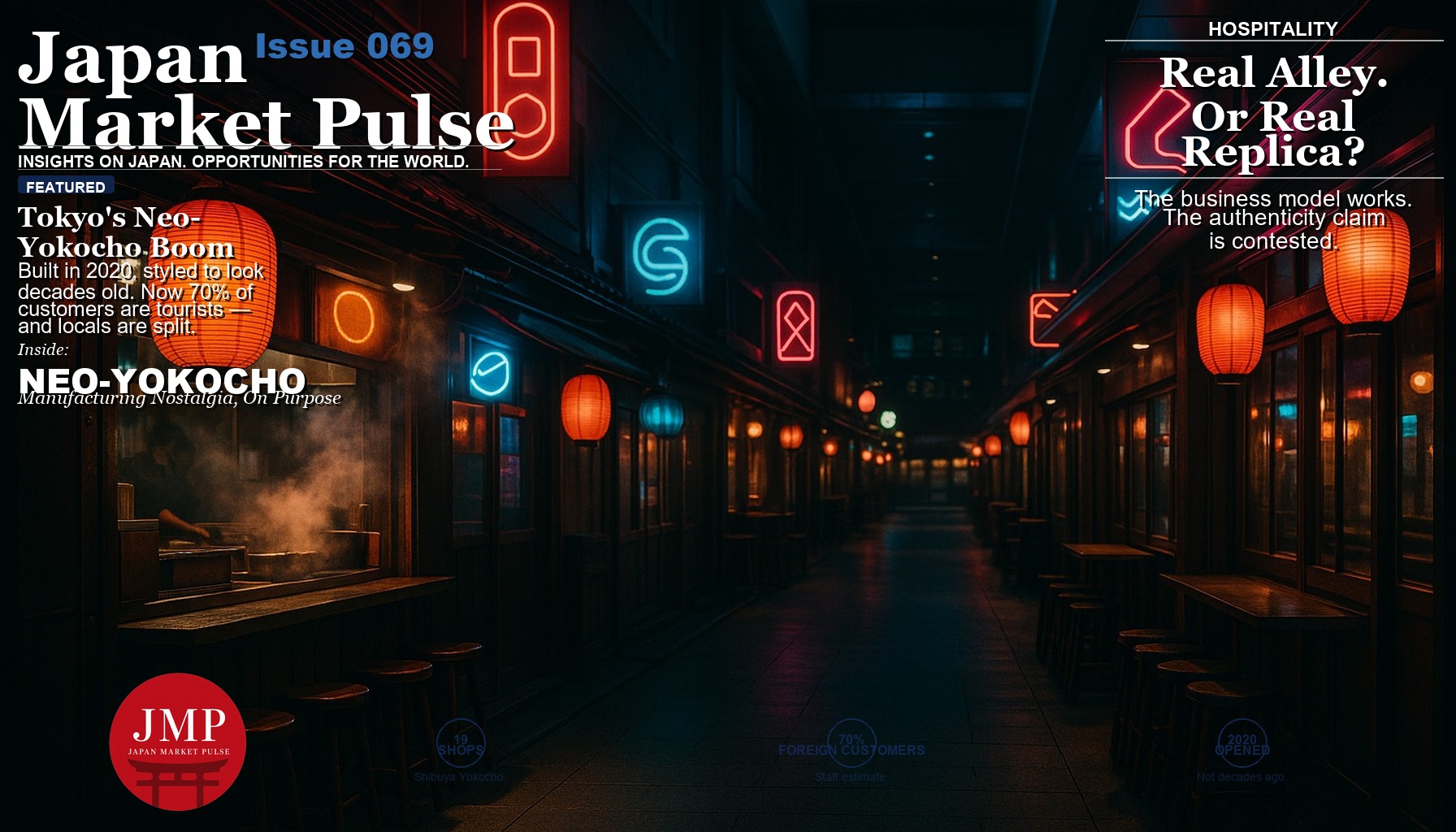
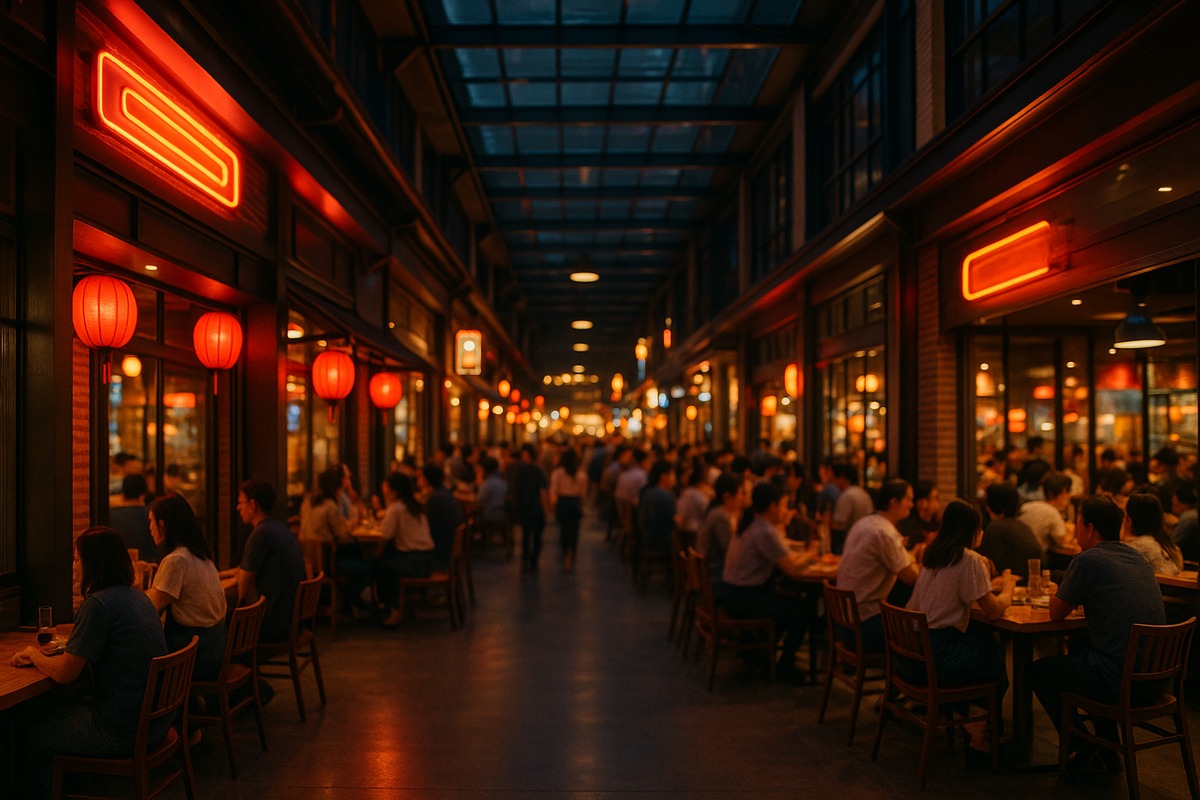
Shibuya Yokocho, a 100-meter indoor alley of 19 bars and restaurants built inside a modern retail complex, opened in August 2020 — not decades ago, but during the pandemic. It seats 1,500 people across roughly 1,000 square meters, and one staff member told Japanese media that foreigners now make up about 70% of its customers. A few train stops away, Shinjuku’s Kabuki Yokocho opened in April 2023 with ten restaurants built around a “matsuri” (festival) theme. Both are polished, brand-new developments engineered to evoke a specific aesthetic: the cramped, neon-lit, postwar alleyway bar districts — yokocho — that grew up organically around Japanese train stations over the past seven decades.
That word “engineered” is doing real work here, and it’s the reason this deserves a more careful look than a simple tourism-boom story. One piece of Japanese entertainment press coverage bluntly asked whether Shibuya Yokocho is really just “a facility for inbound tourists” — describing it as sparsely populated except for foreign visitors and quoting mixed reviews from Japanese customers who found the atmosphere manufactured rather than authentic. Japan is simultaneously building brand-new versions of one of its most organically evolved retail formats, marketing them heavily to international visitors, and generating genuine domestic skepticism about whether the result is a real yokocho experience or a themed replica performing one. Both things are true at once, and understanding why is more useful than picking a side.
What a Real Yokocho Actually Is
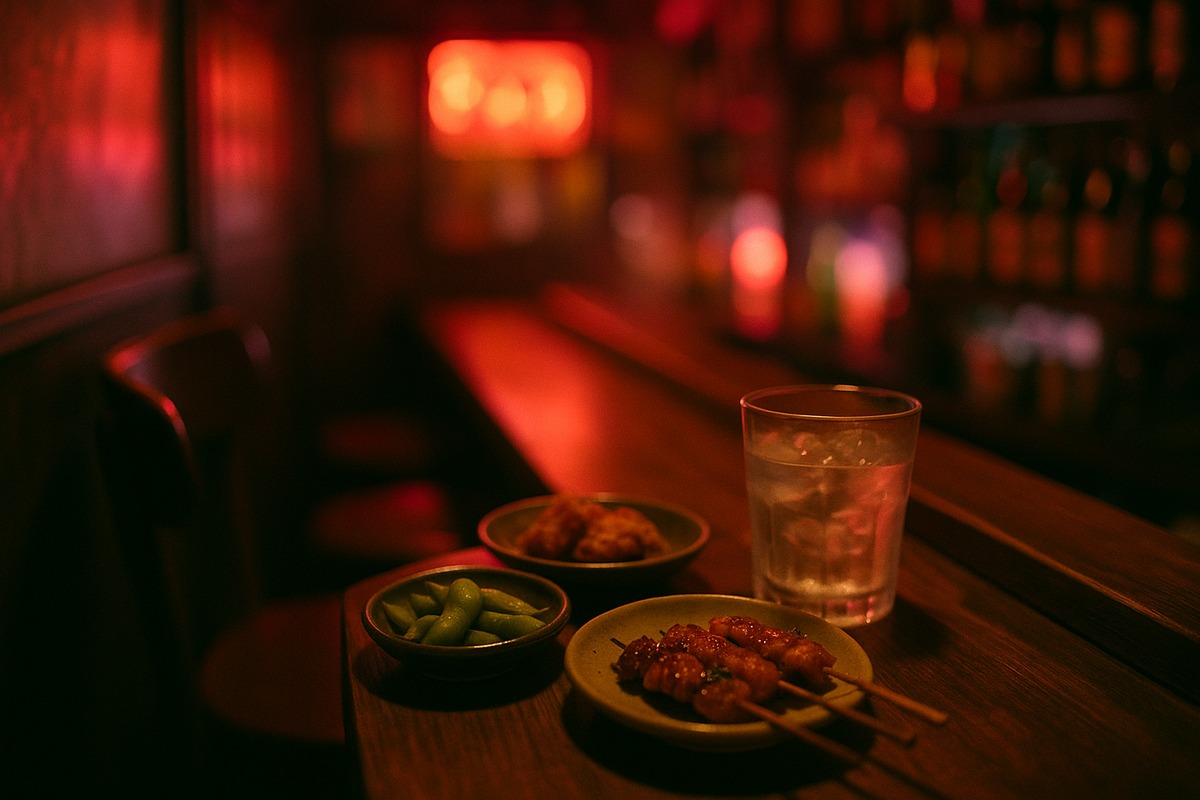
The yokocho format that Shibuya and Kabuki Yokocho are referencing wasn’t designed by anyone. Areas like Shinjuku’s Omoide Yokocho grew out of postwar black-market stalls that gradually formalized into permanent, impossibly narrow lanes of tiny bars and food stalls, each seating a handful of people, accumulating decades of soot, neon signage, and regular customers before anyone thought of it as a tourism product. The appeal to both Japanese locals and, more recently, foreign visitors was never that it was designed — it was that it clearly wasn’t, that the cramped intimacy and lived-in atmosphere were the accidental byproduct of decades of small businesses operating in the same tiny footprint.
That’s precisely the quality a brand-new development can’t manufacture through architecture alone, no matter how carefully it’s styled. A yokocho’s authenticity was never really about the neon signage or the narrow lanes as visual elements — those are copyable. It was about the fact that the format wasn’t created for anyone’s benefit; it just happened, and both locals and visitors could sense the difference between a bar that’s been in the same six-seat stall for thirty years and one that opened eighteen months ago with a licensing deal and a themed interior design brief.
The Numbers Behind the New Format
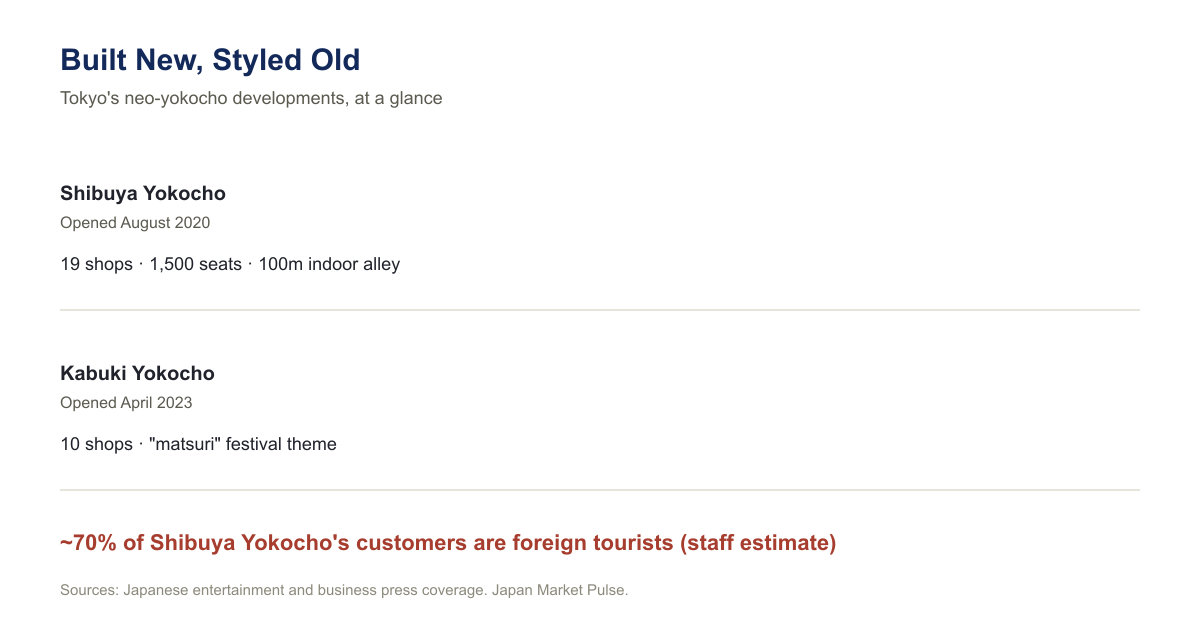
Despite the authenticity debate, the commercial logic behind these developments is straightforward and, on its own terms, working. Shibuya Yokocho’s 19 shops across 1,500 seats inside a purpose-built retail complex represent a level of centralized real estate planning no organic yokocho ever had — a developer can guarantee foot traffic, control tenant mix, and build the space specifically for high-volume tourist throughput in a way that a decades-old alley of independent, individually owned stalls structurally cannot. Kabuki Yokocho’s ten-restaurant, festival-themed build roughly two years and eight months later suggests this isn’t an isolated experiment but an emerging real estate category that Tokyo developers are actively replicating.
The reported 70% foreign-customer share at Shibuya Yokocho is the number that matters most for understanding what’s actually being built here. That’s not a district that gradually became popular with tourists alongside its existing local customer base — it’s closer to a facility whose commercial viability depends specifically on a tourist audience willing to pay for a curated version of an experience, in a controlled environment, without needing to find or navigate an actual historic alley themselves.
Why Both the Success and the Skepticism Are Real
The tension here isn’t a contradiction — it’s two different products serving two different customers, wearing the same aesthetic. A foreign tourist with three days in Tokyo and no fluency in navigating unmarked, Japanese-only-menu alleyways genuinely benefits from a centrally located, English-menu-friendly, guaranteed-open version of the yokocho experience, built specifically to be legible to someone who doesn’t already know which stall is good or how the ordering etiquette works. That’s a real product solving a real access problem, not a scam.
The domestic skepticism is also legitimate on its own terms, and for a specific reason: Japanese customers aren’t rejecting the concept of a curated food-and-drink complex — Japan has plenty of those, plenty of them successful — they’re specifically reacting to the borrowing of yokocho’s aesthetic and cultural signaling (the specific nostalgia of postwar Japan, the coded authenticity of a format that took decades to earn) being deployed for a product that hasn’t earned it yet, and possibly never can. That’s a values-and-authenticity critique, not a business-model critique, and both can be simultaneously true: the business model appears commercially viable while the cultural claim it makes about itself remains contested.
What International Operators Should Take From This
For hospitality developers, tourism boards, and retail operators anywhere building curated, nostalgia-themed dining and entertainment districts — a genuinely global development pattern, from historic-district retail conversions to themed food halls — Tokyo’s neo-yokocho boom is a useful case study in both the opportunity and the reputational risk of manufacturing atmosphere that a market associates with organic, decades-earned authenticity. The commercial logic is sound: centralized planning genuinely can deliver guaranteed foot traffic, controlled tenant mix, and tourist-legible service in ways an organic historic district structurally cannot match. But borrowing the specific aesthetic signals of an organically-earned cultural format, rather than building a new aesthetic on its own terms, invites exactly the “is this real or is this a theme park” scrutiny Shibuya Yokocho has received.
The more transferable lesson may be about audience segmentation rather than authenticity per se: a developer building this kind of curated nostalgia district should be explicit, at least internally, about whether the target customer is the visitor who needs a legible, accessible entry point to a culture they’re unfamiliar with, or the local customer who will hold the space to the standard of the real, decades-old version it’s referencing. Trying to fully satisfy both audiences with the identical product is where the credibility gap tends to open up.
Frequently Asked Questions
Q. What is Shibuya Yokocho, and when did it open?
A. It’s a 100-meter indoor alley of 19 bars and restaurants seating 1,500 people, built inside a modern Tokyo retail complex and opened in August 2020 — a brand-new development styled to evoke Japan’s organic, decades-old yokocho alley bar districts.
Q. What share of Shibuya Yokocho’s customers are foreign tourists?
A. Staff accounts put the figure at roughly 70%, and the venue has drawn Japanese media coverage questioning whether it functions primarily as an inbound-tourism facility rather than a genuine local hangout.
Q. Why do some Japanese customers view these “neo-yokocho” skeptically?
A. The skepticism centers on authenticity: traditional yokocho districts evolved organically over decades from postwar market stalls, and some locals view newly built versions as borrowing that cultural aesthetic without having earned the history behind it.
Q. Is the neo-yokocho business model actually working commercially?
A. Yes, on its own terms — centralized real estate planning delivers guaranteed foot traffic and tourist-friendly service that organic historic districts can’t structurally replicate, even as the format’s cultural authenticity remains debated domestically.
If you’re interested in this topic, the Japanese market more broadly, or what KETCHUPs is working on, we’d love to hear from you — please reach out via our contact form.
Japan Market Pulse is a weekly read on what the Japanese consumer-tech, food, and mobility markets are choosing to do, written for international operators who want to know what is happening before it shows up in the global trade press.
Subscribe at ketchups.co/japan-market-pulse.