

Every January, Tokyo’s Keio Department Store in Shinjuku holds an event most Western retailers would never think to run: a two-and-a-half-week fair devoted entirely to ekiben, the boxed lunches sold at train stations across Japan. The 2025 edition — the 60th consecutive year the fair has run — brought in roughly ¥600 million (about $4 million) in revenue and sold somewhere between 300,000 and 400,000 boxed lunches over its run, drawing 47 regional bento producers to sell and demonstrate their food in person, with around 350 distinct ekiben varieties available across the event. One single bento, a specific regional favorite, reportedly sells around 6,000 units on its best single day and has been the fair’s top seller for 50 consecutive years running.
Compare that to how boxed travel food is treated almost everywhere else. An American airport or train station food court exists to extract maximum margin from a literally captive audience with no other option, and nobody mistakes it for a tourism attraction in its own right. Japan took the exact same category — food designed to be eaten during travel — and turned it into an annual retail event that draws destination shoppers to a department store specifically because of what regional producers are selling, not despite it. Understanding how “food you eat on a train” became “an event people plan a shopping trip around” is a genuinely useful lesson in retail theater and regional food marketing.
What Ekiben Actually Is, and Why It Scaled Into a Category
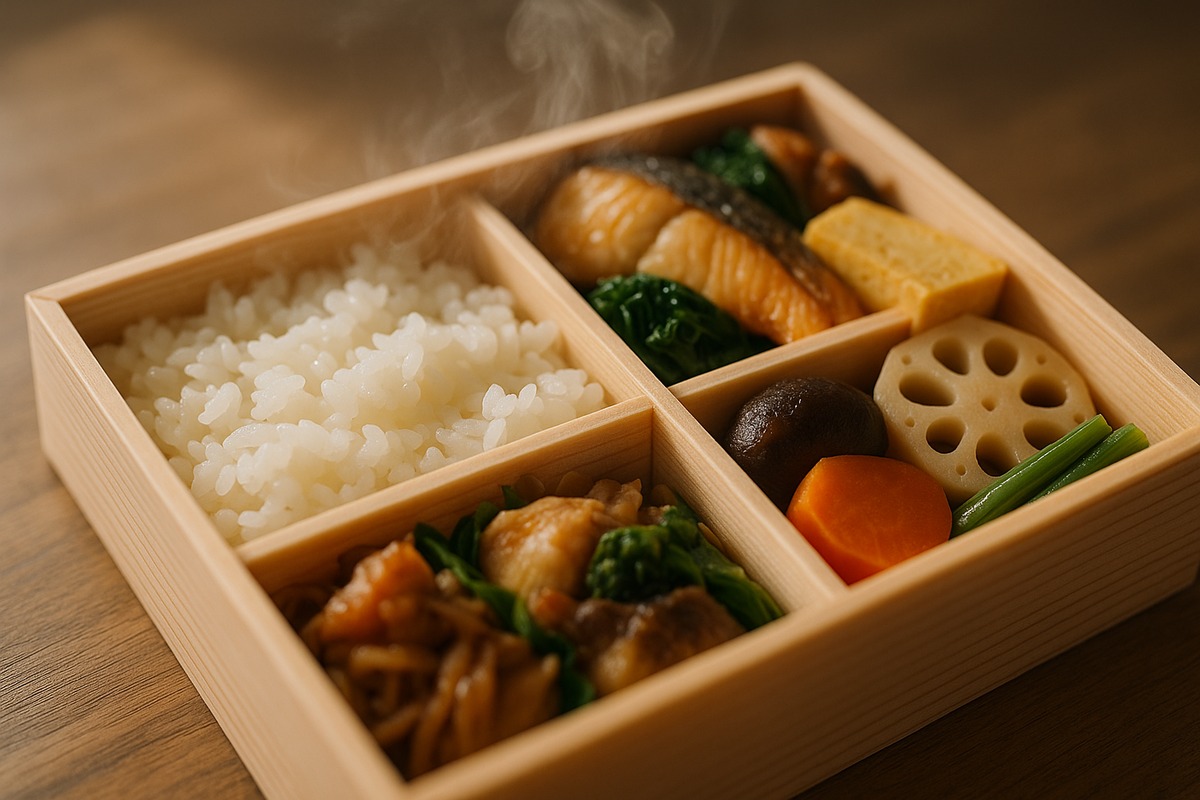
Ekiben — a portmanteau of eki (station) and bento (boxed meal) — are boxed lunches sold specifically at or near train stations, historically aimed at travelers on long-distance rail journeys before dining cars were common and remaining popular long after. Unlike a generic airport sandwich, ekiben are built around regional specialty ingredients and dishes specific to the area the train station serves — a coastal station might sell a bento built around local seafood, a mountain region around wild game or regional vegetables, a beef-producing region around a specific cut and preparation. That regional specificity, repeated at stations across the entire country, effectively created hundreds of distinct micro-brands of the same basic product category, each one tied to a place rather than a company.
That structure is precisely what made an ekiben fair possible as a retail concept. A single company selling a single sandwich has no fair to hold — there’s only one product. Hundreds of regionally distinct producers, each with a genuinely different specialty tied to a place many shoppers will never actually travel to, creates the conditions for something closer to a curated food festival than a lunch counter. Keio’s fair essentially lets a Tokyo department store customer “visit” fifty different regions’ signature train-station food in a single afternoon, without buying a single train ticket.
The Numbers Behind Six Decades of the Same Event
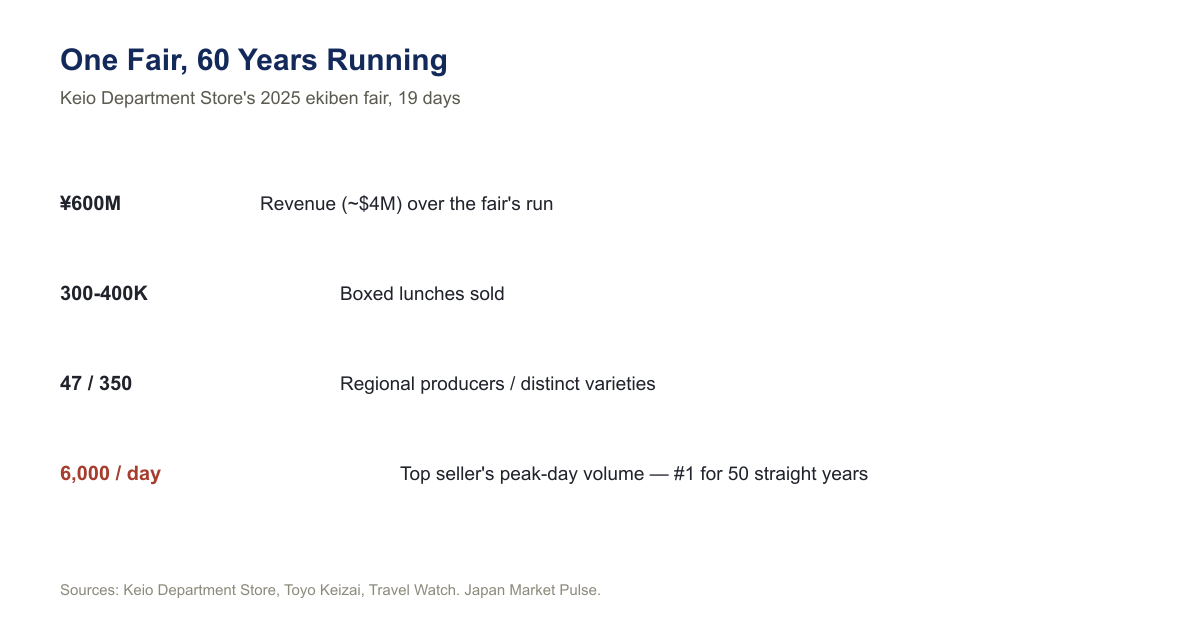
The scale is what separates this from a seasonal promotional gimmick. Sixty consecutive years of the same event, drawing 47 producers and roughly 350 varieties in its 2025 edition, generating approximately ¥600 million in revenue and thirty-to-forty times that many individual meals sold, over a run of less than three weeks. A single standout product selling around 6,000 units on a peak day, and holding the top-selling position for fifty straight years, says something specific about brand durability in a category most Western retailers would assume has no brand loyalty worth building at all — nobody assumes a train-station sandwich has fans who return to it annually for half a century, and yet that’s exactly the dynamic the fair has documented.
The broader effect on foot traffic is also worth noting: department stores running these fairs report meaningful lifts in overall store visitor numbers during the event window, not just sales concentrated in the fair’s own temporary retail space — the food event pulls in a shopper who then also spends time in the rest of the store, a halo effect most single-category pop-up events struggle to produce.
What Makes This Format Actually Work
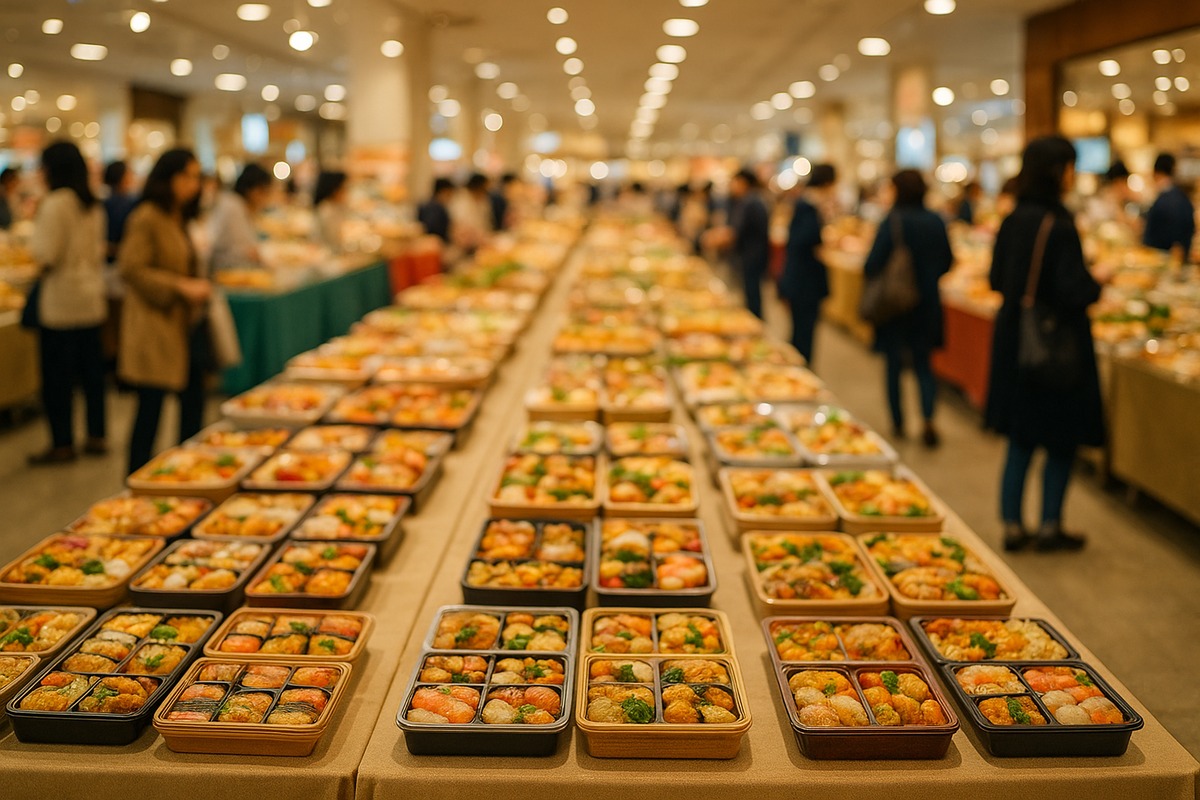
Three structural choices make the ekiben fair function as genuine retail theater rather than a discount food court. First, live preparation and in-person selling by the actual regional producers, not third-party staff, gives shoppers direct contact with the people and places behind each product — the same reason farmers-market formats outperform anonymous grocery aisles on perceived authenticity. Second, deliberate scarcity and rotation: a shopper can’t get most of these specific regional bento at any other time of year without traveling to the originating region, which converts a routine lunch purchase into something closer to a limited-edition collectible. Third, and most importantly, the fair treats geographic diversity itself as the product — the appeal isn’t any single bento, it’s the ability to sample dozens of genuinely different regional food traditions side by side in one place, a value proposition no single producer could offer alone no matter how good their individual product is.
What International Operators Should Take From This
For department stores, tourism boards, transit operators, and food-hall developers outside Japan, the ekiben fair is a transferable model for turning a fragmented category of small regional producers into a single retail event bigger than any of them could run individually. The core mechanic — aggregate dozens of genuinely regional, non-competing specialty producers under one temporary roof, let them sell and demonstrate in person, and lean into scarcity by making the event annual and time-limited — works for any country with meaningful regional food or craft diversity that currently has no shared retail moment showcasing it collectively.
The deeper lesson is about what “travel food” or “convenience food” categories are capable of when a retailer stops treating them as a captive-audience margin play and starts treating them as a legitimate showcase for regional identity. Airport food courts, highway service-area concessions, and train-station kiosks in most countries are optimized purely for throughput and margin per captive customer. Japan’s ekiben fair suggests that same underlying category — food built for travelers — can instead become the anchor of a genuinely popular annual retail event, provided someone is willing to aggregate the regional producers and treat the diversity itself as the draw.
Frequently Asked Questions
Q. How much revenue does Keio’s ekiben fair generate?
A. The 2025 edition, the 60th consecutive year, generated approximately ¥600 million (about $4 million) over roughly two and a half weeks, selling several hundred thousand boxed lunches.
Q. How many different ekiben are sold at the fair?
A. Around 350 distinct varieties from 47 regional producers in the 2025 edition, each tied to a specific train station or region’s culinary specialty.
Q. Why has one specific ekiben been the top seller for 50 years?
A. Specific regional recipes and preparations build genuine repeat demand and brand loyalty over decades, similar to any long-running consumer product — the difference is that most Western retailers don’t assume travel food is capable of building that kind of durable following.
Q. Could this fair format work outside Japan?
A. The core mechanic — aggregating regional specialty food producers under one temporary retail roof, with live preparation and annual scarcity — is transferable to any market with meaningful regional culinary diversity and a retailer willing to organize the showcase.
If you’re interested in this topic, the Japanese market more broadly, or what KETCHUPs is working on, we’d love to hear from you — please reach out via our contact form.
Japan Market Pulse is a weekly read on what the Japanese consumer-tech, food, and mobility markets are choosing to do, written for international operators who want to know what is happening before it shows up in the global trade press.
Subscribe at ketchups.co/japan-market-pulse.