

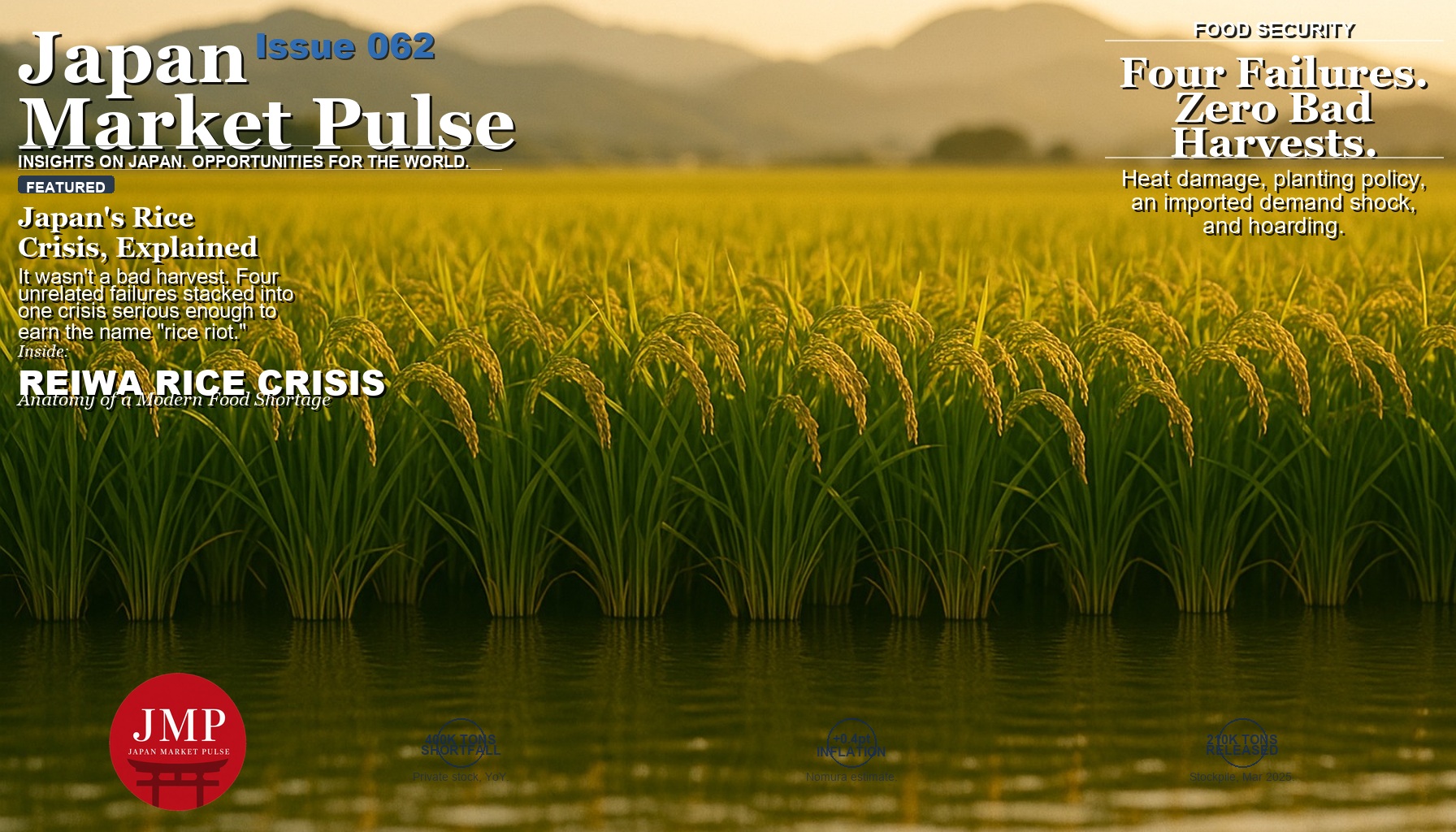
Japan has a name for what happened to its rice supply starting in 2024: people are calling it the “Reiwa rice riot,” a direct callback to the 1993 Heisei-era rice crisis and, further back, the 1918 Taisho rice riots that are still taught in Japanese history classes. The country’s rice price surge pushed national inflation up by an estimated 0.4 percentage points and dragged consumption and GDP down by roughly 0.2% annually, according to Nomura Research Institute’s analysis. In January 2025, the government took the unusual step of rewriting the rules governing its own emergency rice stockpile so it could release grain even without a formally declared supply disruption — and by March, it had put roughly 210,000 tons of stockpiled rice up for auction, with an initial 150,000-ton tranche hitting the market immediately.
Here’s the part that should surprise anyone who assumes a rice crisis means a bad harvest: Japan didn’t have one. The country’s rice supply problem in 2024–2025 was barely a production story at all. It was a story about heat damage during milling, a multi-year acreage-reduction policy finally catching up with demand, a war on the other side of the world reshaping what Japanese households eat for dinner, and — by multiple accounts — old-fashioned hoarding by traders positioning to profit from a price spike they could see coming. For a country that has spent decades treating rice self-sufficiency as close to a matter of national identity, watching prices spiral upward for reasons that had almost nothing to do with how much rice actually got planted is a genuinely uncomfortable case study in how modern supply chains fail.
A Country That Names Its Rice Crises
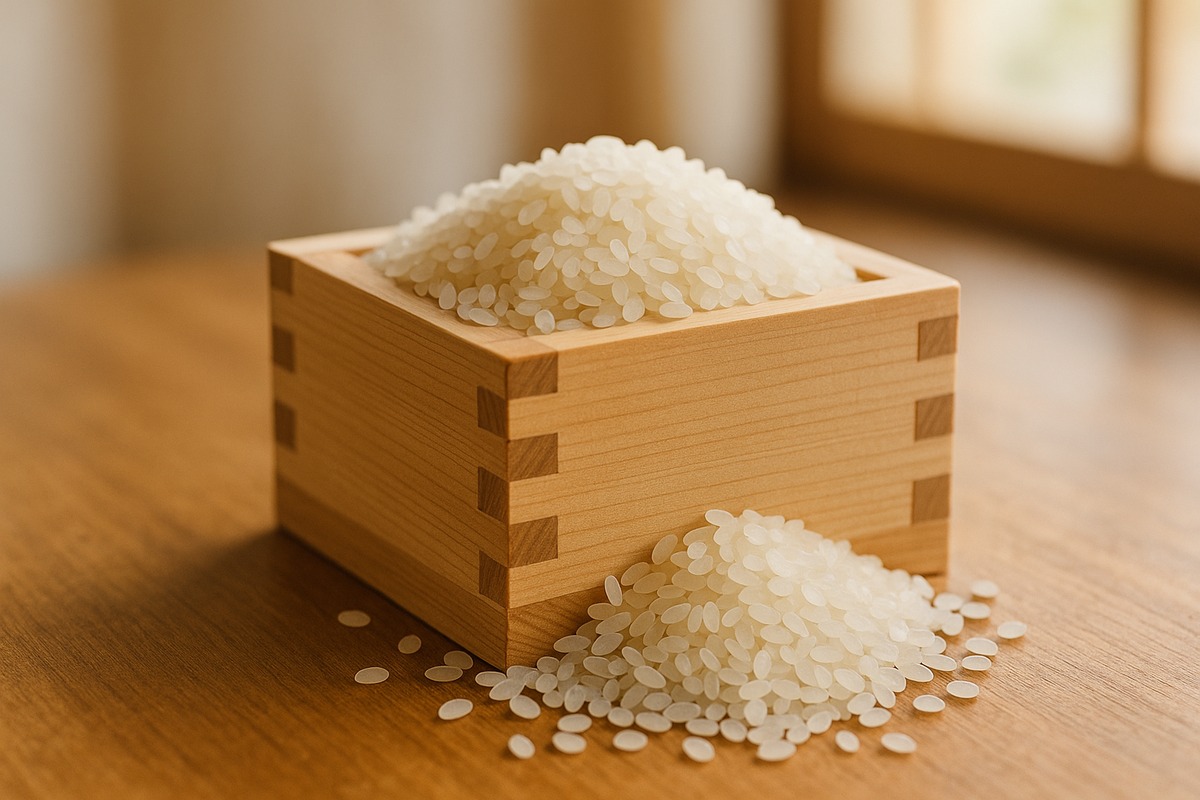
Japan doesn’t use the phrase “rice riot” casually. The 1918 Taisho rice riots were a genuine national crisis — wartime demand and speculative hoarding drove rice prices so high that unrest spread across dozens of cities, eventually contributing to the fall of the sitting government. The 1993 Heisei rice crisis, triggered by an unusually cool growing season that devastated the harvest, forced Japan to import foreign rice for the first time in decades to cover the shortfall, a genuinely traumatic experience for a country that had built rice self-sufficiency into its postwar identity. Both episodes are still taught as reference points for what a real national food crisis looks like.
That’s the weight the word choice carries when commentators started calling 2024–2025 the “Reiwa rice riot.” And it’s precisely why the comparison is uncomfortable: 1918 was wartime demand collision with speculation, and 1993 was a genuine harvest failure. The 2024–2025 episode had a little bit of both — a demand shock imported from an unrelated war, and speculative behavior in the distribution chain — but almost none of the third, classic ingredient. The harvest, in gross terms, was not a disaster. That a crisis serious enough to earn the “rice riot” label again could occur without a harvest failure at its center is itself the headline, more than any single price figure.
Four Things Went Wrong at Once
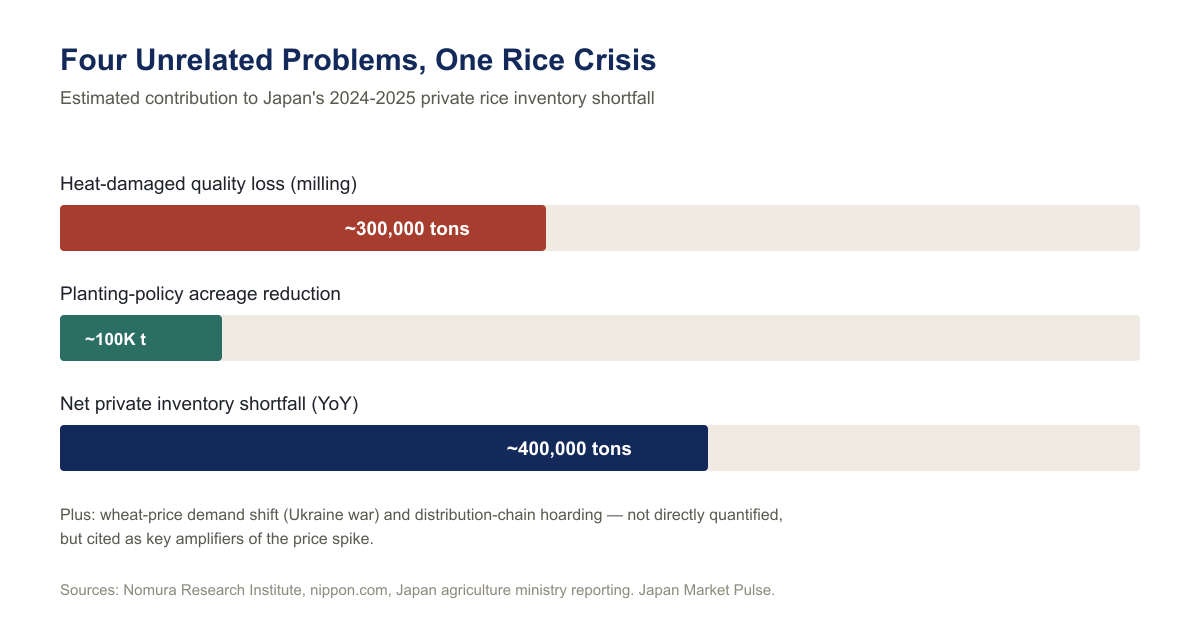
The 2024 heatwave did real damage, but not in the way most people assume. Extreme summer heat degraded the quality of an estimated 300,000 tons of rice during the milling process — grain that technically existed but got screened out before reaching consumers because it didn’t meet quality standards. That’s a quality failure, not a yield failure, and it’s a distinction that matters: the rice existed in the field, but a meaningful share of it never became sellable product.
Layered on top of that was a slower-moving structural problem. Rice acreage under Japan’s long-running production-adjustment policy — a decades-old system designed to prevent oversupply and prop up prices for farmers — had been reduced by roughly 100,000 tons’ worth of planting in the prior harvest cycle. Combined with the heat-damage losses, private-sector rice inventory ended up running about 400,000 tons below the same point the year before. That’s a meaningful gap in a market where supply and demand were already balanced closely enough that small disruptions show up quickly in retail prices.
Then demand itself shifted in a way nobody had priced into planning. The war in Ukraine pushed global wheat prices sharply upward, and Japanese households facing pricier bread and noodles measurably increased their rice consumption in response substitution economics working exactly as textbooks predict, just at the worst possible moment for a market already running short on supply.
The fourth factor is the one that turned a supply problem into a genuine political crisis: speculative behavior inside the distribution chain itself. Multiple analyses of the crisis point to trading intermediaries buying up available rice and holding it, positioned to benefit from further price increases rather than releasing inventory into a tightening market. A supply shortfall that might have been a manageable few-percent price increase compounded into a much sharper spike once participants inside the supply chain started behaving as if the shortage were going to get worse, not better.
Why the Government Had to Rewrite Its Own Rules
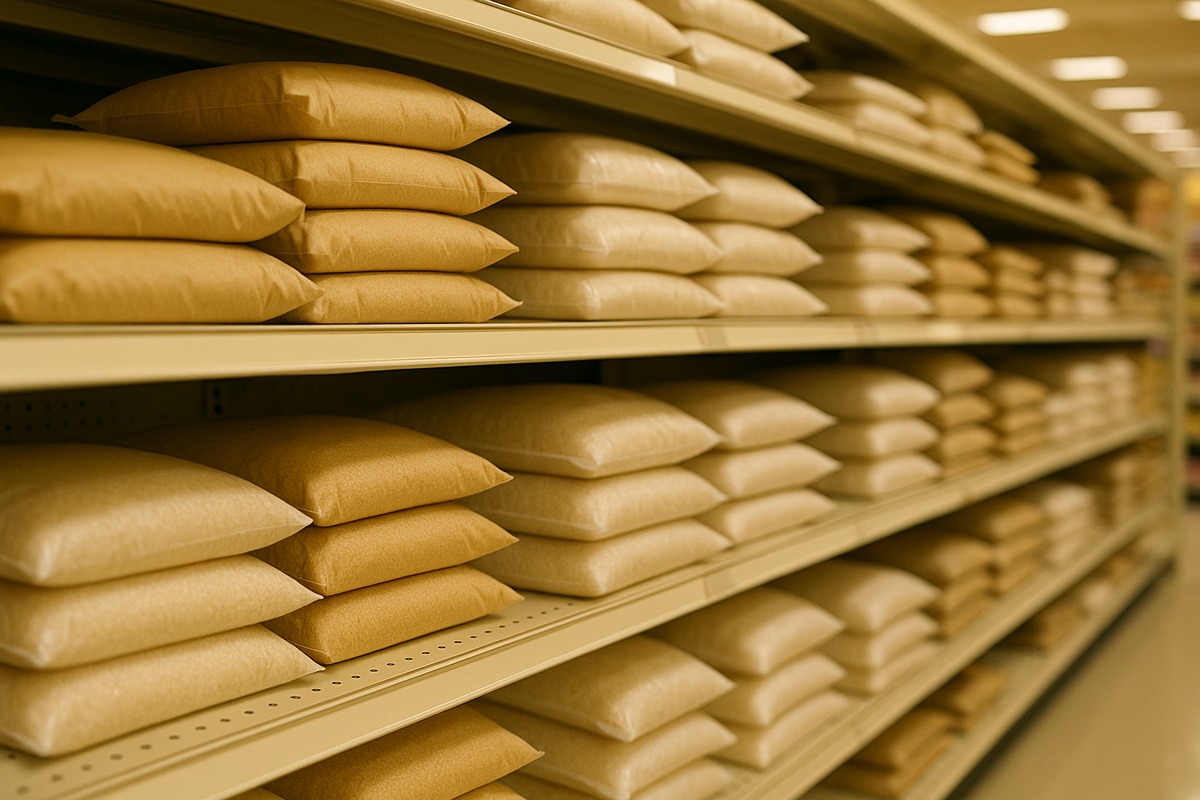
Japan has long maintained an emergency rice stockpile specifically for supply disruptions — the kind of mechanism most food-security-conscious countries keep for genuine crop failures or trade disruptions. The problem in 2024–2025 was that the stockpile’s release rules weren’t written for a crisis with this specific shape: a situation where physical rice existed in the country in adequate quantity, but wasn’t reaching consumers at reasonable prices because of a combination of quality losses, planting policy, and distribution-chain hoarding rather than a clean, declarable “shortage” event.
On January 31, 2025, Japan’s agriculture ministry revised the operating rules for the stockpile specifically to allow release when distribution is disrupted, even without a formal shortage declaration — an acknowledgment that the existing framework, built around production-side disruptions, didn’t fit a crisis that was substantially a distribution and hoarding problem. By March 3, the ministry had announced a tender for roughly 210,000 tons of stockpiled rice, releasing an initial 150,000 tons into the market.
The results were instructive and not entirely satisfying. Prices did respond to the stockpile release, but the effect proved partial and temporary — as stockpile sales volumes tapered off, much of the price-reduction effect faded with them, suggesting the intervention addressed the symptom without fully resolving the underlying distribution-chain dynamics that had let hoarding behavior flourish in the first place. It took until roughly the end of 2025 for the market to enter a clear reversal, with spot prices falling back toward the ¥20,000-per-unit range that traders consider a more normalized level.
What a “Modern” Food Crisis Actually Looks Like
The instructive part of Japan’s rice crisis, for anyone watching food security or agricultural policy outside Japan, is how little of it maps onto the crop-failure template most emergency food-stockpile systems were originally designed around. Japan’s rice stockpile — like most national grain reserves globally, including the U.S. Strategic Petroleum Reserve’s conceptual cousins in agriculture — was built with a specific failure mode in mind: a bad harvest, a trade embargo, a natural disaster that physically reduces the amount of food available. What actually happened was a compound failure across four completely different mechanisms — heat-driven quality loss, a slow-moving planting-policy drawdown, a demand shock imported from an unrelated geopolitical conflict, and speculative hoarding inside the market’s own distribution layer — none of which, individually, would have been severe enough to trigger an emergency response, but which stacked into a genuine crisis when they landed in the same twelve-month window.
That compounding pattern, more than any single cause, is the part worth studying. Modern food-supply systems are exposed to multiple, only loosely correlated shock vectors simultaneously — climate volatility affecting quality as much as yield, geopolitical events thousands of miles away reshaping domestic demand, and financially motivated actors inside the supply chain who can turn a modest shortfall into a sharp one by choosing not to sell. A stockpile release mechanism built to answer “did the harvest fail” is only a partial defense against a crisis built from four unrelated smaller failures compounding at once.
What International Operators Should Take From This
For food companies, agricultural policymakers, and supply chain operators anywhere with a strategic-reserve system, Japan’s rice crisis is a live example of a stockpile mechanism having to be rewritten mid-crisis because its original rules assumed a simpler failure mode than the one actually unfolding. Any organization holding a strategic reserve — food, energy, critical materials — is worth asking the same question Japan’s agriculture ministry effectively had to answer under pressure: does our release trigger actually cover a distribution-chain hoarding scenario, or only a classic supply-failure scenario? Those are different problems requiring different intervention rules, and discovering the gap mid-crisis is considerably more expensive than discovering it in a planning exercise.
There’s a second, quieter lesson about substitution demand. Japan’s rice shortage was measurably worsened by a wheat-price shock originating in a war on another continent, pushing consumers toward a substitute staple that then ran short itself. Any company managing staple-food supply chains should treat cross-category substitution demand — what happens to rice consumption when bread gets expensive, what happens to corn when wheat gets expensive — as a live input into inventory planning, not a secondary effect to model after the fact.
Frequently Asked Questions
Q. Did Japan actually run out of rice in 2024–2025?
A. No. The core problem was a roughly 400,000-ton shortfall in private-sector inventory compared to the prior year, driven by heat-related quality losses and planting-policy reductions, compounded by a demand shift and distribution-chain hoarding — not a true production collapse.
Q. Why did the government change its stockpile release rules?
A. The original rules required a formally declared supply disruption. The 2024–2025 crisis was substantially a distribution and hoarding problem rather than a clean shortage, so the ministry revised the rules in January 2025 to allow release under disrupted-distribution conditions as well.
Q. Did releasing the stockpile fix rice prices?
A. Partially and temporarily. Prices responded while stockpile sales continued, but much of the effect faded as release volumes tapered off, and a clearer price reversal only emerged around the end of 2025.
Q. What role did the war in Ukraine play in a Japanese rice shortage?
A. Rising global wheat prices linked to the war pushed Japanese households to substitute rice for bread and wheat-based staples, adding demand pressure to a market that was already running short.
If you’re interested in this topic, the Japanese market more broadly, or what KETCHUPs is working on, we’d love to hear from you — please reach out via our contact form.
Japan Market Pulse is a weekly read on what the Japanese consumer-tech, food, and mobility markets are choosing to do, written for international operators who want to know what is happening before it shows up in the global trade press.
Subscribe at ketchups.co/japan-market-pulse.