

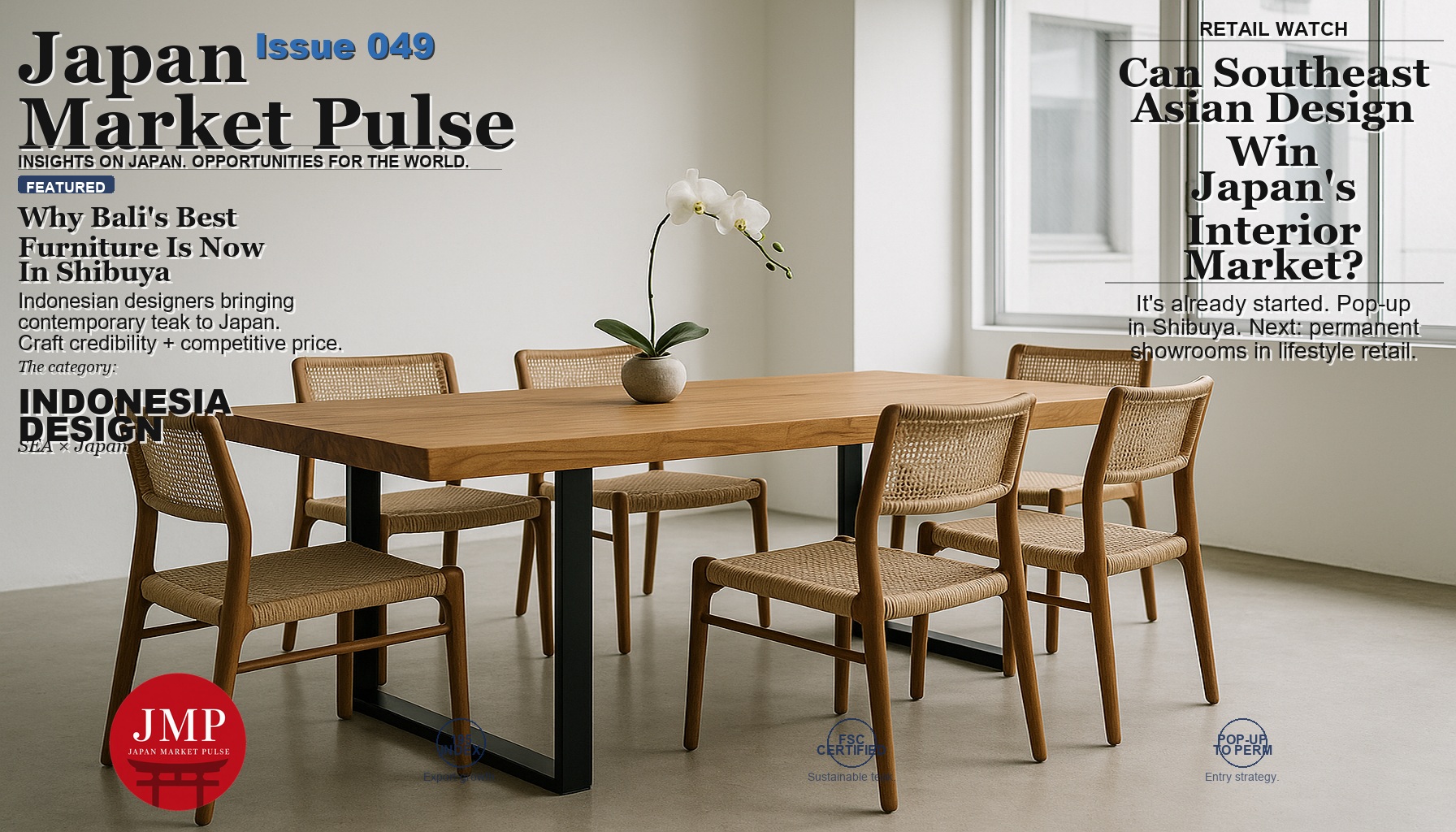
There is a particular kind of cultural moment that signals a market shift rather than a trend. It does not announce itself with a press release or a funded marketing campaign. It arrives, instead, as a quiet surprise: the thing that wasn‘t there last year is suddenly here, and it belongs, and you cannot remember what was there before.
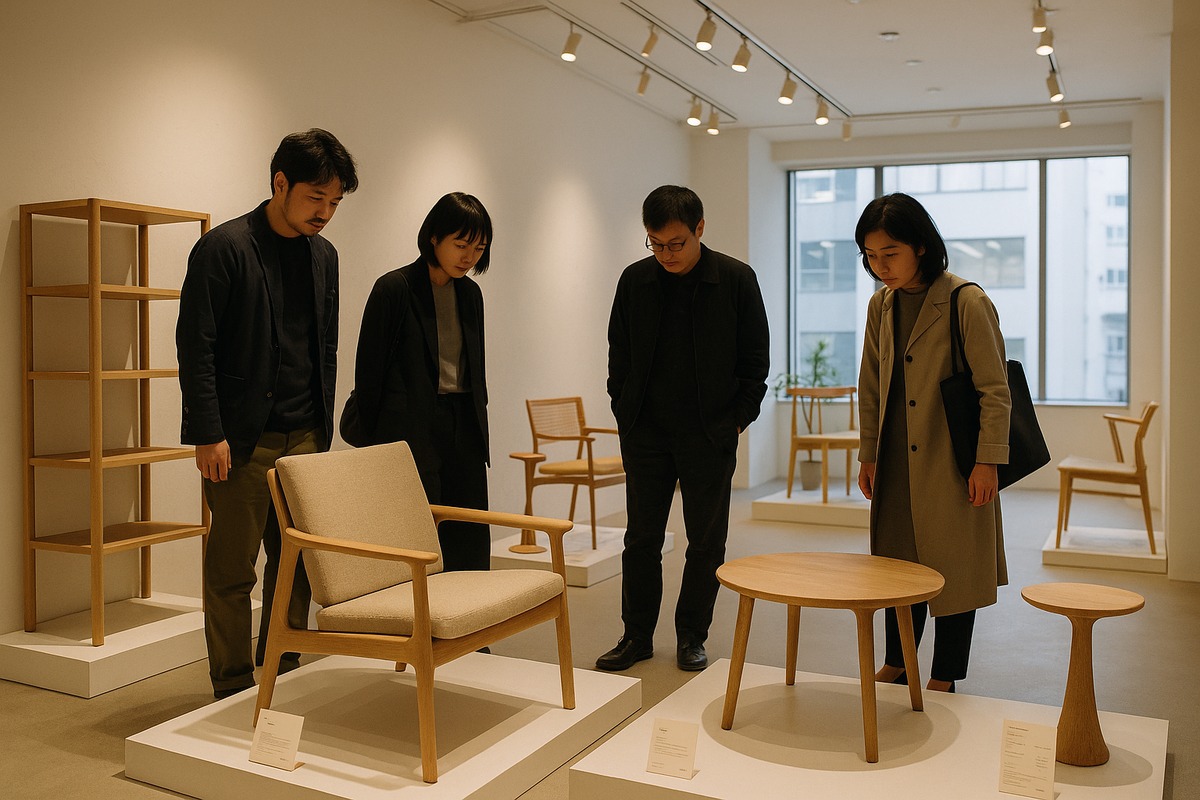
That was my experience walking through a Shibuya design event featuring Indonesian furniture this spring. The pieces were not what I expected from Southeast Asian furniture — not rattan loungers, not carved wooden animals, not the catalog of tropical handicraft imagery that tends to dominate international market stalls. These were contemporary. Precise. The kind of furniture that belongs in a minimal Tokyo apartment or a well-considered Copenhagen loft, sitting alongside pieces by recognized European designers without apology.
The event was described as bringing Bali‘s design scene to Shibuya. But what it was actually doing was more significant: it was a statement about the maturity of Indonesian design, the ambitions of its practitioners, and the readiness of Japanese consumers to receive it on those terms.
The Reinvention That Took Three Decades
To understand what is happening with Southeast Asian furniture in Japan, you need to understand what happened to Indonesian design before it arrived.
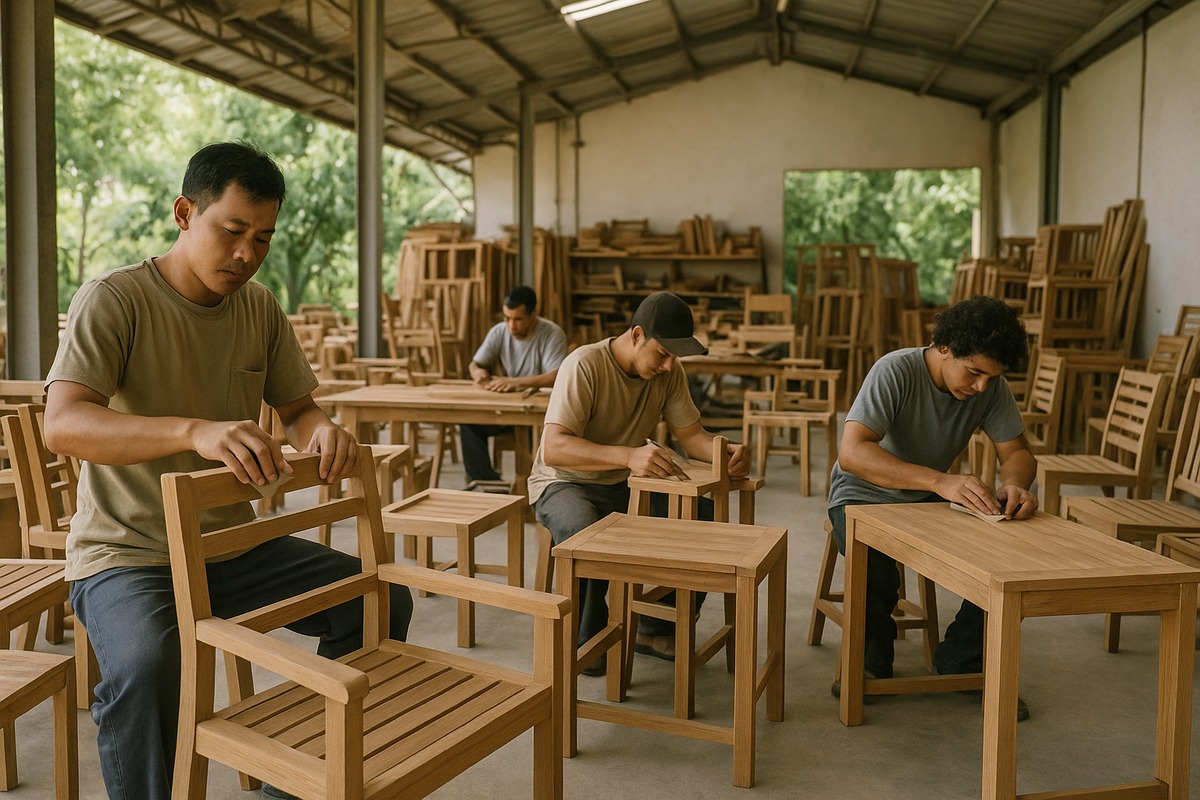
Indonesia has been a furniture-exporting nation for a long time. The country has extraordinary material resources — teak, rattan, bamboo, mahogany, tropical hardwoods — and a deep craft tradition in every region. For most of the twentieth century, the furniture that left Indonesia for export was positioned around those raw materials: solid teak furniture for Western garden markets, rattan sets for casual indoor use, carved decorative pieces for the gift and souvenir trade.
That positioning was export-viable but not design-forward. It defined Indonesian furniture as a materials story, not a design story. The category it occupied in the minds of importers and consumers was "natural materials, moderate price, artisanal finish" — a defensible niche but a ceiling.
The change began, almost certainly, in Bali. Bali‘s unusual position as an international creative hub — attracting designers, artists, filmmakers, and lifestyle entrepreneurs from across the world since the 1980s — created a laboratory that other Indonesian regions didn‘t have. International designers collaborating with Balinese craftspeople produced pieces that retained the material richness of Indonesian production but introduced contemporary design language: clean geometry, thoughtful proportions, finishes that respected the material without being overwhelmed by it.
By the 2010s, Bali had developed a furniture design scene that was genuinely international in ambition and execution. Showrooms in Seminyak and Canggu began stocking pieces that could sit comfortably in Wallpaper* without looking like they belonged in a different category. The market that noticed first was hospitality — high-end resort hotels in Bali, then across Southeast Asia, then in destination markets globally, began commissioning Indonesian designers for interior fit-outs.
Japan as a Target Market
Why Japan specifically? And why now?
The Japanese interior market is, in several ways, the ideal destination for what Indonesian design has become. Japan has a deep culture of appreciating craft — the vocabulary of handwork, material integrity, and the relationship between form and function resonates with how educated Japanese consumers think about objects they live with. A furniture piece that carries a genuine craft story, explained well, finds a sophisticated audience in Japan in a way it might not in a market where design discourse is less developed.
Japan also has an appetite for what might be called "Asian refinement" that is distinct from its appetite for European design. Japanese consumers, and particularly younger urban consumers, have become more interested in work coming from elsewhere in Asia that demonstrates creative confidence — not imitating European modernism but developing from different sources into something equally current. Korean design has benefited from this interest for a decade. Thai design has had moments. Indonesian design is, I would argue, the next significant wave.
The Shibuya event was not a one-off. It followed a pattern of Indonesian design presence in Japan that has been building — individual designer collaborations with Japanese retail partners, participation in Japanese trade fairs, pop-up installations at established retail venues. The trajectory is recognizable: the test-market phase before the permanent establishment phase.
Japanese interior media — magazines, design blogs, the social media accounts of interior stylists with significant followings — have been covering Indonesian design with increasing seriousness. When stylists with audiences of 100,000 or 500,000 feature a piece in their apartment and link to the designer, the commercial consequence is real.
The Pieces Themselves
What specifically is working? Based on observation at the Shibuya event and engagement with the broader category in Japan, a few design directions stand out.
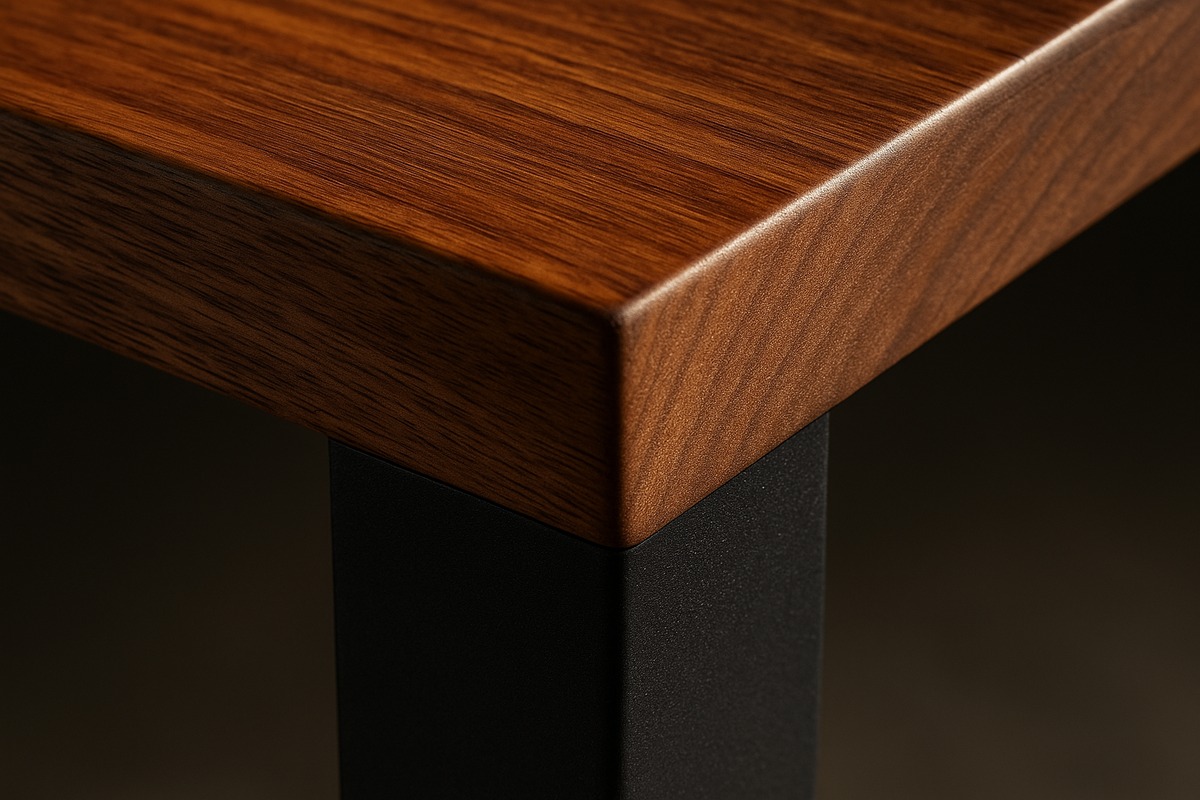
First, the intelligent use of natural material in forms that are not explicitly "natural." A table with a teak top but legs in black powder-coated steel reads as contemporary rather than rustic. A rattan chair with tight weave and a polished lacquer frame sits in a category with Danish mid-century classics rather than in the patio furniture aisle. The skill being demonstrated is the integration of Indonesian material advantage with a design intelligence that has absorbed international contemporary form language.
Second, scale sensitivity appropriate to Japanese living environments. Indonesian designers who have done their homework — and increasingly, those showing at Japanese venues have — understand that the Japanese apartment is smaller than the average international reference frame. Pieces that work in an open-plan Bali villa do not necessarily translate to a 45 square meter Tokyo apartment. The pieces getting traction in Japan tend to be appropriately scaled and multifunctional.
Third, a visible sustainability story. Japan‘s design market has absorbed global sustainability consciousness as a genuine purchase consideration rather than just a marketing filter. Indonesian furniture that can articulate its material sourcing — FSC-certified teak, sustainably managed rattan, artisan wages and working conditions — finds a receptive audience in a market where those considerations have moved from niche to mainstream.
The Competitive Landscape
The Japanese furniture market has long been served by a combination of domestic manufacturers, European imports (particularly Scandinavian brands), and IKEA, which has become a significant market presence. Muji‘s furniture line occupies a particular position — the Japanese minimalist aesthetic at accessible price points — that Indonesian design does not directly compete with.
Where Indonesian design competes effectively is in the segment above IKEA and Muji and below established European designer brands. This is a meaningful gap in many markets, and Japan‘s is no exception. The consumer who wants something more distinctive than flat-pack furniture and more material-honest than mass manufacturing, but who cannot or will not spend ¥300,000 on a single table from an established European brand, is exactly the audience Indonesian design can serve.
This segment has been served, in Japan, primarily by Japanese craft furniture makers and a small selection of international importers. Indonesian design is entering it with a combination of advantages: material richness at competitive prices (Indonesia‘s production costs remain favorable relative to European manufacturers), genuine craft story, and aesthetic freshness that established competitors cannot match by definition.
The Pop-Up as Entry Strategy
The Shibuya event is a deliberately calculated entry strategy. Pop-up installations at high-profile locations allow Indonesian designers and their Japanese distribution partners to test consumer response, generate media coverage, collect social media content for ongoing marketing, and identify the specific pieces and price points that resonate — all without the capital commitment of a permanent retail space.
Several Indonesian furniture brands working the Japan market have explicitly framed the pop-up cycle as Phase 1. Phase 2 is presence in Japanese multi-brand interior retailers — the Actus, Unico, and similar retailers that stock curated selections from multiple design origins. Phase 3, for the brands with genuine market traction, is standalone presence — either a dedicated showroom or a permanent concession in a high-profile department store basement or lifestyle complex.
The economics work at each stage. The pop-up generates ROI through sales and exposure. The multi-brand retail presence provides ongoing volume at reduced overhead. The standalone presence, when it comes, is funded by demonstrated demand rather than speculative investment.
What This Means Beyond Furniture
The Indonesian furniture story in Japan is legible as a specific business case. But it is also a template for how Southeast Asian creative industries are beginning to move into markets where they previously did not have a strategic presence.
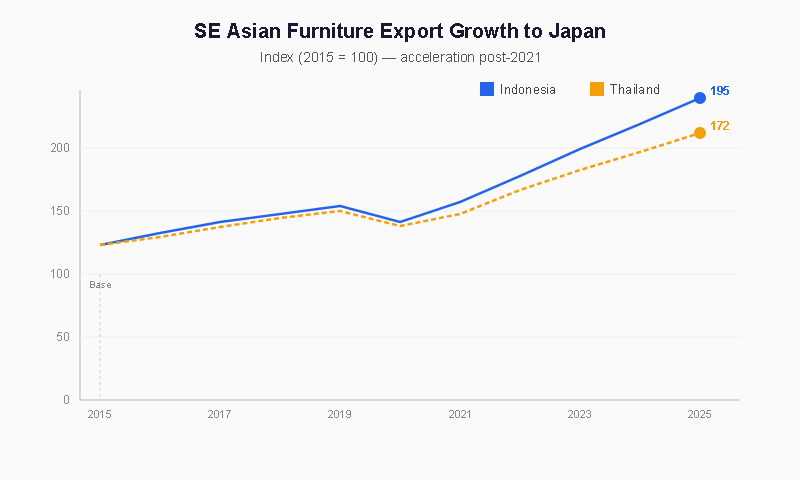
Indonesia‘s creative economy — furniture, fashion, food, content — has been a government priority, with explicit investment in international market development. The results are beginning to show in Japan, in ways that will likely become more visible across the next several years.
For business operators thinking about the creative and design industry landscape, the relevant question is not just about furniture. It is about the broader upgrade in ambition and execution quality that is happening across Southeast Asian creative industries, and which markets are receiving them first. Japan is one. Others will follow.
If you are an American brand or operator with exposure to the interior design and home goods category, Indonesia‘s trajectory is worth tracking not just as a supplier story but as a competitive story. The design intelligence that is making Indonesian furniture attractive to Japanese consumers is the same intelligence that will eventually be attractive to American consumers who care about craft, sustainability, and the provenance of the objects they live with.
If you’re interested in this topic, the Japanese market more broadly, or what KETCHUPs is working on, we’d love to hear from you — please reach out via our contact form.
Japan Market Pulse is a weekly read on what the Japanese consumer-tech, food, and mobility markets are choosing to do, written for international operators who want to know what is happening before it shows up in the global trade press.
Subscribe at ketchups.co/japan-market-pulse.
Japan Market Pulse is a weekly read on what the Japanese consumer-tech, food, and mobility markets are choosing to do, written for international operators who want to know what is happening before it shows up in the global trade press.
Subscribe at ketchups.co/japan-market-pulse.