

This article is published by KETCHUPs, a Tokyo-based trading and brand-development firm. All content is editorial.
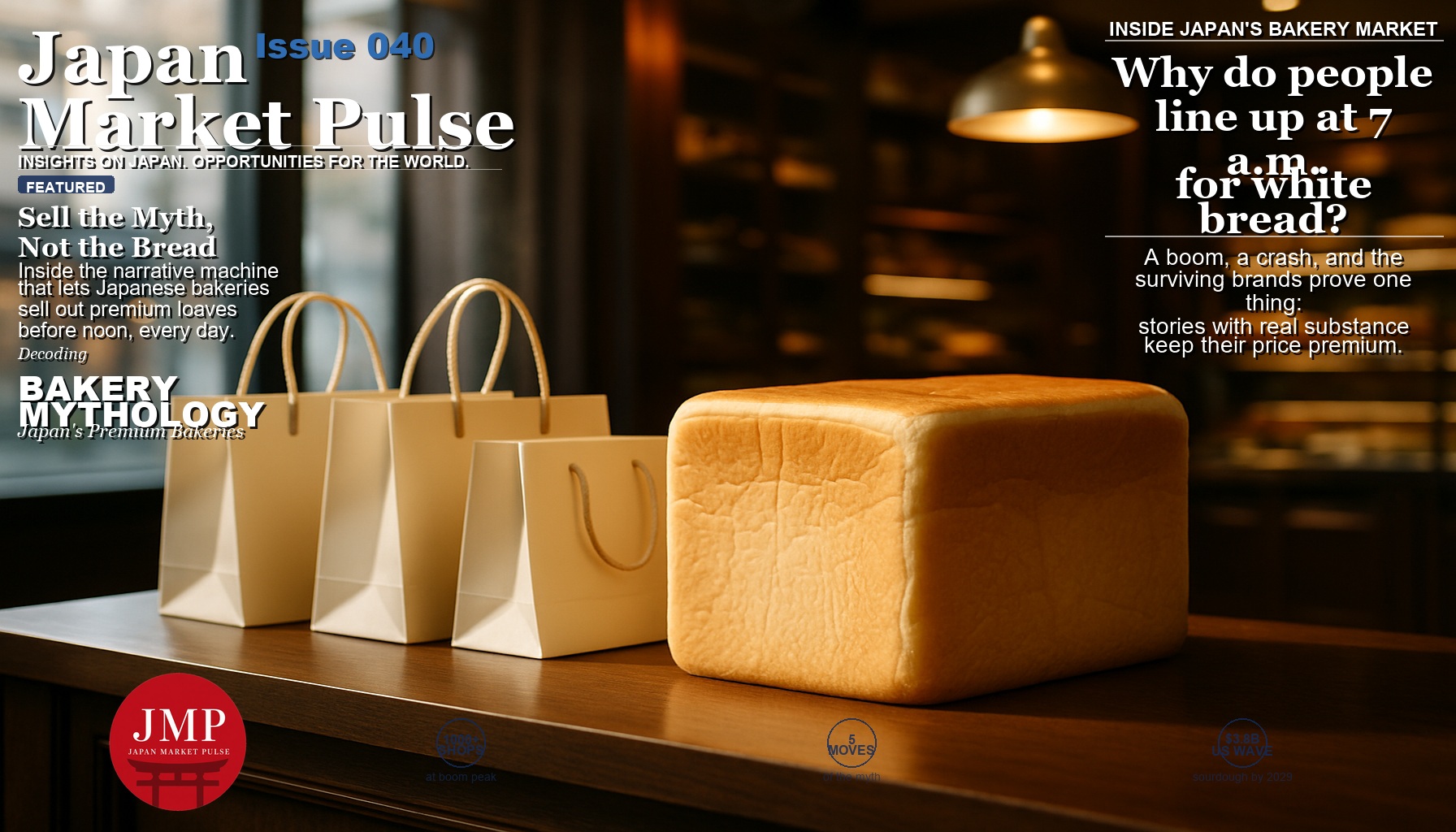
There is a bakery near my station in Tokyo that sells out of its flagship loaf by mid-morning, almost every day, at a price that would make an American grocery shopper laugh out loud. Nobody is laughing in the line. The people queuing at 7 a.m. are not buying flour, water, salt, and yeast. They are buying a story — about a wheat field in Hokkaido, about water with a special pH, about a baker who spent years perfecting a single product. After twenty years of living in Japan and watching its consumer markets reinvent themselves, I have come to a conclusion that sounds cynical but is actually a compliment: Japan’s best bakeries are not selling bread. They are selling myths. And they are better at it than almost anyone in the world.
This matters far beyond Japan. In the United States, craft food brands live and die by storytelling. The sourdough renaissance, the farmers-market premium, the single-origin everything — all of it runs on narrative. But most American craft brands tell their stories instinctively, inconsistently, and often badly. Japan’s bakery sector, by contrast, has spent the past decade running what amounts to a nationwide controlled experiment in narrative branding: a spectacular boom built almost entirely on story, a brutal crash that punished the brands whose stories were hollow, and a quieter second act in which the survivors are the ones whose myths turned out to be true. For any operator building a premium food brand in the US, this is the textbook. Here is what it teaches.
The 7 a.m. Line for an Eight-Dollar Loaf
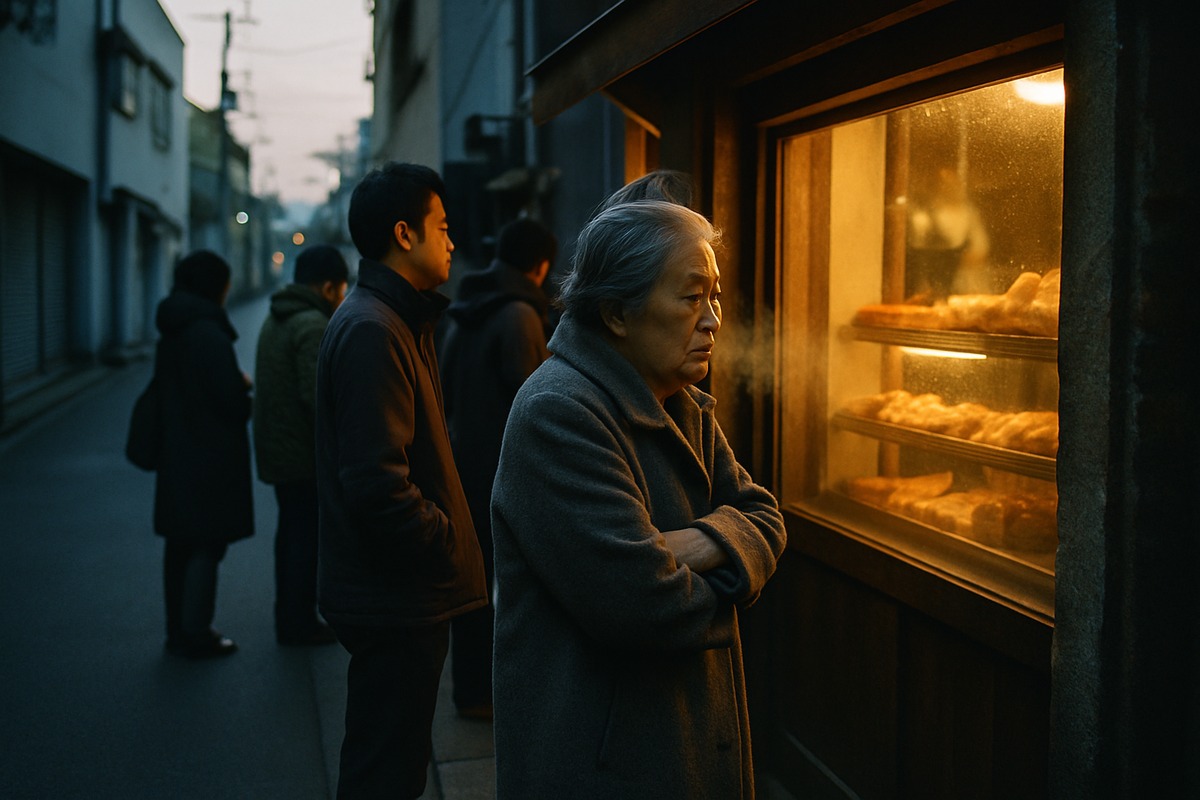
Let me start with the scene that crystallized this for me. A few years ago, a neighbor rang my doorbell holding a paper bag with rope handles, the kind of packaging you would expect from a jeweler. Inside was a loaf of shokupan — Japanese milk bread — from a specialty shop. It came with instructions. I was told, seriously and kindly, not to toast the first slice. The first slice was to be eaten “raw,” torn by hand, ideally on the day of purchase, so I could appreciate the moisture content and the sweetness of the crumb.
A loaf of white bread arrived at my door with a liturgy attached.
That loaf cost more than 800 yen — at the time, roughly eight dollars — for what was, structurally speaking, a sandwich loaf. But calling it a sandwich loaf misses the point in the same way that calling a Birkin a handbag misses the point. The bread was a gift, a ritual object, and a story delivery device. The shop that baked it had built its entire brand on a single product and a single narrative: extraordinary ingredients, treated with extraordinary care, available in limited quantities, gone by noon.
Japan’s bread market is enormous and mostly mundane — manufacturing shipments run to roughly 1.8 trillion yen a year, on the order of twelve billion dollars, and the bulk of that is ordinary packaged bread sold in supermarkets and convenience stores. The retail bakery channel, the world of neighborhood shops and specialty boutiques, is a few hundred billion yen of that total. Which is precisely why the premium segment needed myth. In a mature, slow-growing staple category, the only way to create explosive value is to convince people that one particular loaf is not a staple at all. Between roughly 2018 and 2020, an entire industry did exactly that — and then the experiment turned dark, which is where the lesson really begins.
The Rise and Fall of the Luxury Shokupan Bubble
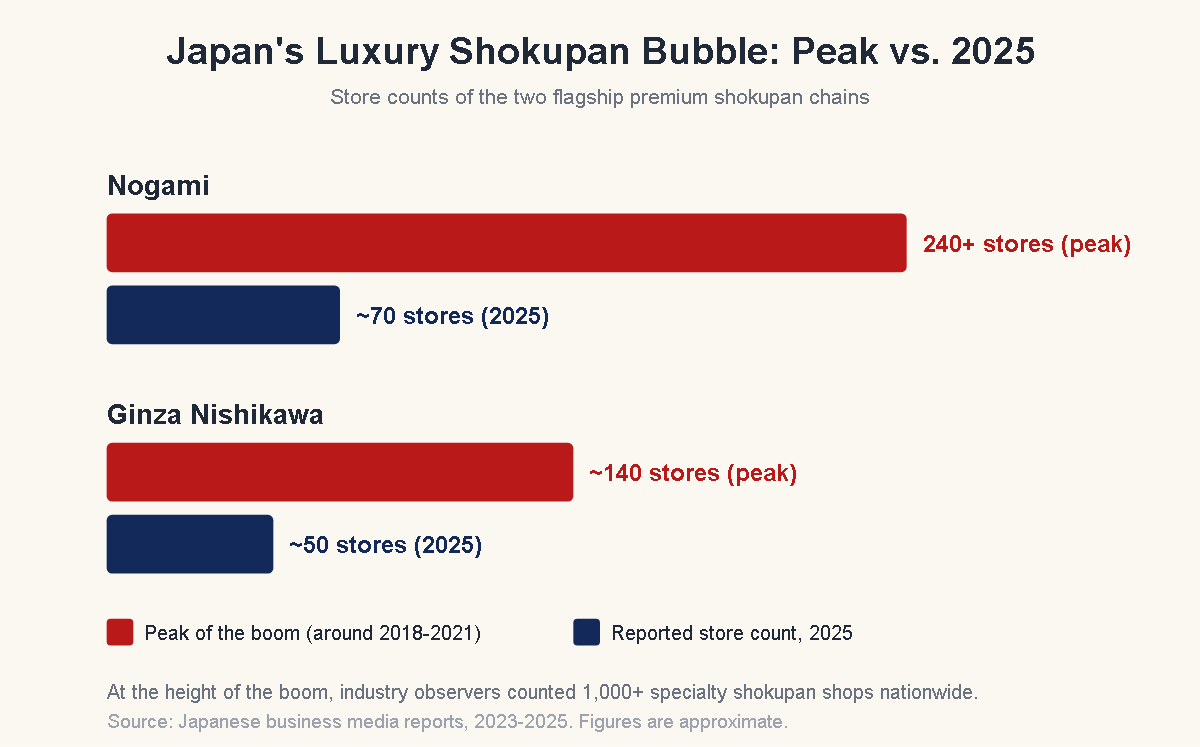
The luxury shokupan boom is one of the most instructive episodes in modern Japanese retail. In the span of a few years, specialty shops selling premium milk bread — typically one or two products, priced at 800 to 1,000 yen per loaf — multiplied across the country. At the peak, industry observers counted more than a thousand specialty shokupan shops nationwide. Television shows covered the lines. Social media did the rest. Two brands defined the era.
Nogami, the Osaka-born pioneer of “raw” shokupan — bread so soft and moist it was meant to be eaten untoasted — expanded to more than 240 stores at its height, largely through franchising. Ginza Nishikawa, founded in Tokyo’s Ginza district in 2018, built its brand on a single signature detail: alkaline ionized water, a higher-pH water that the company says produces a silkier, sweeter, lighter crumb. It grew to roughly 140 stores and even crossed the Pacific, opening in Los Angeles and selling loaves to American customers through the gourmet shipping platform Goldbelly.
Then the tide went out. By 2023, Nogami was down to around 116 stores; by 2025, reports put the count at roughly 70. Ginza Nishikawa contracted from its peak of about 140 stores to around 50 — a third of its maximum footprint — and its leadership has been frank in business media interviews about the shakeout, pointing to overstoring, cannibalization between nearby locations, and the simple fact that the boom brought in customers who were chasing a trend rather than adopting a habit. Bankruptcies among small bread retailers hit record numbers in 2024. The franchise model amplified the pain: operators who had signed multi-year agreements during the frenzy found themselves locked into unprofitable stores, unable to exit without punishing penalties.
It would be easy to read this as a parable about hype, and plenty of Japanese commentators have. But I think the more useful reading is different. The crash did not prove that bread myths fail. It proved that copied myths fail. At the peak of the boom, hundreds of me-too shops opened with the same playbook — a quirky store name, a premium price, a vague gesture toward special ingredients — but without a story that could survive scrutiny. When every shopping street had three shops selling nearly identical 900-yen loaves, the narrative collapsed into noise, and the price premium collapsed with it. The survivors, meanwhile, are the brands whose stories had real substance underneath: a genuinely distinctive process, a genuinely scarce ingredient, a genuinely traceable origin. Ginza Nishikawa still commands its price in fewer, better locations, and is pushing into overseas markets and cafe formats where the story is fresh. The myth did not die. The counterfeits did.
The Wheat That Became a Legend: Hokkaido Terroir by Design
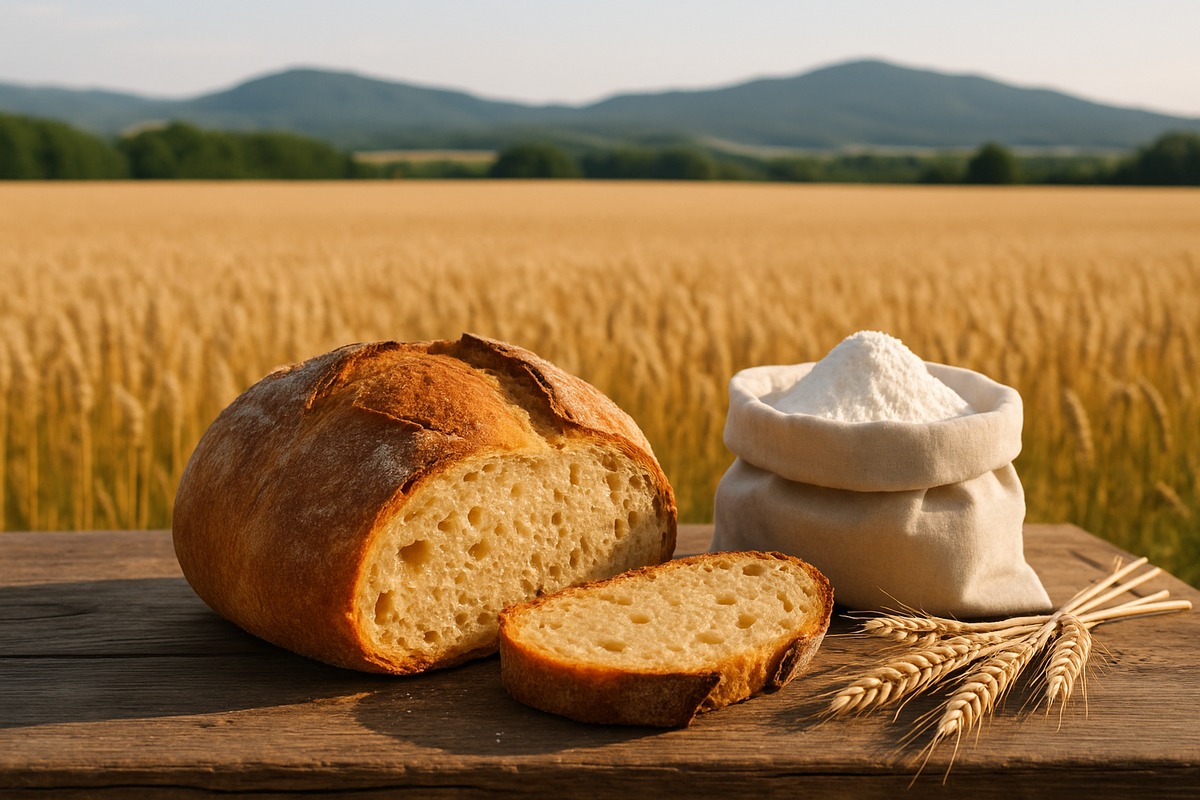
To understand where the durable bakery myths come from, you have to look upstream — to the wheat. And here the Japanese story takes a turn that I find genuinely remarkable, because the terroir narrative that now sells out bakeries was not discovered. It was engineered, deliberately, over decades.
Japan is not a wheat country. Its calorie-based self-sufficiency in wheat is around 16 percent, and roughly nine-tenths of the wheat moving through the country in any given year is imported, overwhelmingly from the United States, Canada, and Australia. For most of the postwar era, domestic wheat was not even suitable for bread: Japanese farmers grew medium-strength varieties destined for udon noodles, while bakers relied on high-protein North American imports. “Japanese bread made from Japanese wheat” was, for decades, close to a contradiction in terms.
That changed through agricultural R&D with an explicitly narrative payoff. Hokkaido — the northern island that produces about six in ten bushels of Japan’s domestic wheat — became the stage. In 2009, a new ultra-strong winter wheat called Yumechikara was certified as a recommended variety in Hokkaido. The name itself is a branding decision: it translates roughly as “power of dreams.” Yumechikara’s high protein content finally gave Japanese millers a domestic base for bread flour, typically blended with the softer Hokkaido variety Kitahonami to produce the moist, springy texture Japanese consumers prize. Major industrial bakers built entire product lines around the provenance, with packaging that names the island, and sometimes the variety, the way a wine label names a vineyard.
Then there is Kitanokaori, the cult hero of this story. Kitanokaori is a Hokkaido bread wheat with a devoted following among artisan bakers — prized for its faintly golden crumb, high water absorption, and distinctive aroma — that accounts for less than one percent of Hokkaido’s wheat output. It is agronomically fragile, vulnerable to pre-harvest sprouting when rain hits at the wrong moment, and harvests have repeatedly disappointed. The result is a genuine scarcity economy: millers and bakeries scramble for allocations, prices have climbed, and “made with Kitanokaori” on a bakery shelf card functions exactly like “Grand Cru” on a wine list. Boutique bakeries in Hokkaido grow it themselves and sell out. I have watched Tokyo bakeries post signs apologizing that the Kitanokaori loaves are gone for the day, with the same regretful ceremony a sushi shop uses for a sold-out catch.
Pause on what has happened here. A country with marginal wheat agronomy has constructed, in under two decades, a domestic wheat terroir with named varieties, regional identity, scarcity dynamics, and price premiums — in a category where 85 to 90 percent of the actual raw material is still imported commodity grain. That is not deception; the domestic wheat is real, distinctive, and traceable. It is curation. Japan took the one percent of the story that was special and made it carry the brand. American craft brands, sitting on top of one of the world’s great agricultural systems, routinely fail to do this with far better raw material.
Anatomy of a Bakery Myth: The Five Narrative Moves
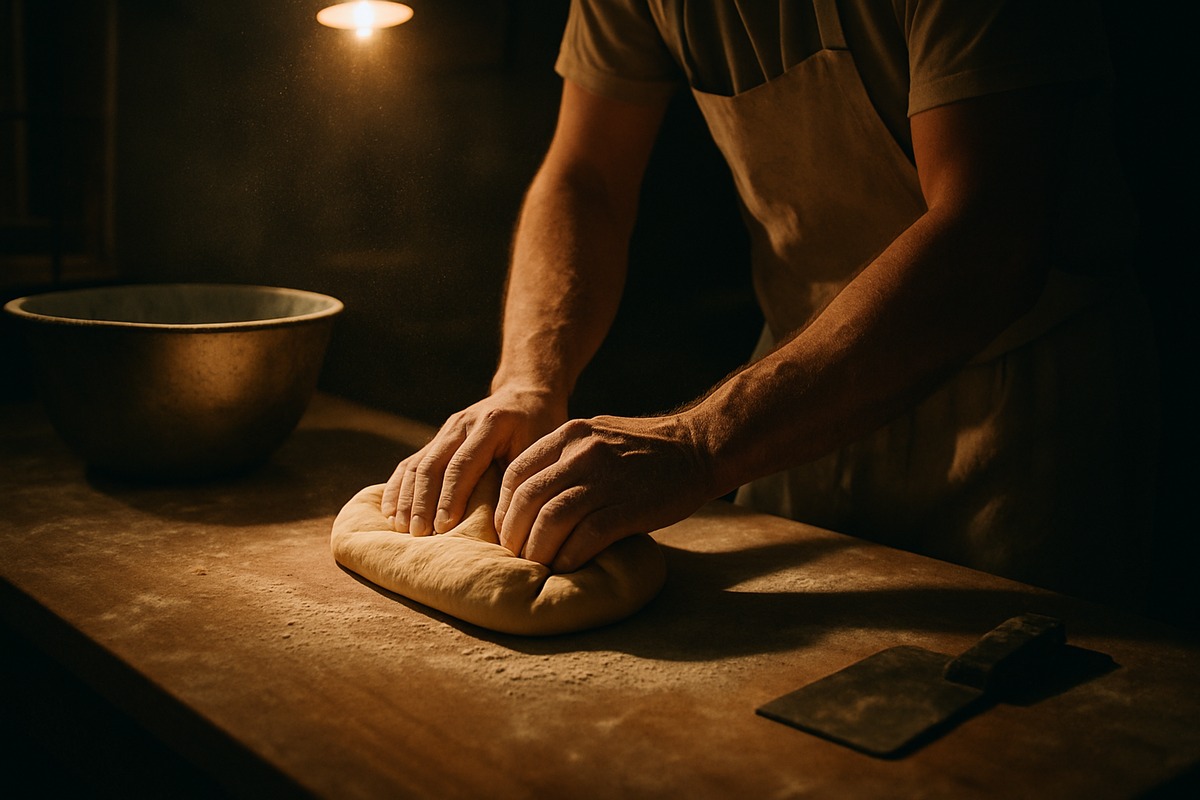
Spend enough time reading Japanese bakery shelf cards — and I have spent an embarrassing amount of time doing exactly that — and you start to see the same machinery underneath the surface. The durable premium bakeries, the ones that survived the crash, run on some combination of five narrative moves. I think of them as a checklist.
1. Terroir with proper nouns. Weak brands say “carefully selected ingredients.” Strong brands say Yumechikara wheat from the Tokachi plain of Hokkaido. The proper noun is the entire game: a named variety, a named region, sometimes a named farmer. Specificity is what separates a verifiable story from marketing perfume, and Japanese bakeries deploy specificity with the discipline of sommeliers.
2. One sacred element. Ginza Nishikawa did not tell customers ten things about its bread. It told them one: the water. Alkaline ionized water became the single memorable, repeatable, slightly mysterious detail that customers could carry out of the shop and retell at dinner. Every strong bakery myth has one of these — the water, the starter, the honey, the kneading method. One. Customers cannot retell a brochure.
3. Engineered scarcity. The flagship loaf is baked in limited batches and sells out, visibly, with a sign marking the hour the last loaf left. Scarcity converts a product into an event and a purchase into a small victory. Crucially, in the surviving brands the scarcity is structural — limited ovens, limited fragile wheat — rather than theatrical. Customers eventually sense the difference, which is one reason the imitators died.
4. The artisan origin story. A founder who obsessed over a single product for years; a baker who tested hundreds of flour blends. The Japanese term shokunin — the craftsman wholly devoted to a discipline — does heavy lifting here, framing a commercial bakery as the modern continuation of an artisanal lineage. The story makes the price feel like patronage rather than expense.
5. Ritual and naming. This is the most underrated move and the most Japanese. The category leaders did not sell “premium white bread”; they sold nama (raw) shokupan, a new noun that implied a new way of eating — tear it, don’t toast it, eat it the day you buy it. Instructions on how to consume the product are not condescending; they are the ritual that completes the myth, and they slot perfectly into Japan’s gift economy, where a loaf in beautiful packaging becomes a legitimate present. When my neighbor handed me that loaf with serving instructions, she was not delivering groceries. She was performing the brand’s liturgy, free of charge, in my doorway.
None of these five moves requires Japanese culture to work. They require discipline, which is rarer.
What the Research Says — and the American Mirror
If this all sounds like soft stuff, the consumer research is blunt. Experimental studies on firm-originated brand stories have found that consumers exposed to a brand’s narrative describe the brand more positively and show meaningfully higher willingness to pay than control groups shown only product attributes — in one well-known study, essentially all story-exposed participants accepted the suggested retail price, versus about half of the non-exposed group. Research on food brands specifically finds that beyond baseline quality, the strongest determinants of a price premium are social image, uniqueness, and origin — which map almost one-to-one onto the gift ritual, the sacred element, and the terroir moves above. The same literature carries a warning label: authenticity is the load-bearing wall. Stories that read as manipulation backfire. The shokupan crash was that finding, demonstrated at national scale with real capital.
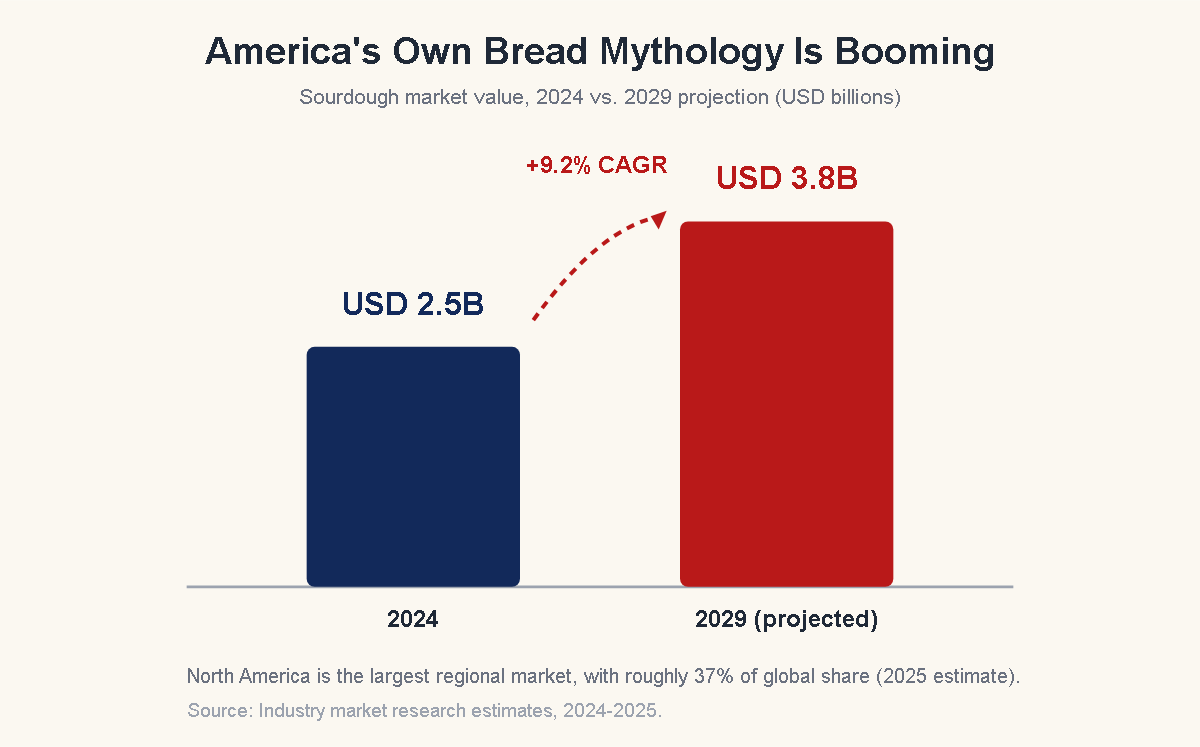
Now hold Japan up against the American mirror, because the timing could not be more pointed. The United States is in the middle of its own bread mythology boom. The sourdough market — the most narrative-rich corner of American baking, with its living starters and pandemic-era folklore — was valued at around 2.5 billion dollars in 2024 and is projected to reach roughly 3.8 billion by 2029, growing at over nine percent a year, with North America the largest regional market. Search interest in sourdough has surged double digits year over year. American brands are already reaching for story: one Pacific Northwest bakery made headlines by launching a retail sourdough built on a starter it says is 140 years old. A century-and-a-half-old jar of fermenting flour is a relic, in the religious sense, and marketing it as such is exactly the right instinct.
But having watched both markets, I would argue most American craft food brands are running at perhaps two of the five moves. They have origin stories, and increasingly they have terroir language. What they mostly lack is the sacred element distilled to a single retellable detail, scarcity that is structural rather than promotional, and above all ritual — the choreography of how the product should be experienced, gifted, and talked about. An American eight-dollar loaf comes with a story on the website. A Japanese eight-dollar loaf comes with a story in the buyer’s mouth, ready to be retold. That difference is the margin.
The Playbook for US Craft Food Brands
So what does the Japanese bakery experiment actually instruct an American operator to do? Reading the boom, the crash, and the second act together, I would compress it into a few directives.
First, audit your myth against the five moves, and be honest about which ones you are faking. The crash years were a sorting mechanism: narratives backed by genuinely scarce inputs, genuinely distinctive processes, and genuinely traceable origins kept their pricing power, while assembled-from-a-kit stories lost it the moment competition arrived. If your scarcity is a marketing calendar rather than a supply reality, competitors can copy it by Tuesday.
Second, invest upstream, because the strongest stories are grown, not written. The most impressive thing Japan did was not a campaign; it was two decades of wheat breeding that produced named varieties capable of carrying a national terroir narrative. The American equivalents are sitting in plain sight — regional grain projects, heritage varieties, named farms — and the brands that lock in those relationships early will own the proper nouns in their categories. Owning a proper noun is worth more than owning a slogan.
Third, design the ritual, not just the product. Tell customers how to eat the thing — which slice first, toasted or torn, what to serve it with, how to give it as a gift. This feels presumptuous to American sensibilities and it works anyway, because ritual is what turns a customer into a narrator. Every person who repeats your serving instructions at a dinner table is doing unpaid brand work of a kind no advertising budget can buy.
Fourth, treat the sellout as a story event, but never let the story outrun the loaf. The deepest lesson of the shokupan bubble is double-edged. Myth created billions of yen in value out of flour and water, and myth withdrew that value just as quickly from the brands that had nothing underneath. The bakeries still charging eight dollars in 2026 are the ones whose stories were, in the end, simply true.
The line outside my neighborhood bakery has gotten shorter since the peak of the boom. It has not disappeared. The tourists chasing the trend are gone; the people who remain know the name of the wheat. That is what a myth looks like after it survives contact with reality — smaller, sturdier, and still commanding its premium at seven in the morning.
If you’re interested in this topic, the Japanese market more broadly, or what KETCHUPs is working on, we’d love to hear from you — please reach out via our contact form.
Japan Market Pulse is a weekly read on what the Japanese consumer-tech, food, and mobility markets are choosing to do, written for international operators who want to know what is happening before it shows up in the global trade press.
Subscribe at ketchups.co/japan-market-pulse.