

This article is published by KETCHUPs, a Tokyo-based trading and brand-development firm. All content is editorial.
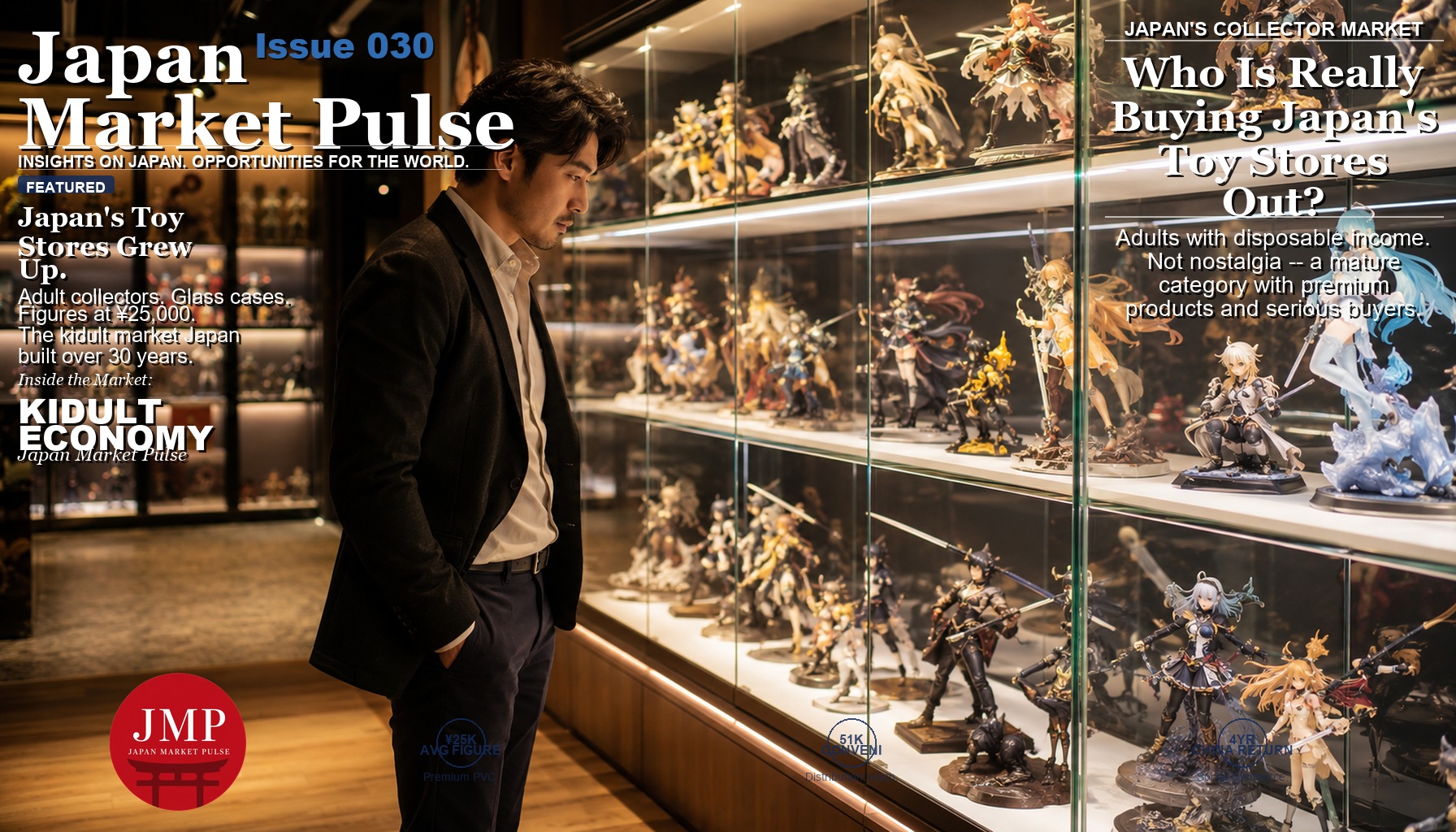
The adult collector market Japan quietly built over thirty years is now one of retail’s most valuable and least-understood segments. International operators are only beginning to notice.
Walk into a major toy retailer in Tokyo today and something immediately feels different from what you might expect. The children’s section — brightly colored, floor-level, designed for small hands — is there, but it is no longer the point. The point is the upper floor, or the back section, or the dedicated wing where adult collectors move slowly and deliberately through glass cases of painted resin figures, binders of laminated trading cards, and limited-edition releases priced at multiples of what a child’s toy would cost. These customers are not browsing. They know exactly what they came for.
Japan has spent roughly thirty years building what the global retail industry has taken to calling the “kidult” market — a portmanteau of “kid” and “adult” that describes the growing category of consumer goods originally designed for children that are now bought, with seriousness and significant disposable income, by adults. The term exists everywhere, but Japan is where it was first normalized as an organizing principle for retail strategy, product development, and brand positioning. And in 2026, with domestic toy retailers announcing new store openings specifically designed around adult collector demographics, and with Japanese collector IP generating renewed momentum on Chinese e-commerce platforms, the market is entering a new phase that international operators cannot afford to misread.
The Store That Quietly Changed Its Target
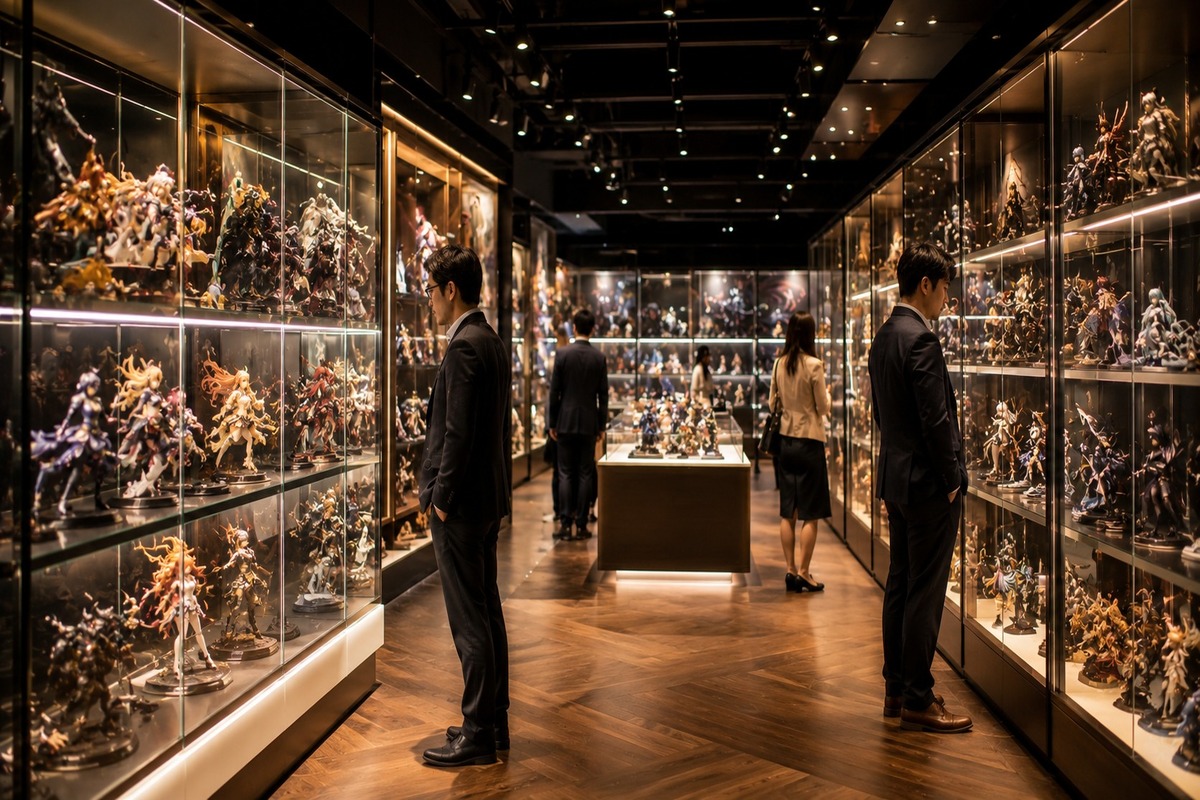
The structural shift in Japan’s toy retail landscape has been building for years, but the inflection point is now visible in the numbers. Japan’s birth rate has been declining for decades, and the consequence for businesses that sell to children is arithmetically straightforward: there are fewer children, and the children’s market is smaller. What was not arithmetically obvious — but has become commercially undeniable — is that the adults who grew up with Japan’s most powerful consumer IP never stopped wanting it. They just needed a store that took them seriously.
Major Japanese toy retailers have been responding to this reality by systematically expanding their adult-facing floor space. The trend that began with dedicated sections for scale models and hobby kits has evolved into full-category adult collector destinations — sections, or in some cases entire floors, stocked with high-end completed figures, premium trading card inventory, limited collaboration merchandise, and collector-grade accessories. In 2026, the expansion is accelerating, with multiple chains announcing two new specialty store openings planned for 2027 and 2028, explicitly designed around adult collector traffic rather than family shopping.
This is a strategic repositioning, not a niche accommodation. Japanese retailers have historically been cautious about the economics of single-demographic stores — the overhead of urban retail space requires broad traffic. The decision to build stores around adult collectors signals that the category has reached the volume and average transaction size necessary to justify dedicated infrastructure. For international brands trying to understand the Japanese consumer market, that signal deserves attention.
The adult collector in Japan is not a marginal figure. Surveys consistently show that the average age of serious hobbyist consumers in categories like plastic model kits, painted figures, and trading cards skews toward the late twenties through mid-forties — employed adults with discretionary income, not teenagers with pocket money. The price points reflect this: a standard completed PVC figure from a major manufacturer retails between ¥8,000 and ¥25,000 (roughly $55 to $170 at current rates), with premium limited-edition releases exceeding ¥50,000. A serious collector’s monthly spending in this category can rival a mid-tier luxury goods habit.
Trading Cards: The Market Japan Invented and the World Discovered
If there is one sub-category that best illustrates the trajectory of Japan’s adult collector market, it is trading cards. The concept of the collectible trading card game originated in the United States with Magic: The Gathering in 1993, but Japan is where it became a truly mass-cultural phenomenon, and where it first crossed over — visibly, commercially, and permanently — from children’s entertainment to adult investment.
The Pokémon Trading Card Game launched in Japan in 1996. For most of its first two decades, it existed in a comfortable equilibrium: children collected cards as toys, a smaller subset of dedicated players engaged with it competitively, and the secondary market existed but was modest. Then the pandemic disrupted the equilibrium in a way that permanently changed the category. Global confinement, combined with nostalgia from adults who had grown up with Pokémon, created a surge in collecting activity that drove secondary market prices for certain cards into territory that attracted mainstream financial media. A first-edition holographic Charizard sold at auction for hundreds of thousands of dollars. The category was no longer a children’s hobby with a collector subset — it was a collector category that children also happened to participate in.
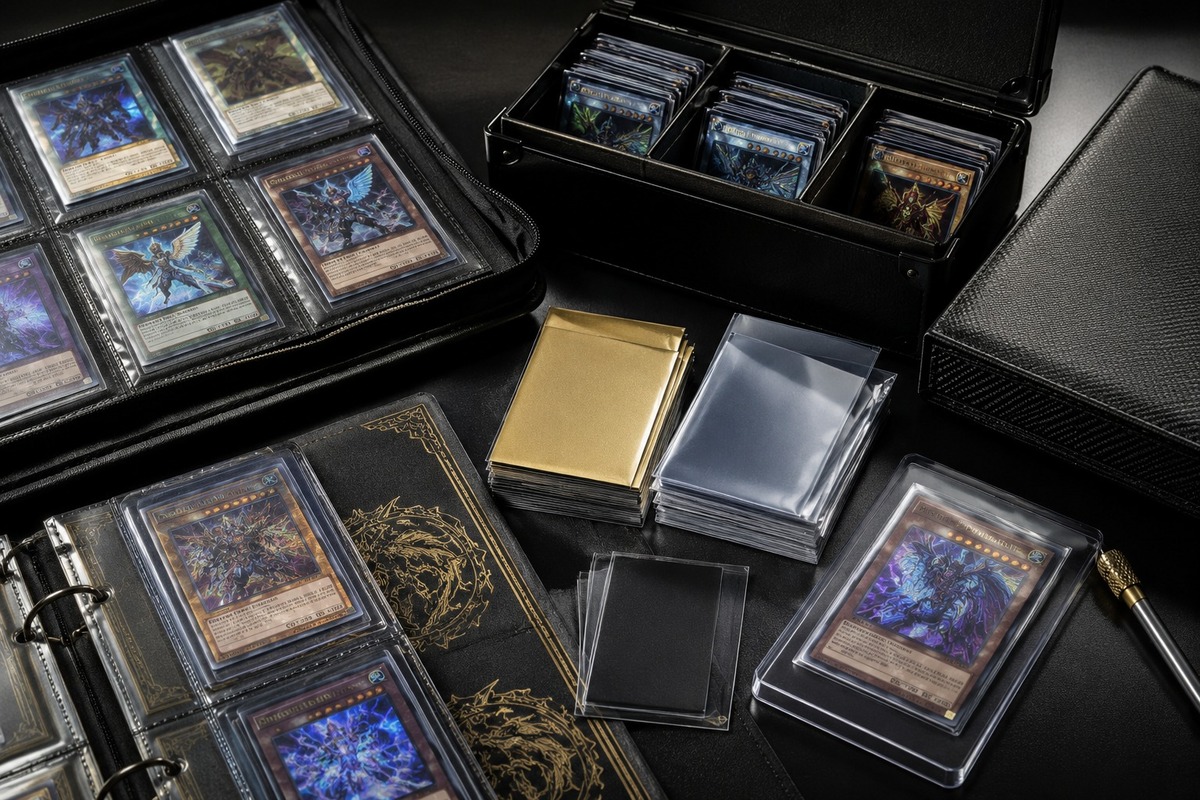
In Japan, the shift has been even more pronounced because the domestic secondary market infrastructure was already mature. Platforms like Mercari and Yahoo Auctions had long hosted robust trading card resale markets, and the surge in global demand fed directly into premium pricing domestically. Rare cards that had been modestly valuable became genuinely expensive assets, and the collector psychology shifted from “I want this for the game” to “I want this because it holds value and means something to me.” That is a fundamentally different consumer relationship with a product — and it is one that major Japanese retailers have moved to formalize by expanding their trading card inventory, dedicated storage and display solutions, and high-value transaction infrastructure.
The category is not limited to Pokémon. Yu-Gi-Oh!, Cardfight!! Vanguard, One Piece, and Dragon Ball card products all have active collector bases in Japan, with the One Piece card game in particular generating extraordinary secondary market activity following its 2022 relaunch. For international operators, the relevance of trading cards in Japan extends beyond the obvious IP licensing angle: the infrastructure Japan has built around trading card retail — including grading services, protective equipment, specialized storage, and dedicated retail space — represents a playbook for how to serve a high-value adult collector market at scale.
Figure Culture: When Plastic Becomes Premium
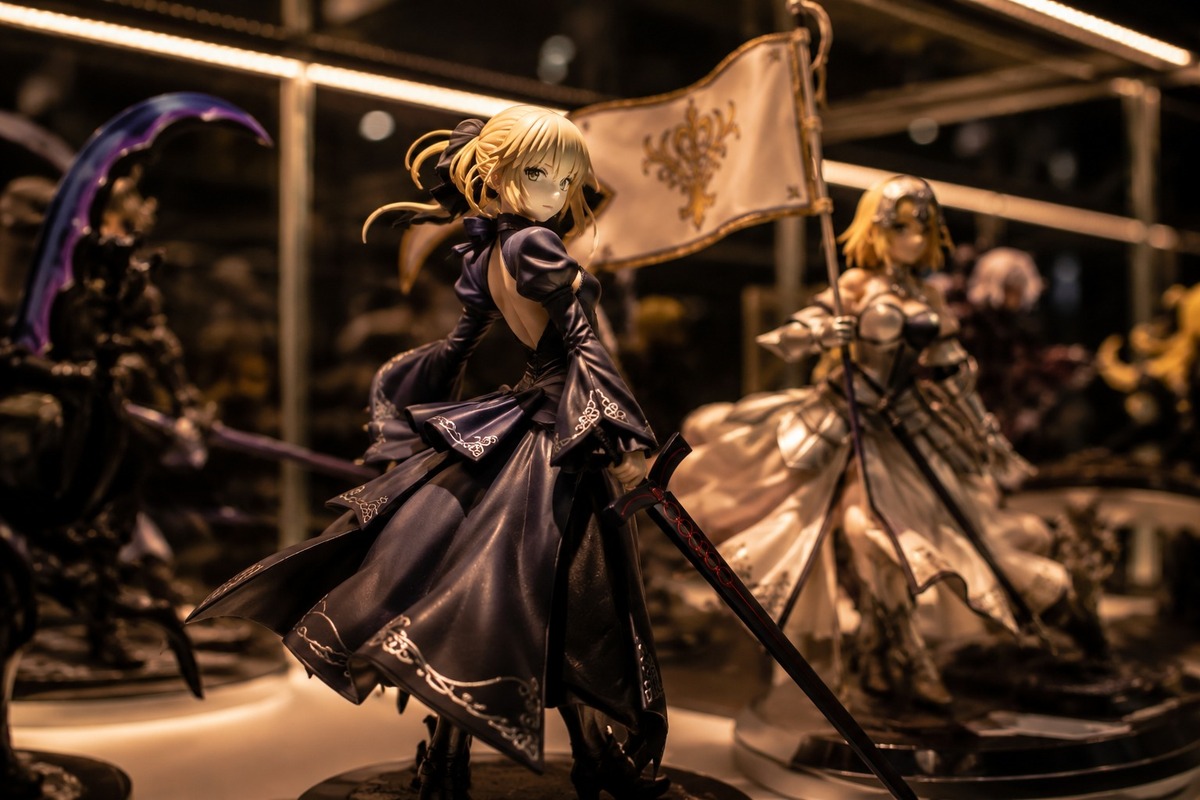
The collectible figure market is, in many ways, the most Japan-specific expression of the kidult phenomenon — and the one that most clearly illustrates how a product category can be elevated from toy to premium cultural object through consistent execution and community investment over decades.
Japan’s figure industry is dominated by manufacturers who compete on a level of craft and detail that has no real analogue in Western toy markets. Companies like Good Smile Company, Alter, Kotobukiya, and Max Factory produce painted resin and PVC figures — typically of characters from anime, manga, and video game properties — that are designed and marketed explicitly as display objects, not play items. The packaging communicates this: premium, collector-oriented boxes with foam inserts and detailed photography. The retail environment communicates it too: figures are displayed behind glass in retail settings, handled carefully by staff wearing gloves, and positioned as considered purchases rather than impulse buys.
The production model is tightly synchronized with entertainment cycles. A figure tied to an anime series will typically be announced during the show’s airing, manufactured on a limited production run, and released six to twelve months later — timing that maintains scarcity while capitalizing on peak IP engagement. The announced-to-release gap creates anticipation that functions as organic marketing: collector communities spend months discussing, photographing prototypes, and building enthusiasm before the product is available to purchase. This is a marketing structure that luxury goods brands would recognize.
What makes the figure market particularly interesting from an international business perspective is the way it has bridged domestic and export demand. Japanese-produced figures are sold globally through specialty retailers, import services, and online platforms, and the domestic market’s willingness to pay premium prices provides a pricing floor that benefits international distribution. A figure sold at ¥15,000 in Japan will retail for $120 to $150 in the United States after import and distribution markup — a price point that Western consumers accustomed to mass-market toys will find steep, but that figure collectors accept as the category norm.
The adult collector does not buy figures despite the price. The price is, in part, the point. It signals quality, craftsmanship, and the seriousness with which the manufacturer treats the fan relationship.
Where Japan Sells It: The New Collector Retail Landscape
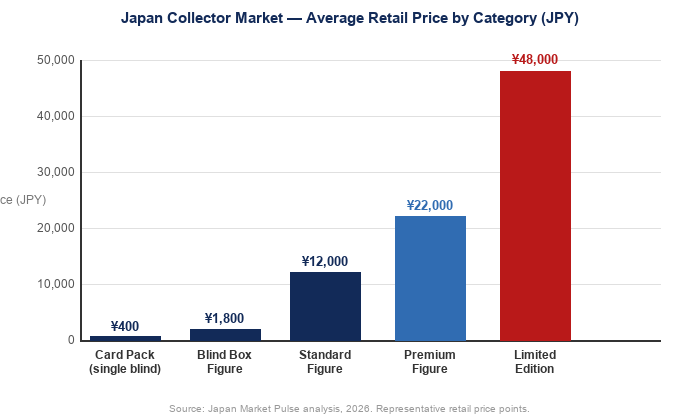
Japan’s collector retail infrastructure is, by any global standard, unusually well-developed — a consequence of the market’s maturity and the specificity of collector consumer behavior. Understanding where Japan sells collectibles matters as much as understanding what it sells, because the distribution architecture shapes both what products succeed and how international brands can access the market.
The largest channel by volume remains general merchandise retailers and dedicated hobby chains, but the character of these stores has evolved significantly. Traditional toy stores have expanded their adult-facing inventory. Specialty hobby chains that historically focused on plastic model kits and scale models have broadened into figures and trading cards. And a new category of collector-specialist retailers — stores built explicitly around the adult collector, with deep inventory, knowledgeable staff, dedicated card game event spaces, and secondary market buying programs — has emerged in major urban centers and is now expanding into suburban markets.
The convenience store network — Japan’s 51,000-plus stores — plays a role in collector culture that often surprises international observers. Convenience stores carry limited-edition collaboration merchandise, trading card blind packs, and character food items tied to popular IP, functioning as a mass-market touchpoint for casual collector participation. The blind pack mechanic — products where the specific item inside is unknown until purchase — is a significant revenue driver for convenience stores and a deliberate engagement tool for IP holders who want to reach consumers who are not yet committed collectors.
Online retail is substantial but structurally different from Western e-commerce. Major specialized platforms — Suruga-ya, Amiami, Hobby Search — serve as primary channels for pre-ordering, secondary market purchasing, and international export. The pre-order mechanic is central to how the figure market functions: major manufacturers release order windows for upcoming products months in advance, and retail platforms compete on reliability of delivery and depth of inventory allocation. A manufacturer’s ability to manage pre-order demand is a significant competitive differentiator.
The secondary market — driven by platforms like Mercari, Yahoo Auctions, and dedicated card shops with buy programs — is not a shadow economy but a structural feature of the collector market. For IP holders, the health of the secondary market is a leading indicator of the underlying health of collector engagement. When secondary market prices hold firm or grow, it signals that demand exceeds supply and that collector enthusiasm is sustaining. Japanese manufacturers and retailers monitor secondary market pricing as a real-time feedback mechanism that informs production decisions.
The China Signal: Japan’s Collector IP Goes Overseas
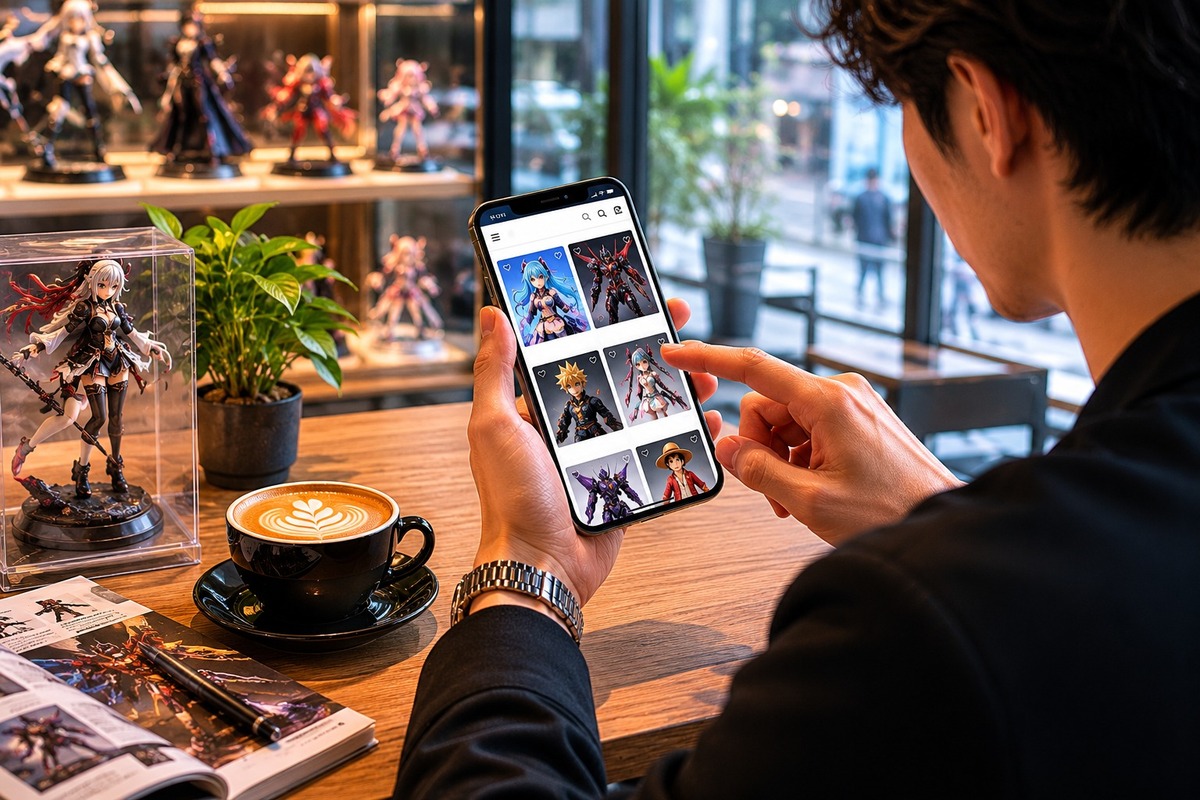
One of the clearest indicators that Japan’s collector market has entered a new phase of international relevance is the resurgence of Japanese brand performance on Chinese e-commerce platforms. In 2025, Japanese brand sales on major Chinese e-commerce channels — Xiaohongshu (Little Red Book), Douyin, and Taobao — returned to positive year-on-year growth for the first time in four years, reversing a decline that had been driven partly by political tensions and partly by the disruption of Chinese consumer spending patterns during the pandemic period.
The recovery is not uniform across categories. It is concentrated in areas where Japanese brands have genuine craft and cultural authority: sporting goods, lifestyle products, and — significantly — character merchandise and collector goods. Brands like Yonex in sporting goods have seen renewed Chinese consumer interest driven by social media content and the cultural cachet that Japanese manufacturing quality carries among Chinese premium consumers. But the broader signal for the collector market is about the infrastructure that is enabling this recovery: Chinese consumers are discovering and purchasing Japanese collector goods through social commerce platforms, bypassing the traditional wholesale and retail import channels that previously constrained access.
Xiaohongshu, in particular, has become a significant discovery and purchase platform for Japanese cultural goods among Chinese consumers who follow Japanese lifestyle content. The platform’s user base skews toward younger urban women, and the content format — aspirational photography combined with personal recommendation — translates exceptionally well to collector culture, where the aesthetic presentation of a figure collection or a card binder is itself a form of content creation. Japanese figure manufacturers and trading card IP holders who have invested in social content are seeing that investment pay off in cross-border demand.
For international operators, the Chinese market dynamics around Japanese collector IP illustrate a broader principle: the cultural authority Japan has built through decades of consistent investment in character IP and premium manufacturing creates demand signals that travel across borders. A brand or IP that performs well in Japan’s domestic collector market is not just a domestic business — it is a potential export platform with built-in social proof.
What International Operators Need to Know
The kidult market Japan has built is not a novelty — it is a mature, high-value commercial category with defined consumer psychology, established distribution infrastructure, and growing international reach. For operators considering entry, the market offers genuine opportunity alongside specific structural requirements.
The category rewards authenticity and punishes shortcutting. Japan’s adult collector community has been buying high-quality products for decades and has developed acute sensitivity to the difference between manufacturers who take the category seriously and those who are chasing trend revenue. Products that cut corners on paint application, material quality, or packaging design are identified and communicated about rapidly through collector communities. The floor for acceptable product quality in this market is significantly higher than in general consumer goods.
IP is the starting point, not the destination. The collector market in Japan is organized around character and franchise properties that have earned sustained fan investment over years or decades. Entering the market with original IP — without prior community engagement in Japan — is significantly harder than entering with a property that already has Japanese fan recognition. International operators who hold IP with existing Japanese fan bases are in a stronger position than those who do not. The corollary is that building IP recognition in Japan is a long-term investment that pays dividends in the collector market specifically.
The secondary market is a feature, not a problem. Western brand managers sometimes view secondary market activity — resellers, gray market imports, auction platforms — as a threat to retail integrity. In Japan’s collector market, a healthy secondary market is a signal that primary market demand exceeds supply and that collector enthusiasm is genuine. Brands that try to suppress or ignore the secondary market miss the feedback mechanism it provides. Those that engage with it — through limited-run releases that create secondary market activity, or through official buyback programs that demonstrate investment in collector value — are better positioned to build sustained community relationships.
The convenience store network is an underutilized entry point. For brands entering the Japanese market without established specialty retail relationships, collaboration with convenience store chains on limited-edition collector merchandise — blind packs, character food tie-ins, limited-run collectibles — provides mass-market exposure with collector-community credibility. The logistics of convenience store product development are complex, but the distribution reach is unmatched.
Think export from day one. The Chinese social commerce recovery and the broader trend of Japanese collector IP traveling through digital channels means that a product performing well in Japan’s domestic collector market is immediately visible to an international consumer base. Brands that build their Japan collector market presence with cross-border distribution in mind — product photography optimized for social platforms, international purchasing infrastructure, awareness of Chinese social commerce dynamics — can leverage Japan’s domestic market credibility as a launch platform for regional expansion.
The adult collectors shopping Japan’s expanded toy stores in 2026 represent a consumer segment that grew up, kept their enthusiasms, and found an industry willing to grow with them. The retailers responding to this reality are opening new stores. The manufacturers producing premium goods for this market are generating significant revenue. The IP holders whose properties anchor collector culture in Japan are watching their brand value accumulate across borders. The question for international operators is not whether this market is real. It visibly is. The question is how quickly they are prepared to take it seriously.
This article contains affiliate links. If you purchase through these links, we may earn a small commission at no extra cost to you.
If you’re interested in this topic, the Japanese market more broadly, or what KETCHUPs is working on, we’d love to hear from you — please reach out via our contact form.
Japan Market Pulse is a weekly read on what the Japanese consumer-tech, food, and mobility markets are choosing to do, written for international operators who want to know what is happening before it shows up in the global trade press.
Subscribe at ketchups.co/japan-market-pulse.