

This article is published by KETCHUPs, a Tokyo-based trading and brand-development firm. All content is editorial.
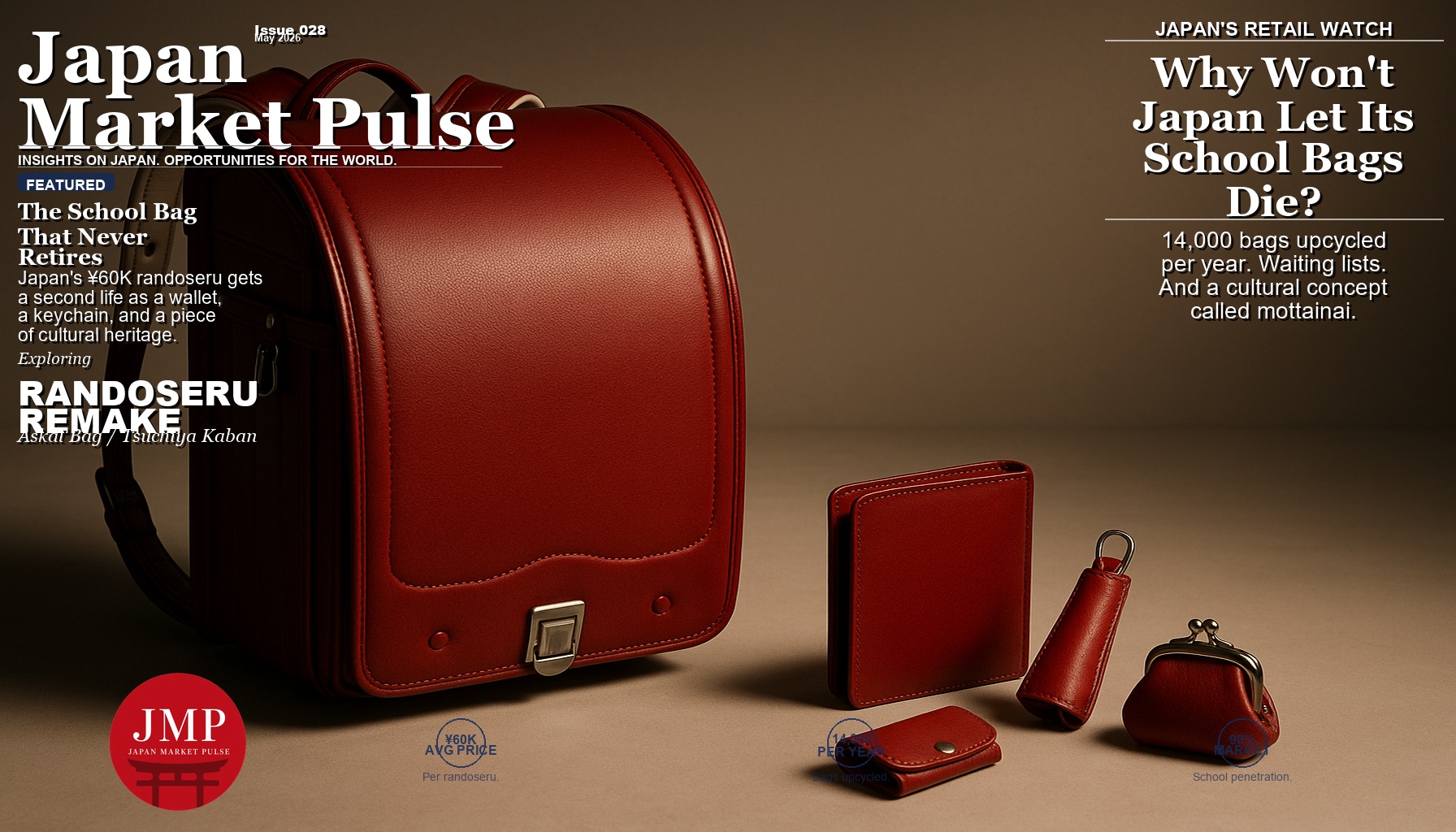
There’s a red leather backpack sitting in the back of a closet in a home in Nagoya. It hasn’t been used in six years. It weighs about 1.2 kilograms, fits neatly in the palm of an adult hand — almost. Its stitching is immaculate. Its hinges still swing open and shut with the satisfying click of precision engineering. The owner is now in middle school and would rather be caught dead than be seen wearing it. But her mother refuses to throw it away.
“It went to school with her every single day for six years,” the mother explains. “How do you just put something like that in the trash?”
She doesn’t have to. A growing number of Japanese businesses, craftspeople, and designers are offering parents exactly the alternative they’ve been looking for: a way to give their child’s ¥60,000 school bag a meaningful second life.
Welcome to the world of the second randoseru — and the surprisingly rich market it has quietly created.
What Exactly Is a Randoseru?
To understand why this matters to anyone outside Japan, you first need to understand what a randoseru actually is — and why families treat them the way they do.
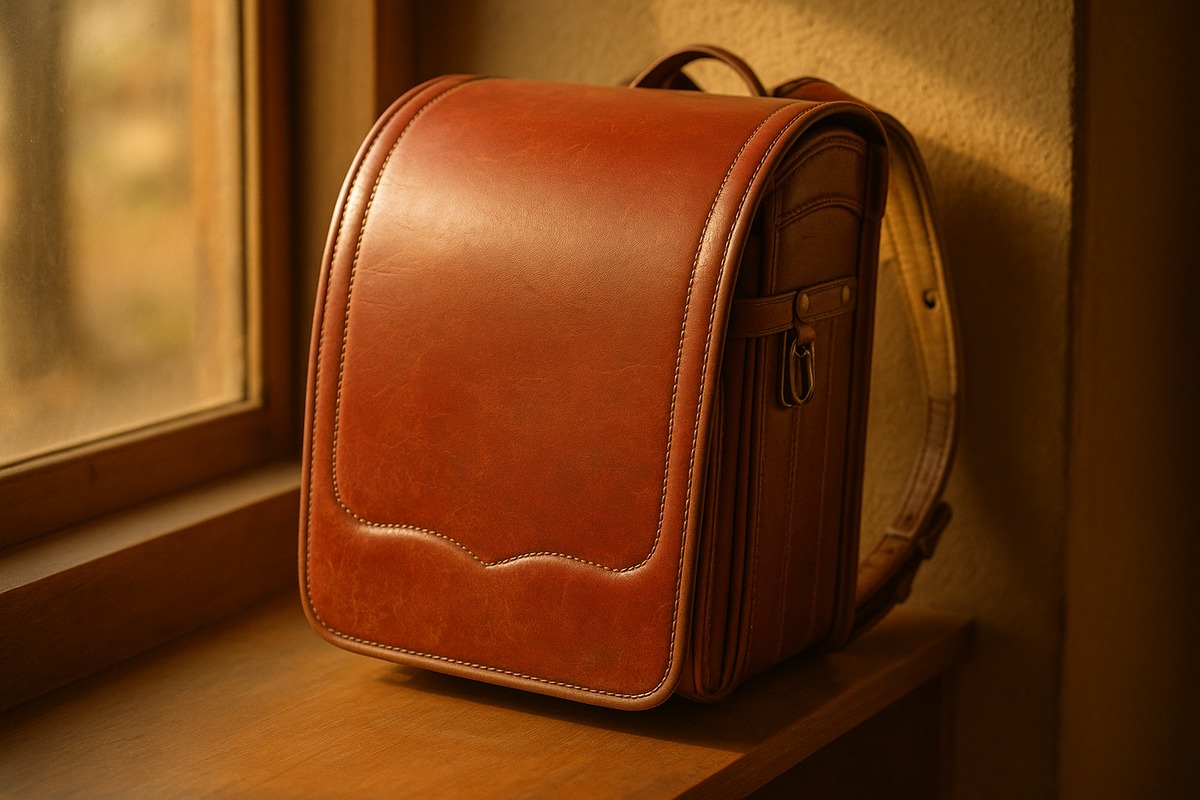
The randoseru is the structured, rectangular backpack that virtually every Japanese elementary school student carries from grade one through grade six. It’s made from leather or high-grade synthetic leather, engineered for a child’s back, and built to absorb the punishment of six years of daily commuting — rain, mud, bumps, and the occasional violent encounter with a bicycle. According to recent survey data, roughly 90% of all Japanese elementary schoolchildren use one.
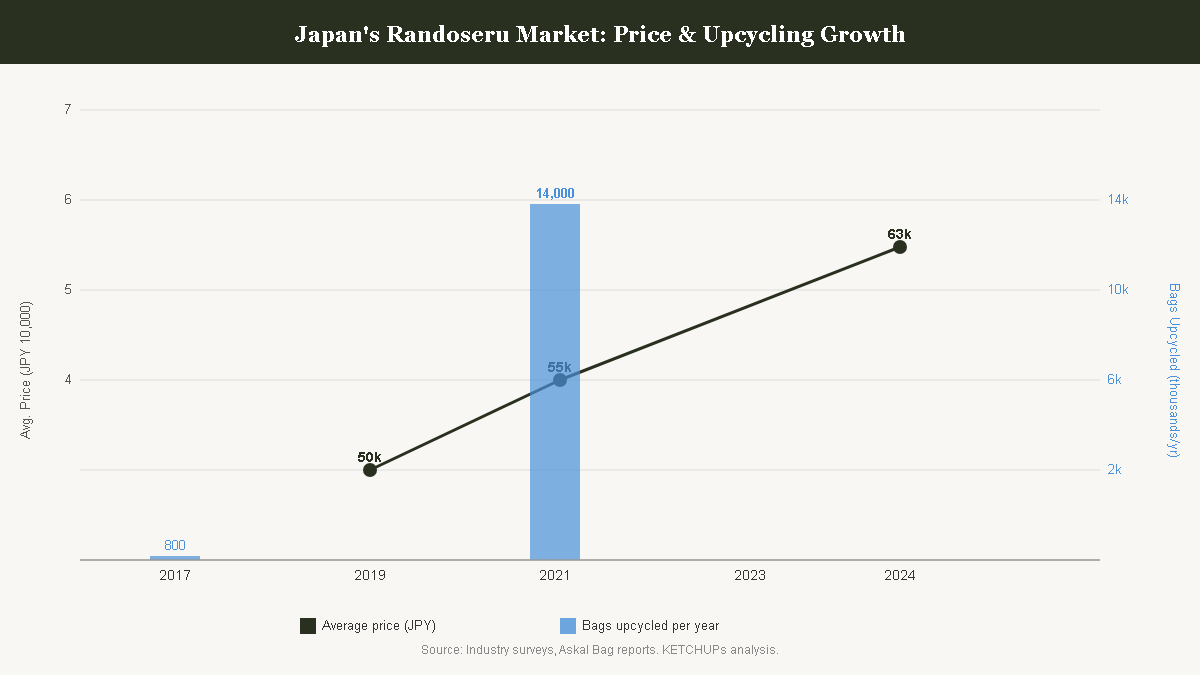
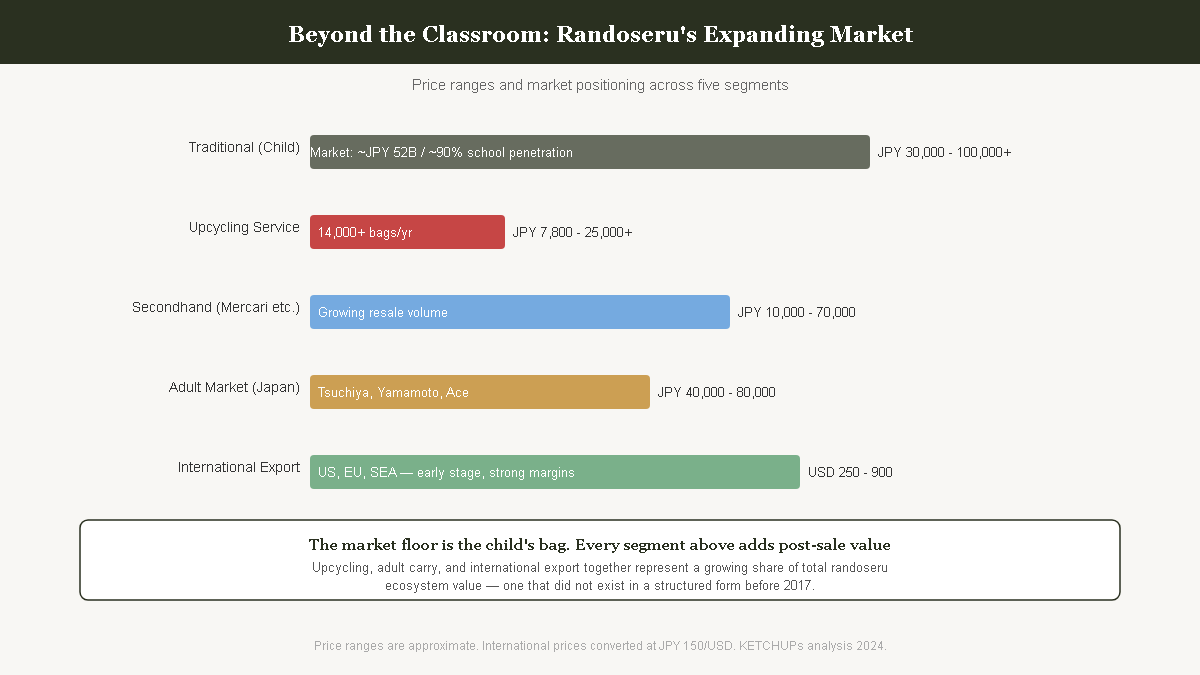
They are not cheap. In 2024, the average price paid by parents was somewhere between ¥60,000 and ¥67,000 — roughly $420 to $470 at current exchange rates. Premium models from craft-focused manufacturers like Tsuchiya Kaban command prices well above ¥80,000, with some specialist editions reaching ¥100,000 and beyond. A significant share of parents — around 37%, by one survey — spent more than ¥65,000 on a single bag.
To put that in perspective: many parents in Japan spend more on their child’s school backpack than an American family might spend on a new laptop.
This spending isn’t considered excessive. It’s considered responsible. A well-made randoseru is designed to last the full six years — and often does, with minimal visible wear. The durability is a feature, not a coincidence. Major manufacturers like Seiban, Japan’s number-one maker (founded in 1919), have built their reputations on engineering bags that look essentially unchanged on the last day of sixth grade as they did on the first day of first grade.
And therein lies the problem — or, depending on how you look at it, the opportunity.
The Problem with Perfection
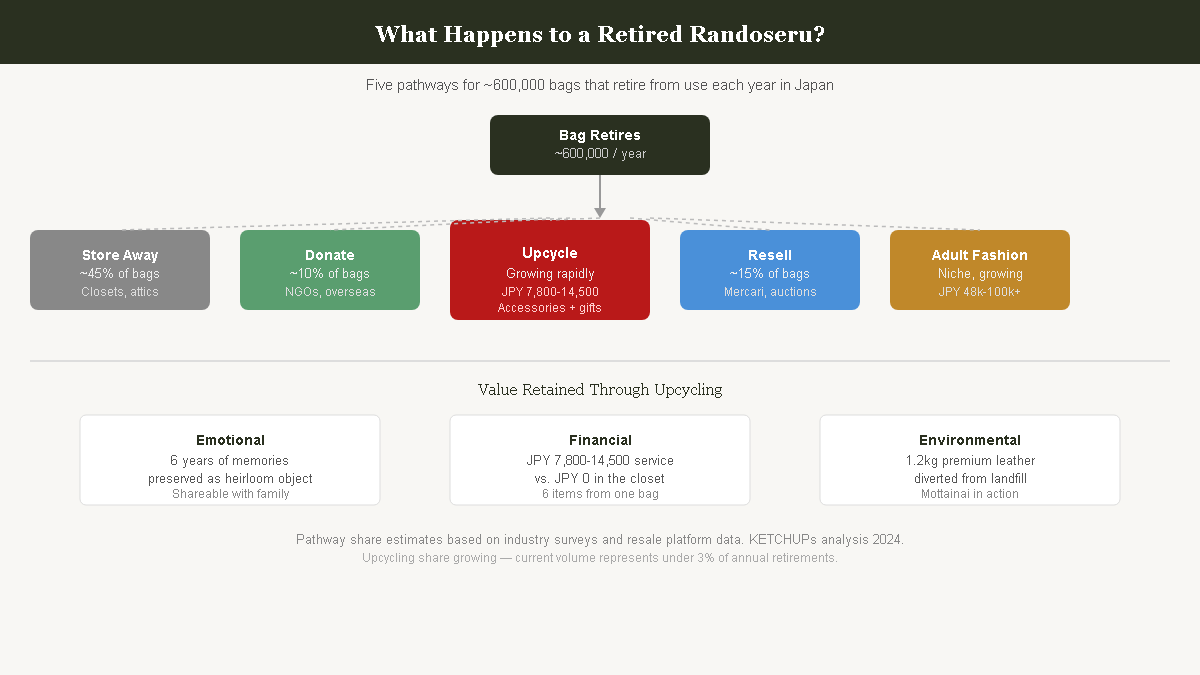
When a child graduates from elementary school in Japan, the randoseru goes into retirement. It’s too small for a middle schooler’s needs, too visibly childish to carry to a new school, and often too emotionally loaded to simply give away. Most families end up storing it — in a closet, under a bed, in a box in the attic.
For years, this was just the accepted end of the randoseru’s story. A few families donated used bags to children in developing countries through NGO programs, and a small trade in secondhand randoseru on platforms like Mercari emerged (used bags fetch ¥10,000 to ¥70,000 depending on condition and brand). But the majority of retired bags simply sat, gathering dust.
Then came Askal Bag.
Askal Bag and the Art of the Remake
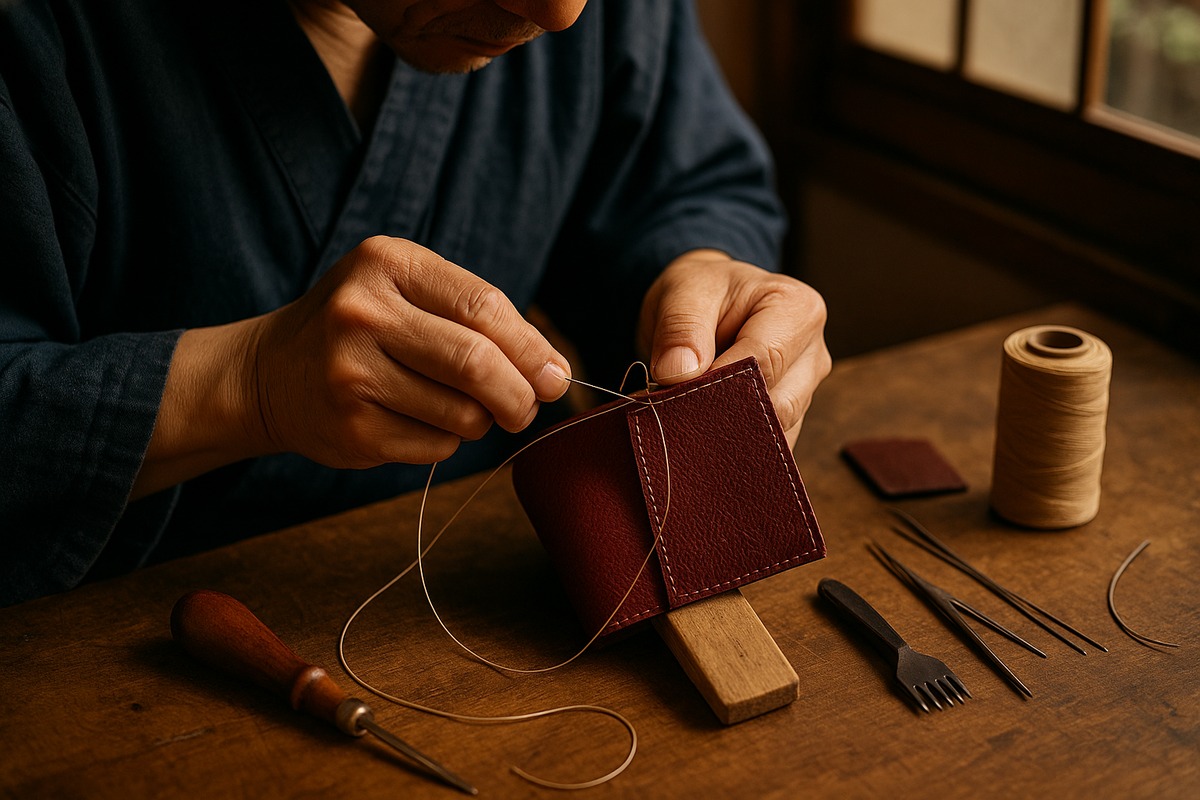
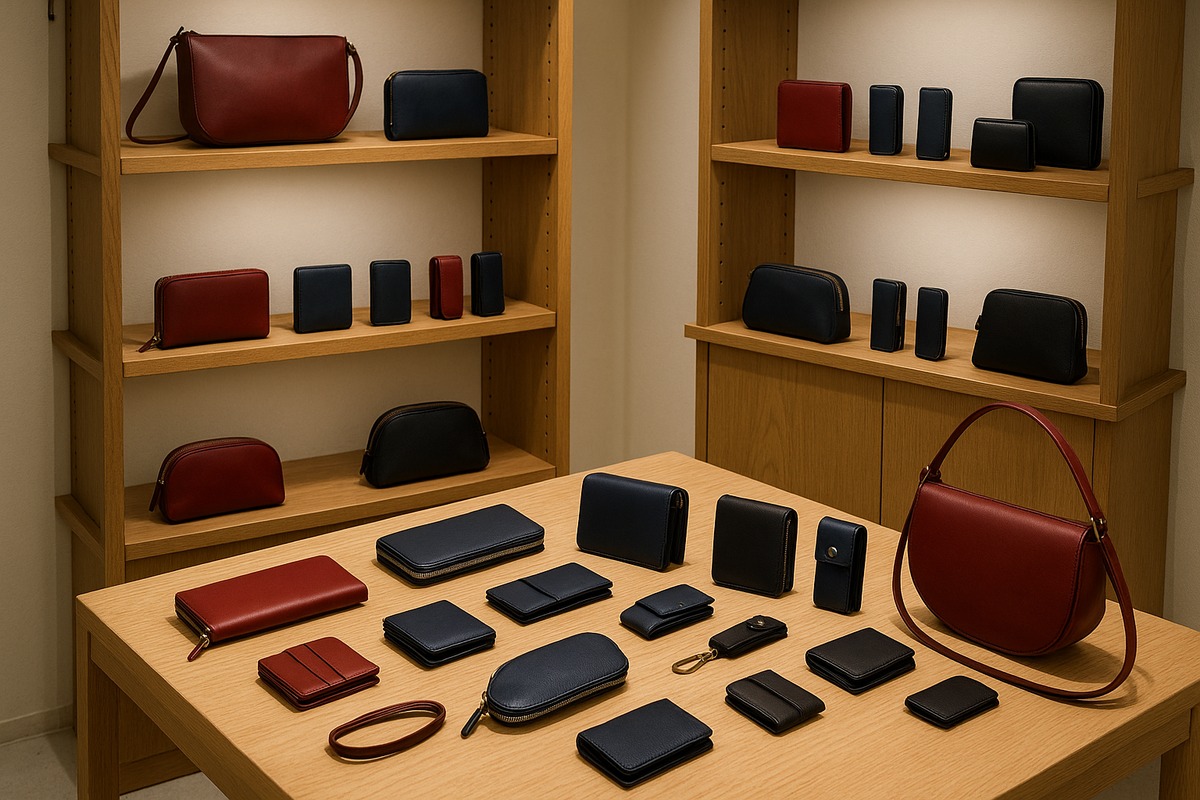
Founded as a general leatherwork business in Ichinomiya, Aichi Prefecture in 2010, Askal Bag launched its randoseru upcycling service in 2017. The concept was simple: parents would mail in their child’s retired school bag, and Askal’s craftspeople would carefully disassemble it and transform the leather panels into a small collection of usable accessories — wallets, key cases, pass cases (for IC transit cards), coin purses, barettes, and cord holders.
The first year, they processed 800 bags.
By 2021, that number had grown to 14,000 bags per year — an increase of more than 1,600%.
Part of what accelerated the growth was COVID-19. When Japanese schools went into extended closures in 2020, graduation ceremonies were cancelled or held quietly, and parents who had expected a celebratory farewell to their child’s elementary years found themselves at home, staring at the bag sitting in the hallway. The emotional weight was suddenly undeniable.
“There was this sense that the bag had seen the child through everything,” says one parent who used the service during that period. “It felt important to keep it somehow.”
Askal’s pricing is designed to be accessible rather than exclusive. Their basic plan, at ¥7,800, produces six items from a single bag: a key case, a pass case, three accessories, a cord holder, and a belt strap keychain — enough to share with grandparents and other family members who want a memento. A premium plan at ¥14,500 and above adds wallets and larger leather goods.
The service now has a waiting list that extends months into the future.
Askal Bag is not alone. A cluster of smaller craft studios and regional leather workers has moved into the space. Atelier Neige, based in Osaka, offers a premium bespoke service in which a craftsperson consults directly with the family about what they want preserved — a specific panel of leather, a strap worn smooth by six years of small hands — and builds a single made-to-order piece around that request. Prices start at ¥25,000 and climb based on complexity. Neige intentionally keeps its volume low; exclusivity is the product. Other operators have moved toward regional specialties: studios in Nara and Kyoto incorporating traditional dyeing techniques into the leather work, or shops pairing the original leather with local washi paper in their accessories.
What unites these services is something that the broader leatherwork industry finds genuinely unusual: a pre-existing emotional bond between the customer and the raw material. A craftsperson working with new leather has to earn the customer’s attachment. A craftsperson working with a child’s retired randoseru inherits it. The customer arrives already invested; the work is to honor that investment rather than create it from scratch. Several craftspeople in the sector have noted that they spend more time listening to parents talk about their child’s school years than they do actually explaining their process. The bag is a portal. What comes out the other side has to feel worthy of what went in.
The Broader Market: From Nostalgia to Fashion
Askal Bag is the most visible player in the upcycling segment, but the trend extends well beyond a single company.
At the premium end of the market, Tsuchiya Kaban — a 60-year-old leather goods maker in Tokyo known for handcrafted bags with natural aging characteristics — has developed an entire adult product line that draws directly on its randoseru heritage. Its OTONA RANDSEL (“Adult Randoseru”) series reimagines the original form factor as a functional, sophisticated bag for working adults: the structure is retained, the materials are upgraded, and the price point ($400–$700) positions it squarely in the premium everyday-carry category.
The bags have found an audience not just in Japan but internationally, with Tsuchiya Kaban’s English-language site now shipping globally, and stockists in the United States, Europe, and Southeast Asia.
Yamamoto Bag Workshop, a 70-year-old manufacturer in western Japan, has taken a similar approach — offering adult versions that preserve the craftsmanship heritage while making the design appropriate for office and travel use. These bags appeal to consumers who grew up with randoseru and want to carry a piece of that history into adulthood.
Ace Luggage, one of Japan’s best-known bag manufacturers, has been iterating on its business backpack line with a specific focus on borrowing structural cues from randoseru design: the rigid back panel, the ergonomic shoulder distribution, the top-loading structure with compartmentalized interior. A mention in the Nikkei MJ noted the brand’s ongoing improvements to business-focused bags that draw from this heritage.
Even Japan’s resale platforms have reflected the trend. Mercari, Japan’s dominant peer-to-peer marketplace with more than 23 million monthly active users, sees a reliable flow of second-hand randoseru — some listed for resale to younger families, others marketed specifically to upcyclers and craft hobbyists who want to attempt the conversion process themselves.
The Cultural Engine Behind It: Mottainai
To fully appreciate why this trend is gaining rather than losing momentum, you need to understand the concept of mottainai.
Mottainai is a Japanese word with no clean equivalent in English. It expresses a sense of regret at the waste of something still worthy — a feeling that goes beyond simple environmental consciousness into something almost spiritual. The concept has Buddhist roots, emerging from an understanding that objects have inherent value that should be honored rather than discarded. It’s why Japanese families iron wrapping paper. Why they keep bags from department stores for years. Why they sharpen kitchen knives instead of replacing them.
In recent years, mottainai has experienced something of a cultural renaissance. As global conversations about sustainability, fast fashion, and waste have intensified, Japanese consumers — particularly younger ones — have embraced the concept as an identity marker as much as a practice. The word has been picked up by international environmental organizations; the United Nations Environment Programme has used it as a framing concept for waste reduction campaigns.
For randoseru, mottainai is the emotional infrastructure on which the second-life market is built. Parents who have spent ¥60,000 on a bag, watched their child carry it for 3,000+ school days, and then seen it sit unused don’t feel the pull to discard it. The upcycling services don’t have to manufacture desire — they just have to offer a practical outlet for desire that already exists.
The Nostalgia Economy: Why Adults Are Buying New Randoseru
There’s another dimension to this story that may be even more interesting from a business perspective.
A growing segment of the adult randoseru market isn’t about recycling old bags at all. It’s about adults buying randoseru — new or secondhand, sometimes exactly as designed for children — as fashion accessories for themselves.
This is not a fringe phenomenon. It’s been building for years. In 2014, American actress Zooey Deschanel was photographed wearing a red randoseru in New York City, generating significant media coverage in Japan and international fashion press. Retail data from the same period showed that Haneda Airport’s specialty stores were selling adult-sized randoseru at prices between ¥48,000 and ¥63,000, with one shop moving about ten bags a month to foreign tourists alone; a comparable outlet at Kansai International Airport was selling approximately 120 bags per month.
The appeal, as visitors describe it, is layered. There’s the aesthetic pull of a bag that looks unlike anything in Western markets — structured, precise, almost sculptural. There’s the quality argument — these bags are built to outlast virtually any competing product in the $300–$500 price range. And there’s the cultural cachet of wearing something that carries deep associations with Japanese childhood, education, and craftsmanship.
Japanese brand builders have taken notice. Several manufacturers have specifically designed adult crossover lines — slimmer silhouettes, more neutral colorways, laptop-compatible internal compartments — that bring the original design language into contexts far beyond grade school. The message, implicit in every product, is that the form factor was never really just for children.
What B2B Operators Should Be Watching
For international business observers, the randoseru second-life trend contains several signals worth tracking closely.
The post-sale revenue model. Japan’s randoseru makers are beginning to develop what might be called post-sale lifecycle services — upcycling programs, repair services, certified resale channels — that extend the brand relationship well beyond the original purchase. This is a template increasingly relevant to any industry selling durable, emotionally charged goods: premium appliances, furniture, footwear, athletic equipment. The bag sale is no longer the end of the commercial relationship; it’s the beginning of a longer one.
Emotional positioning as a market moat. The premium pricing of randoseru has always rested partly on functional claims (durability, ergonomics) and partly on emotional ones (this is your child’s companion for six years of growth). The upcycling market extends and monetizes that emotional positioning in perpetuity. Brands that learn to capture the post-ownership emotional attachment of consumers — rather than ceding that value to the secondhand market — are building a genuinely differentiated competitive position.
Global appetite for Japanese craftsmanship. Tsuchiya Kaban’s success in building an international retail presence for adult randoseru-influenced bags illustrates a broader point: there is sustained global demand for Japanese craft goods positioned at the intersection of tradition, quality, and utility. The buyers aren’t just enthusiasts of Japanese culture — they are consumers who have grown frustrated with fast fashion and are willing to pay a premium for something built to last.
The circular supply chain as storytelling. In an era where consumers and investors alike want evidence of environmental responsibility, the randoseru upcycling ecosystem represents a complete, functional circular model — from manufacture, through use, through resale, through transformation — that communicates sustainability in concrete, emotional terms. It’s not a claim in a sustainability report. It’s a wallet made from the bag your daughter carried to school every morning for six years.
The price architecture lesson. The randoseru industry has quietly solved a problem that many premium product categories struggle with: how to maintain a price floor across a product’s entire lifecycle. Because original manufacturers maintain reputational stakes in how retired bags are treated, the upcycling market doesn’t erode brand equity — it reinforces it. A wallet made by Askal Bag from a Tsuchiya Kaban randoseru carries both brands’ weight. For any company selling goods at a premium, the randoseru model offers a template: invest in making your product so good that the secondary market becomes a brand asset rather than a threat.
Looking Ahead
Japan’s randoseru market continues to evolve. Manufacturers are introducing new materials — eco-conscious synthetic leathers, recycled components — that address sustainability concerns at the point of manufacture rather than just at end-of-life. Upcycling services are scaling their operations and beginning to offer customization options that let families specify exactly which parts of the bag they want preserved and in what form.
The adult market for randoseru-inspired goods is finding traction in Southeast Asia and among Japanese diaspora communities in the United States and Europe. Premium luggage brands are watching the segment closely. The OTONA RANDSEL category, still nascent by volume, is already influencing design conversations about what a high-quality everyday bag should look and feel like.
The numbers suggest the trend has structural legs rather than fashion-cycle timing. Japan’s current elementary school enrollment stands at around 6 million students, and approximately 600,000 new students enter the first grade each year — each one requiring a randoseru. That means roughly 600,000 bags retire from active use annually, after a six-year deployment. Even if only a fraction of those bags find their way into upcycling services, the raw material supply is essentially guaranteed for as long as Japan’s elementary school system maintains its current structure. Askal Bag’s 14,000-bag annual throughput represents well under 3% of annual retirements. The market ceiling is not anywhere close to being reached.
International operators considering entry have a cleaner path than they might expect. The randoseru is already a known object among Japanese culture enthusiasts, fashion-forward consumers, and quality-goods buyers in major Western markets. Several specialty importers in the United States and Germany have begun carrying curated selections of both new and upcycled pieces, with average selling prices between $250 and $500 for accessories and $500 to $900 for adult carry goods. Margins at the retail level are healthy; the constraint is supply, not demand.
The comparison that comes up repeatedly in conversations with Japanese industry observers is watchmaking. Switzerland didn’t lose prestige when the quartz crisis hit — it doubled down on craft, heritage, and the emotional argument for mechanical complexity that couldn’t be measured in time accuracy. Japanese randoseru culture is running a similar play. The bag was never just a backpack. It was always a marker of care, durability, and the weight parents place on their child’s formative years. The second-life industry didn’t create that meaning. It just finally found a way to carry it forward.
And somewhere in a closet in Nagoya, there’s a red leather backpack waiting for its second act.
The craftspeople who will give it one are booked out for months.
This article contains affiliate links. If you purchase through these links, we may earn a small commission at no extra cost to you.
If you’re interested in this topic, the Japanese market more broadly, or what KETCHUPs is working on, we’d love to hear from you — please reach out via our contact form.
Japan Market Pulse is a weekly read on what the Japanese consumer-tech, food, and mobility markets are choosing to do, written for international operators who want to know what is happening before it shows up in the global trade press.
Subscribe at ketchups.co/japan-market-pulse.