

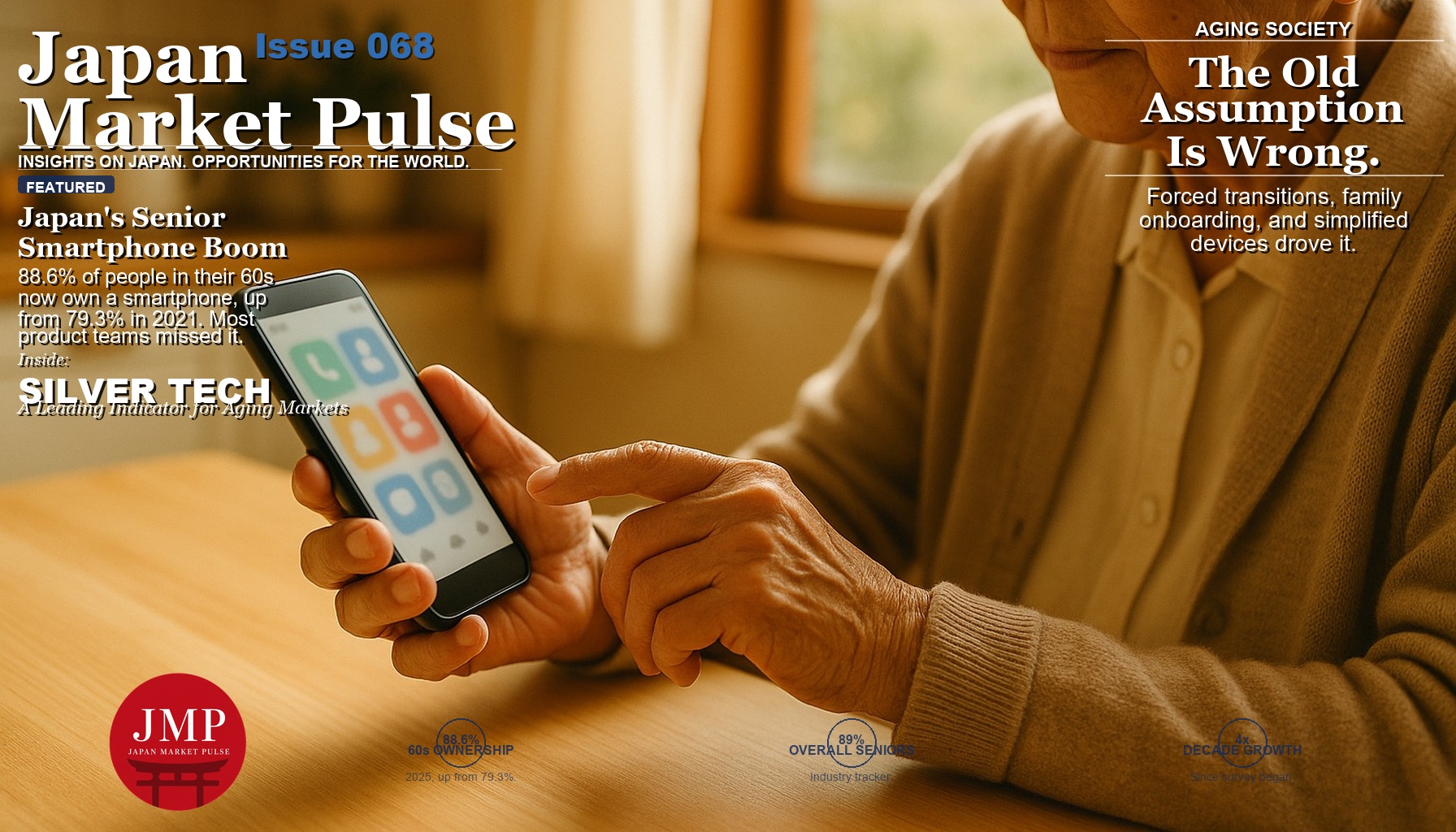
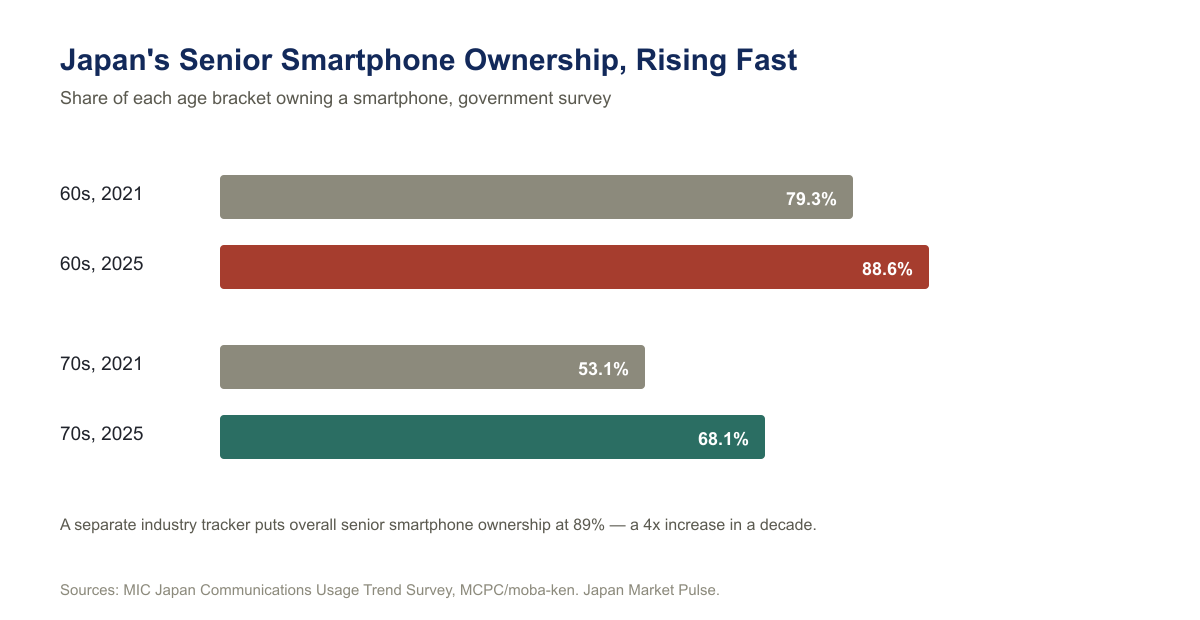
In the world’s most aged society, smartphone ownership among people in their 60s has climbed to roughly 88.6% as of 2025, up from 79.3% just four years earlier in 2021. Among people in their 70s, ownership rose from 53.1% to 68.1% over the same window. A separate long-running industry survey puts smartphone ownership among its surveyed senior cohort at 89%, describing it as a fourfold increase since the survey began tracking the category a decade ago. Even at the oldest end of the range, smartphone ownership among people in their early 80s now sits around 66%.
The gap that matters here isn’t between generations — it’s between what these numbers actually show and what most product teams, marketers, and app designers still assume about older users. “Seniors don’t really use smartphones” was a defensible assumption a decade ago. It is measurably, substantially wrong today, in one of the oldest societies on Earth, and that fact should worry — or excite — anyone building consumer technology anywhere with an aging customer base, which by current demographic trajectories, is nearly everywhere.
The Numbers, Read Carefully
Japan’s government-run Communications Usage Trend Survey and a longer-running private industry tracker tell slightly different but directionally identical stories, and the difference between them is itself instructive. The government survey shows 60s-cohort smartphone ownership rising from 79.3% in 2021 to 88.6% in 2025, and 70s-cohort ownership rising from 53.1% to 68.1% over the same period — measured against the full population in each age bracket. The private industry survey, which polls people aged 60 to 84 nationwide, finds even higher penetration: smartphone ownership of 94.1% among people in their 60s, 85.3% in their 70s, and 66.4% among those in their early 80s, with the same survey clocking overall smartphone ownership across its 60-84 cohort at 89% — a fourfold increase since the tracker began.
Zoomed out to internet usage broadly rather than device ownership specifically, the gap between generations is real but narrower than commonly assumed: Japan’s overall internet usage rate sits at 85.6% nationally, versus 60.8% among people 65 and older (2024 survey). That’s a meaningful gap, but it describes a majority of Japan’s elderly population being online, not a population locked out of digital life — a materially different picture than the “seniors don’t do internet” assumption still baked into a lot of product and marketing decision-making.
Why This Happened Faster Than Expected
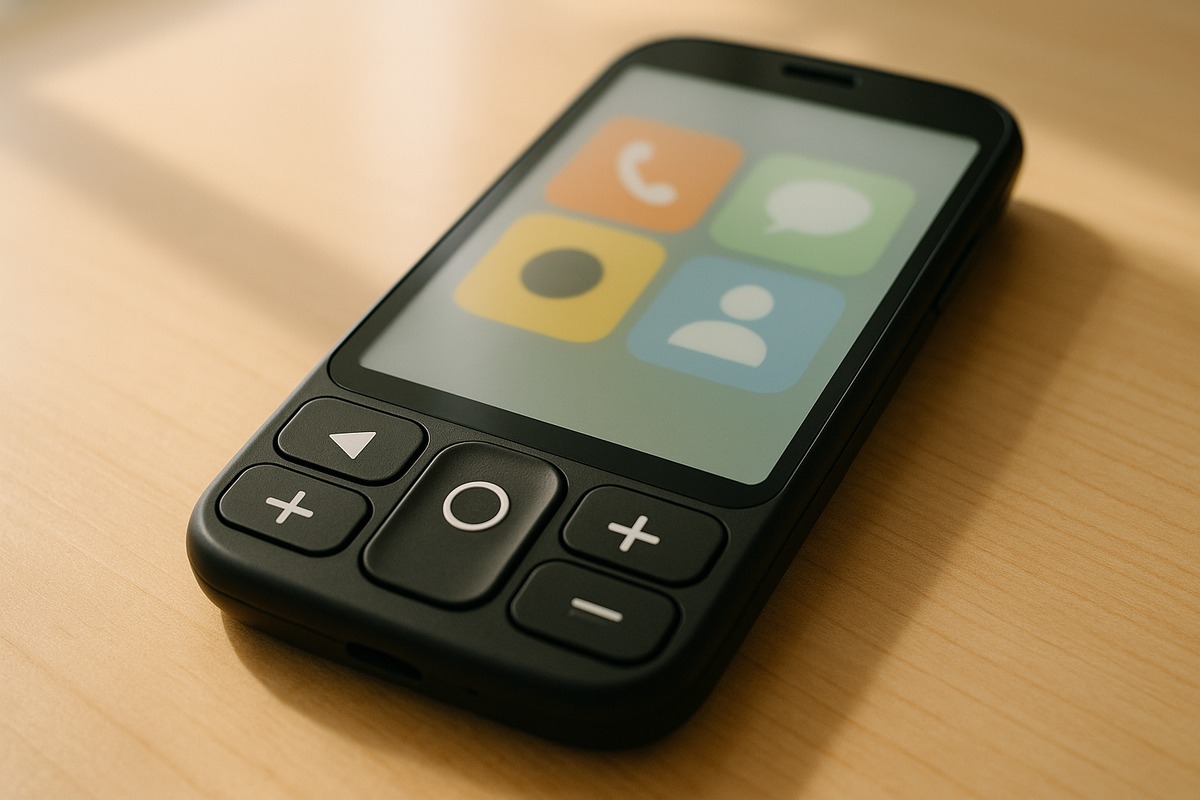
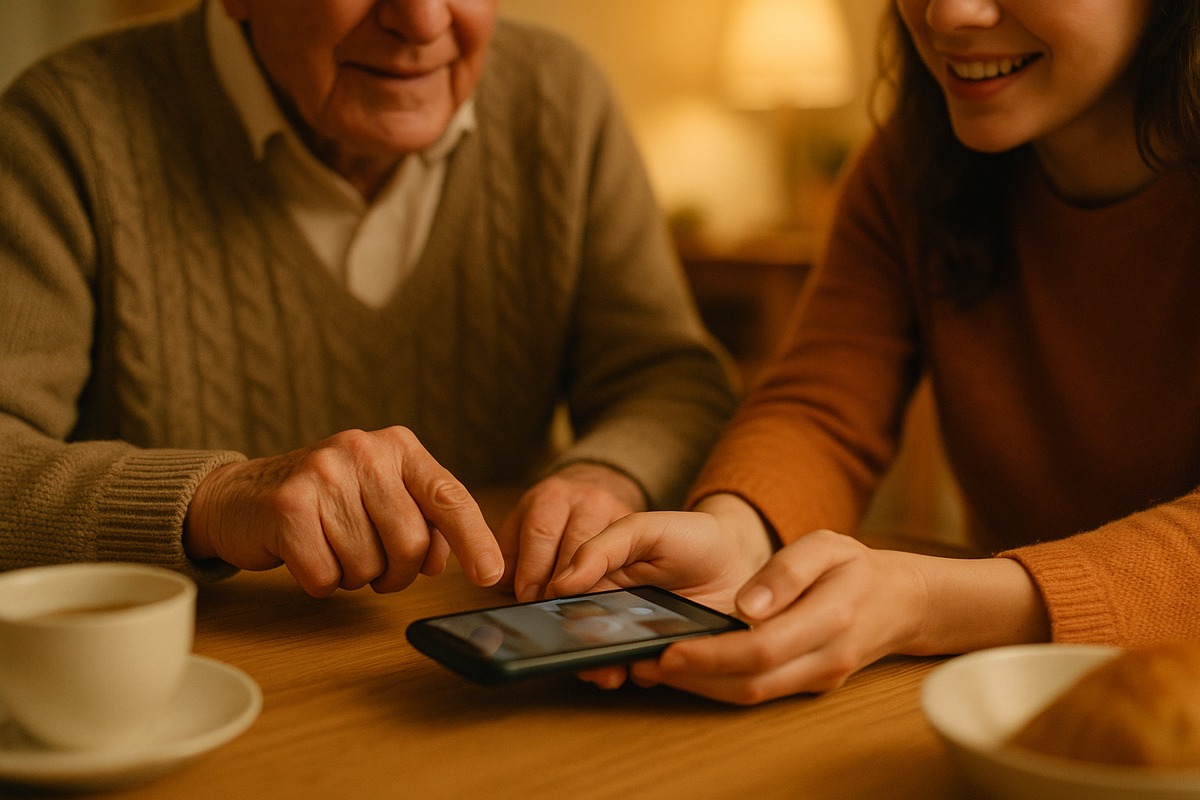
Three forces compounded to drive this shift faster than a simple generational-replacement model would predict — where older non-adopters are gradually just replaced by younger cohorts who were already digital natives. First, feature-phone discontinuation: as Japanese carriers wound down 3G networks and legacy feature-phone support, a meaningful share of senior mobile users faced a forced device transition rather than a voluntary one, and smartphones were often the only remaining option carriers actively offered at replacement time. Second, family-driven onboarding: adult children, increasingly living apart from aging parents in a country with Japan’s demographic structure, pushed smartphone adoption specifically to enable video calling, location-sharing for safety, and messaging apps as a lower-friction way to stay in contact than phone calls, creating a support system around the device that lowered the effective learning barrier considerably. Third, and perhaps most significant, the definition of “smartphone” in the Japanese retail market itself expanded to include devices explicitly designed for older first-time users: simplified senior-oriented smartphones with larger icons, reduced menu complexity, and physical buttons alongside touchscreens, sold specifically as a bridge device rather than assuming every new user wants the same interface as a 25-year-old.
That third point deserves particular attention from any company designing for this demographic elsewhere. Japan’s senior smartphone adoption wasn’t purely organic demand meeting a generic product — it was substantially assisted by device manufacturers and carriers deliberately building products for the specific friction points older first-time smartphone users actually experience, rather than shipping the standard flagship interface and hoping it works.
What “Aged Society” Actually Predicts for Everyone Else
Japan’s demographic position — one of the world’s oldest large economies by median age, and the clearest large-market case of population aging — makes its senior tech adoption curve a genuinely useful leading indicator rather than a Japan-specific curiosity. Countries including South Korea, Germany, Italy, and increasingly China are moving along a similar aging trajectory with a multi-decade lag behind Japan, and the U.S. and much of Western Europe, while less extreme, face the same underlying direction of travel. A product or marketing team anywhere currently treating “older users don’t adopt new technology” as a stable planning assumption is working from a premise Japan’s own data has already substantially disproven for its own elderly population.
The more specific, transferable lesson is about what actually drove adoption once the demographic pressure existed: it wasn’t generic smartphones becoming cheaper or more available in the abstract, it was a combination of forced transition points (carriers’ staged 3G shutdowns, completing with docomo’s in March 2026), family-driven support systems built around safety and connection use cases specifically relevant to older users, and deliberately simplified hardware and interface options designed for first-time older adopters rather than assuming a one-size-fits-all device. Any company targeting an aging user base elsewhere should treat those three levers — forced transition moments, family/caregiver-mediated onboarding, and genuinely simplified first-device products — as the actual mechanism, rather than assuming adoption will simply happen on its own as younger, already-digital cohorts age into the senior bracket.
What International Operators Should Take From This
For consumer electronics companies, telecoms, healthcare technology firms, and financial services businesses anywhere serving an aging population, Japan’s senior smartphone data is a direct signal that the addressable market for well-designed senior-first digital products is larger and growing faster than most planning models currently assume. A company still building its senior-user strategy around printed instructions, phone-based customer service as the primary channel, or an assumption that this demographic simply won’t engage with an app is planning against data Japan’s own market has already contradicted.
The device-design lesson is the most directly exportable piece: purpose-built, simplified hardware aimed explicitly at first-time older smartphone users — not a stripped-down budget phone, but a genuinely reconsidered interface — appears to meaningfully lower the adoption barrier compared to expecting older users to simply adapt to a standard flagship device. Any market entering its own demographic aging phase should look at what Japan’s device manufacturers built for this transition, rather than waiting for their own senior population to somehow catch up to mainstream smartphone design on its own.
Frequently Asked Questions
Q. What percentage of Japanese seniors own smartphones?
A. As of 2025, roughly 88.6% of people in their 60s and 68.1% of people in their 70s own smartphones, according to Japan’s government Communications Usage Trend Survey — up sharply from 79.3% and 53.1%, respectively, in 2021.
Q. Is internet usage among Japanese seniors as high as smartphone ownership?
A. Not quite. Japan’s overall internet usage rate is 85.6% nationally, compared to 60.8% among people 65 and older (2024 survey) — a real gap, but still a majority of the elderly population being online.
Q. What drove the rapid increase in senior smartphone adoption in Japan?
A. Three main factors: the shutdown of 3G networks forcing feature-phone users to transition, family members driving adoption for safety and communication use cases, and manufacturers building simplified, senior-oriented smartphones designed for first-time older users.
Q. Is Japan’s senior tech adoption curve relevant to other countries?
A. Yes — Japan’s demographic position as one of the world’s oldest societies by median age makes its adoption data a leading indicator for South Korea, Germany, Italy, China, and other rapidly aging markets following a similar trajectory with a time lag.
If you’re interested in this topic, the Japanese market more broadly, or what KETCHUPs is working on, we’d love to hear from you — please reach out via our contact form.
Japan Market Pulse is a weekly read on what the Japanese consumer-tech, food, and mobility markets are choosing to do, written for international operators who want to know what is happening before it shows up in the global trade press.
Subscribe at ketchups.co/japan-market-pulse.