

Disclosure: This article is published by KETCHUPs, a Tokyo-based trading and brand-development firm. All content is editorial.
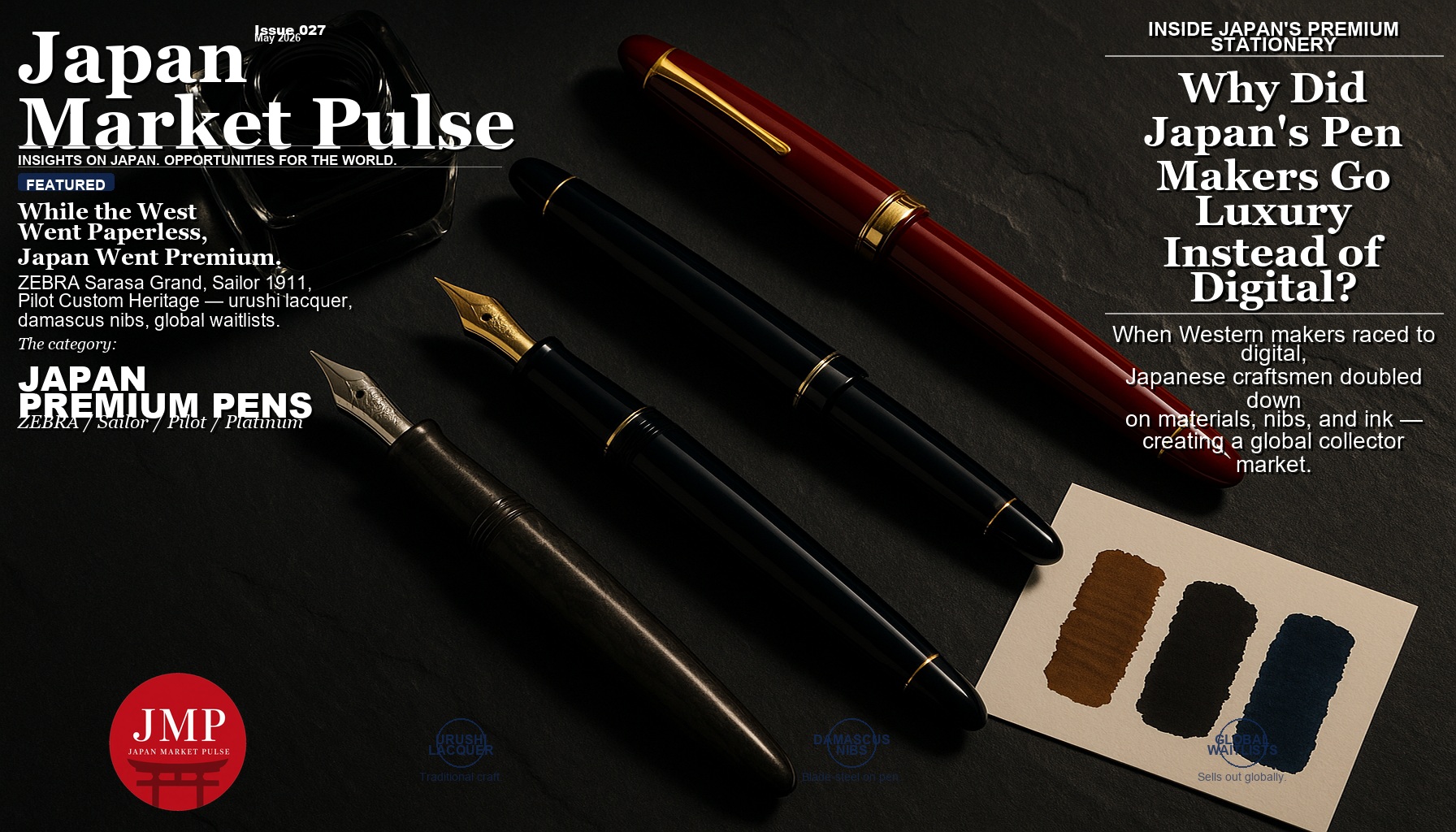
The conventional narrative about writing instruments in the twenty-first century is a decline story. Digitization. The death of the handwritten memo. Parker’s shrinking market share. Cross pens as airport gift-shop afterthoughts. It is a narrative that fits the data from Western markets reasonably well and is almost entirely wrong when applied to Japan.
Japan’s premium writing instrument market is, as of 2026, in the middle of something that looks less like a niche enthusiasm and more like a full category reinvention. The four dominant domestic manufacturers — Pilot, Sailor, Platinum, and ZEBRA — have spent the past several years executing a collective pivot toward premium and limited-edition products that command prices and waitlists previously associated with Swiss mechanical watches, Japanese whisky, or high-end audio equipment. The pivot is working.
Understanding why requires understanding something about Japanese consumer culture that the decline narrative misses: in Japan, the act of writing by hand was never purely functional. It carries aesthetic, philosophical, and even status dimensions that have no precise equivalent in Western office culture.
The Market That Wasn’t Supposed to Be Growing
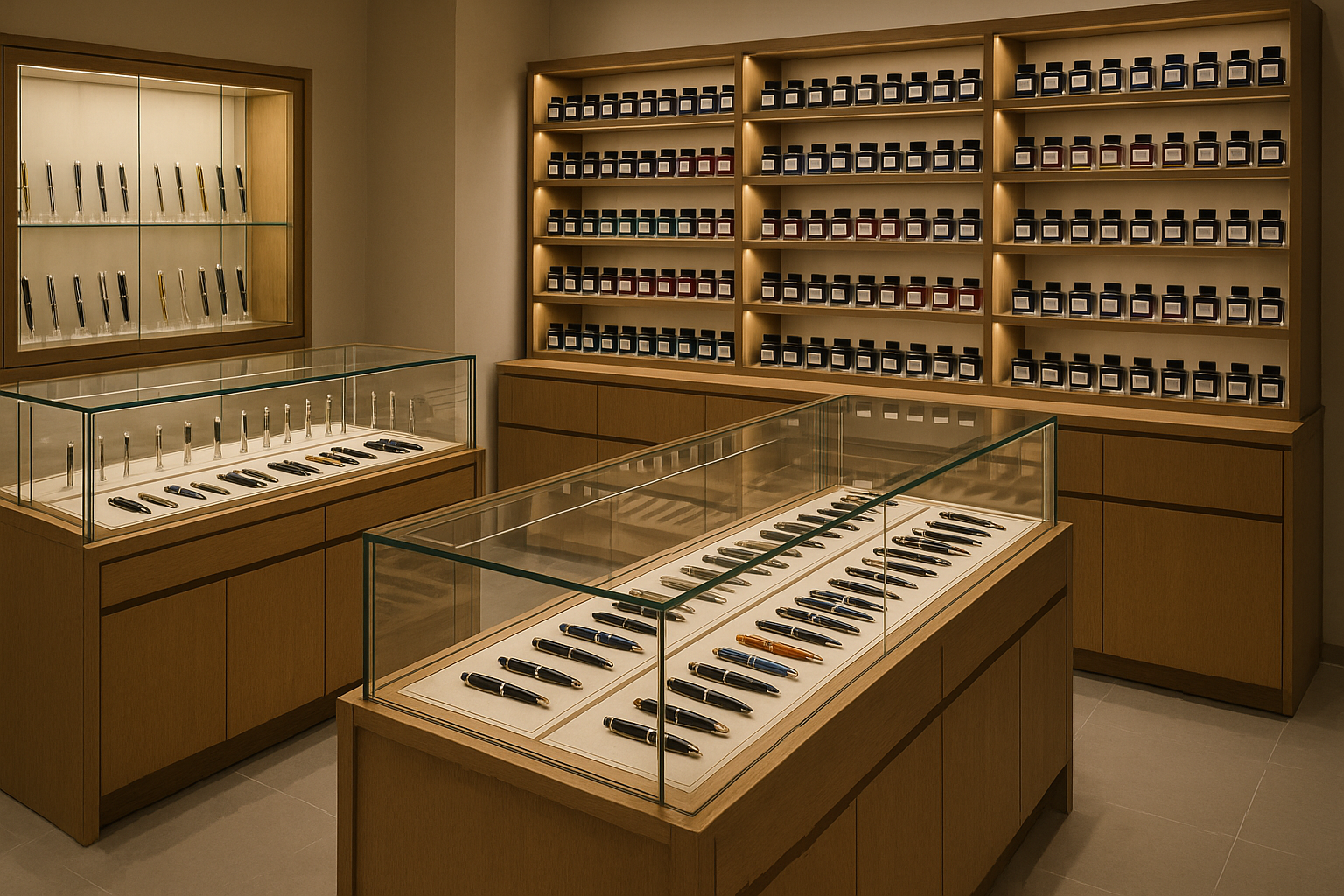
Japan’s writing instrument market generates approximately ¥120 billion ($800 million) annually. The premium segment, defined as writing instruments priced above ¥10,000, is growing at roughly 12% per year as of 2025. The growth is concentrated in the upper end — products with six-month waitlists and hand-numbered limited editions, not the entry tier. This pattern is familiar from other Japanese luxury-adjacent categories: sake, ceramics, kitchen knives. Each followed a similar arc: traditional craft base, decades of technical refinement, international discovery, premium spiral. Writing instruments are following the same curve.
ZEBRA HAMON: 110 Years of Manufacturing, Channeled Into One Pen
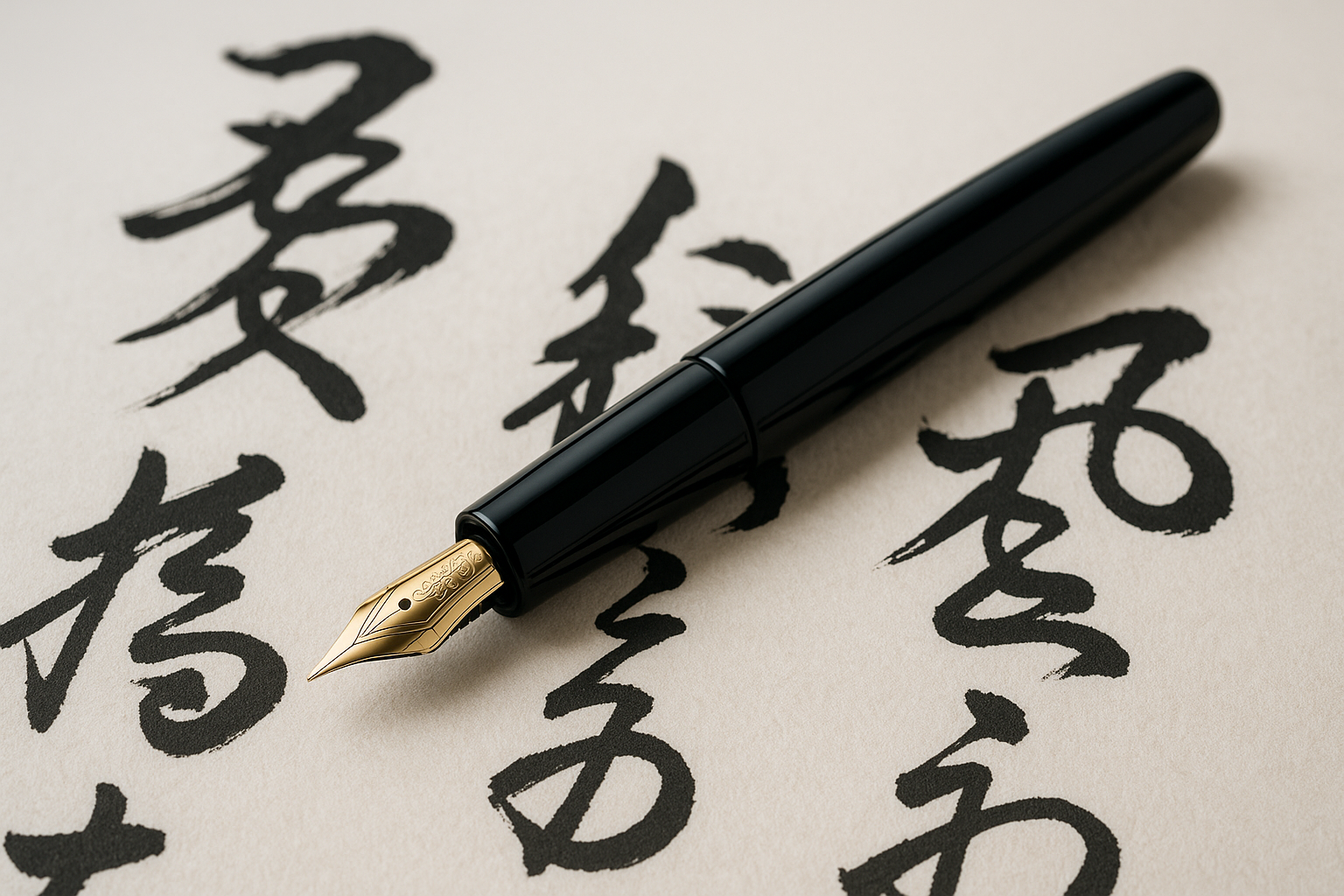
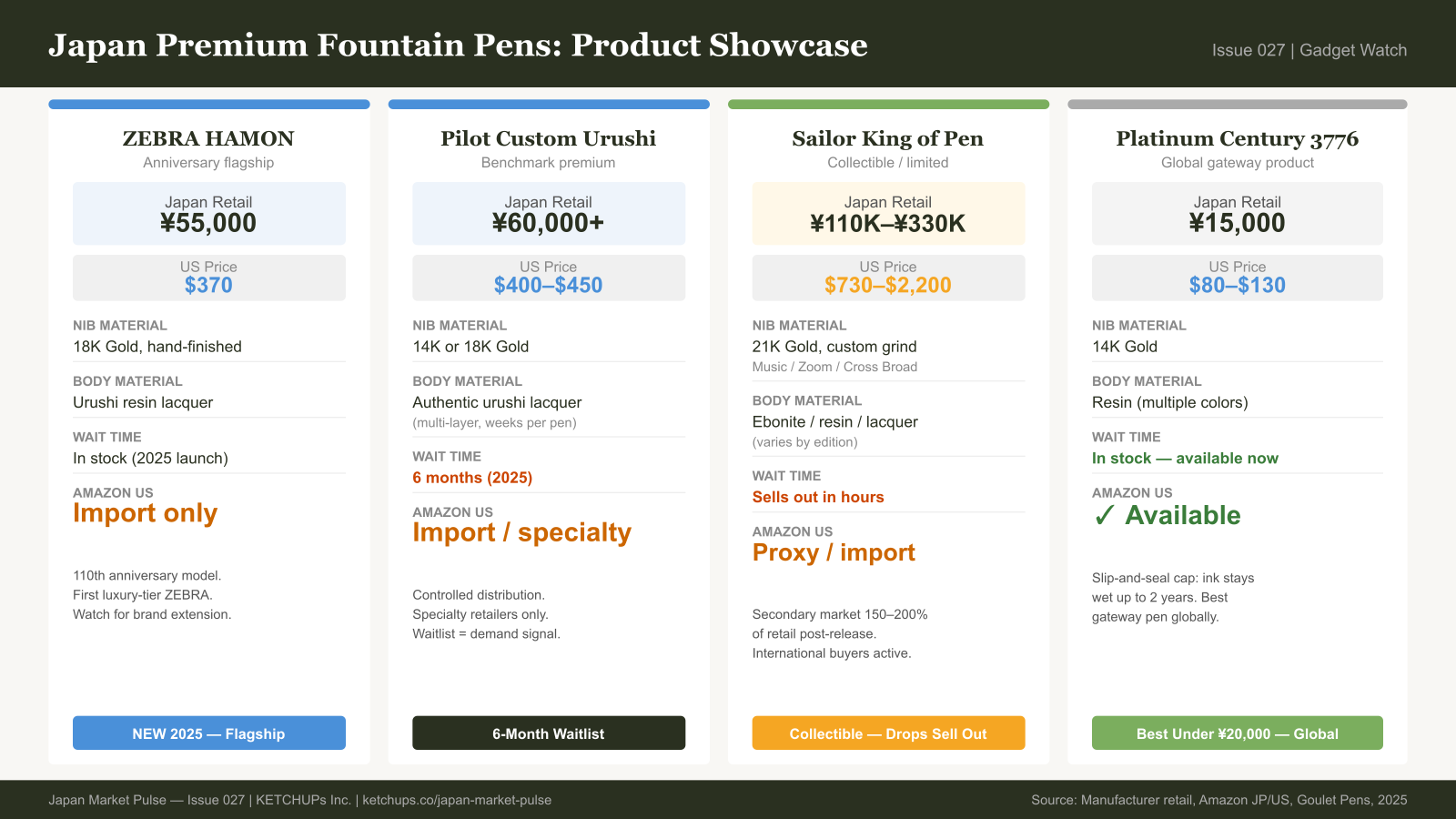
ZEBRA’s HAMON fountain pen deserves extended treatment because it represents something relatively rare: a mass-market manufacturer successfully entering the luxury tier without diluting the brand. ZEBRA is best known globally for ballpoints retailing between $3 and $20. The HAMON, launched for the company’s 110th anniversary, applies authentic urushi lacquer technique to a precision-machined pen body with an 18-karat gold hand-finished nib. Retail price: ¥55,000 ($370). If the HAMON succeeds at this price point — and early indicators suggest it is — the path to ¥100,000+ ZEBRA products is open.
Sailor, Pilot, and the Collectible Tier
Sailor’s King of Pen retails from ¥110,000 ($730) to ¥330,000 ($2,200) for limited editions that sell out within hours of release. Pilot’s Custom Urushi — six-month waitlist in 2025 — applies a multi-layer traditional lacquer process requiring weeks per pen. The Platinum Century 3776, named for Mount Fuji’s height, functions as the global gateway product: best fountain pen available under ¥20,000, available on Amazon US at $80–$130, and responsible for converting more international buyers to Japanese pen quality than any other single product. Together these four manufacturers cover the entire premium range from accessible to collectible.
The Ink Market: Recurring Revenue Hidden in Plain Sight
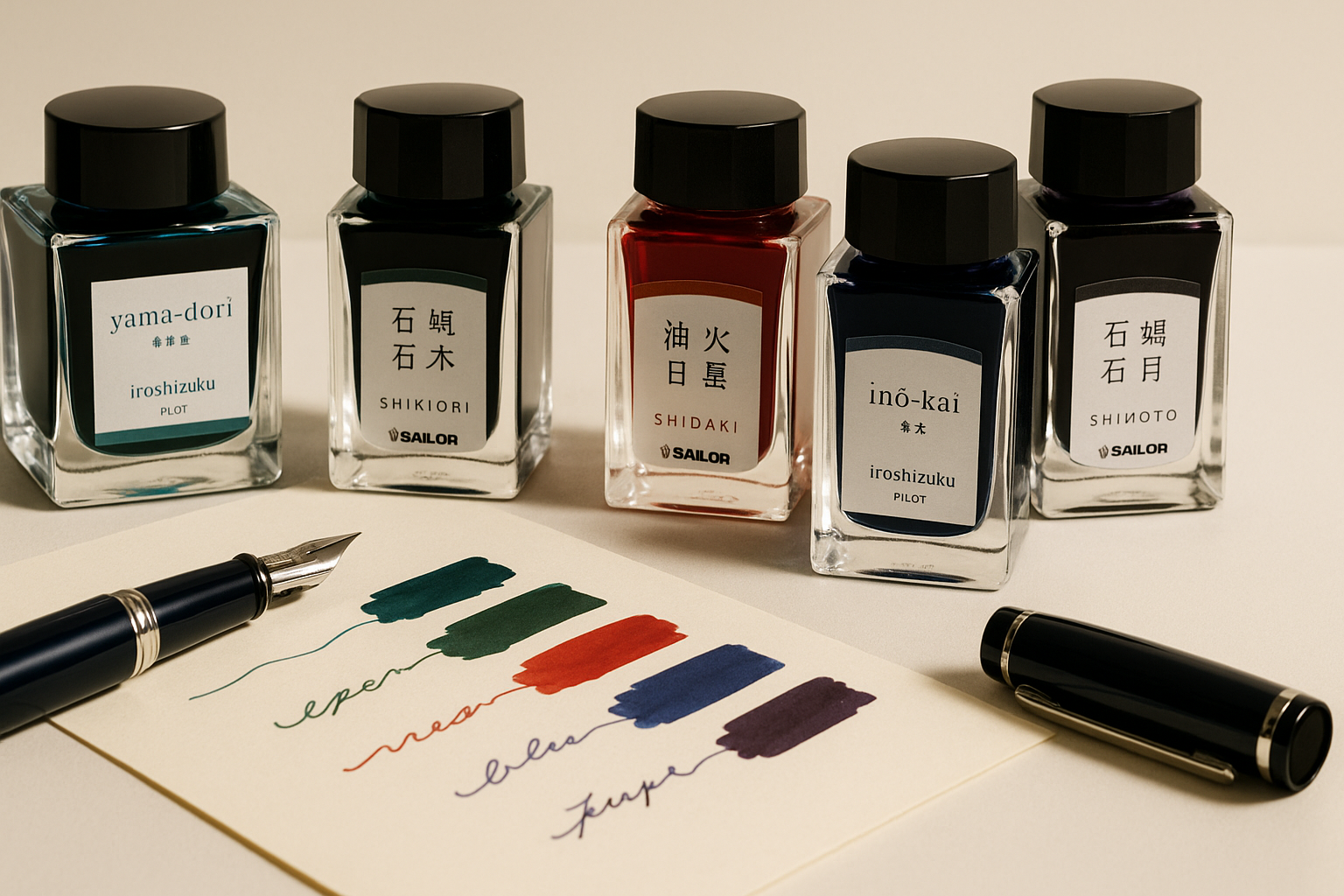
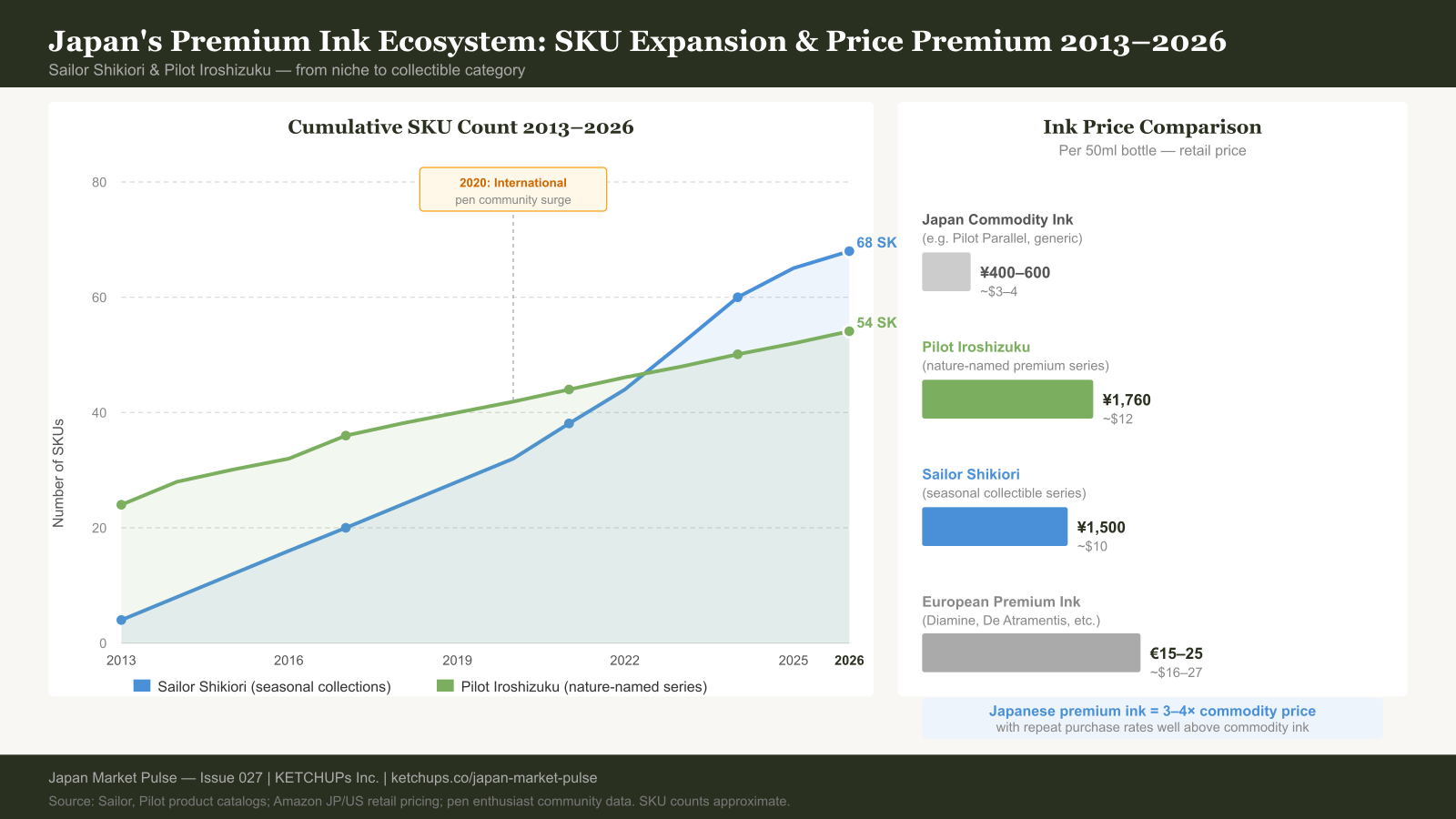
The most commercially interesting dimension of the premium pen renaissance may not be the pens themselves — it is the ink. Sailor’s Shikiori seasonal series now runs to more than 60 SKUs at ¥1,500 per bottle, each named for a Japanese seasonal color reference. Pilot’s Iroshizuku line tops 50 colors. The commercial logic is elegant: a fountain pen enthusiast who owns three pens might own twenty inks. Purchase frequency is high, brand loyalty is strong, and the barrier to trial is low. Discontinued colorways trade on secondary markets; new seasonal releases generate predictable demand spikes. This is the consumable flywheel that makes pen hardware investment rational.
Distribution and the Western Opportunity
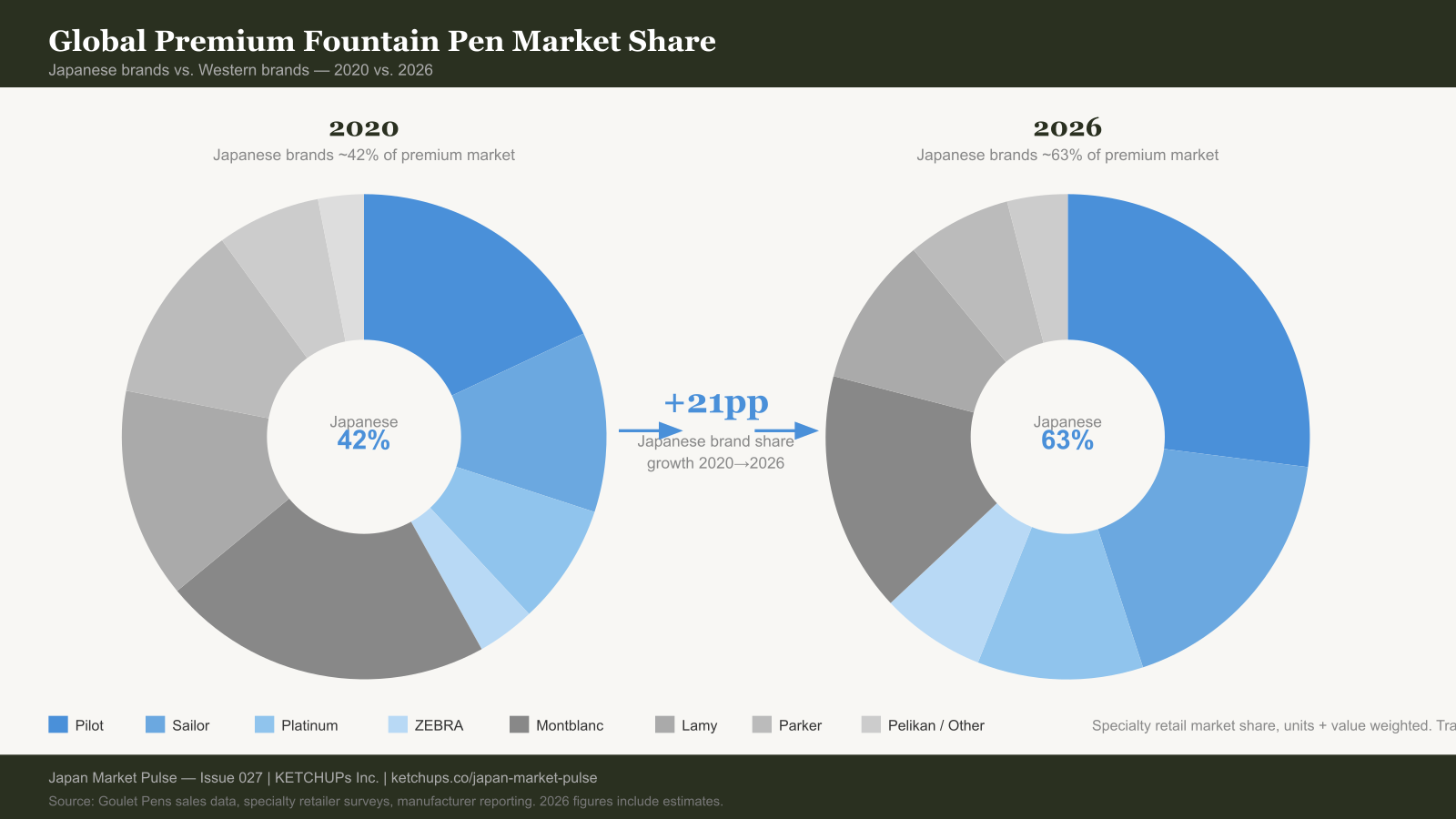
Goulet Pens — a US specialty retailer with $50M+ revenue — reports Japanese brands now representing over 60% of its premium fountain pen sales. Entry and mid-tier Japanese pens (Pilot Metropolitan at $22, Platinum Preppy at $8, Sailor Pro Gear Slim at $180) are broadly available on Amazon US. The true premium tier requires more deliberate sourcing — a gap that represents a clear opportunity for specialty importers. The consumer base exists, the average order value is high, and the category differentiates on multiple axes simultaneously: country-of-origin prestige, craft narrative, functional superiority, and collectible potential.
What the 2026 Wave Looks Like
The current moment is defined by convergence: material innovation, ink ecosystem development, and international distribution are all accelerating simultaneously. ZEBRA will extend the HAMON platform. Sailor’s KOP releases will continue to command secondary-market premiums. The next phase, visible in early product announcements, involves collaboration inks — limited editions produced with specific artists, literary properties, or regional cultural institutions — applying the collectibles playbook that has driven Japanese trading cards and vinyl toys. For international operators watching Japan as a product development laboratory, the premium pen category is readable. The axes are defined. The consumer exists. The question is who will be positioned to serve it.
If you’re interested in this topic, the Japanese market more broadly, or what KETCHUPs is working on, we’d love to hear from you — please reach out via our contact form.
Japan Market Pulse is a weekly read on what the Japanese consumer-tech, lifestyle, and adult-collectibles markets are choosing to do, written for international operators who want to know what is happening before it shows up in the global trade press.
Subscribe at ketchups.co/japan-market-pulse.