

Disclosure: As an Amazon Associate, I earn from qualifying purchases. Some links in this article are affiliate links.
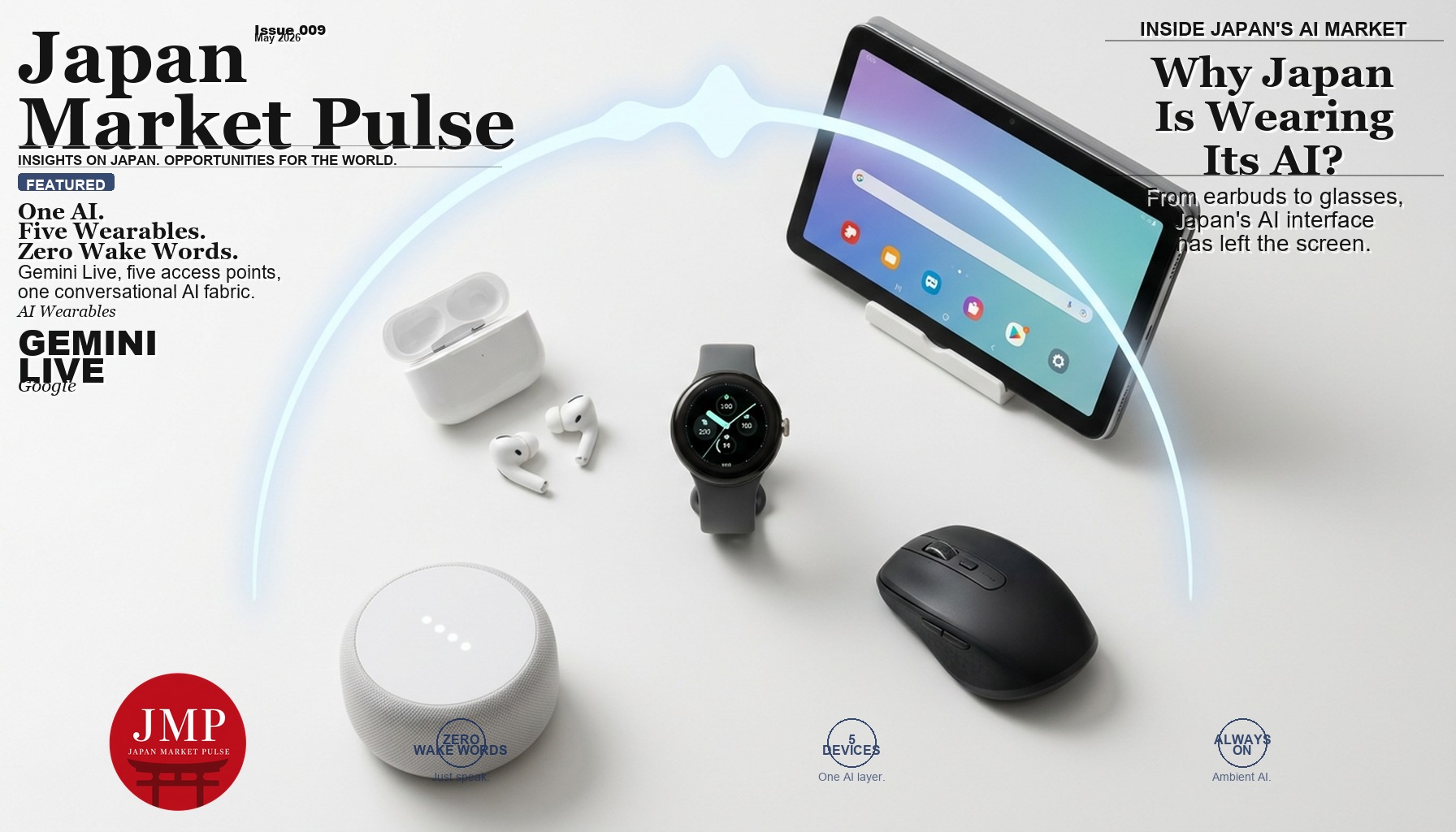
Voice assistants used to be bound to a specific piece of hardware: Siri to the iPhone, Alexa to the Echo, Bixby to a Galaxy. In late 2025 and through 2026, Google has done something different — Gemini Live, the conversational always-on voice agent first shown at I/O 2024, has been cross-deployed onto a watch, an earbud, a tablet, a niche Japanese mouse, and a new home speaker. Here is what that looks like in the Japanese consumer channel, and why it matters more than the individual products do.
Japan Market Pulse — Issue 009 | Gadget Watch
A small brand-line confession is in order. The author is, by training and instinct, a Pixel sceptic. Five years of Pixel hardware reviews — and a half-decade of Pixel-versus-Galaxy-versus-iPhone comparison work in the Japanese consumer-tech press — have produced exactly the kind of muscle-memory the next sentence is meant to question. “On-device voice assistants are nice but ultimately a phone feature. Apple does it better than Google does. Buy whatever phone you like and use the assistant that comes with it.”
That sentence was true through 2023. It was wobbly through 2024. By the GetNavi May 2026 issue, with its cover-story spread on “latest voice-input gear, five picks”, it is no longer true at all. The five picks in the magazine spread are not five phones. They are a smartwatch, a pair of premium ANC earbuds, a smart-glasses headset, an AI tablet, and a four-button voice-command mouse. And the through-line that connects them is not a hardware vendor and is not a phone OS. It is a single AI model — Gemini Live, Google’s conversational always-on voice agent — that is now deployed natively on each of those five form factors, treating the hardware around it as a sensor-and-speaker substrate.
This is, I think, the more important story than the individual products. The hardware-to-AI relationship has just inverted. The voice-input-and-AI layer used to be a feature attached to a specific piece of hardware. It has now become infrastructure that the hardware is attached to. Watching that inversion happen across five Japanese product launches in three months tells us more about the next eighteen months of consumer AI than any single phone release.
This is the story of how that inversion looks in Japanese consumer retail in spring 2026, told through the five GetNavi picks.
What Gemini Live Actually Does Differently
To understand why the cross-device deployment matters, it helps to be specific about what Gemini Live is.
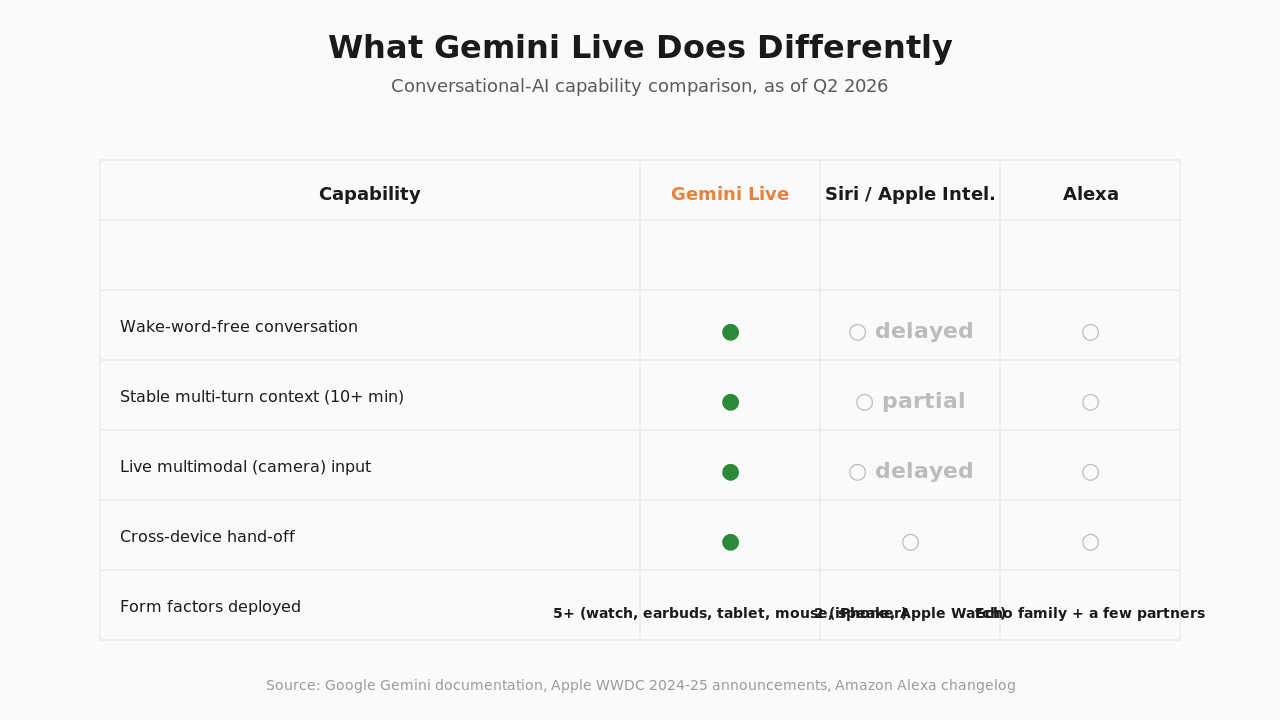
Gemini Live, in its current Q2-2026 form, is a real-time conversational agent backed by Google’s Gemini 2.5 family (the Pro variant for premium devices, the Flash variant for the lighter form factors). Gemini Live’s distinguishing characteristics, relative to Siri and Alexa as they stood in 2024, are: (1) sub-second turn-taking latency — the assistant can be interrupted mid-sentence and will gracefully back off; (2) stable multi-turn context — a conversation can run for ten or fifteen minutes without state loss; (3) live multimodal input — the user can hold up their phone or watch and ask Gemini what it is looking at, and the answer integrates the visual context; and (4) native tool-use against the device’s capabilities — Gemini Live can place calls, send messages, run shortcuts, query the calendar, control smart-home devices, all without a “OK Google” wake word and all in one continuous spoken conversation.
The closest equivalent in the Apple ecosystem is the in-development Siri-with-Apple-Intelligence overhaul, which has been repeatedly delayed and which, as of March 2026, is still the long-promised vapor of WWDC 2024. The closest equivalent in the Microsoft ecosystem is Copilot Voice, which is competent but PC-bound. Google has, almost by accident of timing, ended up the only major-platform vendor with a real-time conversational agent that runs natively across smartwatch, earbud, tablet, and home speaker form factors.
That cross-form-factor coverage is the entire point of the GetNavi feature. Look at any of the five products in isolation and you have a competent gadget. Look at the five products as a system and you have something like the next-generation consumer-AI substrate.
The Watch Tier — Google Pixel Watch 4 (45 mm)
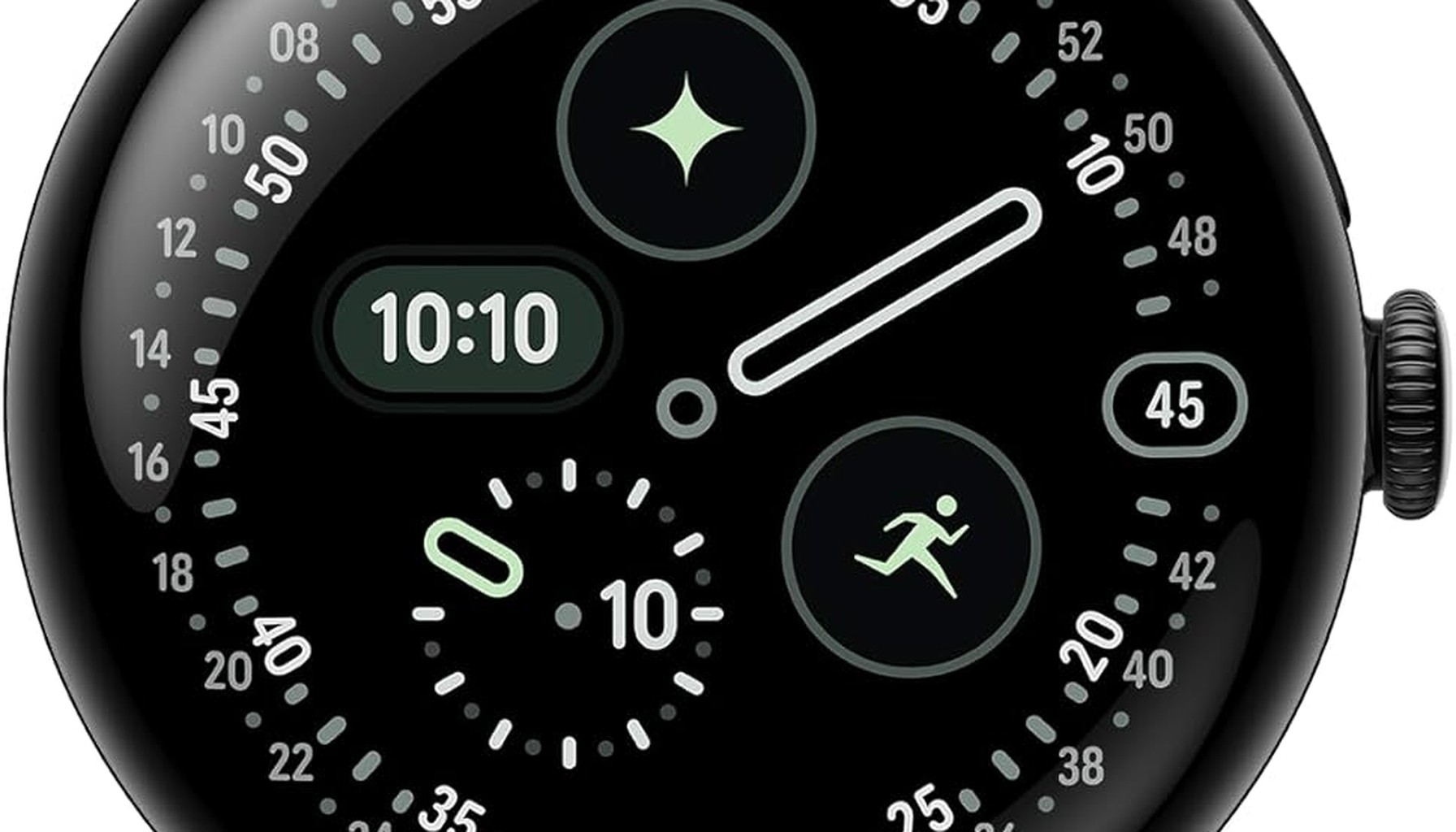
The first GetNavi pick is the Google Pixel Watch 4 in its 45 mm trim at ¥63,800 (about USD $425), or the 41 mm version at ¥57,200 (USD $380). The U.S. shipping SKUs are B0FJWQP6LX (45mm) and B0FJW36Y5Q (41mm) on Amazon US, with the canonical maker page at store.google.com/us/product/pixel_watch_4.
The Pixel Watch 4’s headline pitch — “Gemini Live without a wake word” — is, to anyone who has used the equivalent generation of Apple Watch with Siri, the most jarring change of behavior in the smartwatch category in three years. The wrist-up gesture activates the watch face. A second wrist-up gesture, with the watch’s microphone enabled (which it is, by default, on an opt-in basis the user has to deliberately disable), enters a Gemini Live conversational mode. The user simply talks. The watch speaks back through the wrist’s tiny speaker, or — and this is where the Pixel-Buds-cross-pairing becomes relevant — through any paired Pixel Buds or Sony WF-1000XM5 in the user’s ears.
Specs that matter for the Japanese context: the Pixel Watch 4 ships with Suica support natively (Japan-domestic, post-2024 Felica integration with Wear OS 5), which makes it a credible iPhone-Apple-Watch competitor for the first time since the Pixel Watch line started in 2022. Battery life is a little under 36 hours in light use, about 24 hours with always-on display. The 45 mm casing is comfortably wearable for the median Japanese male wrist size; the 41 mm fits the median Japanese female wrist size, which is a non-trivial market-fit consideration in a country where Apple Watch sizing has been a years-long complaint.
The reason to put the Pixel Watch 4 first in the GetNavi spread is, I think, that it is the smallest device on which Gemini Live demonstrably works in a way that does not feel like a downgrade from a phone experience. Twelve months ago that was not true. Even Google’s previous generation, the Pixel Watch 3, ran a stripped-down assistant. The Watch 4 runs Gemini Live more or less in parity with the Pixel 9 Pro phone, and that parity is the entire reason the device is interesting.
The Earbuds Tier — Sony WF-1000XM5
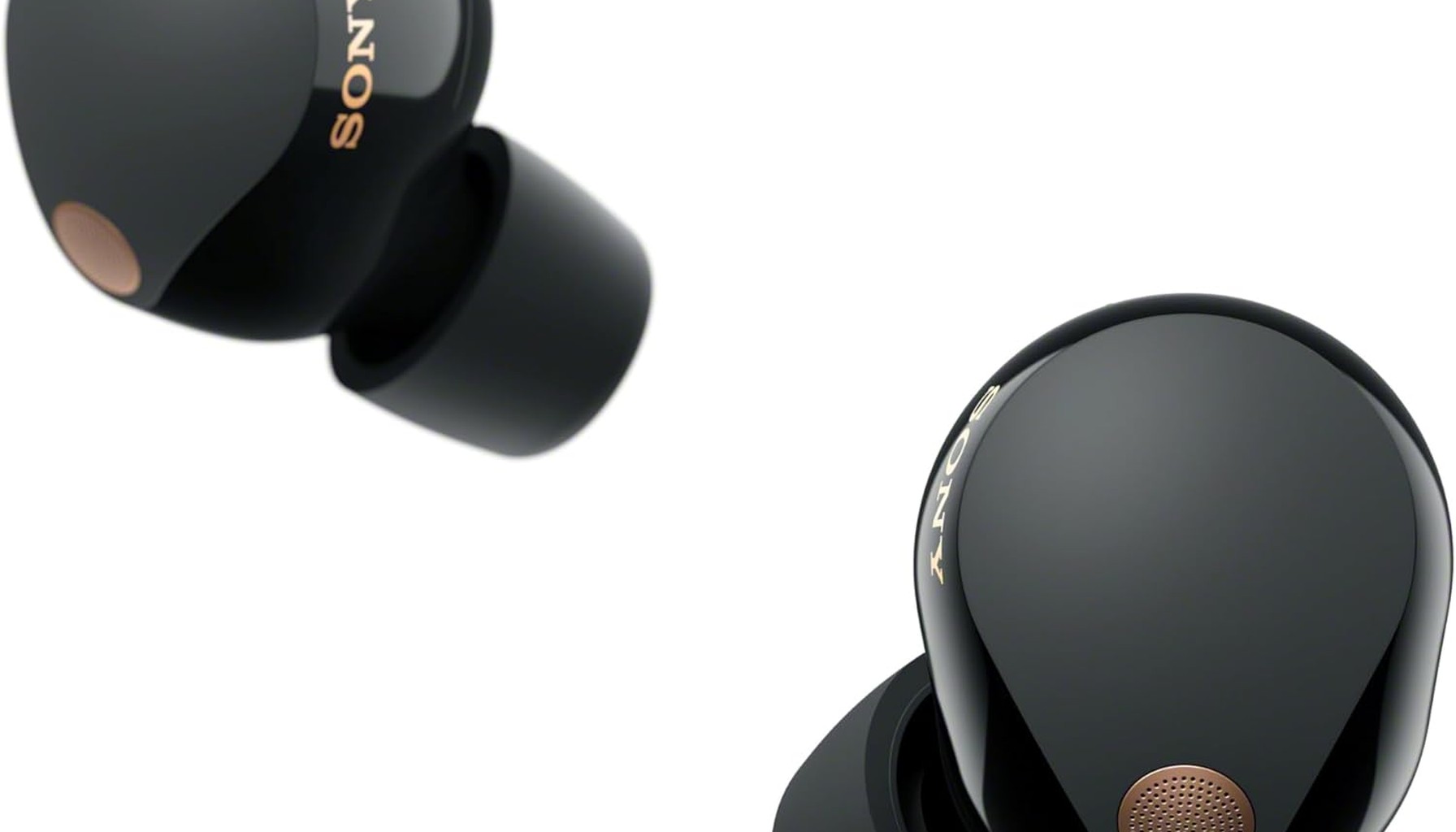
The second pick is Sony’s WF-1000XM5 at ¥41,800 (USD $279), Amazon US ASIN B0C33XXS56. Maker page at electronics.sony.com.
This is the GetNavi pick that should make the international reader sit up. The Sony WF-1000XM5 is, on its own merits, one of the two or three best premium ANC earbud options on the market — competing head-on with Apple’s AirPods Pro 2 and Bose’s QuietComfort Ultra Earbuds. What is new in the 2026 Japanese channel is that the firmware update Sony pushed in March 2026 added native Gemini Live integration through the Sony Sound Connect app on Android, with the WF-1000XM5 acting as the audio I/O for a Gemini Live conversation that runs on the paired Android phone.
Functionally, this means: a user wearing WF-1000XM5 and carrying any Android device with a current Gemini Live build can hold a real-time multi-turn conversation with the assistant, hands-free, with the phone in their bag or pocket, with no other input device. The earbuds’ touch-sensors handle the conversation initiation and termination. The ANC processing and the Gemini Live audio streaming run on separate audio pipes. The user does not need to look at the phone for any normal Gemini Live task.
For the Japanese audience this is a meaningful upgrade. Japanese consumer electronics buyers have, for two decades, treated Sony as the trusted in-country premium audio brand, with a brand-loyalty curve that is structurally different from the brand attachment to Apple or Samsung. The fact that Sony has chosen Google’s assistant as its first-party voice partner, rather than building a Sony-branded equivalent or sticking with the legacy Google Assistant integration, is more strategically interesting than Western coverage has flagged. It indicates that Sony has read the cross-form-factor AI shift the same way Google has, and has decided to be a hardware substrate inside Google’s AI infrastructure rather than try to reimplement the AI layer.
Whether that is the right strategic call is genuinely open. What is not open is the consumer outcome: a 2026 Japanese commuter wearing WF-1000XM5 on the Yamanote Line has, today, the cleanest hands-free Gemini Live experience available on any earbud platform.
The Tablet Tier — Samsung Galaxy Tab S11 Ultra (Wi-Fi 14.6-inch)
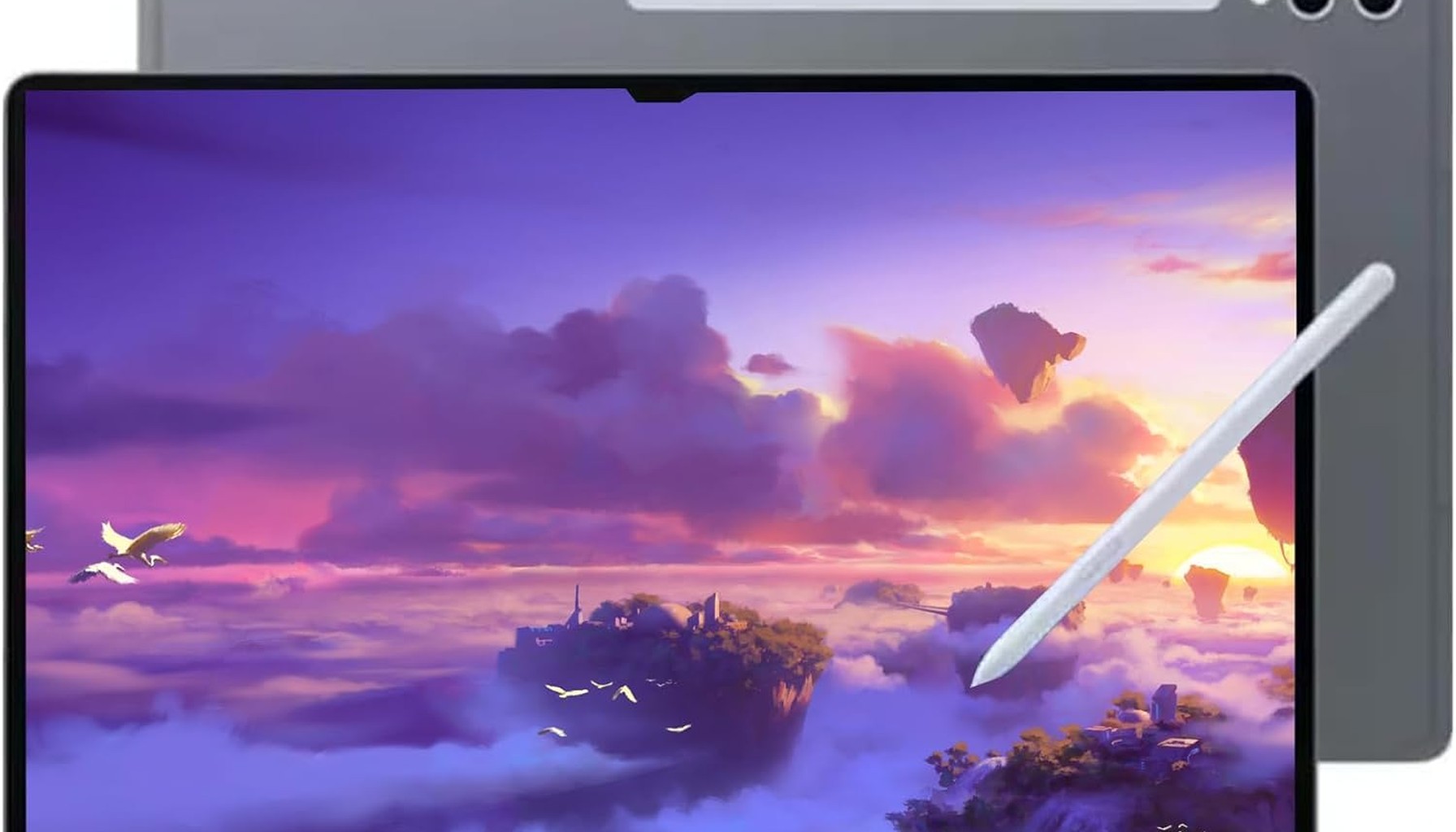
The third pick — Samsung’s Galaxy Tab S11 Ultra, Wi-Fi 14.6-inch, list price ¥195,800 (USD $1,300), Amazon US ASIN B0FQKSCX2D, maker page at samsung.com/us/tablets/galaxy-tab-s11 — is the most expensive pick in the GetNavi feature, and the most interesting from a strategic perspective.
The interesting thing is not the hardware, although the hardware is excellent: 14.6-inch Dynamic AMOLED 2X, 2960×1848 resolution at 120 Hz, included S Pen with Bluetooth haptics, MediaTek Dimensity 9400+ flagship SoC, 12 GB or 16 GB of RAM, and a battery that does almost a full work-day under heavy creative-app use. The Tab S11 Ultra is a credible iPad Pro M4 competitor on every spec the spec sheet measures.
The interesting thing is the AI-runtime architecture. Samsung’s tablet runs the same Galaxy AI feature set that the Galaxy S25 phones run — Circle to Search, Live Translate, Note Assist, the rest — but in 2026 Samsung has done something it took the S25-series launch a year earlier to build up to: it has made Galaxy AI’s voice layer defer to Gemini Live for conversational tasks, while keeping the Samsung-branded layers for tablet-specific UI and creative-tool integration. The user experience is one continuous Gemini Live conversation, with Samsung’s app ecosystem hooking in via a documented intent system underneath.
That choice — for a Samsung flagship tablet to ship with Google’s voice agent rather than Bixby — would have been unthinkable in 2022. In 2026 it is the obvious move. Bixby continues to exist as a system-level command vocabulary. Gemini Live is the conversational layer the user actually talks to.
The Japanese consumer takeaway is that a Galaxy Tab S11 Ultra, paired with the Pixel Watch 4 on the wrist and the Sony WF-1000XM5 in the ears, gives the user the same Gemini Live conversational fabric across three radically different hardware footprints. The system is the product. The individual devices are nodes in it.
The Quirky Japan Tier — Clouther ThinkClick (4-Button Voice Mouse)
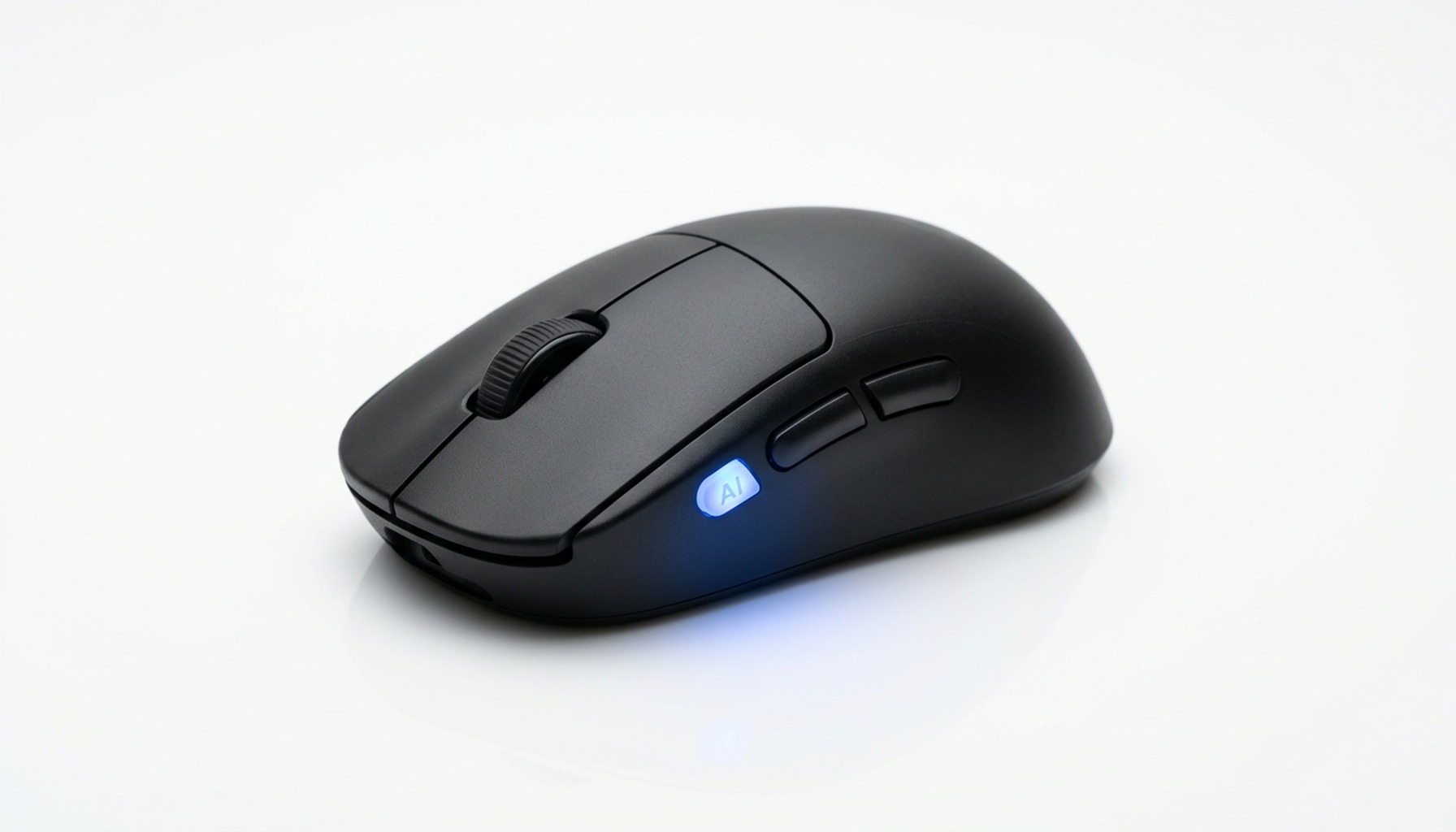
The fourth pick is the most distinctively Japanese: the Clouther ThinkClick four-button voice-recognition mouse, at ¥13,280 (USD $89). This product is, today, a Japan-mostly product — it does not have a clean Amazon US listing, the Clouther brand has minimal English-channel distribution, and the relevant Japanese channel is primarily the maker-direct shop and the Bic Camera / Yodobashi physical retail tier.
Mention is nonetheless warranted, both because it is a useful illustration of the cross-form-factor pattern this article is about, and because Clouther’s specific design choice is one no Western OEM has tried. The ThinkClick is, mechanically, a fairly conventional three-button-plus-scroll-wheel mouse. The fourth button — a thumb-side button on the left flank — triggers a voice-command session that is locally interpreted by the mouse’s on-board “Spark AI” chip and forwarded as a structured intent to the host PC. The user says “translate this paragraph to English” or “summarize this email”; the mouse forwards the intent as a Microsoft-Word-and-Outlook macro; the on-PC Copilot or Gemini-for-Workspace does the work.
The interesting thing the mouse does is treat the voice button as the “AI hotkey” that Microsoft has been attempting to standardize on Copilot+ PC keyboards but has failed to make consistently useful. By moving the AI-trigger to a peripheral, Clouther has effectively made an AI-aware accessory that works on non-Copilot+ PCs too — including the millions of older Windows machines in Japanese corporate offices.
Whether the design takes off is uncertain. What is interesting for this analysis is that Clouther exists, in Japan, as a Japanese-channel-mostly product, before any equivalent has shipped from Microsoft, Logitech, or Razer in the international market. It is a small but genuine Japanese-OEM bet on the AI-peripheral category, and it deserves the GetNavi spread coverage even if the international reader cannot easily buy one.
For an English reader looking for the closest internationally-shipping equivalent: the relevant alternatives are the Microsoft Surface Mouse with the Copilot button (US-only, late 2025 release) and the Logitech MX Master 4 with the Smart Actions / AI Prompt button (announced late 2024, shipping internationally). Both are more expensive than the ThinkClick and neither offers exactly the same on-mouse voice processing the Clouther does.
The Home Speaker — Google Home Speaker (2026 Spring Model)
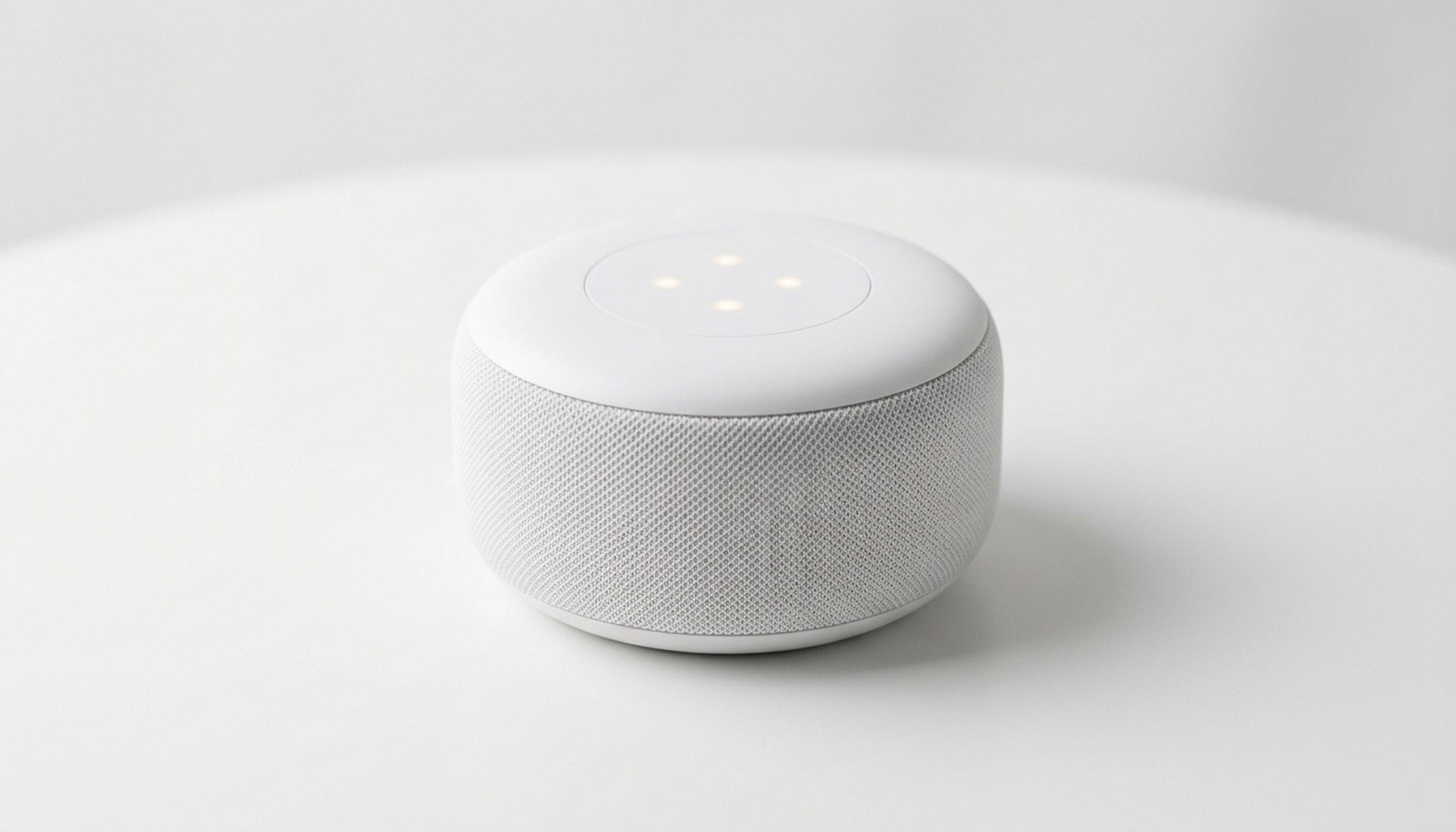
The fifth and final pick is the Google Home Speaker, 2026 spring model. As of the GetNavi issue’s print date, the speaker had been announced and was scheduled for a Japanese channel release in May–June 2026. Maker page at store.google.com/us/product/google_nest.
The 2026 Google Home Speaker — Google’s first major refresh of the Home/Nest Mini smart-speaker line in three years — is the household anchor of the cross-device Gemini Live story. It is positioned, in Japanese consumer channels, against the Amazon Echo Show 8 and the Apple HomePod mini (the latter of which has not seen a major Japanese push in three years). What it does that the Echo and the HomePod do not is: expose the same Gemini Live conversational layer that the Pixel Watch 4, the Sony earbuds, and the Galaxy Tab S11 Ultra expose, with full hand-off — a conversation started on the watch can continue on the home speaker when the user walks in the door, with the assistant aware of the conversational context.
Japanese reviewers — Engadget Japan, ITmedia Mobile, AV Watch — have already noted that this hand-off behavior, more than any single specification, is the Google Home Speaker’s actual selling point. The speaker’s audio quality is competent but unremarkable. Its Gemini Live integration is the differentiator, and it is the kind of differentiator that only makes sense in the context of the cross-device deployment that the rest of this article has been describing.
What This Looks Like as a System
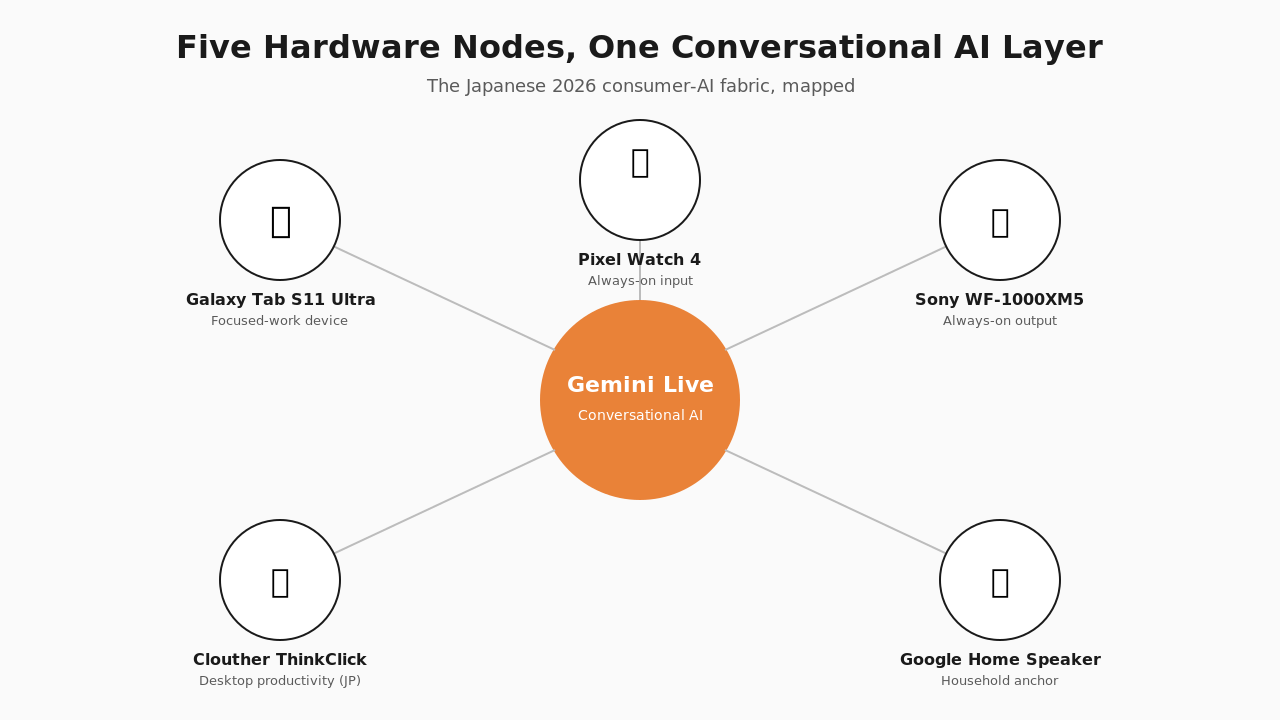
Step back from the five products. The pattern is clear, and it is the pattern this article opened with: the AI layer has detached from the hardware. A Japanese household in spring 2026 can buy a watch, an earbud, a tablet, a mouse, and a home speaker — each from a different manufacturer, all running a single conversational AI agent — and treat the resulting system as one continuous voice-driven AI fabric.
That is structurally new. Apple has not done it. Microsoft has not done it. Amazon, despite a multi-year lead with Alexa across more devices, has not done it because Alexa has not had the conversational depth to make the cross-device experience feel like one assistant.
Google has, and Japan is the country watching this most carefully, because Japan is the country where the household-as-system thinking — the same thinking that produced the smart-toilet-plus-smart-fridge-plus-smart-bath integration that Western reviewers find odd — is the consumer baseline rather than a high-end aspiration.
The five GetNavi picks are, in this light, less five products than five access points. The smartwatch is the always-on input device. The earbuds are the always-on output device. The tablet is the focused-work device. The voice mouse is the desktop-productivity device. The home speaker is the household-anchor device. The Gemini Live agent runs across all five and treats them as the same conversation.
Whether this is the future that we want is a separate question, and worth more careful thought than it usually gets. There are real privacy questions. There are real questions about what happens to a household when the AI layer is operated by one company. There are real questions about what failure modes look like when a single Google-side outage takes out the conversational layer of five different devices simultaneously.
What is not in question, at this point, is whether this is happening. The GetNavi spread is the visible surface of an underlying shift that the Japanese consumer-electronics channel has already absorbed. The five products are real. The cross-deployment is real. The Apple counter-move is delayed; the Microsoft equivalent is PC-bound; the Samsung-with-Bixby alternative has effectively conceded the conversational layer to Google. This is, today, what the Japanese AI-wearables market looks like. The rest of the world is approximately one product launch behind.
TL;DR — Which Device Should You Buy First
If you want the single most useful Gemini Live entry point: the Google Pixel Watch 4 (45mm) (B0FJWQP6LX) — paired with whatever Android phone you already have. The watch is where Gemini Live’s wake-word-free conversational design feels most like a step-change.
If you want the best hands-free Gemini Live audio experience: the Sony WF-1000XM5 (B0C33XXS56). The March 2026 firmware update made this earbud the cleanest cross-platform AI audio device on the market.
If you want a focused-work AI tablet with the same conversational layer: the Samsung Galaxy Tab S11 Ultra (B0FQKSCX2D). The Galaxy-AI-defers-to-Gemini-Live design is the right architectural choice and Samsung has executed it well.
If you want the household anchor: wait for the Google Home Speaker 2026 model when it ships in late spring. The hand-off behavior is the differentiator.
If you are a Japan-domestic reader looking for a curiosity: the Clouther ThinkClick at the local Bic Camera. It will not change your life. It might change how you think about AI peripherals.
The five together form a coherent system. The system is, in 2026, what the Japanese consumer-AI market is choosing.
Subscribe at ketchups.co/japan-market-pulse.
If you’re interested in this topic, the Japanese market more broadly, or what KETCHUPs is working on, we’d love to hear from you — please reach out via our contact form.
If you’re interested in this topic, the Japanese market more broadly, or what KETCHUPs is working on, we’d love to hear from you — please reach out via our contact form.
Japan Market Pulse is a weekly read on what the Japanese consumer-tech, food, and mobility markets are choosing to do, written for international operators who want to know what is happening before it shows up in the global trade press.
Subscribe at ketchups.co/japan-market-pulse.