

The new gold standard of luxury isn’t features. It’s ethnography.
Japan Market Pulse — Issue 002 | Luxury & Brand Strategy
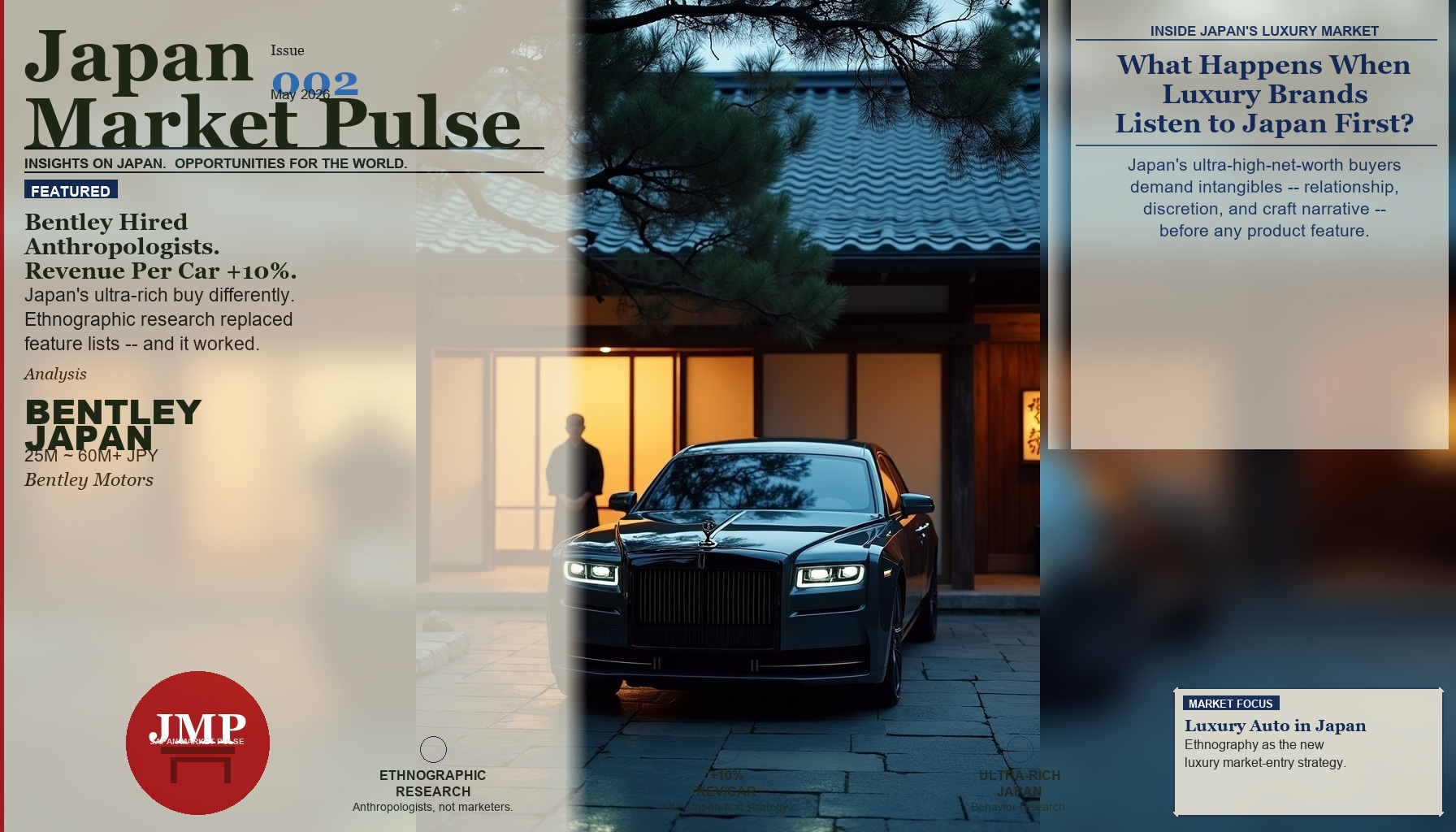
A Bentley costs somewhere between ¥25 million and ¥100 million in Japan. At that price — call it a quarter-million dollars on the bottom rung, well over a million for a fully commissioned coachbuilt — you would expect the sales process to be about leather, paint, horsepower, perhaps a discreet glass of champagne in a hushed showroom.
It is not.
The Brand Director of Bentley Motors Japan, Katsunosuke Endo, conducts roughly 170 in-depth interviews a year — thirty to sixty minutes each, with existing owners, prospective buyers, and a handful of cultural influencers around them. The questions are not about cars. They are about lives.
What do you eat for breakfast. What do you read on Sunday morning. What music is playing when nobody is watching. Which paintings hang on which walls. Who do you admire. What worries you at three in the morning.
Bentley is not selling a car. Bentley is studying a culture. And in a market where 165 million dollars’ worth of cars left Japanese showrooms last year — a record, three years running — that distinction is the entire ballgame.
The car costs ¥25 million. The interview takes 60 minutes.
To grasp how unusual this is, contrast it with how the rest of the automotive industry approaches its customers. Volume brands run quantitative surveys: 5,000 drivers, ten questions each, regression analysis, output a persona. Even most premium brands stop at qualitative focus groups.
What Endo is running is something older and stranger: ethnographic research, the methodology anthropologists use when they want to understand a tribe.
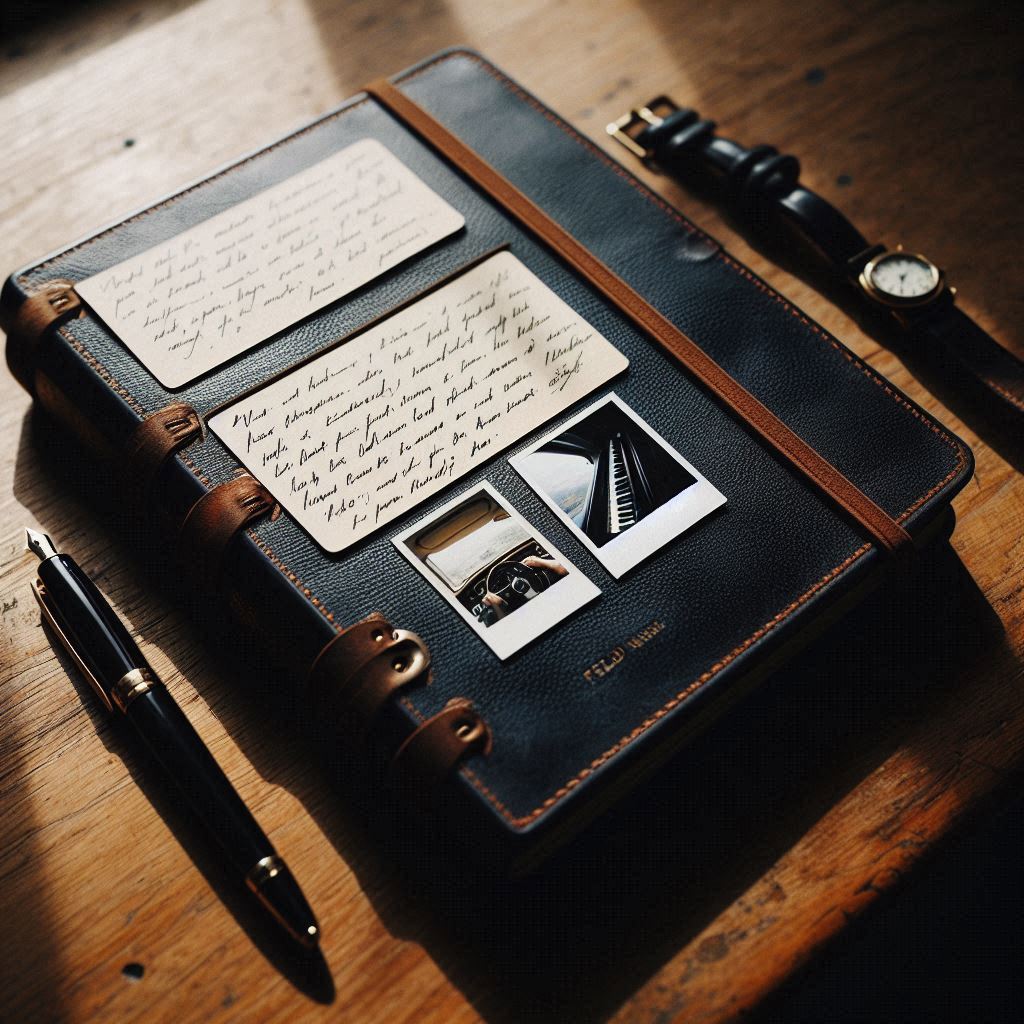
Ethnographers don’t extract opinions. They observe. They sit in living rooms and notice which magazines are on the coffee table. They register the flowers in the genkan, the brand of the tea cups, the way someone tucks their feet when they sit. The output isn’t “what customers say they want.” The output is “how customers actually live, in surprising and specific detail.”
Bentley applies this to Japan’s ultra-high-net-worth households. The findings then feed three things: what cars to commission, how to design the showroom encounter, and which cultural worlds to partner into.
The result is what Endo’s team internally describes as “the ultimate one-to-one”— a degree of personalization that begins long before someone walks onto a forecourt. By the time a prospective Bentley buyer is sitting across from a sales representative in Tokyo, the company already knows what music they listen to, where they vacation, and which categories of art adjacent to cars they would appreciate.
This is also why revenue per vehicle has risen approximately 10% in recent years, even as global Bentley unit volumes have softened. Customers are buying more car — not in dimensions, but in personalization, story, and meaning. That is the financial signature of ethnographic understanding.
46 Billion Ways to Be Yourself
The output of all this listening is a configurator that breaks the brain.
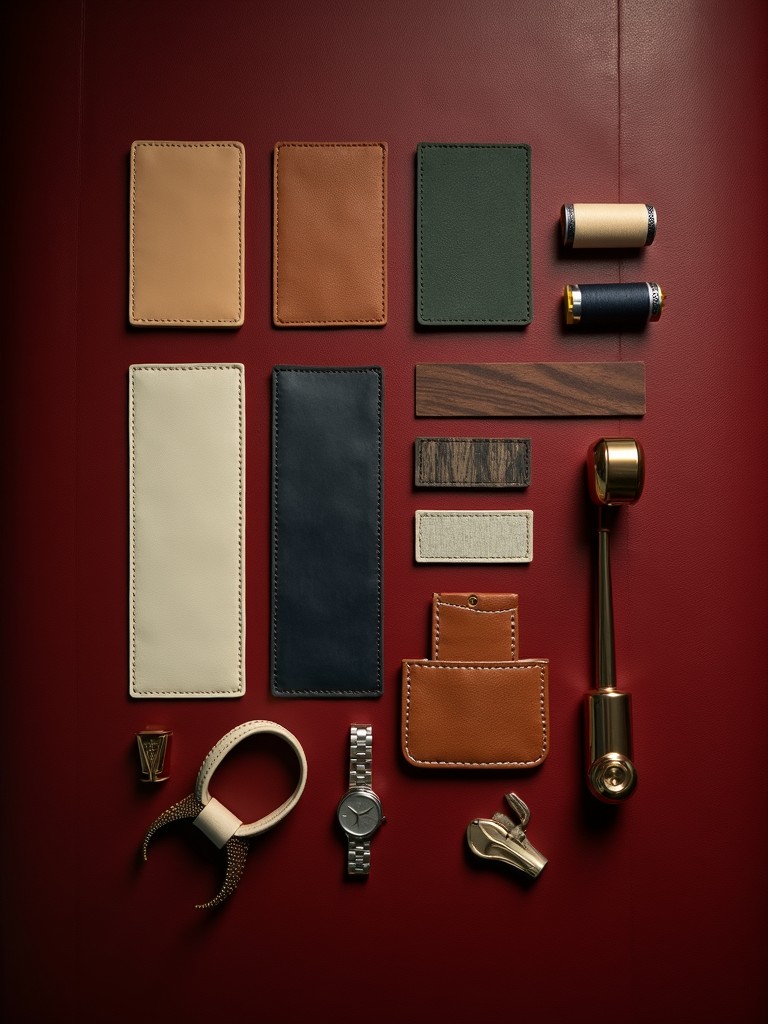
Bentley publicly states that 46 billion possible specifications are available across its current model line. Wheels, stitch patterns, leather grades, steering wheel materials, veneer panels, cabin scents, even — and this is the detail that captures the philosophy — dedicated pet accessories, because it turns out a non-trivial percentage of Japanese Bentley owners have specific dogs that ride in specific places.
A Mulliner commission, the highest tier of personal customization, isn’t a configurator at all. It’s a series of conversations. A Bentley Mulliner consultant will ask about a customer’s collection of fine watches before suggesting an interior leather. They’ll ask about the customer’s preferred Japanese ceramicist before recommending an ash veneer. They will, in some cases, fly to the customer’s home.
The numbers tell the story. Around 70% of new Bentley owners now select some level of bespoke personalization. One in four cars leaving the Crewe factory carries Mulliner bespoke elements. The Mulliner Design team averages three full personal commissions per week, and that volume has doubled in China over two years.
What’s striking is what this isn’t. It isn’t “more options.” Toyota offers more visual color combinations than any luxury brand on earth. It isn’t “premium materials” — every German luxury brand can stitch you a leather dashboard. It is, instead, a fundamentally different question: not “what would you like?” but “who are you?”
That question only has meaningful answers if you’ve done the anthropology first.
Why Japan, Why Now
To understand why Bentley has invested so heavily in Japanese customer ethnography specifically, look at the wealth substrate beneath it.
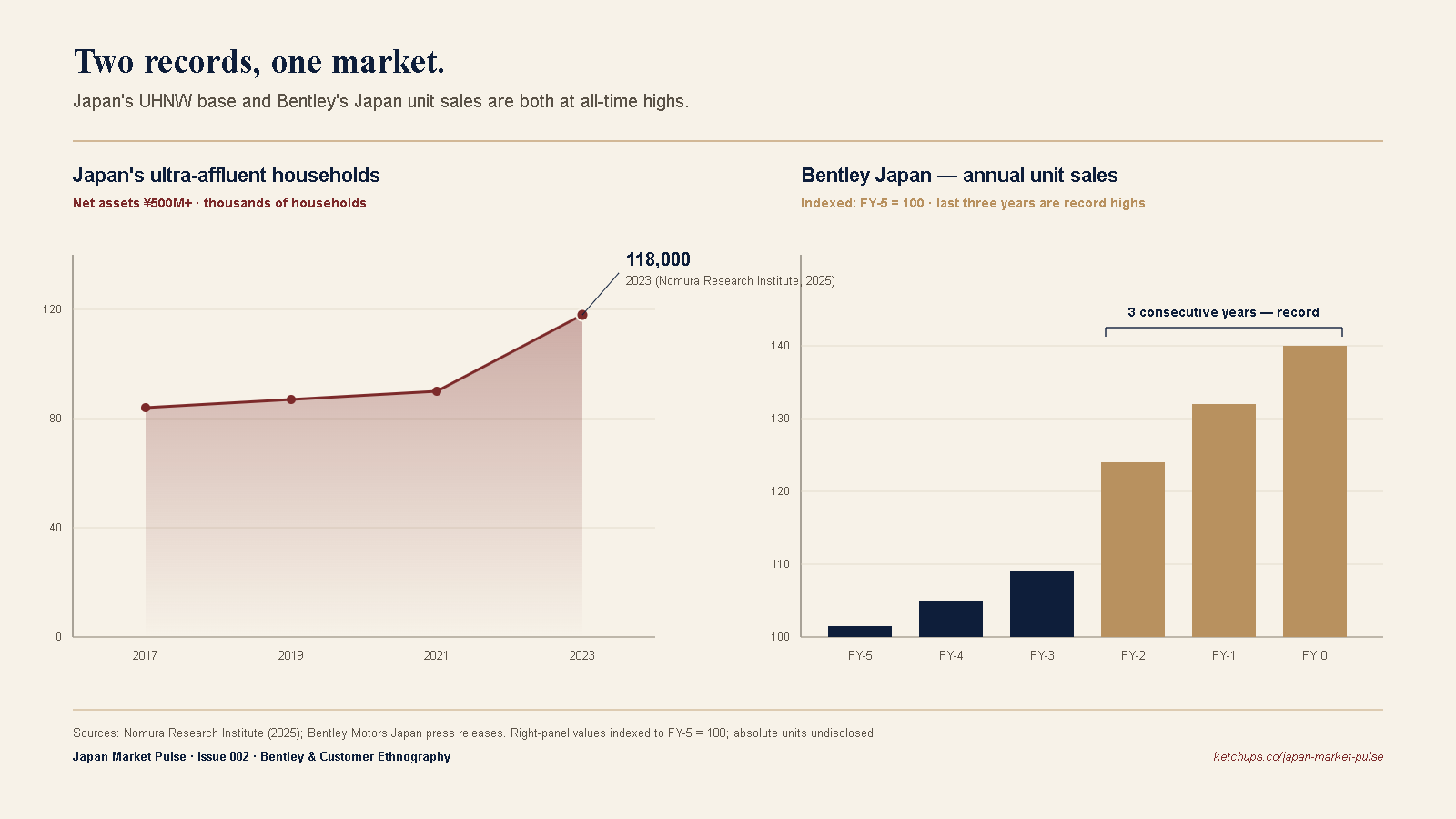
According to Nomura Research Institute’s 2025 survey, Japan now has approximately 118,000 ultra-affluent households — defined as households with net financial assets of at least ¥500 million. The total number of affluent and ultra-affluent households combined hit 1.65 million in 2023, the highest ever recorded. This sliver of the population — about 2.7% of households — controls 22.3% of all net financial assets in Japan.
Asia broadly has roughly 129,100 individuals worth $30 million or more, a figure that grew 6.4% year on year in 2025. Japan sits firmly in the global top ten by UHNW population.
Bentley’s Japan business reflects this. Sales have set records three years in a row, even while the brand’s global volume softened in 2024. Per-vehicle revenue hit an all-time high. Bentley Motors achieved its sixth consecutive year of net profitability — an extraordinary streak for any premium automaker, especially one whose volumes haven’t been growing.
The strategic insight is unsexy but important: Bentley has stopped chasing units. The KPI is lifetime value per relationship, not annual deliveries. That math only works if you know each relationship deeply enough to extend it across a lifetime — which brings you back, inevitably, to ethnography.
Anthropology in the Showroom
There is a small but important corporate-anthropology movement underway in Japan, and Bentley is one of its more visible exponents. Domestically, NTT and Suntory have been quietly building philosophy and cultural-anthropology functions inside their consumer businesses, on the thesis that algorithmic personalization plateaus exactly where genuine human understanding begins.
The case for ethnography in the Japanese luxury context is unusually strong, for three reasons.
First, Japanese consumers reward coherence. A brand that sends mixed signals — luxury website, mediocre phone support, awkward email tone — is read instantly as inauthentic. Ethnographic understanding is the only known antidote to incoherence; you can’t imitate a culture you haven’t observed.
Second, Japanese luxury values are not Western luxury values. The framework sometimes called “Jaxury” leans on aesthetic principles like iki (refined, understated style), wabi-sabi (the beauty of impermanence and imperfection), and mono no aware (the pathos of transience). Showy logos work less well here than they do in Shanghai, Dubai, or Los Angeles. A brand cannot signal iki if it has not understood what iki means in a particular customer’s life.
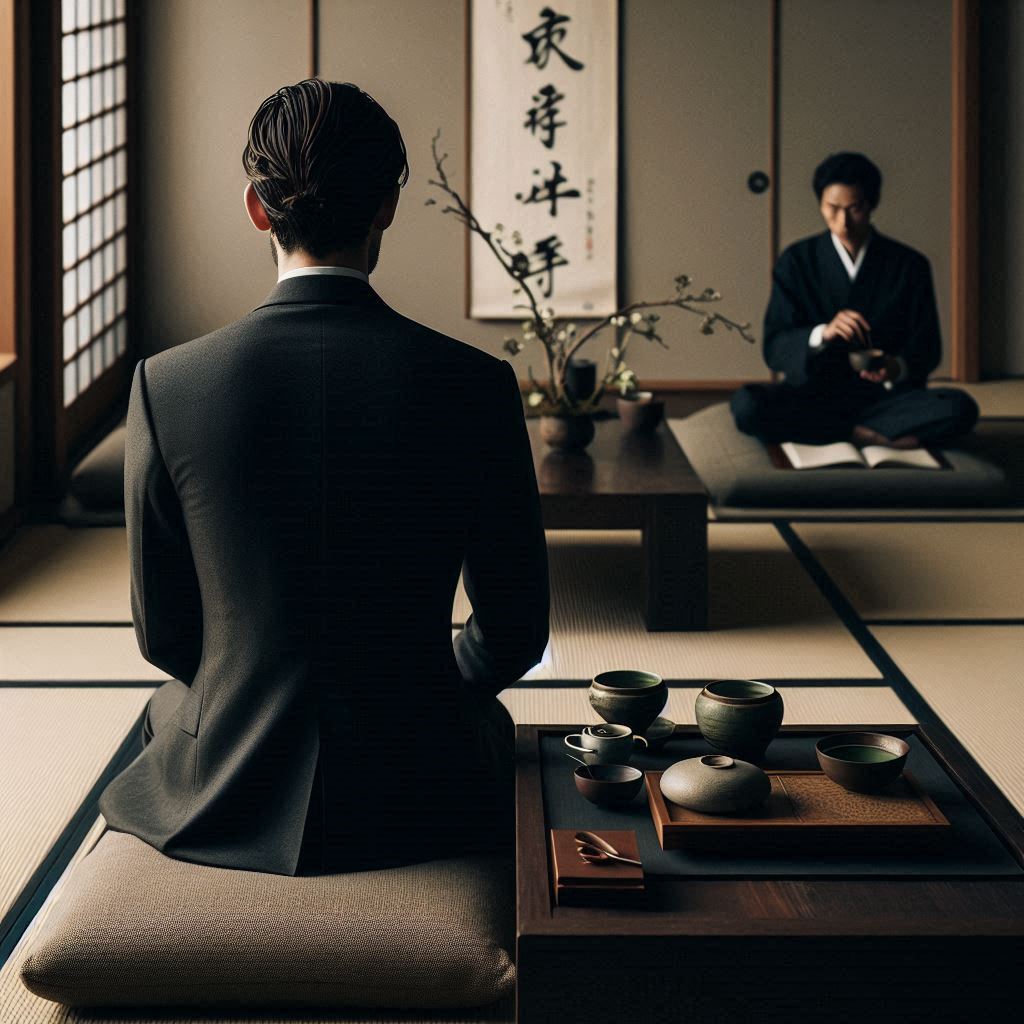
Third, the Japanese sales encounter is itself ethnographic. “Mazu ippai docha demo” — let’s first share a cup of tea — is not idle hospitality. It is the cultural protocol by which strangers signal seriousness about a relationship. Bentley’s customer-research practice operationalizes that same instinct: build the relationship before transacting; build the understanding before recommending.
What Endo’s team has done is take a methodology that anthropologists invented to study tribes in Papua New Guinea, and applied it to a tribe in Tokyo whose annual income exceeds the GDP of small island nations. The output is the same kind of document: a thick description of how a particular human community lives, what it values, and what objects fit into that life with grace.
Rolls-Royce, Aston Martin, and the Bespoke Arms Race
Bentley is not alone in this. The entire ultra-luxury automotive segment has been quietly migrating, over the past five years, from manufacturing toward something closer to bespoke craft consultancy.
Rolls-Royce describes its 2025 bespoke programme as “a refined creative dialogue between client vision and uncompromising craftsmanship.” Note the language: not customization, dialogue. Not buyer, client. Each commission, the brand says, is “a singular expression of identity, culture, and personal legacy.” When a Rolls-Royce coachbuild reaches the eight-figure-dollar range, what is being sold is no longer transportation; it is the act of co-authoring a sculpture you can drive.
Aston Martin runs a dedicated customization studio in Manhattan. The brand publicly notes that its standard color, stitch, trim, and wheel combinations already number in the hundreds of millions. People who go beyond that aren’t seeking exclusivity for its own sake; they want, in the brand’s words, a story.
Across the segment, dealerships have begun calling their senior client-facing roles “lifestyle managers” rather than salespeople. The job description is closer to that of a luxury concierge than a car retailer. The lifestyle manager is supposed to know, before any sales conversation, the rough shape of the client’s life — what they collect, where their other vehicles live, which charities they board, what their family rituals are.
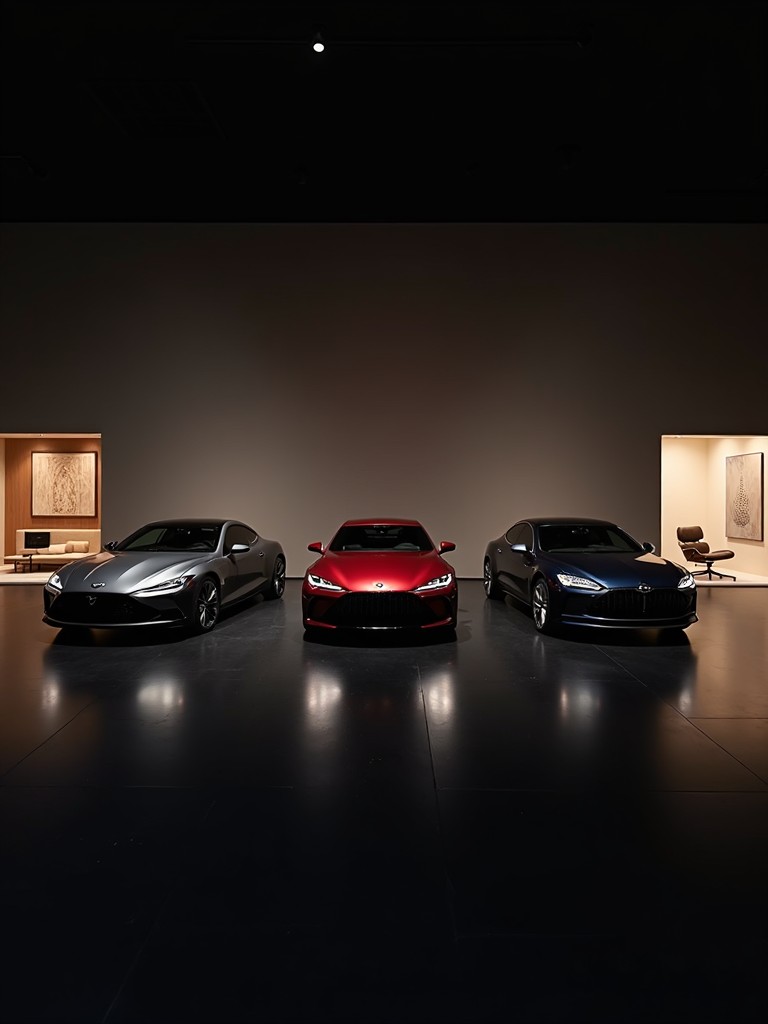
This is corporate anthropology by another name. The luxury auto industry has independently re-invented ethnography because, at the very top of the market, functional differentiation has been exhausted. A Rolls-Royce, a Bentley, and an Aston Martin will all get a person to a private aviation lounge in comfort; the question is which one feels like theirs. That question can only be answered if the brand has bothered to ask, and to listen at length.
The Transferable Principle
Customer ethnography is sometimes filed under “things only luxury brands can afford to do.” That framing is wrong. The principle scales down to almost any category in which the buyer’s identity is implicated by the purchase.
The economic logic: people don’t buy products; they buy the version of themselves the product makes possible. Understanding that version — not approximating it through demographics, but mapping it through observation — is the difference between a brand and a commodity.
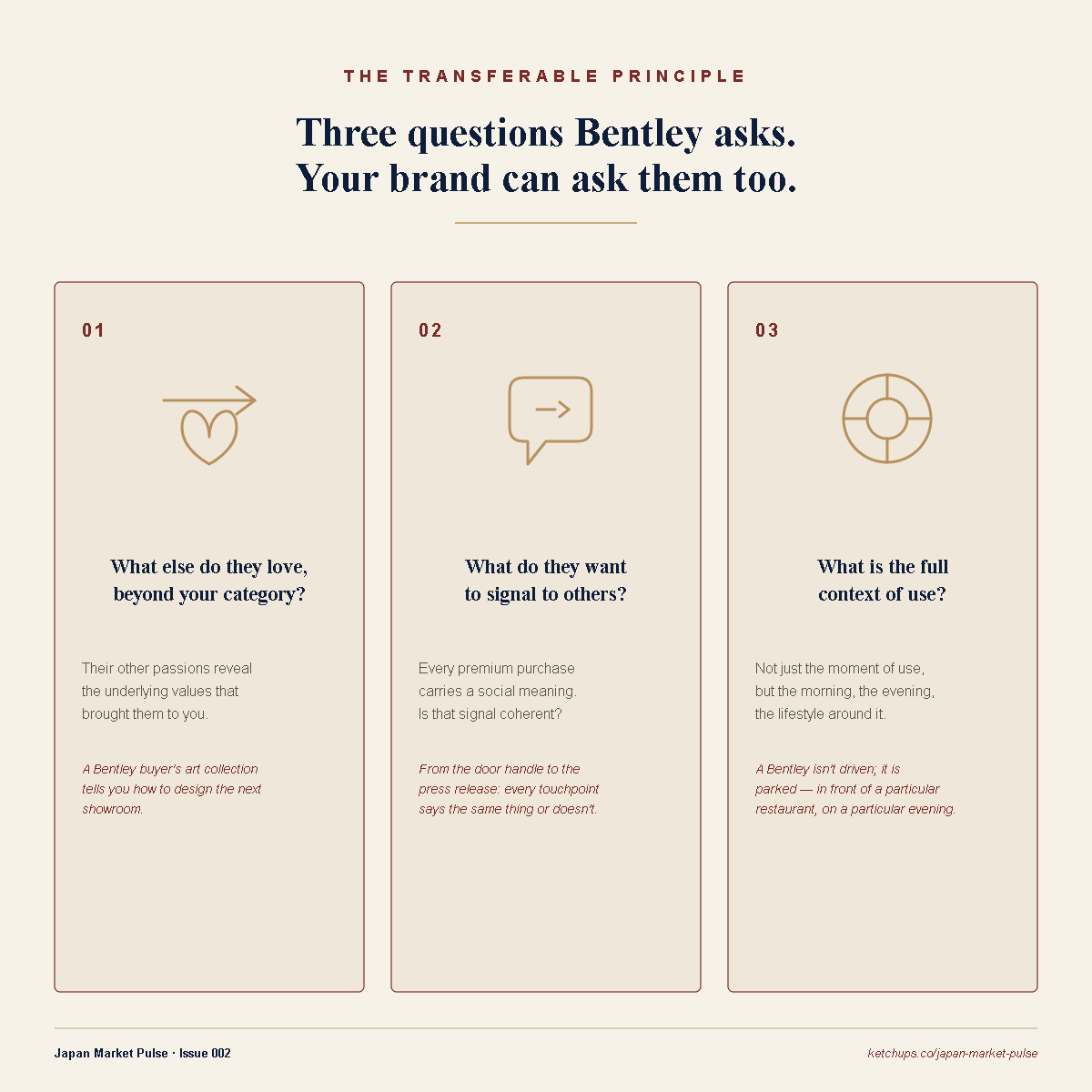
Three questions that translate the Bentley method to brands operating at much lower price points:
1. What else do they love, beyond your category?
Your customer’s other passions reveal the underlying values that brought them to you. A bag-charm-loving Anua skincare buyer (see Issue 001 of this newsletter) is telling you something about her relationship to objects, not just to skincare. A Bentley buyer’s art collection is telling Endo something about how to design the next showroom.
2. What do they want to signal to others?
Every premium purchase has a social meaning. What does buying from you say about the buyer? Is that signal coherent across every touchpoint — the unboxing, the email tone, the customer-service voice? Bentley’s iki-aware aesthetic is consistent from the door handle to the press release.
3. What is the full context of use?
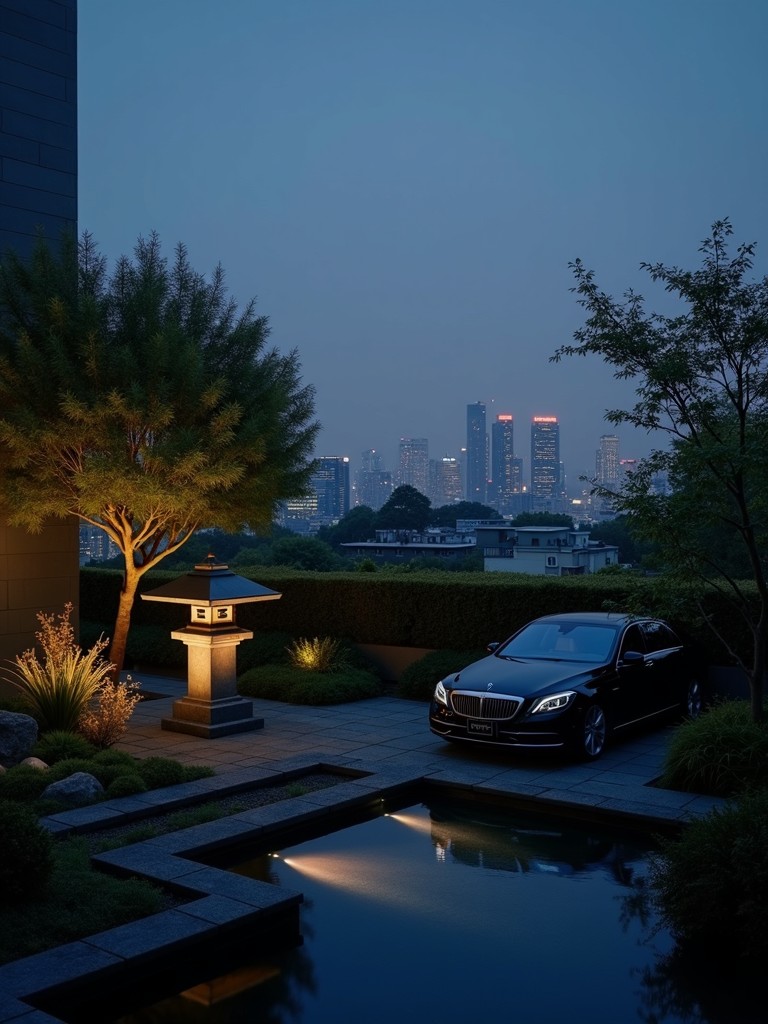
A piece of skincare isn’t used in a bathroom; it’s used in a particular morning, in a particular bathroom, by someone with a particular hair texture and a particular work day ahead. A Bentley isn’t driven; it is parked — in front of a particular restaurant, on a particular evening, alongside a particular set of other cars. Understanding the full context, not just the moment of use, is where design insight lives.
These questions are not new. What is new is that brands now have the technology to answer them at scale — through field research, mobile ethnography, and AI-assisted observation — without the prohibitive cost of mid-century anthropology departments. Bentley is operating the gold-plated version. Most brands could operate a serviceable version, if they decided to.
What Tokyo Is Teaching the World
Japan has historically functioned as a kind of laboratory for global luxury. The market is sophisticated, brand-literate, intolerant of inconsistency, and unforgiving of cultural carelessness. Brands that succeed here tend to learn lessons that travel.
Bentley’s Japanese ethnographic practice is one such lesson. The output of Endo’s 170 annual interviews flows back into the global Bentley organization — into vehicle design briefs, into Mulliner commissioning training, into how the brand thinks about engaging next-generation UHNW heirs in markets from Riyadh to Singapore. Tokyo is not just a sales market for Bentley. It is a research lab for what luxury becomes after the era of mass personalization.
There is a useful contrast to draw with the algorithmic side of personalization. AI recommenders predict; ethnography understands. Predictions can be impressive on average and unsettling in specifics — recommend the wrong leather to a Rolls-Royce client and the relationship is finished. Understanding scales differently. Understanding, once it exists, can be used to design experiences that the customer has never had words for, but recognizes immediately when they encounter them.
The reason Bentley’s Japanese revenue per car has risen 10% — the reason its global per-car revenue is at an all-time high while volumes drop — is not fancier features. It is that, increasingly, Bentley is selling something its competitors cannot: a one-to-one understanding, materialized in a car.
That is what the new gold standard of luxury looks like.
It looks less like a product. It looks more like a thoughtful friend who happens to remember everything.
If you found this useful, you might also enjoy Japan Market Pulse Issue 001 — “When Moisturizer Becomes Merch”, on Anua’s Tokyo pop-up and the post-skinimalism turn in K-beauty.
Japan Market Pulse is a fortnightly briefing on consumer-and-retail trends in Japan, written for non-Japanese brand strategists. Subscribe at ketchups.co.
Sources & further reading
- Nikkei Cross Trend: Bentley’s UHNW marketing — 6 consecutive years of profit
- Nikkei Cross Trend: Bentley Japan record sales 3 years running
- MarkeZine: How Bentley does ultimate 1-to-1 marketing
- Nikkei: NTT and Suntory using philosophy and cultural anthropology
- Bentley Mulliner — bespoke commissions overview
- Renascence: How Rolls-Royce delivers exceptional CX with bespoke luxury services
- Haute Living: Rolls-Royce Bespoke 2025
- INA & Associates: Defining wealth in Japan — HNWIs and their investments
- Altrata: World Ultra Wealth Report 2025
- SCMP Post Magazine: Less bling, more wabi-sabi — Japan’s answer to modern luxury
If you’re interested in this topic, the Japanese market more broadly, or what KETCHUPs is working on, we’d love to hear from you — please reach out via our contact form.
If you’re interested in this topic, the Japanese market more broadly, or what KETCHUPs is working on, we’d love to hear from you — please reach out via our contact form.
Japan Market Pulse is a weekly read on what the Japanese consumer-tech, food, and mobility markets are choosing to do, written for international operators who want to know what is happening before it shows up in the global trade press.
Subscribe at ketchups.co/japan-market-pulse.