

This article is published by KETCHUPs, a Tokyo-based trading and brand-development firm. All content is editorial.
Suntory just launched an RTD alcohol brand built around a single consumer insight: some drinks exist to make bad food choices feel deliberate. The strategy is more sophisticated than it sounds.
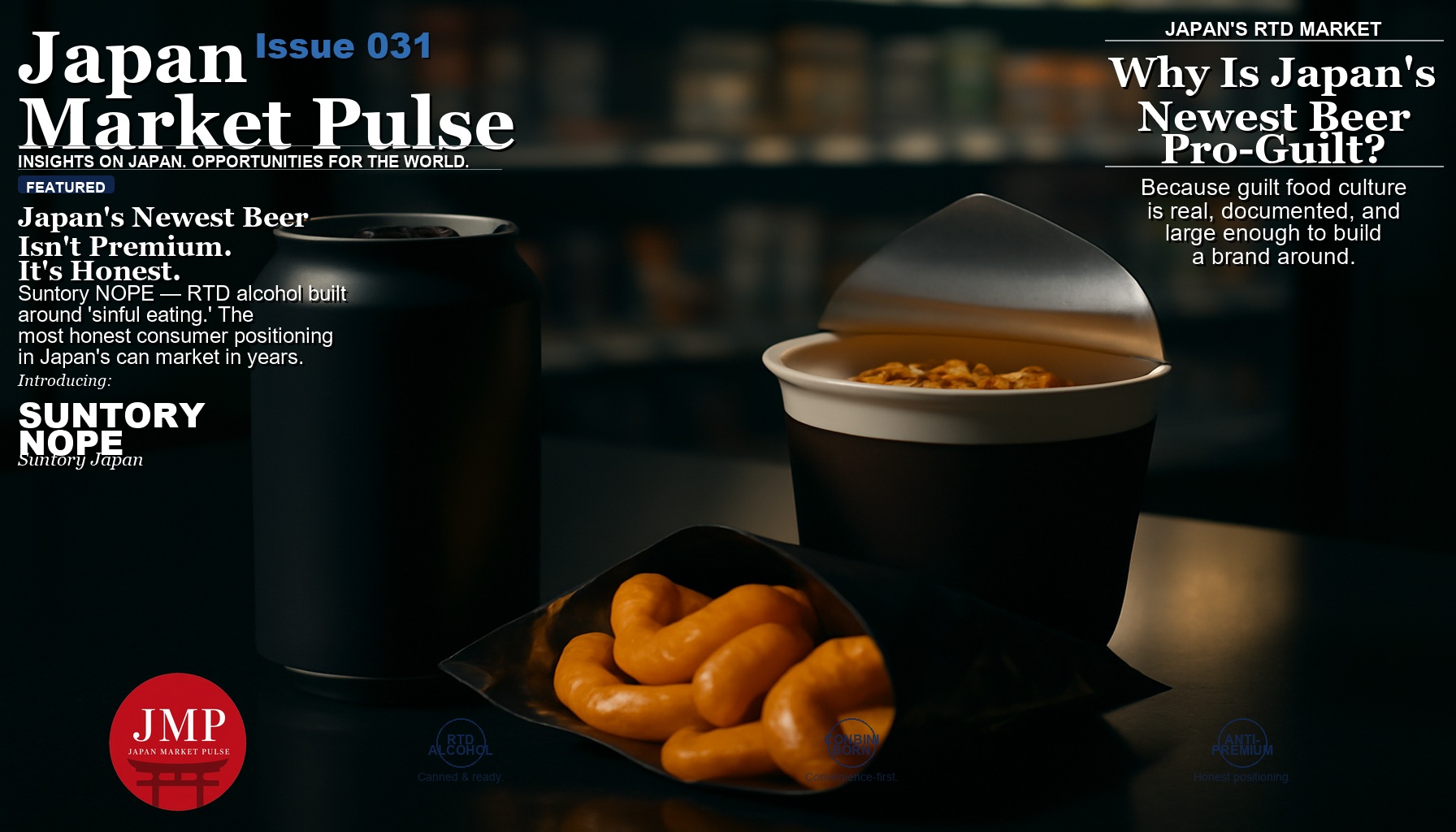
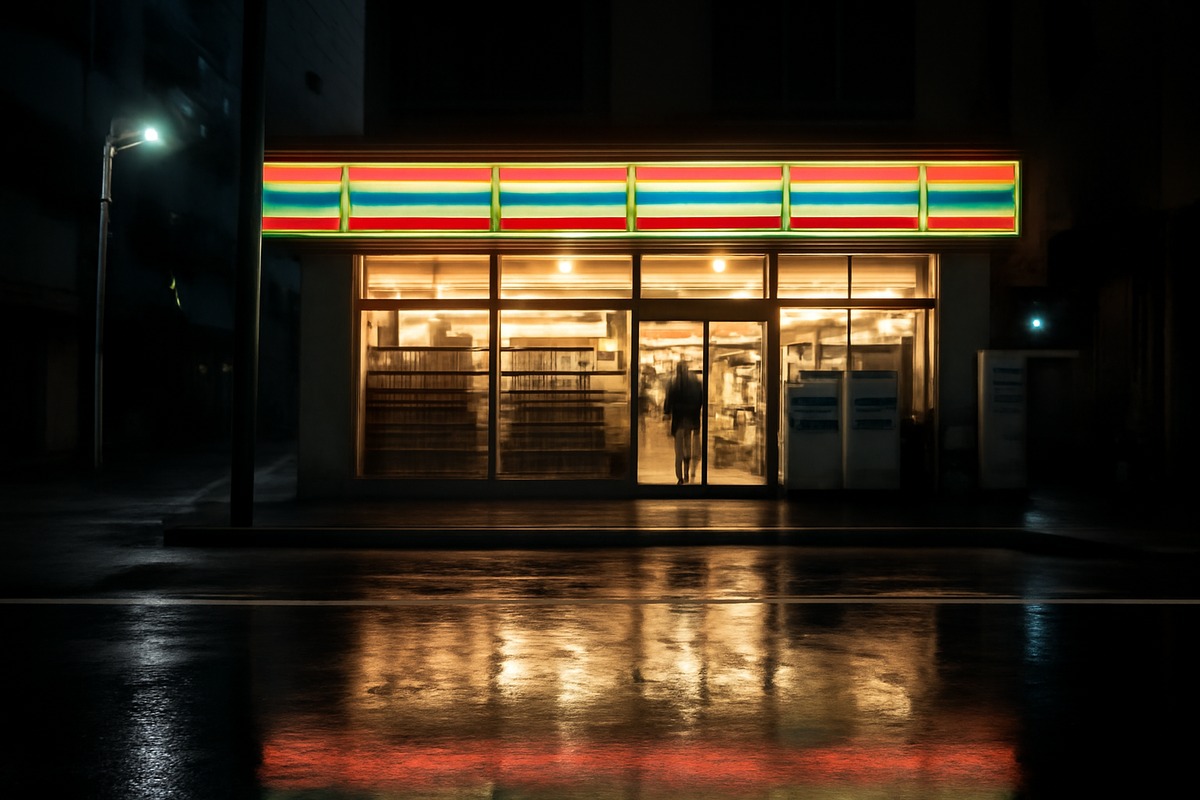
There is a moment that anyone who has spent serious time in Japan recognizes. It is eleven at night, you are at a convenience store under fluorescent lighting, and you are making purchasing decisions that cannot be defended on nutritional grounds. A bag of cheese-flavored corn puffs. A cup of instant noodles with the sodium content of a small ocean. Perhaps a convenience store fried chicken piece that has been rotating under a heat lamp since the Heisei era. You know what you are doing. You have made peace with it. The question is what you are going to drink while doing it.
Suntory has decided that question needs a dedicated answer. Its answer is NOPE — a new ready-to-drink canned alcohol brand positioned explicitly around what the company’s own marketing describes as haitoku-meshi no otomo: the companion for sinful eating. The translation loses something. The concept does not.
The Shrinking Market That Created the Opportunity
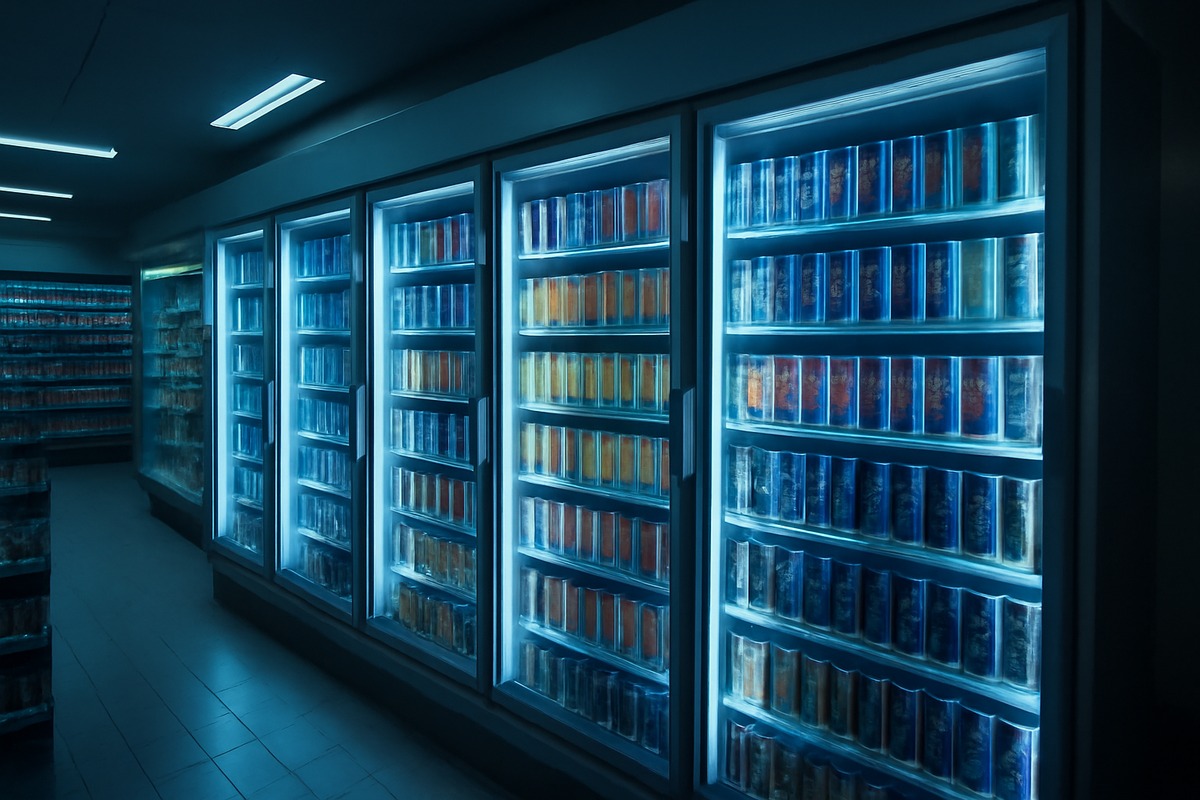
The category context for NOPE requires a brief detour into the structural dynamics of Japan’s carbonated beverage market, because those dynamics are what makes the brand positioning necessary — and, if it works, brilliant.
Japan’s carbonated soft drink market has been in measurable decline. The domestic fizzy drink business, which once seemed as structurally secure as rice consumption, has contracted as younger Japanese consumers have moved toward functional beverages, bottled water, and category-crossing products that deliver something beyond carbonation. The market that once organized itself around major branded colas and domestic soda brands is now competing for space in convenience store cooler cases that are increasingly devoted to sports drinks, fermented beverages, and specialized health-oriented products.
For alcohol producers, this creates a specific kind of pressure. The category of chu-hai — canned cocktails mixing shochu, soda, and fruit flavoring — is Japan’s most democratic alcohol format, consumed at home, at convenience stores, and at izakaya chain restaurants across every demographic. It is also intensely competitive. The three major domestic brewers — Suntory, Kirin, and Asahi — compete with hundreds of SKUs on similar flavor profiles, similar price points, and similar shelf positions. Differentiation in this environment is genuinely difficult.
The conventional approach to differentiation is premiumization — adding botanicals, sourcing premium spirits, communicating craft credentials, and migrating toward higher price tiers where margins are better and competition is thinner. Most major Japanese alcohol brands have followed some version of this trajectory over the past decade.
Suntory has made a different bet with NOPE. Rather than competing on quality signals, it is competing on occasion specificity — the idea that this particular drink exists for this particular moment, and that the moment it exists for is the pleasure of eating badly on purpose.
The Positioning: Embracing the Occasion Nobody Talked About
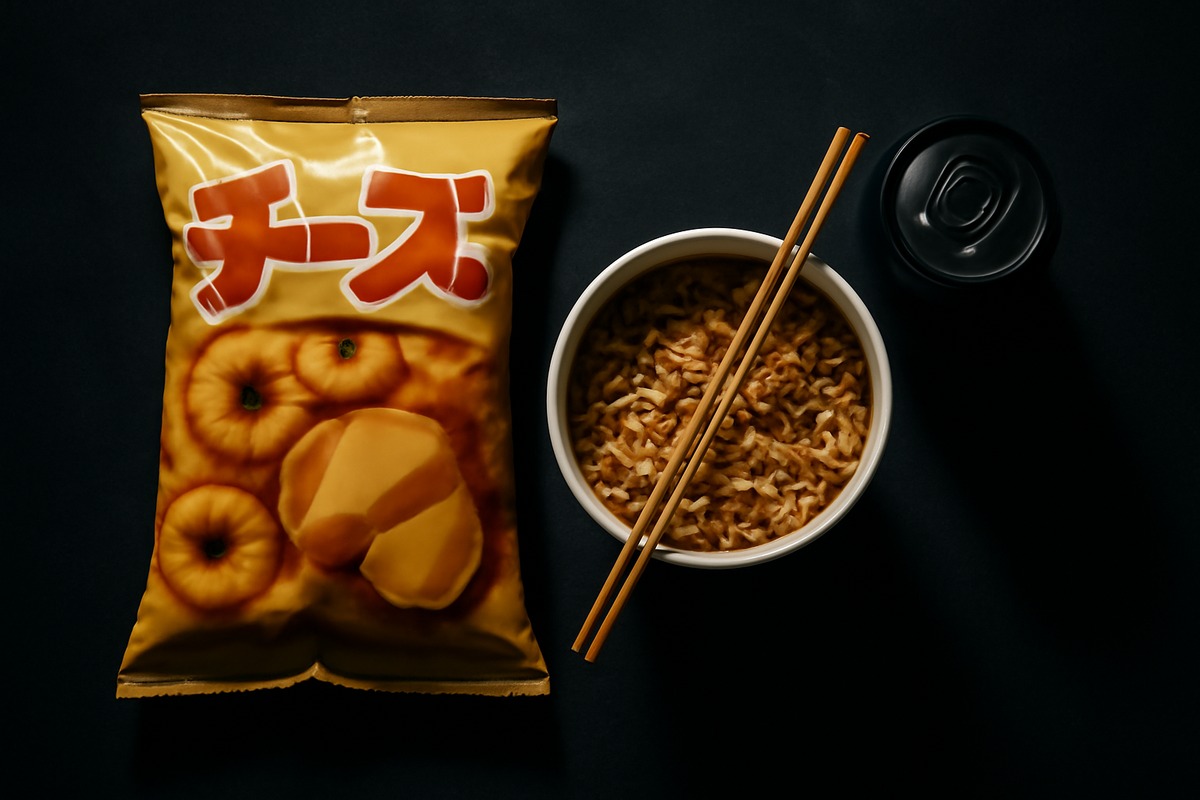
The haitoku-meshi frame — literally “immoral meal” — is not a new concept in Japanese consumer culture. There has always been a recognized category of food that people eat specifically because it is indulgent, convenient, calorie-dense, and guilt-producing. Convenience store fried chicken, cup ramen, late-night ramen shop visits, the entire genre of otsumamiashi (drinking snacks) that line izakaya menus — these are not products people buy because they forgot nutrition exists. They are products people buy with full knowledge that they are making a hedonistic choice.
What NOPE does is name that choice explicitly and position a drink as belonging to it. The marketing is deliberately un-premium: the visual language references convenience stores and late nights, not sophisticated cocktail culture. The product name itself is a rejection of aspirational positioning — “nope” as in “nope, I am not drinking something refined tonight; I am eating too much and I want something to go with it.”
The insight underneath this positioning is real. Beverage purchase decisions are heavily contextual. The drink someone reaches for at a celebration dinner is different from the drink they want when watching late-night television with leftover pizza. The challenge for most alcohol brands is that they have positioned around the celebratory or sophisticated occasion — occasions that are aspirational but relatively rare. The late-night convenience store occasion, by contrast, is extremely common, and no major Japanese brand had explicitly claimed it.
NOPE is claiming it. Whether that claim sticks is a different question, but the strategic logic is coherent.
The AI Copy That Won an Award

A secondary data point that makes the NOPE story interesting is that the brand’s launch copy was generated using AI tools — and that copy was submitted to, and recognized by, Japan’s Senden Kaigi advertising awards. The specific recognition is for campaigns that use generative AI in advertising production, a category that reflects how quickly AI-assisted creative work has moved from novelty to industry practice in Japan’s advertising sector.
The significance of AI-generated copy winning an advertising industry award is partly about the technology and partly about what it says about where Japanese creative practice is heading. Japan’s advertising industry — and particularly the copywriting tradition associated with major campaigns — has historically been a domain of high craft and celebrated individual practitioners. The Senden Kaigi awards have prestige within that tradition.
An AI-assisted campaign winning recognition within that tradition sends a signal that the industry is recalibrating its standards for what counts as creative achievement in the AI era. The debate is not unique to Japan — it is happening in every major advertising market — but the speed and specificity with which Japanese brand owners and agencies are adopting AI tools in production is worth noting for international operators who want to understand how the competitive landscape for marketing services is shifting.
For NOPE specifically, the AI copy connection reinforces the brand’s positioning. The campaign for a product explicitly designed for un-aspirational moments is produced using the most discussed and debated technology of the moment — there is a coherence to that juxtaposition, even if it was not entirely deliberate.
Why Carbonated Drinks Are in Trouble — and What That Means
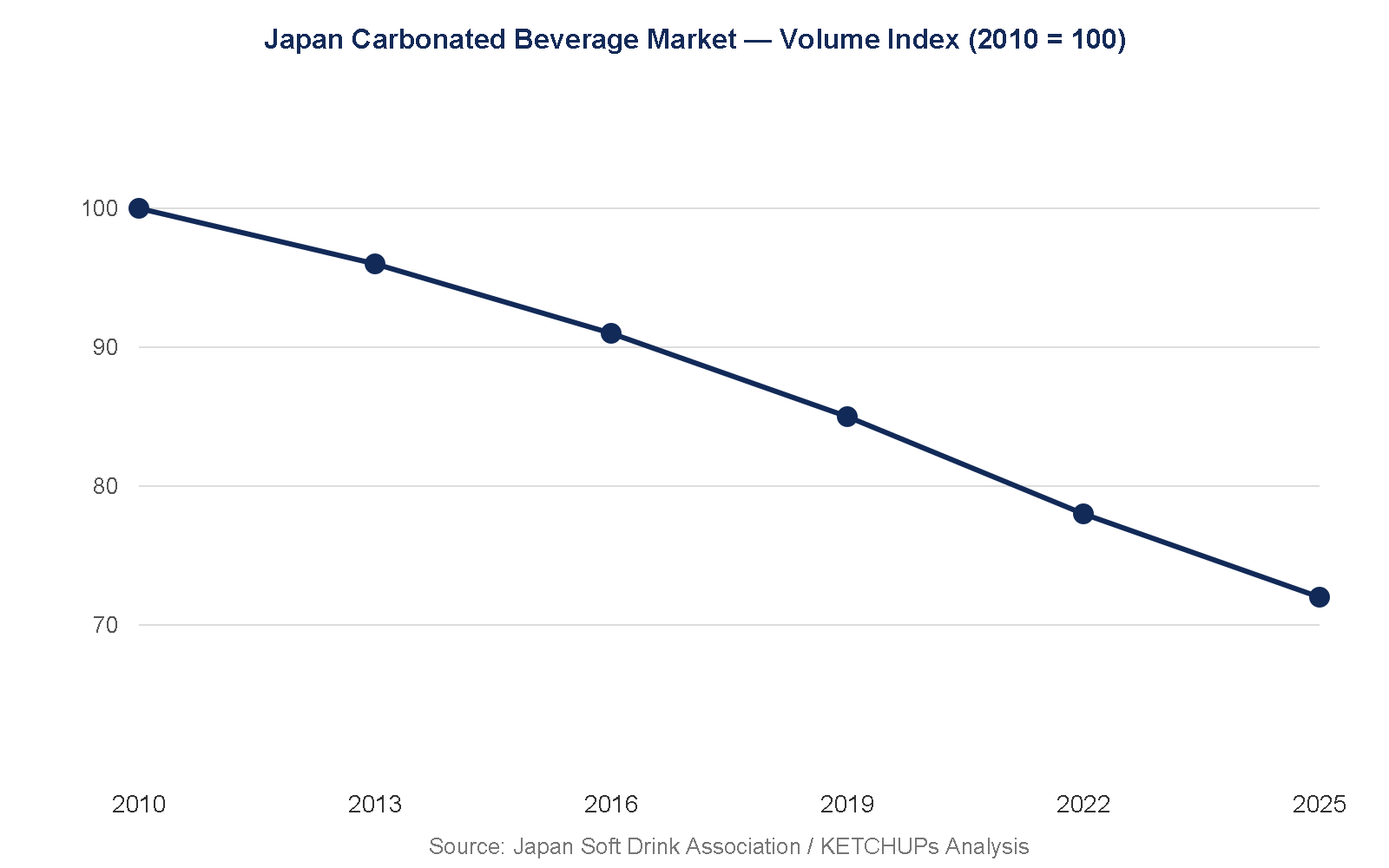
The broader context for NOPE’s launch is the structural pressure on Japan’s carbonated beverage category, which deserves its own examination because it illustrates a pattern that international FMCG operators should understand.
Japan’s soft drink market has historically been organized around temperature and occasion: hot drinks for winter, cold drinks for summer, workplace vending machines as a distribution backbone, and convenience stores as the primary retail channel for impulse purchase. Within that structure, carbonated drinks occupied a reliable mass-market position — Coca-Cola, Pepsi, and domestic brands like Mitsuya Cider held their positions through habit, availability, and category familiarity.
The disruption of that stability has come from multiple directions simultaneously. Functional beverages — sports drinks, amino acid drinks, vitamin supplements in liquid form — have captured significant shelf space from traditional soft drinks by offering perceived utility beyond refreshment. The domestic market for fermented beverages and probiotic drinks has grown as Japanese consumers have become more invested in gut health. And the general shift in younger consumer preferences away from sweetened carbonated drinks — a pattern visible in most developed markets — has compressed the core carbonated drink demographic.
For alcohol producers who have used carbonated mixers as the backbone of their chu-hai products, this creates a supply-chain and formulation pressure as carbonated flavoring innovation becomes harder. It also changes the retail dynamic: when convenience store buyers are reducing their carbonated soft drink allocation to make room for functional and health-oriented products, the remaining shelf space for carbonated alcohol is more contested.
NOPE’s positioning against this backdrop is a bet that occasion-specific positioning can create defensible shelf space even in a compressed category. A drink that wins the “late-night bad food” occasion does not compete against sports drinks or probiotic beverages — it competes against other canned alcohol brands, in a segment where it has a distinctive position.
What International Operators Should Take From This
The NOPE story is interesting beyond its specific market context because it illustrates several principles of brand strategy in mature, competitive consumer markets that translate well beyond Japan.
Occasion specificity outperforms product superiority in saturated categories. When a product category reaches the saturation point where most players are competing on quality, flavor, and price within the same tier, the most effective differentiation is often to define a new occasion rather than to win an existing one. NOPE is not trying to be the best chu-hai. It is trying to be the only chu-hai that specifically belongs to a particular moment in consumer life. That is a different strategic problem — and one that competitors cannot easily copy without abandoning their existing positioning.
Naming the unspoken behavior creates category ownership. Japanese consumers have been eating haitoku-meshi and drinking canned alcohol simultaneously for decades. NOPE did not create that behavior; it named and claimed it. Naming a behavior that consumers recognize but that no brand has articulated is one of the most powerful available moves in consumer positioning. Once a brand owns the name of the occasion, every competitor in that space becomes a reference to the original.
Counter-aspirational positioning has specific value in premium-saturated markets. The relentless movement toward premiumization in consumer goods — true in Japan and globally — creates structural opportunity for brands that explicitly decline to be premium. This is not a statement about quality; it is a statement about occasion. A brand that says “I am for the moments when you do not want premium” gives consumers explicit permission to enjoy those moments without the cognitive dissonance of holding an aspirational product while doing un-aspirational things.
The convenience store is Japan’s best test environment for new occasion positioning. Seven-Eleven, FamilyMart, and Lawson collectively give a new brand access to 51,000 retail touchpoints, with real-time sales data and category review cycles that are among the most rigorous in global consumer goods. A brand that performs in Japan’s convenience store channel has been stress-tested in a way that few other retail environments can match.
NOPE may succeed or it may not. The positioning is clear; the execution will determine whether the naming of the occasion translates into durable consumer behavior. But the strategic logic it represents — claim the occasion nobody has named, build the product identity around that claim — is one of the cleaner examples of consumer positioning thinking in Japan’s crowded RTD alcohol market in some time.
This article contains affiliate links. If you purchase through these links, we may earn a small commission at no extra cost to you.
If you’re interested in this topic, the Japanese market more broadly, or what KETCHUPs is working on, we’d love to hear from you — please reach out via our contact form.
Japan Market Pulse is a weekly read on what the Japanese consumer-tech, food, and mobility markets are choosing to do, written for international operators who want to know what is happening before it shows up in the global trade press.
Subscribe at ketchups.co/japan-market-pulse.