

Disclosure: This article is published by KETCHUPs, a Tokyo-based trading and brand-development firm. All content is editorial.
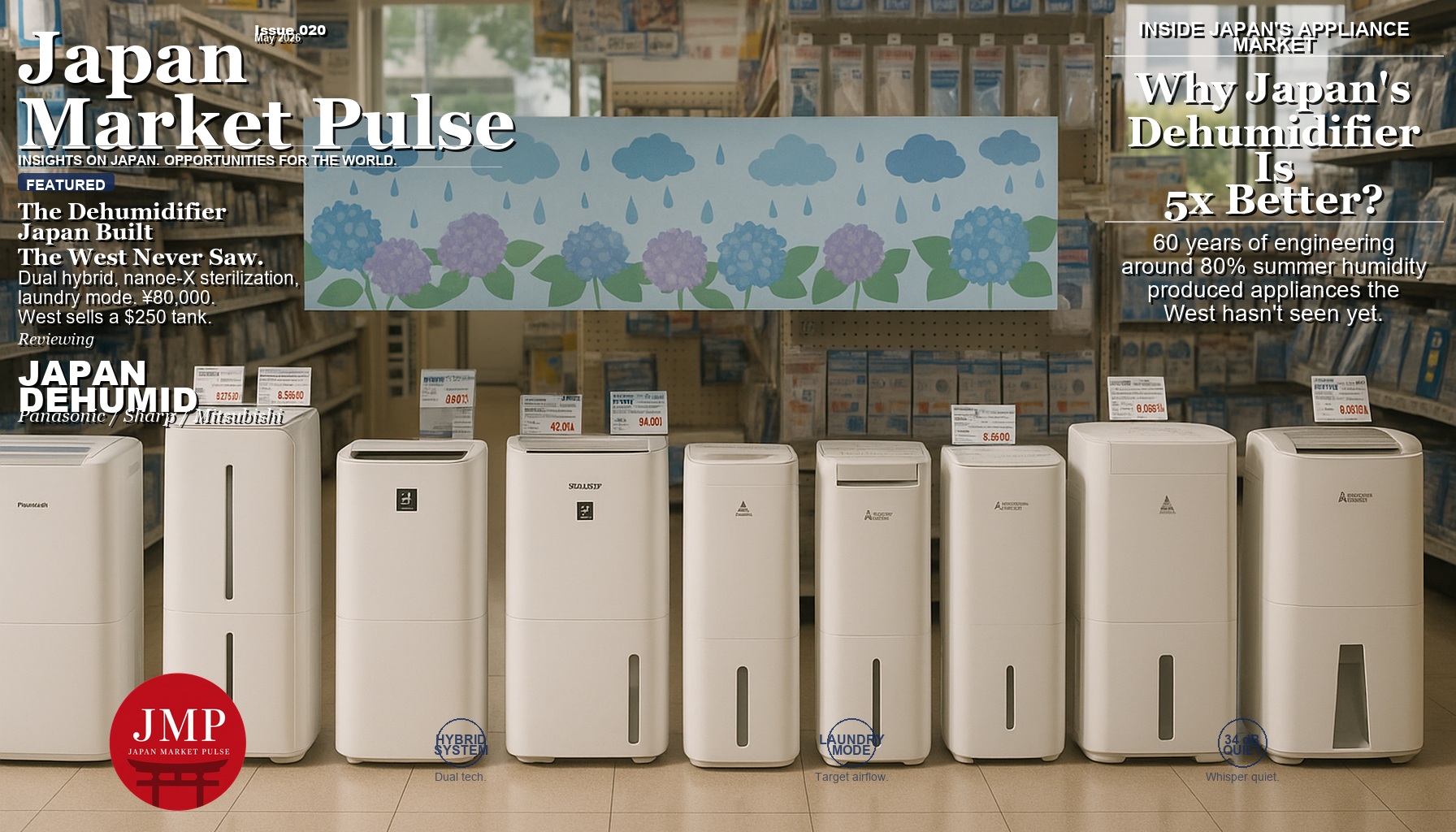
Walk into any major electronics retailer in Japan — Yodobashi Camera, Bic Camera, Yamada Denki — during late spring and you’ll find an entire floor section dedicated to dehumidifiers. Not a shelf. A section. Rows of machines from Panasonic, Sharp, and Mitsubishi with spec sheets that read more like HVAC equipment than household appliances: dual compressor-desiccant hybrid systems, nanoe-X sterilization technology, whisper-quiet operation at 34 decibels, automatic humidity sensors with ±5% accuracy, dedicated “partial dry” laundry modes with airflow that targets hanging garments. Price tags run from ¥30,000 to ¥80,000 — $200 to $530.
Then go home and look up what Frigidaire or hOmeLabs are selling in the US. You’ll find a tank, a compressor, a dial that says “low/medium/high,” and a price of $250 for the “premium” model. The gap is not a feature gap. It’s a design philosophy gap. Japan has been engineering around humidity as a core life challenge for sixty years. Western manufacturers are still treating it as an inconvenience.
This is a story about how a climate problem becomes a cultural obsession, and how that obsession produces engineering that the rest of the world will eventually adopt — whether Japanese brands get credit for it or not.
The Tsuyu Problem: Why June Changes Everything in Japan
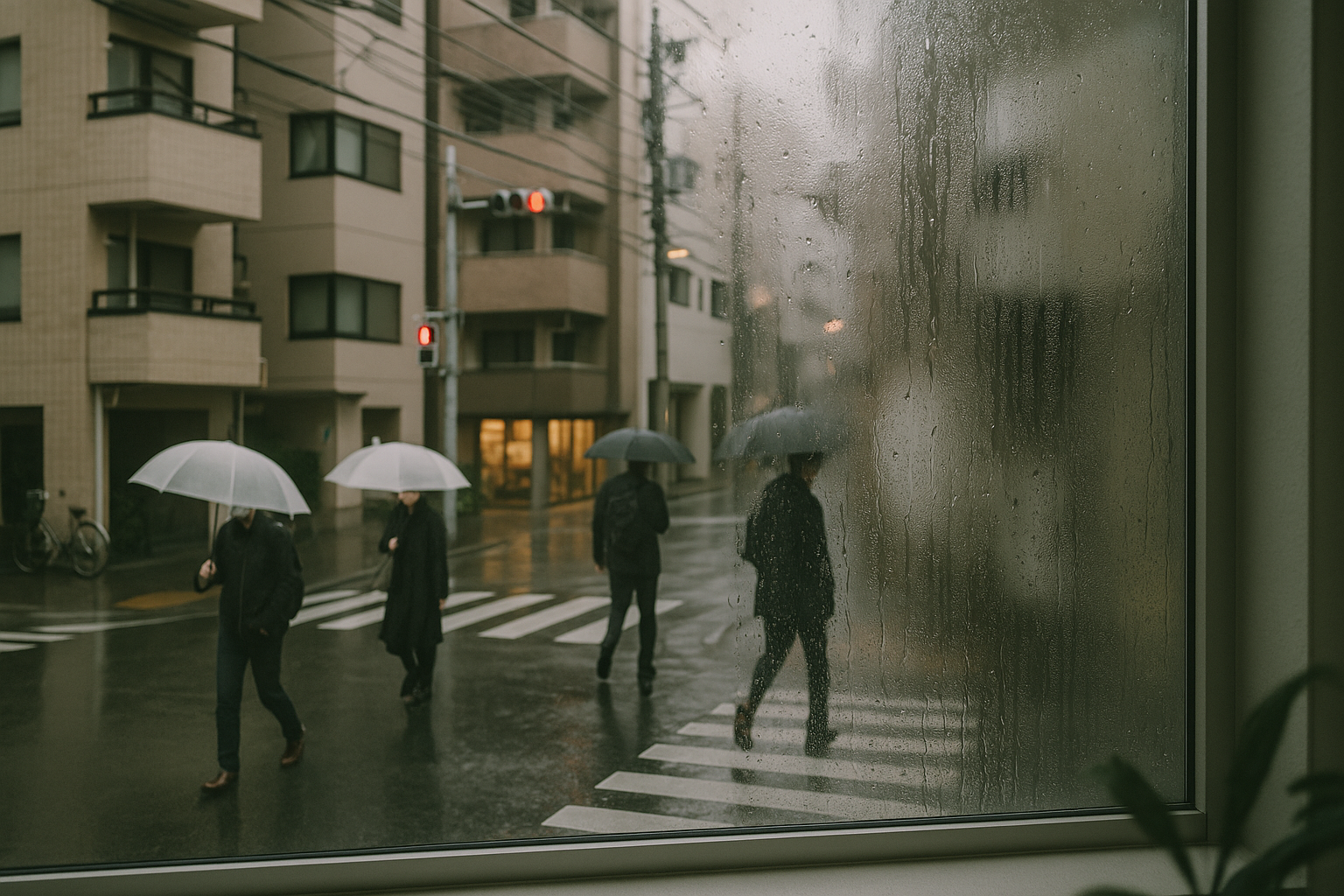
Japan’s rainy season — tsuyu — runs roughly from early June to mid-July across most of Honshu, with Okinawa getting hit earlier in May and Hokkaido largely escaping it. International travelers who visit Japan during this window often find it the most disorienting part of the trip: clothes feel damp the moment you put them on, hotel rooms smell faintly musty despite the air conditioning, and the outside air itself feels like a warm, wet towel. During tsuyu, average relative humidity in Tokyo and Osaka sits between 80 and 90 percent. For weeks at a stretch. Rain doesn’t just fall; it persists. The air saturates. Surfaces that were dry become damp. Wooden floors swell. Clothing hung to dry indoors stays wet for two days. Bread molds overnight.
This is not a background condition. It’s an annual siege, and Japanese households have adapted their lives around it in ways that are largely invisible to outsiders. Japanese apartments — the majority of which are concrete construction with limited airflow between units and negligible attic ventilation — function as humidity traps. Average indoor relative humidity in a Tokyo apartment without active dehumidification runs 50 to 70 percent for most of the year, spiking higher during tsuyu. The consequences are visible: bathroom ceiling mold, condensation on single-pane aluminum-frame windows, the characteristic musty smell of a Japanese apartment that hasn’t been properly ventilated.
The Japanese word for this problem is “shimekke”, and managing it is considered basic adult competency in Japan the same way changing a tire is in the US. Many households manage with the dehumidification mode built into their air conditioner — a feature Japan’s AC manufacturers have refined to a degree that surprises most Western engineers. But for serious cases — heavy laundry loads, basement rooms, families with young children or allergy sufferers — a dedicated dehumidifier is the difference between managing and actually solving the problem. The category’s annual market size — approximately ¥50 billion ($330 million) — reflects a market that has graduated well past “one box for every home” into genuine product differentiation driven by specific use cases.
The seasonal demand curve is sharp. Retailers start floor displays in April. Sales peak in June and July. The machines that sell best during this window are not entry-level — they’re the ¥50,000 to ¥70,000 models with laundry modes, sterilization features, and smart humidity control. Japanese consumers, having lived with this problem for years, know exactly what they need and are willing to pay for it.
What Japanese Engineers Actually Built
The feature gap between Japanese and Western dehumidifiers isn’t the result of Japanese manufacturers over-engineering for premium positioning. It’s the result of solving real problems that Japanese consumers articulated loudly and early.
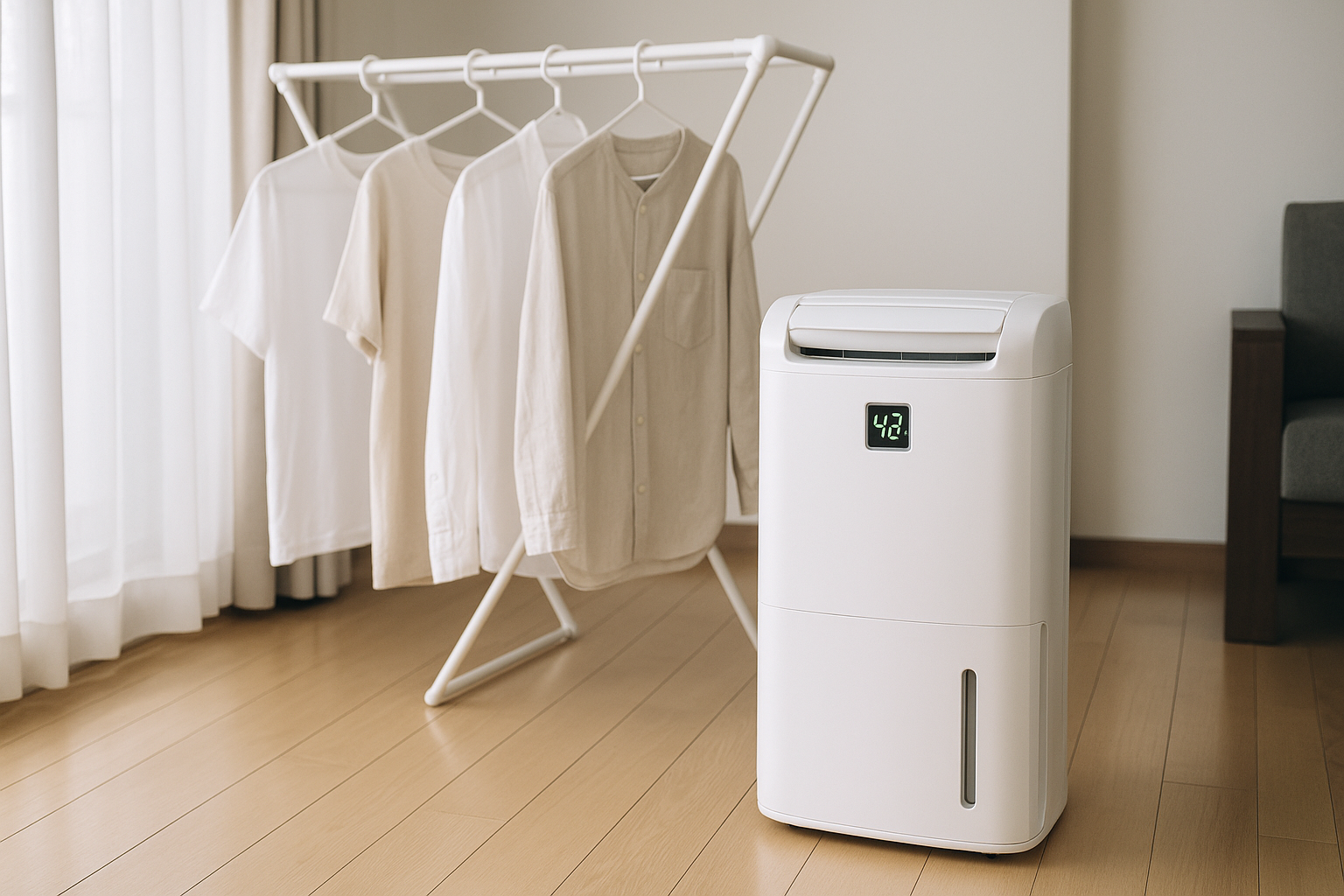
Take the laundry problem. Japan has one of the lowest clothes-dryer penetration rates in the developed world — somewhere around 30 percent of households versus 80 percent in the US. This isn’t stubbornness. Japanese apartments often lack the ductwork for vented dryers, and washer-dryer combos are expensive and slow. The default solution for most Japanese households is to hang laundry indoors, particularly during rainy season when line-drying outside is impossible. The result: a room full of wet clothing raising indoor humidity by 10 to 15 points while also never quite drying properly.
Japanese dehumidifier manufacturers responded by engineering a specific mode for exactly this situation. The “partial dry” mode routes airflow directionally toward a designated hanging area, increases fan speed to accelerate evaporation from fabric surfaces, and runs the machine at sustained maximum extraction capacity until sensor readings confirm the ambient humidity has dropped below a target threshold — typically 45 to 55 percent. This isn’t a marketing label. It’s a distinct operating algorithm.
The Panasonic F-YHUX120 series adds nanoe-X technology to this: a nanoe generator that continuously produces nano-sized electrostatic water particles carrying hydroxyl radicals, which deactivate bacteria, mold spores, and viruses on fabric and surfaces. Sharp’s CV-H120FX uses Plasmacluster ion technology for the same purpose. Neither is vaporware — both have peer-reviewed third-party efficacy data against common household pathogens, though the mechanisms differ. Mitsubishi’s MJ-H120VX goes a different direction, using a hybrid compressor-desiccant system that maintains efficiency at low ambient temperatures (as low as 7°C/45°F), where standard compressor dehumidifiers lose most of their extraction capacity.
The noise engineering is also non-trivial. Japanese apartment walls are thin. Running a dehumidifier overnight in a 6-tatami (approximately 100 sq ft) bedroom at 40 decibels is the difference between sleeping and not sleeping. The leading Japanese models operate at 34 to 38 dB in their quiet modes — roughly the sound level of a library. The Frigidaire FFAD7033W1, one of the best-reviewed US models, operates at 51 dB. That’s not a minor difference. It’s the gap between “background noise” and “appliance you’re aware of running.”
The Brands and Their Differentiation
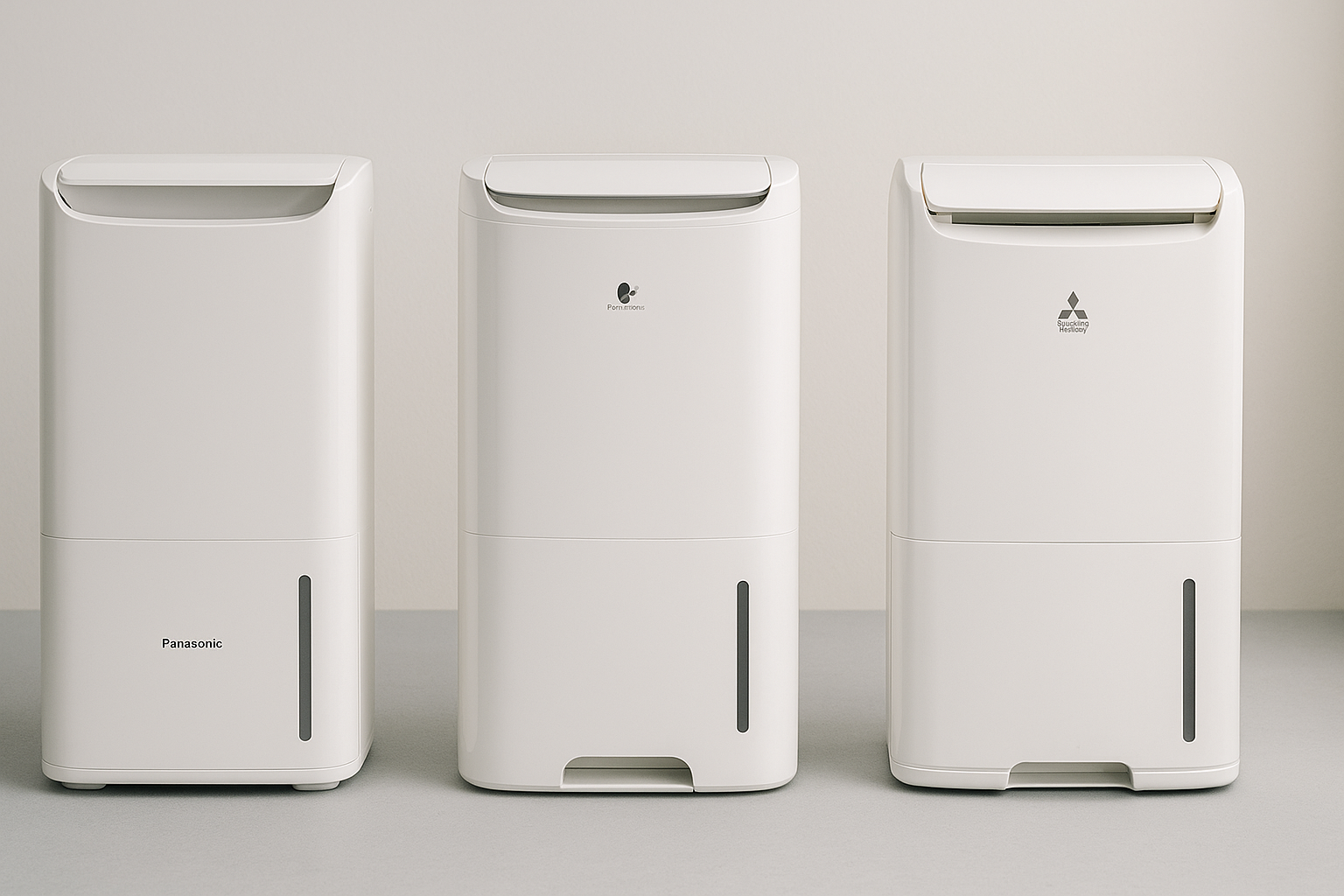
Three companies dominate Japan’s mid-to-high dehumidifier segment, and each has staked out distinct technical territory.
Panasonic leads with the F-YHU series, of which the F-YHUX120 is the current flagship. The machine extracts up to 12 liters of water per day (at 30°C/85% RH), runs three operating modes (auto, quiet, powerful), and incorporates nanoe-X both for sterilization and for what Panasonic calls “moisturizing” mode — using the ion technology in reverse to add controlled humidity to extremely dry winter air. The dual-function approach reflects Japan’s year-round humidity problem: summer is too humid, winter (with central heating) can be too dry. One appliance solves both. The F-YHUX120 retails at ¥72,000 to ¥78,000 ($475–$515) and is consistently a top seller in its category.
Sharp positions the CV-H120FX around Plasmacluster, its proprietary air-purification technology that generates both positive and negative ions to neutralize airborne contaminants. Sharp has invested heavily in third-party certification for Plasmacluster efficacy — it has been tested against H1N1, SARS-CoV-2, and various mold species. The CV-H120FX integrates a humidity sensor with auto-shutoff calibrated to maintain a target humidity level rather than simply running until the tank fills. This matters: running a dehumidifier past optimal humidity wastes energy and overdries the air. The machine retails at ¥65,000–¥70,000 ($430–$465).
Mitsubishi Electric takes the most engineering-forward approach with the MJ-H120VX. Its hybrid desiccant-compressor system is the key differentiator: desiccant wheels work efficiently in cold conditions where compressors struggle, while compressors are more energy-efficient in warm conditions. The MJ-H120VX switches between modes based on ambient temperature, maintaining consistent dehumidification performance year-round. This is particularly relevant for Japanese homes in winter, when running a compressor-only dehumidifier in a 10°C room produces almost no result. The MJ-H120VX retails around ¥68,000 ($450).
What none of these models have: US or European retail distribution. They are Japan-market products with Japan-standard electrical specs (100V/50-60Hz), Japanese-language interfaces, and certifications (PSE mark) aligned to Japan’s regulatory framework. Importing one to the US requires a voltage converter, and the warranty becomes void. The feature set exists. The distribution does not.
Where the West Is Getting This Wrong
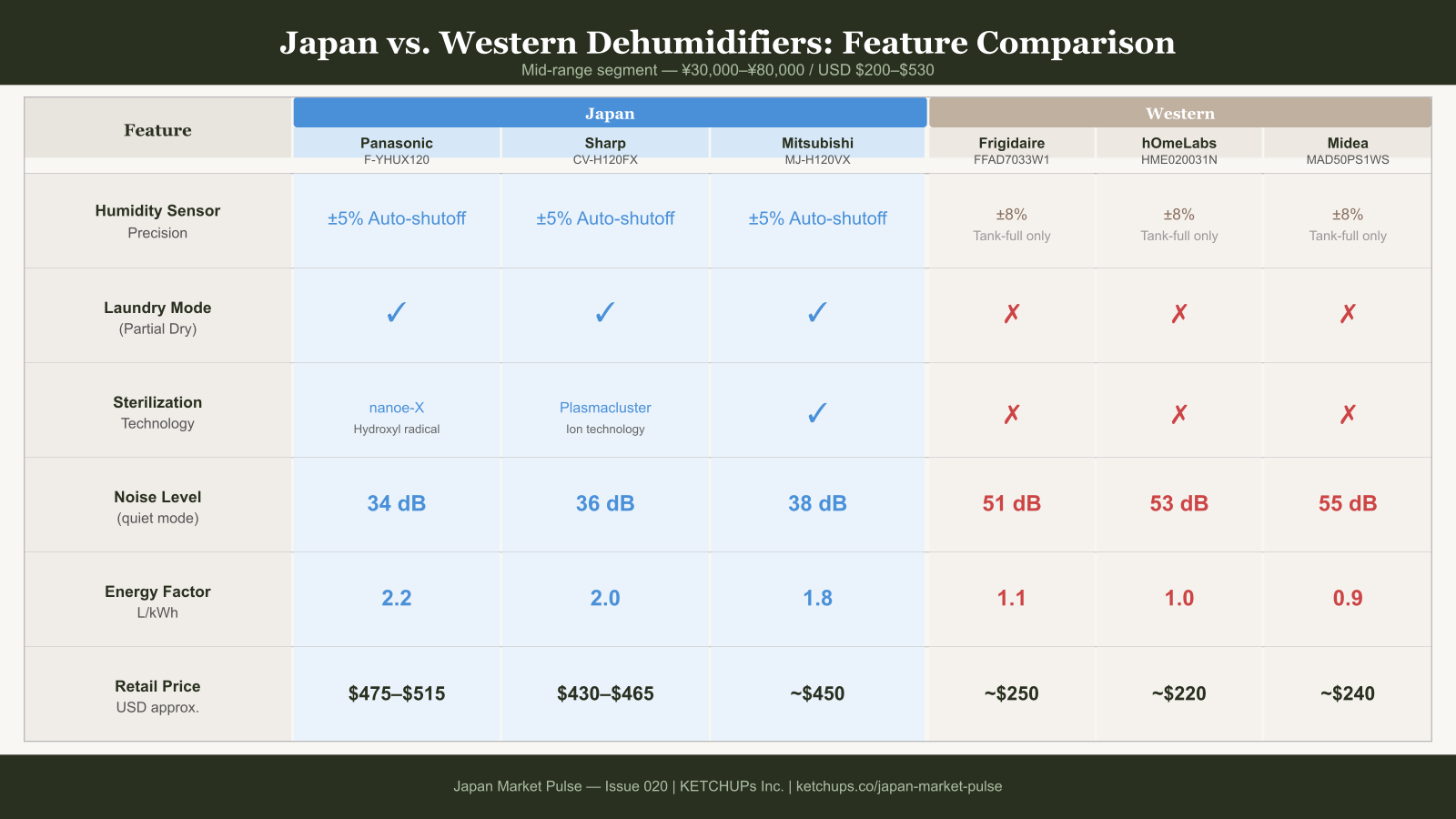
The US dehumidifier market is dominated by Frigidaire (Electrolux), hOmeLabs, and Midea (which also manufactures under Keystone and other private labels). The best-reviewed US model in the $200–$250 range — roughly where the entry tier of the Japanese market sits — offers: a compressor system, continuous drain option, 50-pint daily extraction capacity, and a humidistat that reads in increments of 5 percent relative humidity. That’s the state of the art at this price point in the US.
There is no laundry mode. There is no sterilization. The noise floor is 51–55 dB. The energy factor (liters extracted per kWh) is roughly half that of comparable Japanese models. The humidity sensor accuracy is ±8 percent versus the ±5 percent typical of Japanese models — a difference that matters when you’re trying to maintain a 55% target to prevent mold without overdrying the space.
The UK market is arguably worse. Despite Britain’s well-documented damp problem — Victorian construction with inadequate vapor barriers, condensation damp affecting an estimated 4.4 million homes — the premium UK dehumidifier category looks almost identical to the US: Meaco, EcoAir, and De’Longhi dominate with machines that largely replicate the US feature set with European electrical standards. Meaco, the most technically sophisticated of the UK brands, has begun adding hybrid desiccant-compressor systems — following the Mitsubishi playbook — but lags on the sterilization and laundry-mode sophistication.
The Pacific Northwest of the US — Oregon and Washington — has a climate profile that resembles the UK and in some respects Japan’s tsuyu season: prolonged overcast and rainy periods from October through May, average indoor relative humidity in older homes of 55–70%, significant mold-season concerns. Florida is a year-round problem. These are not small markets. Florida alone has 22 million people living in a climate that calls for the exact appliance category Japan has spent decades refining.
The feature gap exists because the pain in Western markets has not been concentrated enough to force manufacturers to innovate. Japan’s high-density apartment living, its laundry culture, and its institutional attention to indoor air quality created market pressure that didn’t exist in the US, where houses are larger, windows are bigger, and the dryer is a given. The pressure is now building in Western markets. The innovation has already been done in Japan.
The Humidity Data: Japan vs. the World
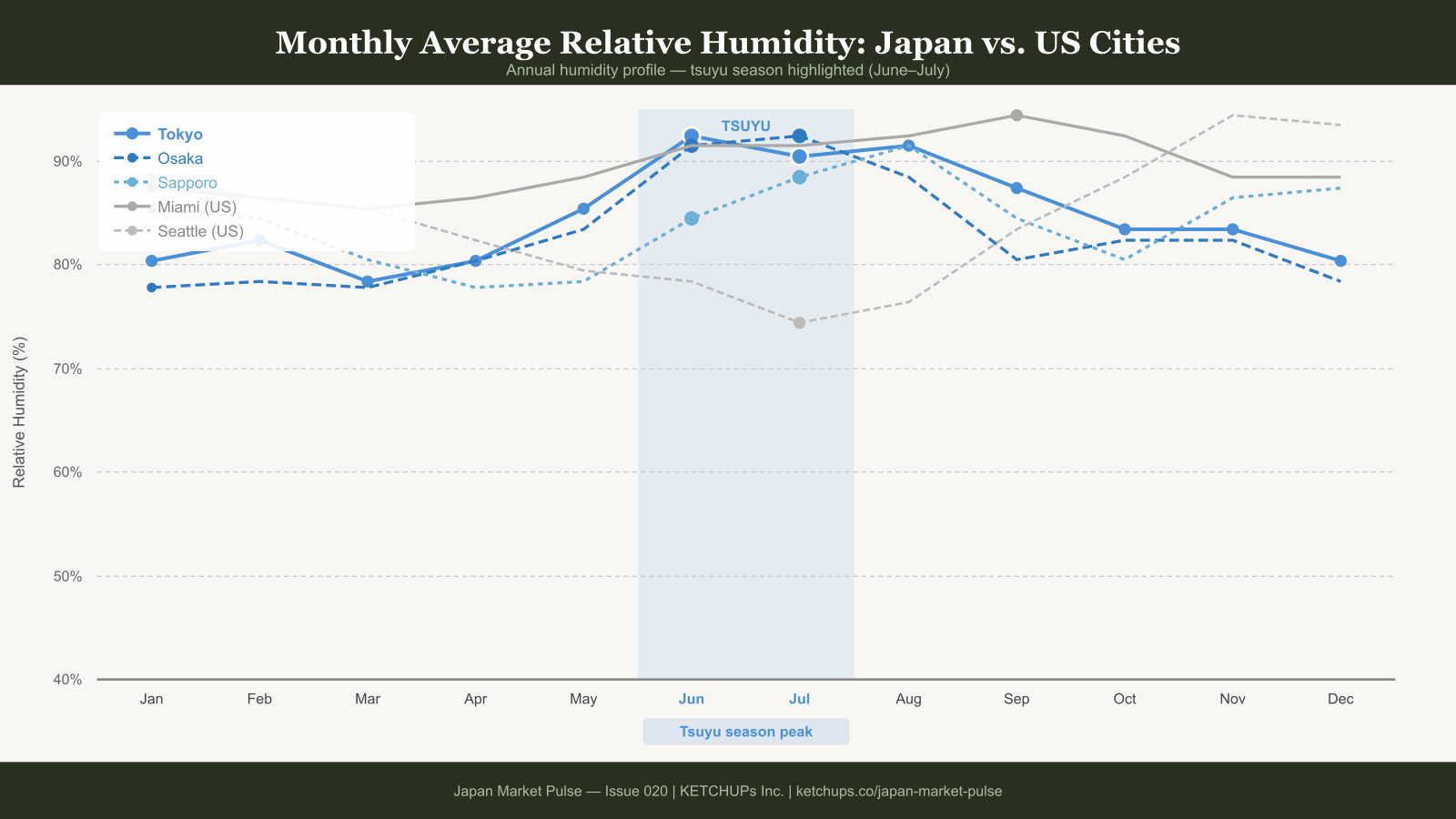
Tokyo’s average relative humidity in June is 79%. In July it’s 77%. Neither figure is dramatic on its own — Miami averages higher for more of the year. But Tokyo’s humidity problem is compounded by the built environment. Miami houses tend to be newer construction with vapor-sealed concrete slabs and central air conditioning that dehumidifies continuously. Tokyo apartments tend to be older, with minimal insulation, single-pane windows, and no central air. The air conditioning units that are universal in Japanese apartments cool but do not dehumidify to the same degree as Western central air, and running them continuously overnight is expensive on Japan’s electricity tariffs.
Sapporo, in Hokkaido, largely escapes tsuyu but faces a different humidity problem: extreme cold combined with intensive indoor heating produces condensation on interior surfaces throughout winter, with indoor humidity often dropping to 20–25% in heated rooms — a level associated with increased respiratory infection risk. The Panasonic F-YHUX120’s dual humidify/dehumidify capability was designed precisely for this use case.
The seasonal concentration of Japan’s humidity problem — the fact that the worst conditions cluster in June and July — is actually what drove the market sophistication. Consumers who experience a severe problem twice a year think carefully about solutions. They buy better machines, read spec sheets, compare features. The market rewards engineering because consumers are motivated enough to evaluate it.
What This Tells International Buyers
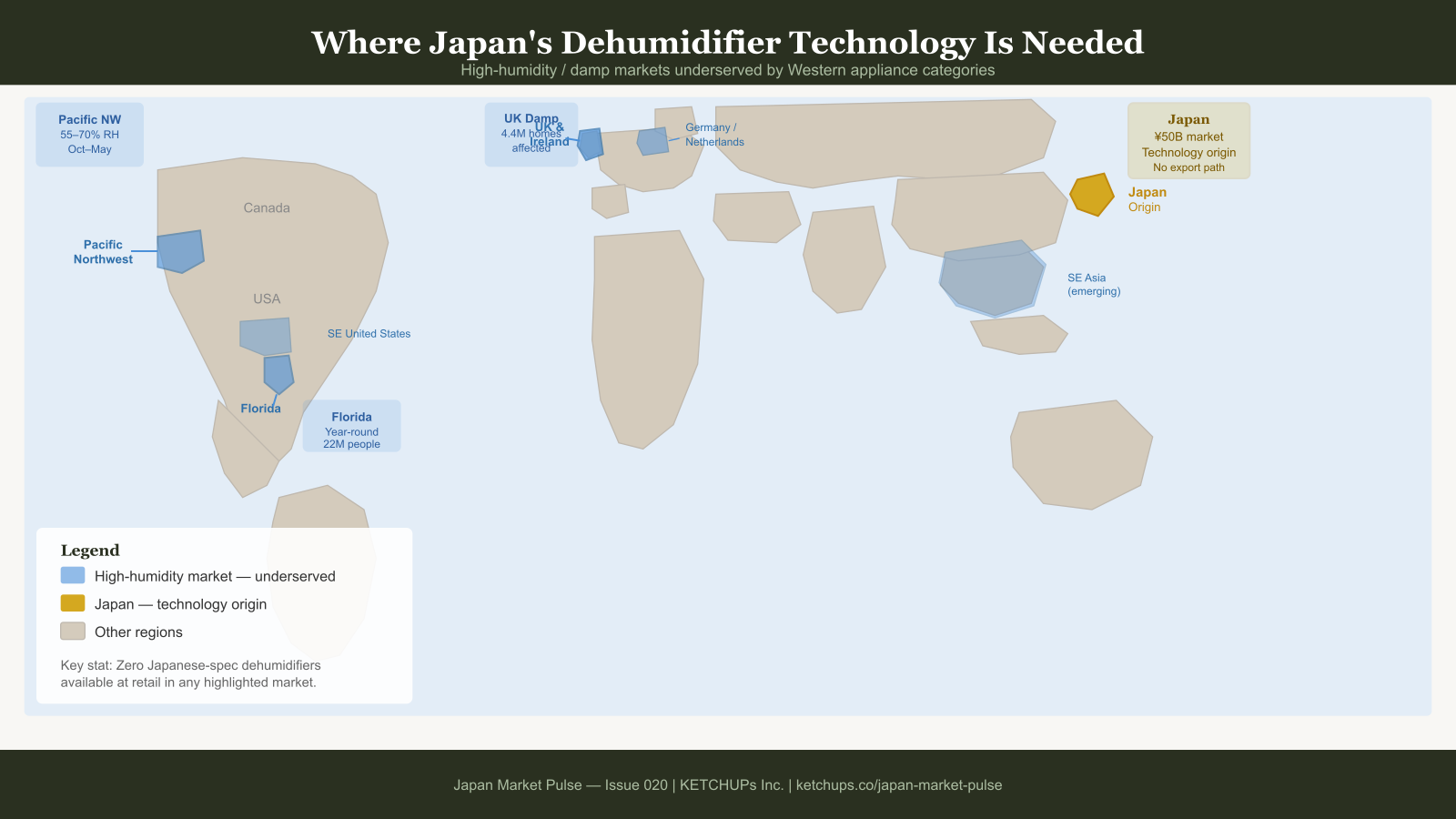
The Japanese dehumidifier market is a case study in what happens when consumer pain is both intense and concentrated, and when the consumer base has the disposable income to reward engineering investment. Japan’s combination of humid climate, dense apartment living, indoor laundry culture, and institutional focus on indoor air quality has produced a category where the leading products would be considered premium-segment innovations in any other market.
For international buyers, this signals several things. First, the upgrade path is proven. Japanese consumers have been paying ¥50,000–¥80,000 for dehumidifiers for over a decade. The feature set at this price point — sterilization, precision humidity control, laundry mode — is not experimental. It’s mature technology with an established consumer base willing to pay for it. That’s a different risk profile than a startup pitching a “smart” version of a category.
Second, the Western category is underserved at the mid-premium tier. There is currently no US or European brand offering a dehumidifier with laundry optimization, sterilization, and sub-40dB operation at any price. The closest thing is a Japanese product with a voltage converter. That gap represents an addressable market. Third, the timing is right. Remote work has pushed more people to spend more hours in their homes. Post-COVID awareness of indoor air quality is structurally higher than it was in 2018. UK damp is a political issue that gets national media coverage. Pacific Northwest homes are increasingly being valued based on mold risk.
For anyone thinking about where mid-range home appliance innovation is heading, the answer is easy to find: walk into Yodobashi Camera in June. Everything that’s going to be mainstream in Western markets in 2030 is already for sale there in Japanese. The engineering has been done. All that’s missing is the translation.
If you’re interested in this topic, the Japanese market more broadly, or what KETCHUPs is working on, we’d love to hear from you — please reach out via our contact form.
Japan Market Pulse is a weekly read on what the Japanese consumer-tech, lifestyle, and adult-collectibles markets are choosing to do, written for international operators who want to know what is happening before it shows up in the global trade press.
Subscribe at ketchups.co/japan-market-pulse.