

Japan Market Pulse | K-Beauty Series #1 | Consumer Trends
It was a Tuesday morning in January, and Harajuku was doing what Harajuku does — a low hum of people moving with somewhere to be. I almost walked past the queue without registering it. Then I stopped.
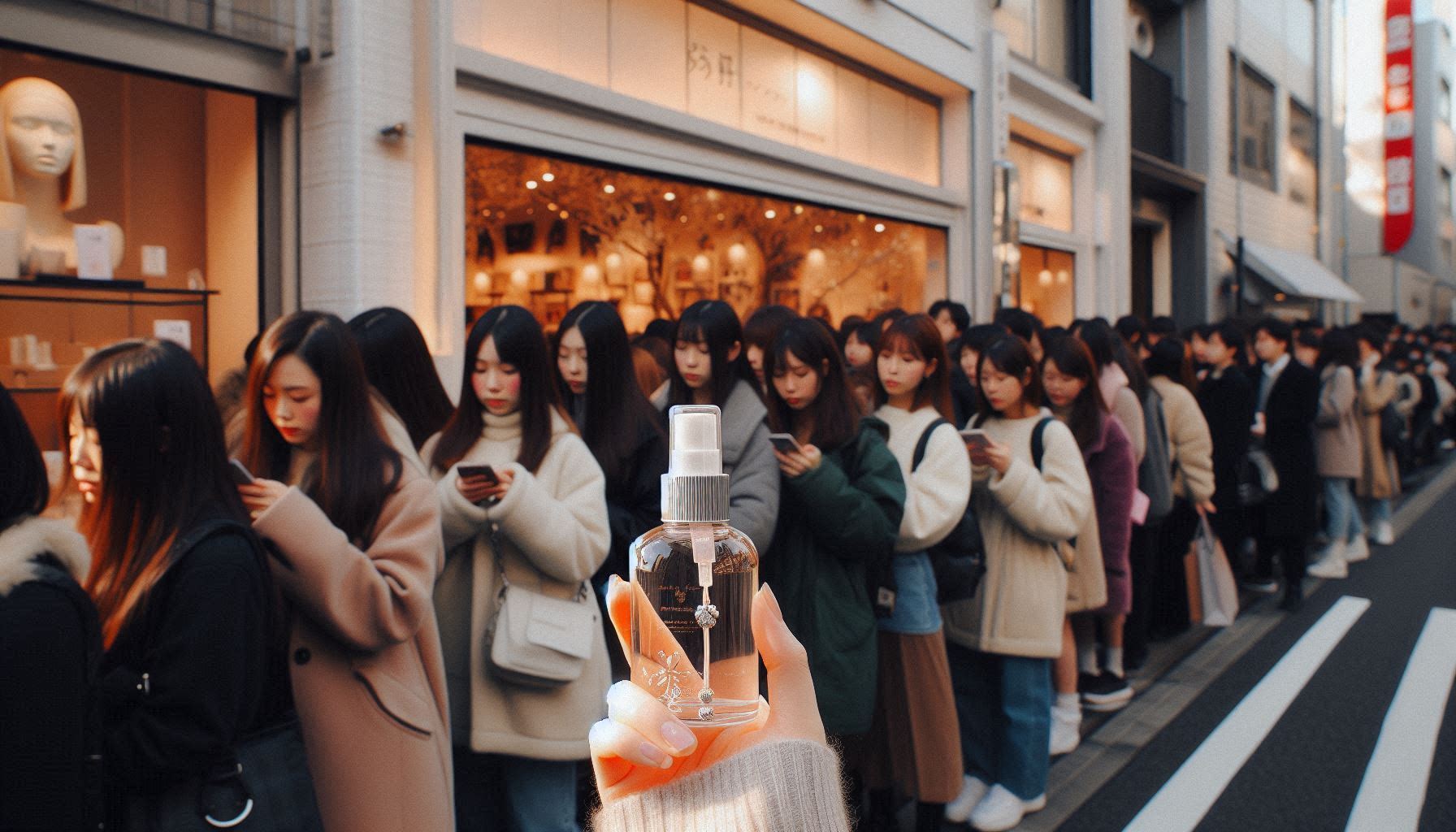
The line outside @cosme TOKYO stretched down the pavement, past a vending machine, around a corner. Most of the people waiting were women in their twenties. Several were filming it.
I asked the woman in front of me what she was there for.
She held up her phone. On the screen: a small bottle of skincare mist, pale green, with what looked like a tiny pearl charm clipped to the cap.
“It’s like jewellery,” she said. “But for your skin.”
Skincare You Wear
For decades, skincare in Japan belonged in a pouch. Bathroom shelf, medicine cabinet, out of sight. You used it. You didn’t display it.
Anua had a different idea.
Their PDRN Hydrating Capsule Mist — around ¥3,000 — can be fitted with a custom silicone case and a charm chosen from over ten designs. Hearts. Stars. Pearls. Tiny sculpted flowers. The bottle is small enough to clip to a bag strap.
On the train home that evening, I watched a woman pull hers out, mist her face, and drop it back onto her tote — charm catching the light — without breaking conversation. She wasn’t performing. It was just part of how she moved through the day.
By the end of the week, the hashtag #AnuaJapan had generated tens of thousands of posts. The pop-up ran for seven days. Total visitors: 4,300 — all by reservation, yet the queue still spilled outside.
No one was there just for the moisturiser.
The Ingredient That Skipped the Queue
PDRN stands for Polydeoxyribonucleotide, extracted from salmon DNA. In clinical medicine, it has been used for decades as an injectable treatment — accelerating wound healing, stimulating tissue regeneration. The kind of compound that lives in operating theatres and academic journals.
Then Korean beauty clinics began offering topical PDRN treatments around 2023. Within a year, Japanese beauty editors were calling it “the next retinol.” By January 2026, Anua’s PDRN line had won a @cosme Best Cosmetics Award.
For context: retinol spent roughly forty years moving from prescription pad to drugstore shelf. PDRN compressed that journey into about two years.
That acceleration is not a fluke. It is a pattern — and it tells you something important about where beauty innovation is coming from now.
빨리빨리: When Speed Is the Product
There’s a Korean word that keeps coming up in conversations about K-beauty’s global momentum: 빨리빨리 (palri-palri). It means, roughly, “hurry hurry.” A cultural restlessness, an impatience with waiting that has become — in the beauty industry — a structural advantage.
Here is what 빨리빨리 looks like in practice.
Anua entered Japan in late 2024. The PDRN Mist launched, showed early traction, and instead of pausing to study the data, the team moved. Within months, a PDRN serum, cream, sheet mask, and lip treatment followed. One ingredient insight became an entire product ecosystem — fast enough to define the trend cycle before a competitor had finished their approval process.
By January 2026 — roughly 14 months after entering the market — Anua had completed a three-city pop-up tour, won a major industry award, and built a customer base large enough to fill a week-long event in Harajuku with 4,300 reservations.
A typical Japanese major beauty brand takes two to three years to bring a new active ingredient to retail shelf. That is not a criticism. It reflects a particular model of rigour, consensus, and brand protection that has served Japanese beauty well for generations.
But when a competitor is iterating in months, two years is a very long time to wait.
The Market Behind the Queue
The numbers make it harder to call this a moment.
The global K-beauty market was valued at approximately $14.6 billion in 2024. It is projected to reach $38.3 billion by 2033 — a compound annual growth rate of 11.3%.
In Japan, the momentum is sharper still. K-beauty online sales in the first three quarters of 2025 already reached 86% of the entire 2024 total. Amorepacific Group — the conglomerate behind brands including Anua — reported record overseas revenue growth of 15% for 2025, with operating profit up 102% year-on-year.
These are not trend figures. They are structural shift figures.
What This Actually Means
Standing outside @cosme TOKYO that Tuesday, watching the queue not move, I kept thinking about what these women were actually buying.
It wasn’t salmon DNA. It wasn’t even, really, better skin.
It was a small green bottle that looked good on a café table. An ingredient with a credible clinical backstory. A brand that moved fast enough to feel alive. And a charm — a tiny pearl, or a star, or a flower — that said something about who you are before you’ve said a word.
Three observations, specific to Anua:
- The charm is not a freebie. It is the product. Making the mist customisable and wearable turned a replenishment purchase into a considered one. The customer doesn’t just buy. She curates. That changes her relationship to the brand entirely.
- PDRN’s speed from clinic to shelf was a strategic bet, not an accident. Korean brands are already moving toward NAD (nicotinamide adenine dinucleotide) as the next ingredient category. The gap between “emerging clinical research” and “@cosme bestseller” is getting shorter. Whoever is closest to that pipeline wins.
- 빨리빨리 is a choice available to any organisation. Smaller decision committees. More tolerance for launching at 70% and iterating. The willingness to follow a signal before the data is complete. These are not Korean traits. They are organisational choices — ones that require will more than resources.
The Takeaway
4,300 people stood in a queue for a skincare mist with a charm clip.
K-beauty has always understood that skincare is identity. Anua’s charm cosme campaign executed that insight more literally than anyone had before — and made it tangible enough to photograph, to clip to a bag, to wear on the train home.
The queue wasn’t waiting for better skin. It was waiting to say something about itself.
The next question, for every brand in this market, is what they’re going to say back.
If you’re interested in this topic, the Japanese market more broadly, or what KETCHUPs is working on, we’d love to hear from you — please reach out via our contact form.
If you’re interested in this topic, the Japanese market more broadly, or what KETCHUPs is working on, we’d love to hear from you — please reach out via our contact form.
Japan Market Pulse is a weekly read on what the Japanese consumer-tech, food, and mobility markets are choosing to do, written for international operators who want to know what is happening before it shows up in the global trade press.
Subscribe at ketchups.co/japan-market-pulse.